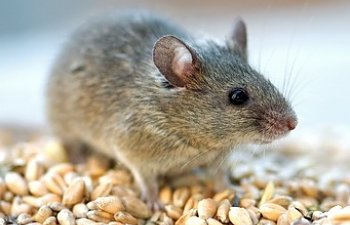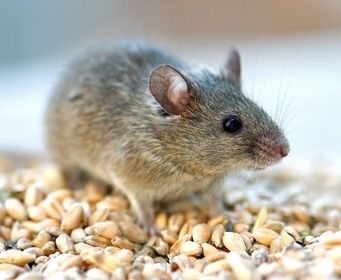
Mice are mammals that belong to the order of rodents. They are small animals with pointed snouts, small rounded ears, short legs and a long naked, or almost naked, hairless tail. There are about 30 species scattered through various regions of the world. They are considered one of the great survivors on the planet and can adapt to almost any environment. These rodents are herbivores by nature and would normally consume grain or fruit, but due to the rise of urban development, they have learned to eat almost anything. Though generally nocturnal creatures, they are often active during the daytime as well. These rodents can be greatly harmful to crops. They also cause structural damage to buildings and are carriers of almost 35 kinds of diseases.
Range
The common house mouse inhabits urban areas such as homes, buildings, and undisturbed natural habitats. They can be found in most regions of the continental US, the Pacific region, and Canada. Deer mice are commonly found in grasslands and open areas, specifically in the Western United States. Species such as the Western Harvest Mouse live in runways and underground burrows, and are commonly found in Canada and The Western US. The Great Basin Pocket Mouse, on the other hand, inhabits vegetation plains, shrubs, and grasslands. It is commonly found in British Columbia and some parts of Arizona and Wyoming. They grow and multiply in great numbers. In fact, a female mouse can give birth to a little of 5-10 babies 20 days post-mating.
Method of kill
Since mice are renowned nibblers of seeds and fruits, they are not necessarily armed with the killer instincts. But, given the opportunity, these rodents can wreak havoc on a poultry farm especially when they target the small, vulnerable chicks. They also love stealing chicken eggs and if you find an empty egg shell with a smallish hole on the side, chances are it was a mouse's handiwork.
Prevention and treatment
Mice are attracted by food, so make sure store your poultry feed in a secure, mouse proof container. Collect eggs frequently and remove any broken eggs, shells and dead birds asap. While there is no surefire way to mouse-proof one’s poultry farm, there are various preventative measures that you can take to keep mice out of your chicken coop and some are more effective than others. First of all, make sure you block any access points in your coop. Mice can gain access through holes as small as 1 inch in diameter, so block any holes and gaps and cover larger openings, such as windows and ventilation holes with strong, fine mesh or hardware cloth. Did you know mint is a natural mouse repellent? Plant some spearmint, peppermint, wintergreen or even lemon balm (which is also in the mint family) around your coop and run as a sweet smelling, natural mouse repellent. You can also sprinkle fresh or dried mint in the coop and nest boxes.
One method that proved to be quite effective in dealing with a mice infestation is the bucket mouse trap. Another way of dealing with mice is by setting poison. Keep in mind, however, putting out poisoned feed is risky, because you may end up killing your chickens and other animals in the area. Also take care to set traps outside the reach of your children, chickens, and other pets. A cat or two around the yard and barn will help keep mice populations under control too, just make sure they don't catch your chicks! And believe it or not, your chickens may also sometimes kill and eat mice!
One method that proved to be quite effective in dealing with a mice infestation is the bucket mouse trap. Another way of dealing with mice is by setting poison. Keep in mind, however, putting out poisoned feed is risky, because you may end up killing your chickens and other animals in the area. Also take care to set traps outside the reach of your children, chickens, and other pets. A cat or two around the yard and barn will help keep mice populations under control too, just make sure they don't catch your chicks! And believe it or not, your chickens may also sometimes kill and eat mice!