
Thursday, May 10, 2012
BTC ACRE... Coming Along
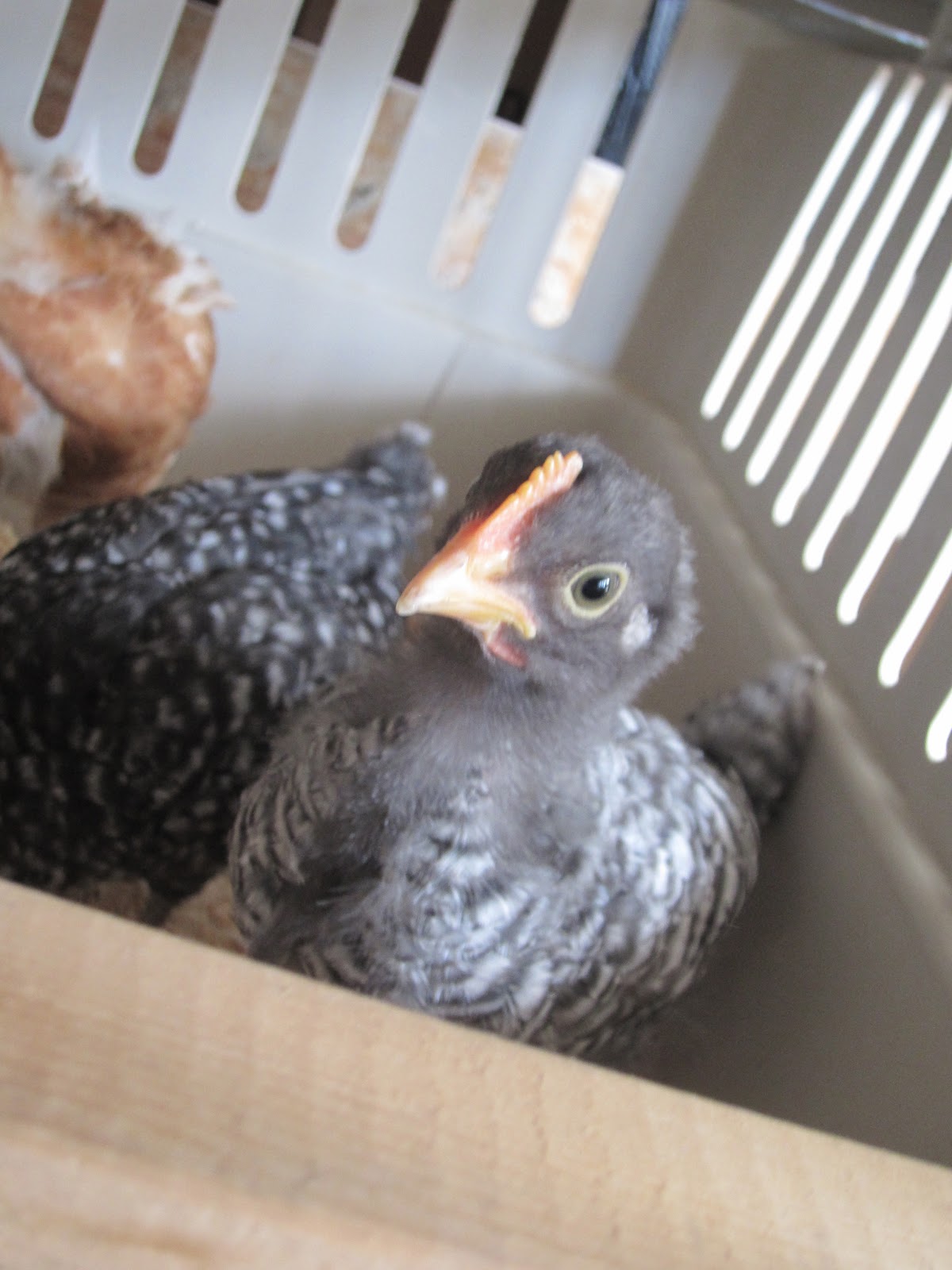
We adopted 4 3 week old chicks from one of Aaron's coworkers. The coworker had purchased 4 day old chicks for his kids at Easter. They spent time watching them grow simply for the experience and were ready to get rid of them. Aaron offered to take them and it was a win win situation. So we now have 2 Barred Rocks and 2 what we believe to be Rhode Island Reds. The chicks were not purchased sexed so we are fairly sure we have 1 BR Cockerel... but only time will tell if we are correct. We are unsure what we will do with any roosters we acquire but if they are not aggressive or too loud we may keep 1 or 2. The kids have been having a blast feeding them dandelions and seeded grass.
Seriously... how cute are these little chickies!?!


|
| Our Suspected Roo! |

I must say it is a very nice feeling knowing no one will be able to tell us to get rid of our birds. Just today there was yet another article in the local paper about a family with some Rouen Ducks (which we are getting 4 of next week) who are now being forced to get rid of them. There is an 11 year old girl who will now lose her pets and 2 ducks that will lose their home. I am so very thankful that we were able to sell our home and find a property that suited our desired lifestyle. Every time I walk out into our yard or drive up to the house I get this feeling of inner peace I never had living at our old home. Many people think we were nuts moving from our trendy, modern subdivision home into the sticks, but I think its crazy not too. Whats not to love about being back with nature where we belong. It is unbelievable satisfying being where we are and having the freedom to grow most of our own food.
My advice to anyone considering making a move into the county is.... Do it, you will never look back.
Wednesday, March 28, 2012
BTC Acre... 8 days away!!!
We have figured out a rough layout for the new yard. Here it is:

Monday, March 26th, 2012
Ordered our birds!
It is official! We stopped in at our local feed store and placed our order for our chicks and ducklings. The chicks were all available sexed... but there is no guarantee of course. If we end up with a few roos, we may keep one and have the rest for the soup pot. In the end we decided to go with 12 hens. They are all brown egg layers but our flock will be somewhat colourfull. We ended up getting 2 of each of the following 6 breeds: Rhode Island Reds, Barred Plymouth Rocks, Red Sex Link, Black Sex Link, Columbian Rock X and New Hampshire X.
Our ducklings are not able to be sexed so we took a shot and got 4 of each breed. Pekin and Rouen were our final breeds of choice.
TUESDAY, MARCH 13, 2012
Chicks and Ducklings coming May 15th!
We are planning on purchasing our day old chicks and ducklings soon. We are ordering them from a local supply store. We really wanted to get some heritage breeds but they are not readily available locally. To get heritage breeds of chickens and ducks we would have to go to Ottawa to pick them up which is way too far or pay $75 per breed to have them shipped with papers from the US which is just silly! So, we are limited to the typical breeds that are offered.
For chicks we are planning to get 2 of each breed of Black Sex Link, Columbian Rock X, Rhode Island Red and of course Barred Plymouth Rocks. The birds will be coming from here: Frey's Hatchery and there you can find a bit of info on each breed. I would love to get some white egg layers but the only breed available from Frey's is Leghorns which are known to be a bit sketchy and nervous. We could call around and order from elsewhere which may have another white egg laying breeds but we really wanted to support the local supply store which orders from Frey's. If we get Pekin ducks, which I think we will, they will give us our white eggs so we will have a nice colour assortment.
As for our 4 Barred Rock ladies, we have decided not to bring them home form the CSA coop since we will be getting new birds and ducks. I don't want to have to worry about fights between the older hens and the young pullets and ducklings. Plus, our birds have their place in the pecking order and are "friends" with some of the other birds. I don't want to cause them stress removing them from their home, again, and throwing them in with new birds.
Duck breeds have been the big question. We have only 3 options being: Pekin, Muscovy and Rouen. Based on my research they all have benefits and negatives. Lets have a look at the pros and cons of each breed:
Rouen:
Pros: docile, good meat, social, usually too heavy for flight, descent foragers
Cons: 35-125eggs/yr, slow grower 6-8mo for table, 1.5yr for full growth, poor egg setters, poor forager
General: look like large mallards, production bred 6-8lbs, standard bred 9-12lbs, lifespan approx 7yrs
Pekin:
Pros: 200+ eggs/yr, 6-8wk for table, usually too heavy to flight, loyal, friendly
Cons: loud, poor egg setters
General: 8-11lbs, lifespan 9-12yrs, white plumage with yellow feet and bills
Muscovy:
Pros: brood 8-16 eggs up to 3x/yr, strong tasting meat (taste similar to beef, tender like veal), silent, fast growing, great foragers of bugs and weeds
Cons: perching duck, flighty, drakes can be aggressive and may mount chickens
General: male-10-15lbs, female 5-7lbs, lifespan approx 8years (can live up to 20 in optimum conditions)
If we get a mating pair of 2 breeds I just can't decide which 2 breeds are best. I think we will definitely get Pekin since they make great pets, are excellent egg layers and are also fast growing and tasty meat birds (they are the most common meat duck). Deciding on the other breed is the tricky part. Now, looking at the pros and cons I think Rouen may be the better choice. They are good foragers and not typically flighty. They are average egg layers and very tasty meat birds. I had placed being broody as a positive and not sitting on eggs as a negative but maybe I have that wrong. We likely will need to incubate eggs from both Pekin and Rouen but at least we have control over their reproduction. It is more work for us to have to incubate but we certainly don't need 8-16 eggs 3x per year from Muscovies. It also may be better for the ducks since we won't be taking their babies away when ready for harvest.
Once in a while a blog post can really shine some light on a topic... even for the writer. I had been so torn about what breed of ducks to get but now I am confident that Pekin and Rouen are best suited for our family needs. Muscovy ducks would be a great choice if we weren't planning on keeping the chickens and ducks in the same area and if we had older children. The aggressive drakes are just too big of a risk factor for us.
Posted by Sarahat 3/13/2012
THURSDAY, MARCH 8, 2012
Winter at the Coop
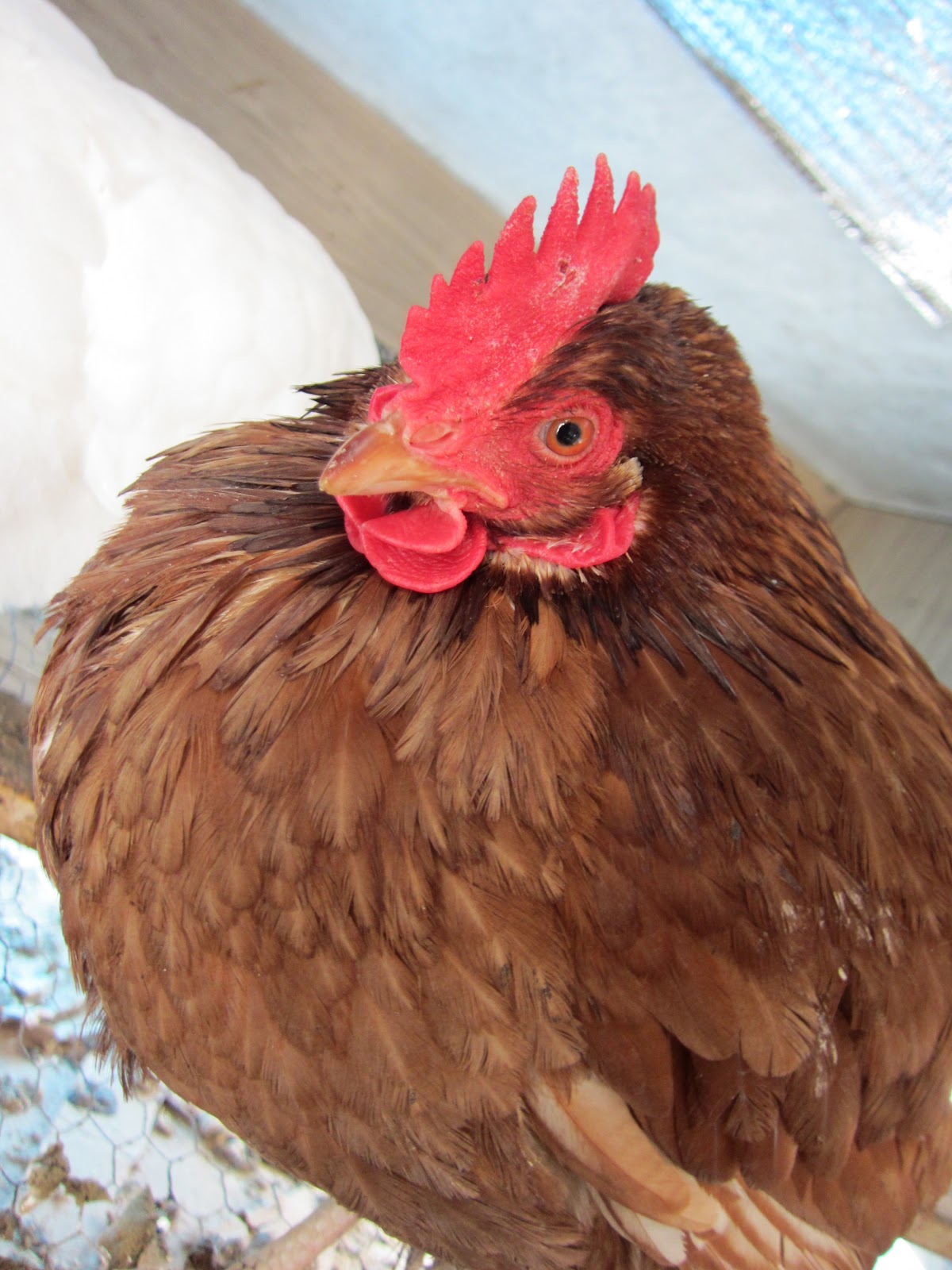
Our southeastern Canadian winters are usually slammed with snow and cold. This year on the other hand, there has been little to no snow and we have been enjoying fall type weather all "winter" long. We did get a few inches here and there but not much accumulation so far. One of the larger snow falls this winter was the day before we headed to the coop. It was over a weekend when I marched out through the snow bringing the chickens water and snacks. I shoveled the snow out of their main run area as best as I could to allow them some room to scratch and peck. It was neat to watch the chickens outside in the cold; once their feet were cold they hold up one foot close to their body for a few moments and then alternate feet. They really are in fact smart animals. The more I watch their behaviours the more I am amazed by them.

|
| Snowy Run. |


"Excuse me!" "What are you lookin' at?"

|
| Going down! |
|
| Big Red. |

|
| Snack Time. Most couldn't be bothered to come out of the coop even after I shoveled. |


No matter how you look at things, chickens are quite fascinating birds. They produce wonderful orbs of nutritional deliciousness, are clean, sweet, fun to watch and loaded with personality! Once you are exposed to chickens in their natural environment free to nest, forage, dust bath, roost and behave as chickens should... it's impossible not to love them!
Posted by Sarahat 3/08/2012
Pickled Orbs of Deliciousness!
When one tend chickens (or helps tend in our case, thanks to the town of Amherstburg) one finds himself with eggs; those wonderful orbs of goodness that reward your efforts feeding and scooping poop. They're nutritious, tasty and oh so versatile. Oh, and best of all, they can be pickled.
I've always liked pickled eggs. Sarah on the other hand, does not. She's only ever had grocery store pickled eggs. Hmm... that needed to change.
We found ourselves with what could be described as a "glut" of eggs in the fridge. Seven or eight dozen. They add up when tending 34 chickens with only one other person helping out for a few weeks. We gave some away and decided three dozen is a good number to pickle, so we set three dozen aside for a few weeks to age; older eggs are easier to peel when hard boiled.
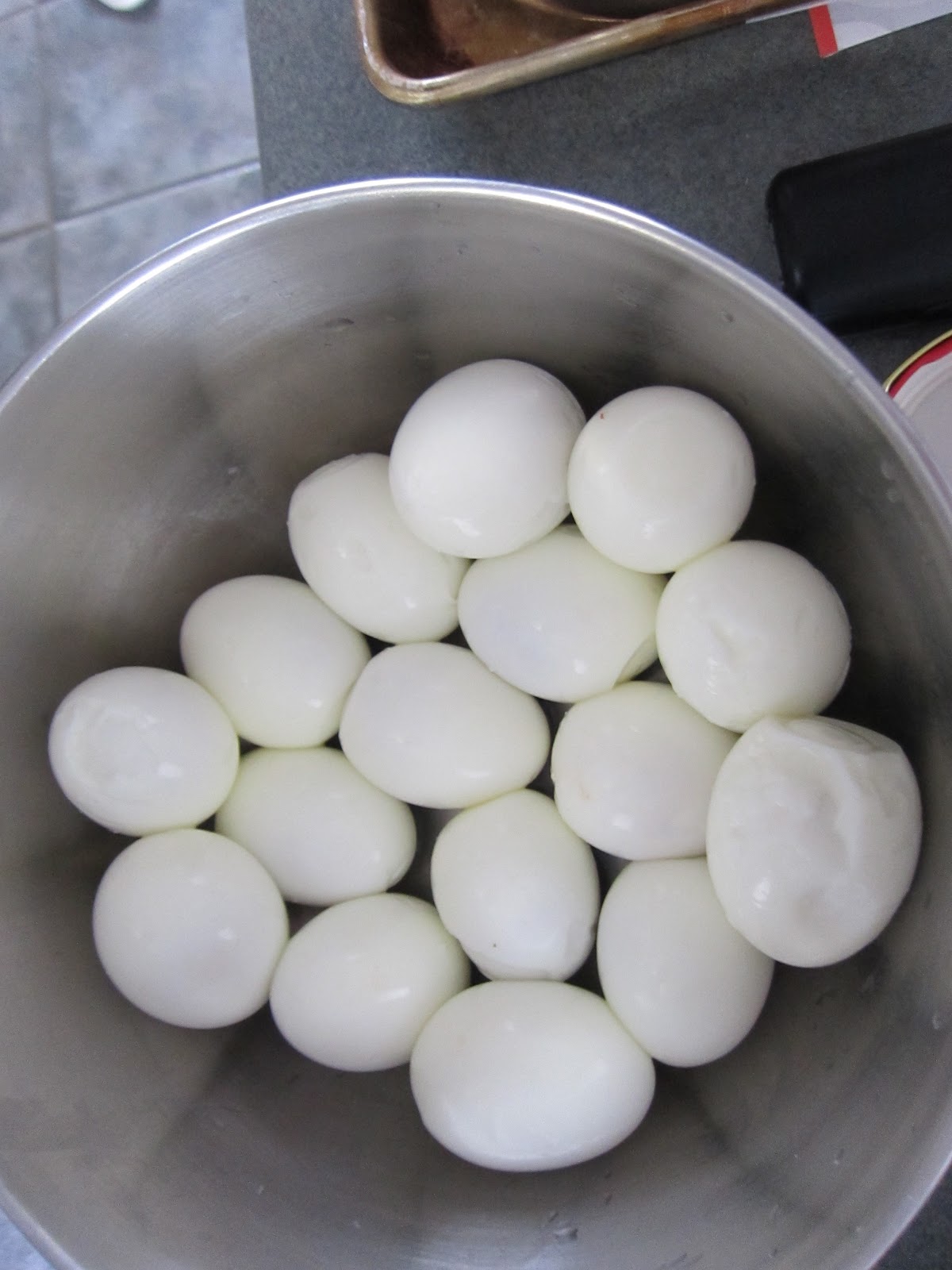
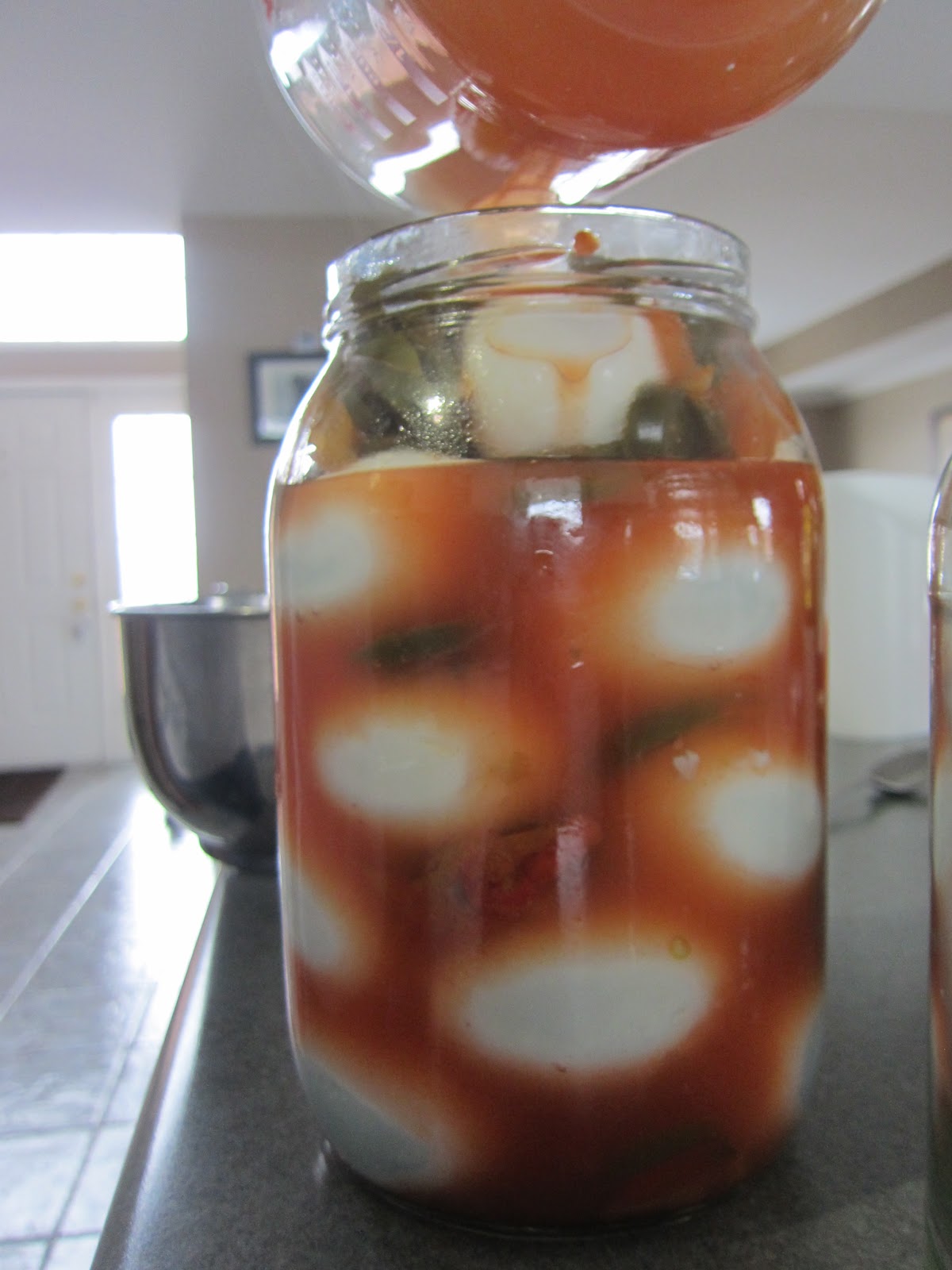
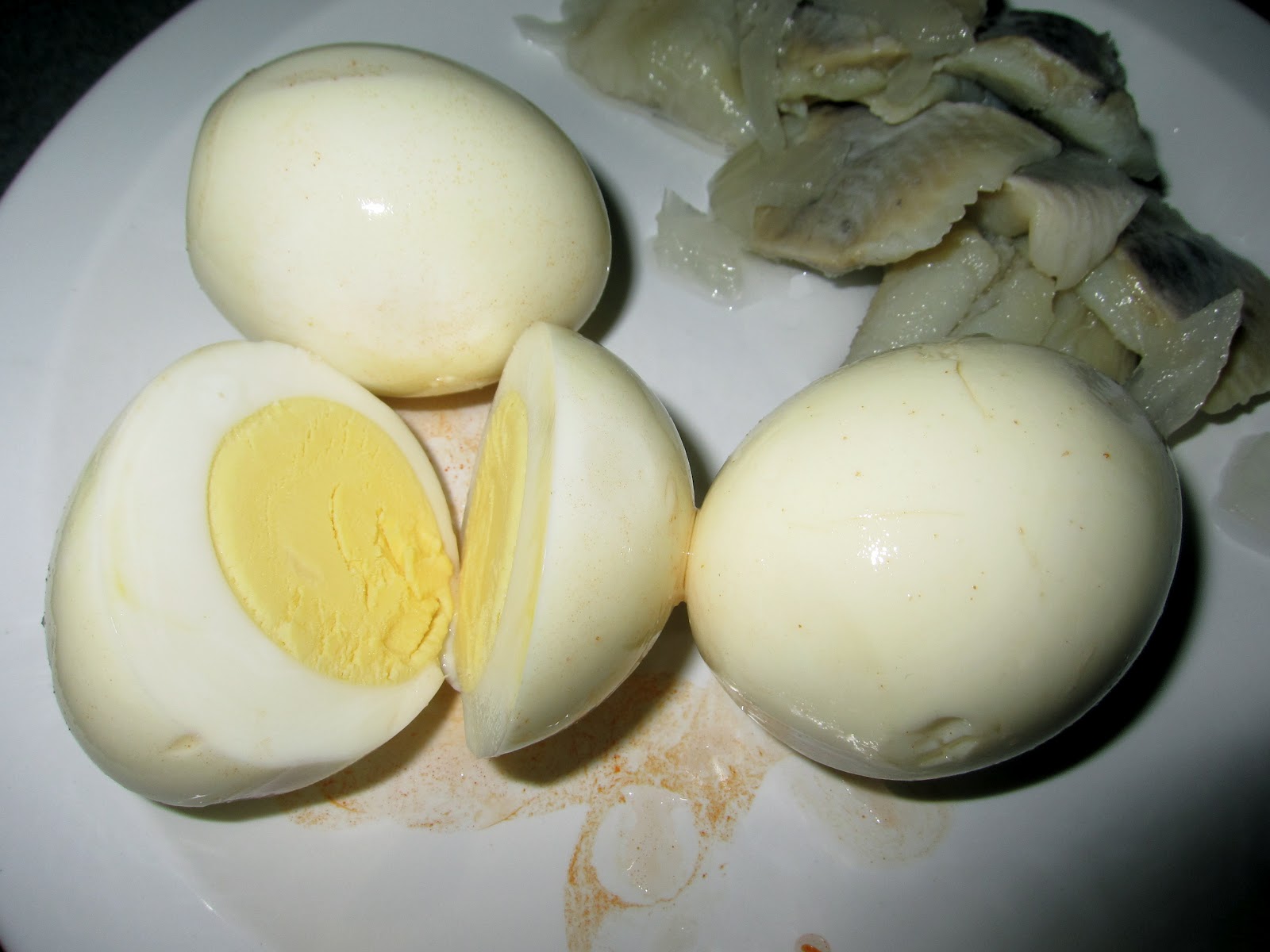
A colleague of mine had, on occasion, brought into work, a jar of eggs he had pickled. They are by far the best I've eaten, so I hit him up for the recipe. We then looked for a jar big enough to hold three dozen hard boiled and peeled eggs. A bulk jar of Olives should do the trick. As it turns out, it fit two dozen exactly... so, an extra dozen for egg salad.





|
| BOOM!!! Beautiful Orbs of Deliciousness served with some pickled herring. |
Recipe and Method
Based on this one taken from Michigan Tech Alumni Association (the yoopers know a thing or two about pickled eggs). I changed some things (Frank's Red Hot), and modified the quantities for 2 doz.
INGREDIENTS
- 3 Dozen Hard Boiled Eggs
- 2 cups White Vinegar
- 16 ounces Sliced Jalapenos and Juice (canned is easiest)
- 1 cup Water
- 12 oz MacIlheney Tobasco sauce
Boil the water, vinegar, and jalepenos for about 20min and then add the tobasco sauce to it. Layer the eggs and the peppers in the big GLASS jar (the size restaurants get their pickles etc.. in) and then pour the liquid over the top, filling any extra space with 50/50 water/vinegar. Top off and let stew for 2-3 weeks - any longer and they start to get rubbery. Warning, these are VERY VERY HOT and need lots of cheap beer to wash them down.
Posted by Aaron Lock at 2/10/2012
An evening at the coop co-op.
For the first time since we became members of the co-op we ran out of eggs. We had given some away to friends and family and made a few dozen pickled eggs for Aaron (recipe post to follow). We were out of eggs for about 24 hours. I went out for our evening at the coop. Recently, one of the Chantecler birds hurt her leg and had to be removed to heal and is still not back at the coop but the other 33 birds were ready for my visit!
I brought a bunch of snacks out to the coop for the birds and collected 23 eggs... not bad for middle of February! The chickens, as usual, went crazy for the snacks. After patting my 4 BR's, I went to town cleaning the "poop tray" in the coop and cleaning out the nest boxes. While out at the coop, I always find myself almost in a dreamy dream land. It feels so natural to get out and tend to a flock of chickens. There is something so freeing about being in the county and getting back to the good life of growing and raising your own food.

|
| Tail Feathers... Beautiful! |

|
| Chow Time. |
Posted by Sarahat 2/10/2012
A winter slump, yet there is light on the horizon!
In our attempt to eat fresh healthy food, the winter is truly our arch enemy. Our local grocery stores have little to nothing local. Our community does not hold any type of farmers market to supply in season local food to local consumers. Aside from some Leamington hot house tomatoes, there isn't much around for the average consumer here in Essex County. Our children are very young and need to have as much fruits and vegetables as possible, so skipping these items during the winter is out of the question. Aaron and I could live on such foods as squash, cabbage, root vegetables, kale and collards for an entire winter, but our children are another story. To be able to provide them with a good balance of fruits and vegetables, we need to purchase the grapes from Peru and strawberries from California... there is no other option. We have frozen local berries from the summer and I add them to yogurt and smoothies for the kids, but they still love to bite into a (I use the term loosely) "fresh" strawberry!
Regardless, spring in simply around the corner... and Aaron and I are super excited to get our new home and begin building our garden. For the spring we will likely use the 2 raised beds they have currently on the side yard. Once we have the garden and chicken coop planned out we will begin their construction. We also have future plans to get a few turkeys, some ducks, rabbits, bees and possible a few sheep for yarn... and meat after some time. My Mom believes that my Aunt has an old family spinning wheel which I would love to have a crack at... then when I make a scarf... it will truly be HOMEMADE!
For the small garden beds currently at the new house, we will be planting seeds here and move them with us in April and plant. We won't have too much for our spring and early summer garden... but we should be able to have the main garden ready for some early-mid summer planting for a decent fall yield. We have a whole bunch of other cleanup to do around the yard at the new house... not to mention getting unpacked and settled in. Still... I can't wait!!
Posted by Sarahat 2/10/2012
FRIDAY, JANUARY 27, 2012
BTC Acre... Coming this April!
This past year has been one of triumphs and failures alike. In our quest to become more self sufficient we added 4 Hens to our family only to have our hometown tell us we MUST remove them. Arguments with a neighbour, disputes with the town, a media craze and then finding a local CSA resulted in us moving our birds and placing our home up for sale. We continue to tend to our chickens as well as 30 others at the CSA, collecting eggs, cleaning up after them and bringing them snacks and love each week.


We have our 10'x10' vegetable garden in the back yard which supplied us with much fresh food for our table including fresh salad, cucumbers, zucchini, kale, watermelon, beans, a few strawberries, purslane, fresh herbs and ripe plump tomatoes. With all the by-law commotion we found out that we are actually not even allowed to have our garden. Turns out, to be within the laws here we are only allowed to grow peppers, tomatoes and grapes. Seems ridiculous that a town can tell you not to supply your family with fresh food from your own backyard... this is not freedom. It has been a long winter, although with a serious lack of snow for our area, and there is change in the air. Recently our house has sold and we purchased a home on just under an acre of property. The home is in a great location close to a school in an AGRICULTURAL ZONE! There are still limitations as to what we can do of course, the governments must control everyone, but we will have far more freedoms than in our current residential prison. We will be close to our current home and able to visit the same park so our kids can play with the kids they have grown familiar too. Come this spring we will have one neighbour who keeps chickens and bees and another neighbour who raises horses... those are my kind of neighbours! We will be bringing our chickens home (possibly getting more) and adding some ducks to our flock. Maybe in a few years we may even add some sheep for wool!
As for our gardens... we have hug plans! We will be able to grow much more food and plant some fruit and nut trees as well. There will be no limit to what we can grow! There is a creek that runs along the side of the property and a track and tennis courts within a 2 minute walk from the house! As with everything, there were a few hiccups along the way with the house purchase but as far as Aaron and I are concerned the issues have been resolved. Aaron and I could not be happier with our decision to move and with the home that we have chosen! We know that this will better our family in so many ways as well as the environment. We are simply trying to Be The Change we want to see in the world.
TUESDAY, DECEMBER 6, 2011
Busy Busy!
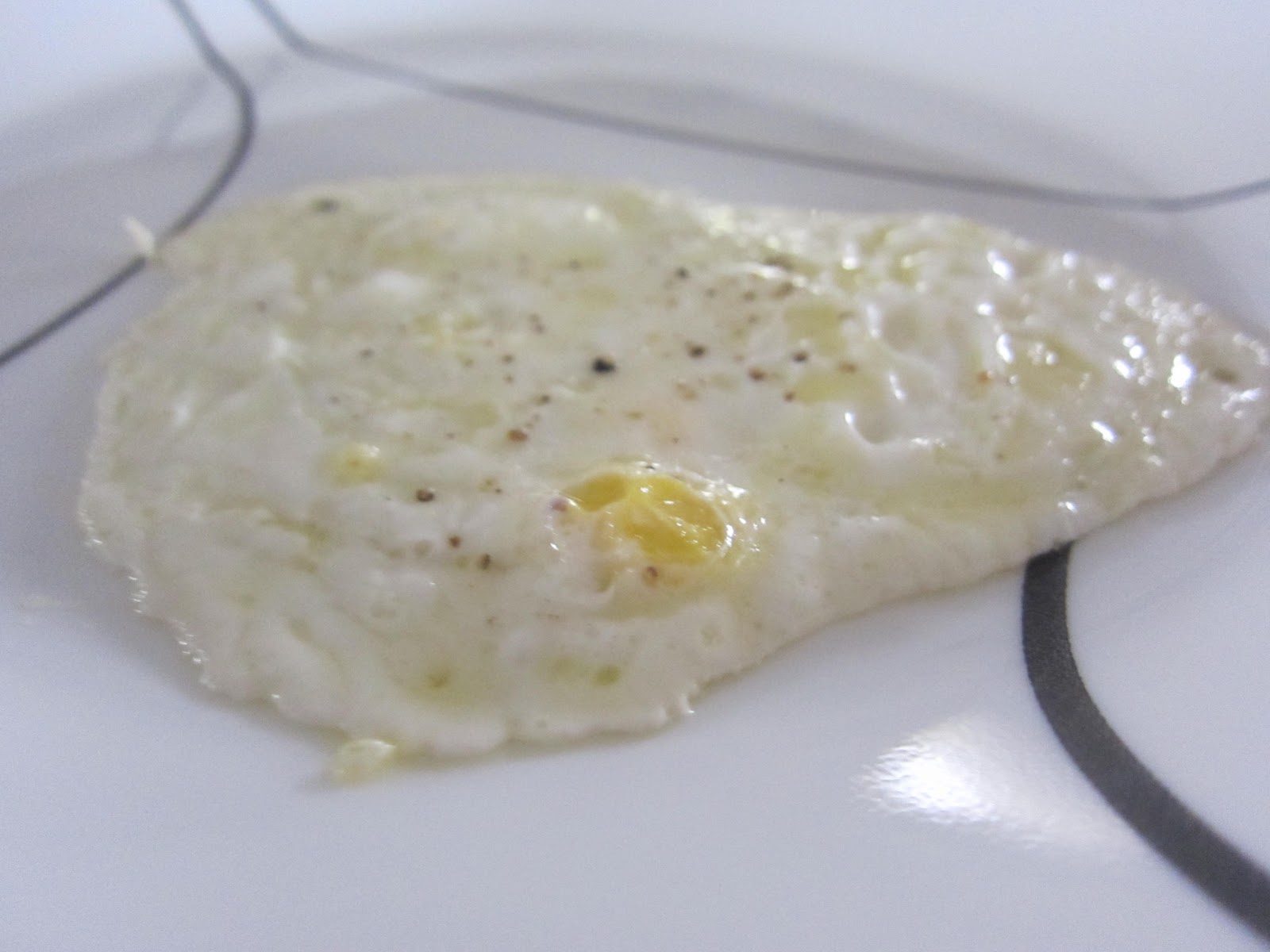
I finally cooked up our teeny tiny egg! The size of the yolk clearly effects the size of the egg; there was plenty white but the yolk was super tiny and misshapen. I simply fried it up and could not believe the taste of this little egg! It was like the flavour of a large egg was packed into this little bundle of deliciousness. The texture of the egg was a bit different but in a good way. It was more dense than a regular size egg... it was really quite fantastic!


|
| ... and so I enjoyed my little bundle of goodness! |
Posted by Sarahat 12/06/2011SATURDAY, NOVEMBER 19, 2011
New Layer.
There is clearly a new layer out at the coop. I collected eggs this past Wednesday and found a "mini egg". The small egg had a nice shape to it but the shell was bumpy and the colour was inconsistent. There are often some very large, slightly misshapen eggs as well which I assume are from the older layers. I am excited to crack the tiny egg open and see the size of the yolk (vitellus) and white (albumen) in comparison to an average size egg. I am not sure if the new layer would be one of my Barred Rocks or one of the Chanteclers since they are all about the same age and both lay brown eggs. I would like to think it was one of the first from my hens, but there is no real way of knowing unless we actually see them laying. Pretty cool regardless!

|
| Tiny egg compared to one of the larger eggs. |
Posted by Sarahat 11/19/2011
MONDAY, NOVEMBER 14, 2011
WECSA Coop Improvement
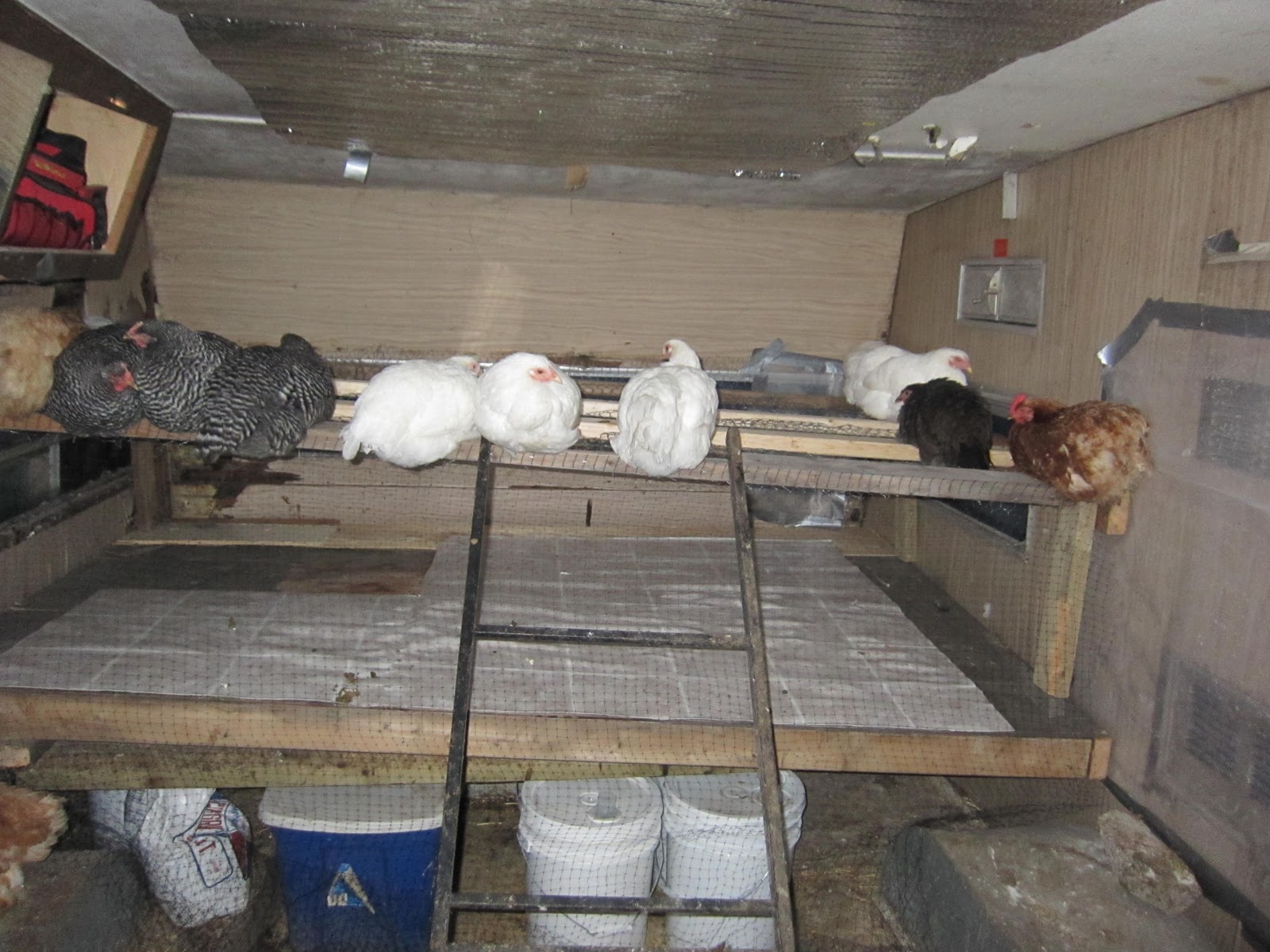
Aaron finally made it to this past weekend to do the improvements at the coop. He and another member built the ladder roost with a poop drawer. They built the roost and use mesh to keep the birds from getting underneath it. There is netting that prevents the birds from getting underneath and below the poop deck is storage for food and supplies. I went out later in the evening after the improvements were complete to check on the birds and see if they were using the roost...
|
| New roosts with poop deck. Underneath there is storage space for food and supplies. |

|
| Nest boxes, grit feeders on right wall... birds all huddled together unable to get onto the roost. |

|
| Here is the straw bale outdoor coop. There is a hole in the side of the main coop to allow the birds to enter and exit as they please. The white angled structure is covered with a tarp which is over the hole to prevent the birds from getting snowed in over the winter months. |
Once we noticed the birds unable to get onto the high roost we decided to build a ladder so they could climb easier. The following night 4 more made it onto the roosts; hopefully in time more will find their way up there.

Posted by Sarahat 11/14/2011 Take a stand!
Lately I have been wondering where our voices have gone. I understand that not everyone will find something that they have a passion for (the ones who do will lead the way) and many working families do not have time to dedicate fully to a cause. But what about simply having an opinion! People do have opinions about issues once informed ( I hope). Lets use animal cruelty as an example, even more specifically Rhino poaching. Now if I were to tell you that dogs or cats were near extinction and that their population is so diminished that it likely will not recuperate... what might you say, better yet, what might you do? The rhino population has in fact declined 90% since 1970 and their population will likely not recover from this decline. I had no idea this was even occurring until just days ago, where the hell have I been?! To top it off, just this week the Western Black Rhino was officially declared extinct! Now, the Rhino's extinction will not directly and immediately impact my day to day life and so maybe I should not be overly concerned with this news... or should I?? The answer is I SHOULD! If your neighbour was running a meth lab out of his/her basement I bet you would have a voice! Why does it need to negatively effect people for them to care enough to have a voice!?!
Now, one single person cannot ever be abreast on all the issues that plague our world but lets think about the ones you ARE AWARE OF! (ex: Global warming, war, poverty, etc.) Supporting an issue does not mean that you must donate money and hours of your time. Not everyone is in a financial situation where they can give to many or any causes. Simply sending emails, spreading news and information and vocalizing your support IS STILL SUPPORT! It does not take long to "fan" a page on facebook, start a conversation about an issue or cause with friends and coworkers or shoot off an email to people of influence. If everyone in Canada made their voices heard about every issue they had an opinion about think of how much good we could do as a country! Those with influence could help, those with funds could support and those with a voice would be heard and that is how change happens! I am not going to start a local campaign to support the Rhinos but I will speak to the issue and spread the word.
I can't resist but to mention backyard chickens here... It is my belief that the majority of people don't mind if a neighbour were to keep backyard hens and that if those who are opposed were to be educated about backyard chickens they too would be supportive. I believe this whole heartedly! I can give you a dozen+ news articles from the past few years about backyard chickens. With all the news coverage I would assume that the majority of people have heard about people wanting to keep chickens. If everyone within a city/town were to make their voices hear.. whether in support or not, imagine how simple it would to have change! As of now, it is those who want to keep hens and those who are totally against them that have a voice. When people read the news articles and say "Oh, thats really a shame they had to get rid of their chickens, who cares if they want to keep a few chickens." THIS DOES NOT HELP ANYTHING! People need to stop saying "oh, thats too bad." with regards to every single issue they read about. "That's too bad." is what's wrong with society. If you support a cause... make it known! With regards to Backyard chickens, if you don't mind them... let your town/city know about it! Just because you don't plan to have them in your yard doesn't mean you shouldn't have a voice.
I guess what I am trying to get at here is.... when you read your local paper and hear about an issue-form an opinion and have it heard. When you go to the grocery store and they have a box for canned food donation-throw in a $1 can of beans. If you go to throw away your clothes-think about those less fortunate and donate them instead! There are many ways in which we can make a difference. When you buy food-think about where it came from and what might be in it. As you try on apparel made from animal skin-remember where they came from. As you drive by the next construction site for a big box store or new strip mall-remember what used to inhabit that land. Not all causes need to save the world and not all activism needs to be major. It starts with one and for every voice that is heard... other minds start turning; its a chain reaction. Take a stand!
Posted by Sarahat 11/14/2011 0 comments

Labels: Chickens
MONDAY, NOVEMBER 7, 2011
Lots going on over here!
We have been trying to get out to the chicken coop as often as possible. We still try to go twice a week. We brought Owen out there recently and let him collect some eggs.


|
| Owen collecting some farm fresh eggs! |
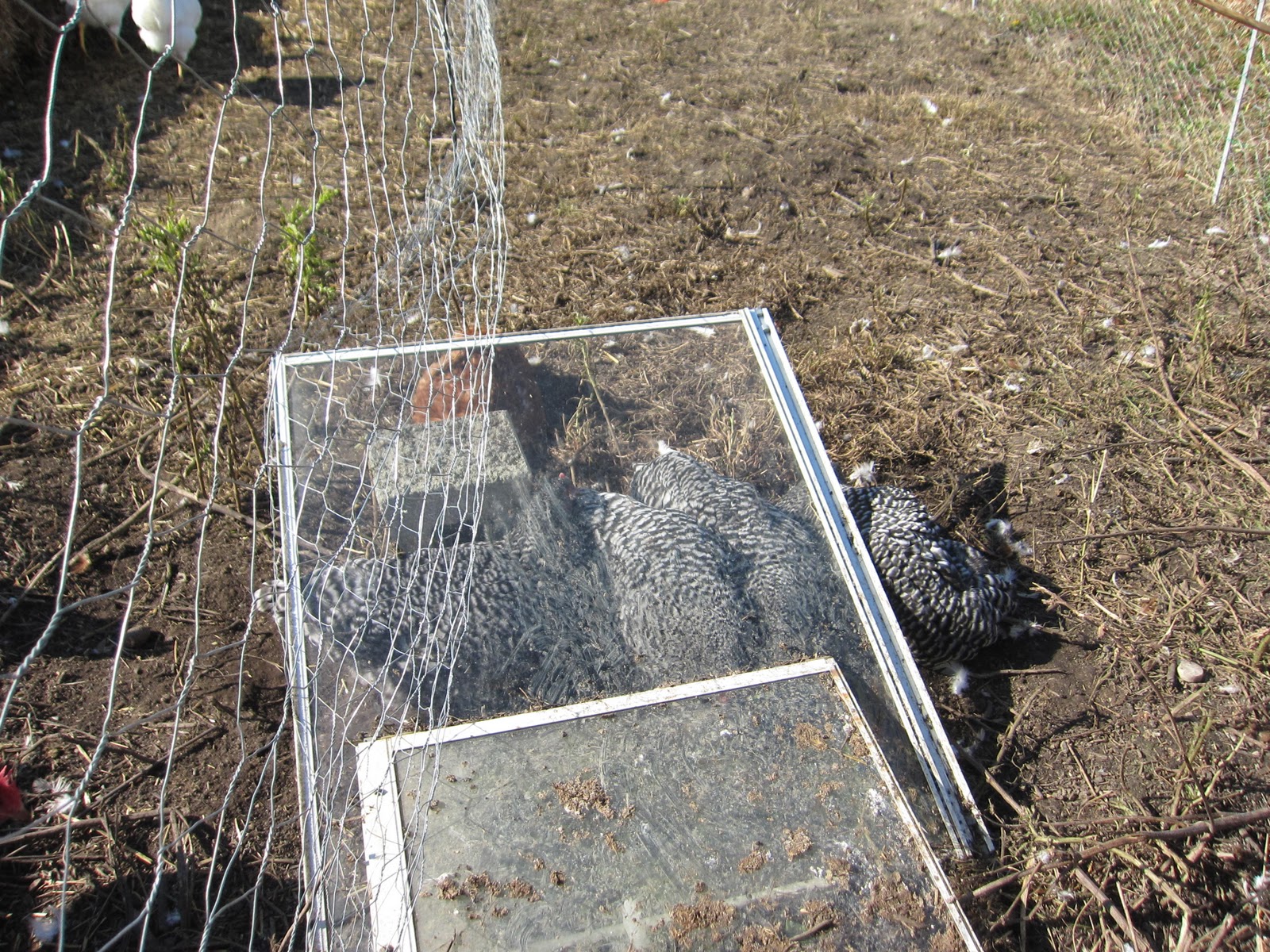
Some other things going on at the coop... the run was extended and there are suppose to be 3 separate areas in which the birds would alternate depending on where we allowed them to go. They decided they would venture into all the run areas by digging and slipping under the fence. The birds were not able to get back to the original run and therefore, not able to return to the coop. Someone propped up the fence to allow them to go from run to run without getting stuck just until there was a solution.
|
| Our birds found a perfect place to dust bathe... together of course! |

|
| Under a window below the fence that was suppose to separate 2 run areas. |
Posted by Sarahat 11/07/2011
FRIDAY, OCTOBER 28, 2011
Chickens New Home
I just realize that I haven't posted about my Chickens new home yet, so here it is:
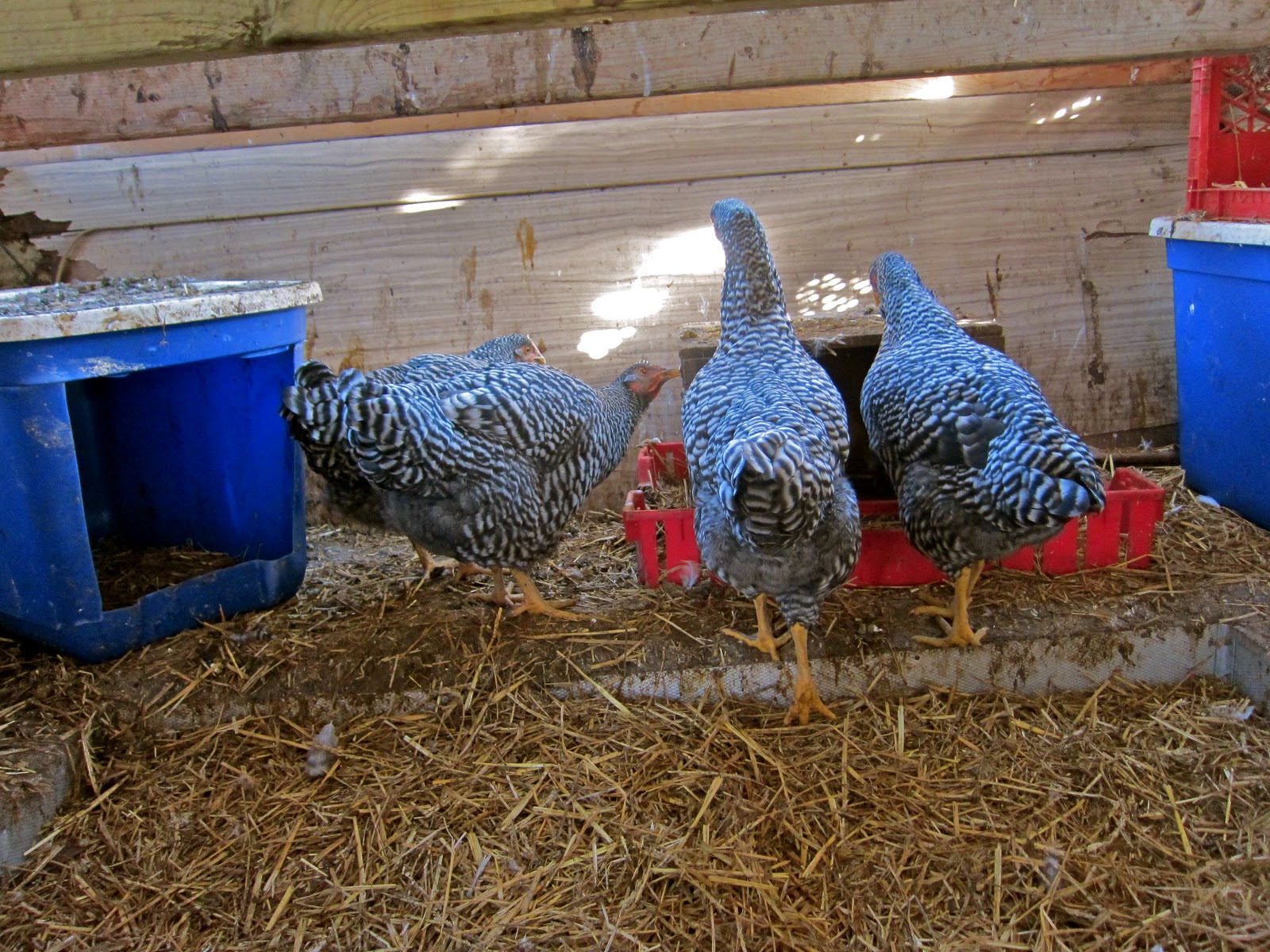
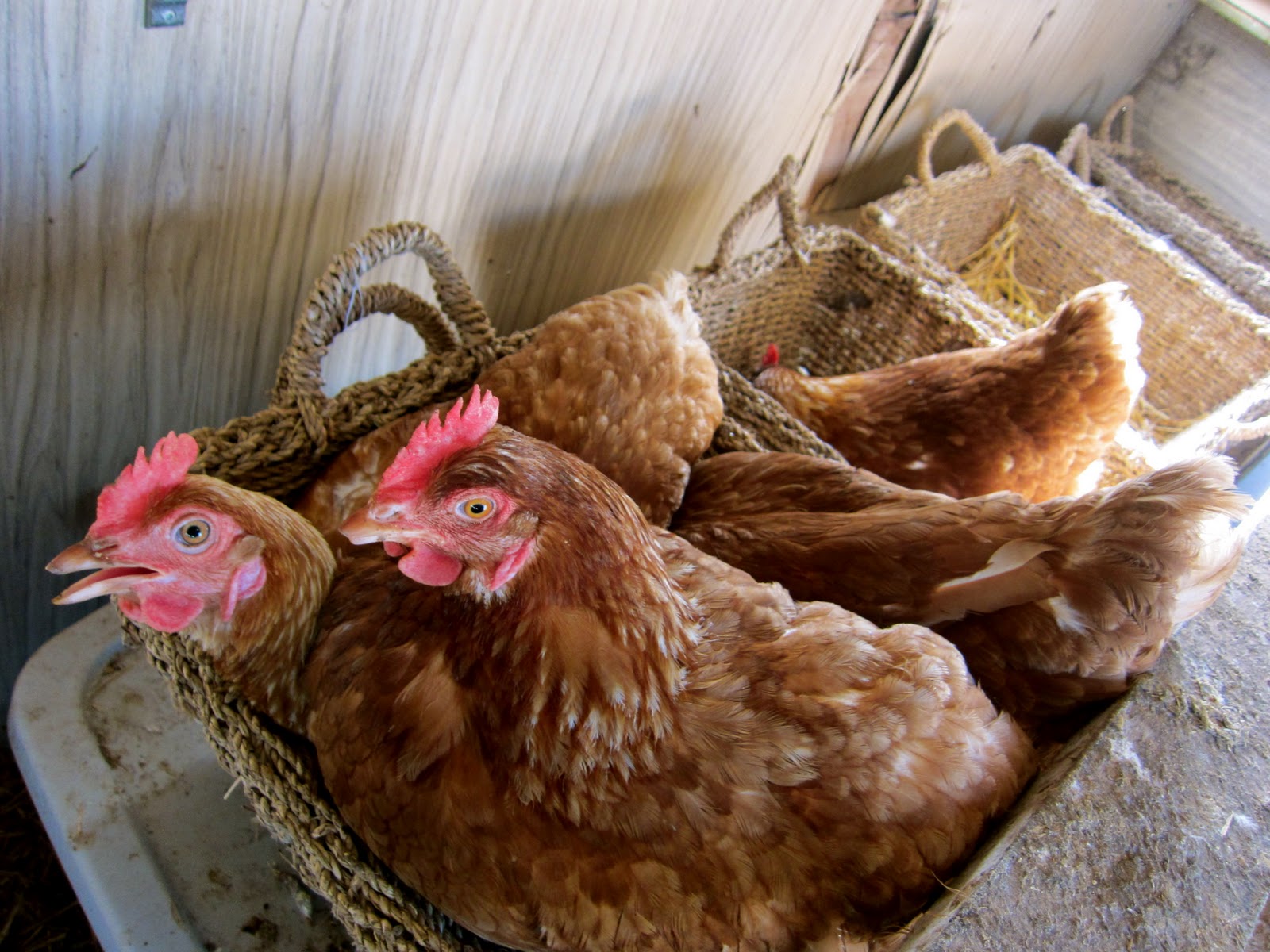
They are now living at the Windsor, Essex Coop Cooperative. They run around with 31 other birds and live in an old trailer for a coop... not too shabby! It's about a 15 minute drive, at most, and we go at least twice a week. I often stop by during the day when on my way into the city to give them a few treats and some love and cuddles. I had been very nervous about my ladies getting along with the existing birds but it took no more than a few days and they were making friends. My ladies stayed in the coop for the first few days only venturing out at odd times. I had witnessed one of my ladies running out and getting picked on quite a bit from the other birds. Although, this didn't last long. Within a few days they were seen running around with the other birds and having no issues whatsoever. There had been some Chanteclares introduced a few weeks prior to ours and they never left the coop until my ladies were there. I think once they saw my ladies running around outside they decided they should head out as well. Everyone seems very happy together.
The Cooperative plans on keeping the coop and chickens all winter long and so we will now be hiking out in the dead of winter for the birds. I don't mind much, but hopefully there are no major issues with the cold and ice. I am not sure what the plan is for the waterer... hopefully it doesn't freeze solid inside the coop. They winterized the coop by covering it with plastic tarps to keep drafts and such out, but there are areas for venting. I think we will all just take it one day at a time and concur the challenges as they arise. That said, I was very glad to see where my birds had decided to roost. They are on the highest shelf. It is a wide shelf so they can tuck their entire feet and legs under their bodies without any hanging over an edge. They also are enclosed a bit since there is an immediate top and sides around them so they can huddle together, as they do anyhow, and keep warm. I remember when we brought our ladies there, some of the existing birds had definitely been roosting on that shelf; they definitely got the boot once my ladies got there. Now, I have read that the highest rooster are the "boss" but I am not sure if that is fact but I know one of my girls, I like to call her Sophia, is definitely a bossy bird. I have seen her out in the run putting others in their place when I throw some scraps... its nice to know I raised a natural leader.

|
| Day one. We had them in their own small area for the first few hours. |
|
| Checking out their new digs. |

|
| Roosting! |

|
| Crazy Chanteclares. |

|
| Pretty Girls! |
|
| Too many production birds in one nesting basket. LOL |

|
| 3 peas in a pod... or, 3 chickens in a basket. |
Posted by Sarahat 10/28/2011
FRIDAY, OCTOBER 7, 2011
Birdie Updates.
Oh My Gosh! The Chickens are digging! They have started to dig a hole that goes under the fence. It is definitely the chickens since the hole is massive from the inside of the fence. They got it big enough within the yard that they can back up their bums against the fence and scratch back and throw feathers and dirt out from under the fence. We stuck a brick in the hole to keep them from digging any further. My guess is they found an ant farm or potato bug village! Yesterday I didn't see them doing this, but then this am I saw them doing it in the whole within the yard but unable to get against the fence to kick out. These 4 birds are very clever! People always say chickens are the lest intelligent animals, but if they were to spend any amount of time around them... in their natural settings (battery cages are not natural nor in 500 hens stuffed into a small barn) they would see how intelligent these birds actually are!
In other news, we have decided to move our birds from our yard. BUT WAIT, it is for a good and exciting reason! We believe we will be getting an offer on our house early next week. We think it will be a house to sell offer, but an offer none the less. This being said, we want to have the chickens and their things out of the side yard so we can clean it up for the perspective new owners. We have not been asked to do this, we just feel it is the right thing to do. We don't want to leave a muddy mess for anyone once the blocks and coop are removed. It will also allow our wonderful neighbours (cough, cough) to feel they have been victorious! Not that I want them to feel as though we have given into their bullying, but at the same time... I WILL NOT change my behaviours because of them. If the complaint had not been made and everyone loved our chickens, we would still want to move them to clean up for the potential new residents. Leaving the chickens there up until the day we move would only be out of spite and not wanting the neighbours to feel as though they have won; this is not fair to the new owners and I refuse to jeopardize my personal integrity and beliefs. Plus, as I am seeing it... WE WIN! We will not only get the home and property of our dreams, but we will be healthier, happier, and far more self sufficient!
Now, our ladies will not be far from us and we will be able to go visit whenever we wish and even collect eggs. We are now part of the Windsor Coop and the Community supported agriculture. They have a coop with 25 or so hens that we will have our birds added to for the time being. Once/if we get our new place we will build a large new coop for our birds and bring them home where they belong. We would also remain a part of the Windsor Coop and CSA for the community aspect as well as learning and sharing ideas. Being part of a CSA is a great way to teach children and yourself about community and agriculture.
I am becoming more hopeful that everything will work out in our favour. Country Living... here we come!
Green Acres is the place to be
Farm living is the life for me
Land spreading out, so far and wide
Keep Manhattan, just give me that countryside!
Posted by Sarahat 10/07/2011 Farm living is the life for me
Land spreading out, so far and wide
Keep Manhattan, just give me that countryside!
THURSDAY, OCTOBER 6, 2011
Having Urban Chickens will Attract predators.... HOGWASH!
After coming home from our vacation, I went to speak to our neighbours (chicken complainant). They had threatened my Mom in front of my kids about our dog barking while walking by their house. I decided that was enough of all this insanity. The gentleman began telling me about how my birds feed is attracting fox, snakes and rats into the neighbourhood. Funny thing is that he had told us in June, prior to us getting chickens, that he saw a fox running down the road! This was back when he was petitioning against a feral cat cage going up at our local park. (I will say, I signed that petition due to the fact that there is no evidence of the effects a feral cat cage would have on the neighbourhood and it was very unclear what the future plans were for upkeep of this cat cage.) Seems to me like the neighbour likes to use some good old fashioned fear mongering to achieve his own agenda. While discussing this issue with him I was very polite and just said "I will look into that and talk to Aaron about it tonight." He has also been spreading his beliefs throughout the neighbourhood and gaining support.
What is astonishing to me is that people will take one mans word as factual evidence. They listen to what he has to say and go off half cocked and complain about the birds. Not to mention the fact that they are accusing me of endangering the children of this neighbourhood as well as my own which is something I find highly offensive. The FACT of the matter is URBAN chickens nor their feed attract predators or vermin any more than a bird feeder hanging in ones tree, a trash can at the side of the house or a yorkshire terrier in ones yard. (We did plenty of research prior to getting our birds.) I am not keeping 200 chickens in my yard. We have 4 urban hens who attract no more predators or vermin than small dog breeds, cats, local rabbits, local birds and our trash cans. I believe I gave many of my neighbours far too much credit. I assumed that they would, at minimum, spend a few minutes researching urban chickens online prior to making complains or believing one mans opinion. With the wealth of knowledge that the internet provides us there is no excuse for people not to take the time to educate themselves on an issue prior to jumping in head first. I know they have not done any research because they will be hard pressed to find any research or evidence to support their claims. I do understand their fears but that does not make them rational... like most fears, they tend to be anything but rational! I, on the other hand, have done my research and can provide many links supporting my statement that:
"Urban Chickens do not attract predators!"
Support of this statement can be found here:
http://www.eatwhereulive.com/chicken_ordinance_report.pdf
and here:
http://www.sailzora.com/Frequently_Asked_Questions.htm
and here:
http://en.wikipedia.org/wiki/Urban_chicken
and here:
http://www.scribd.com/doc/16509728/Changing-Your-Citys-Chicken-Laws
and here:
http://urbanchickens.org/files/Ordinance%20research%20paper.pdf
"ME? Attract Predators? WHY I NEVER!"
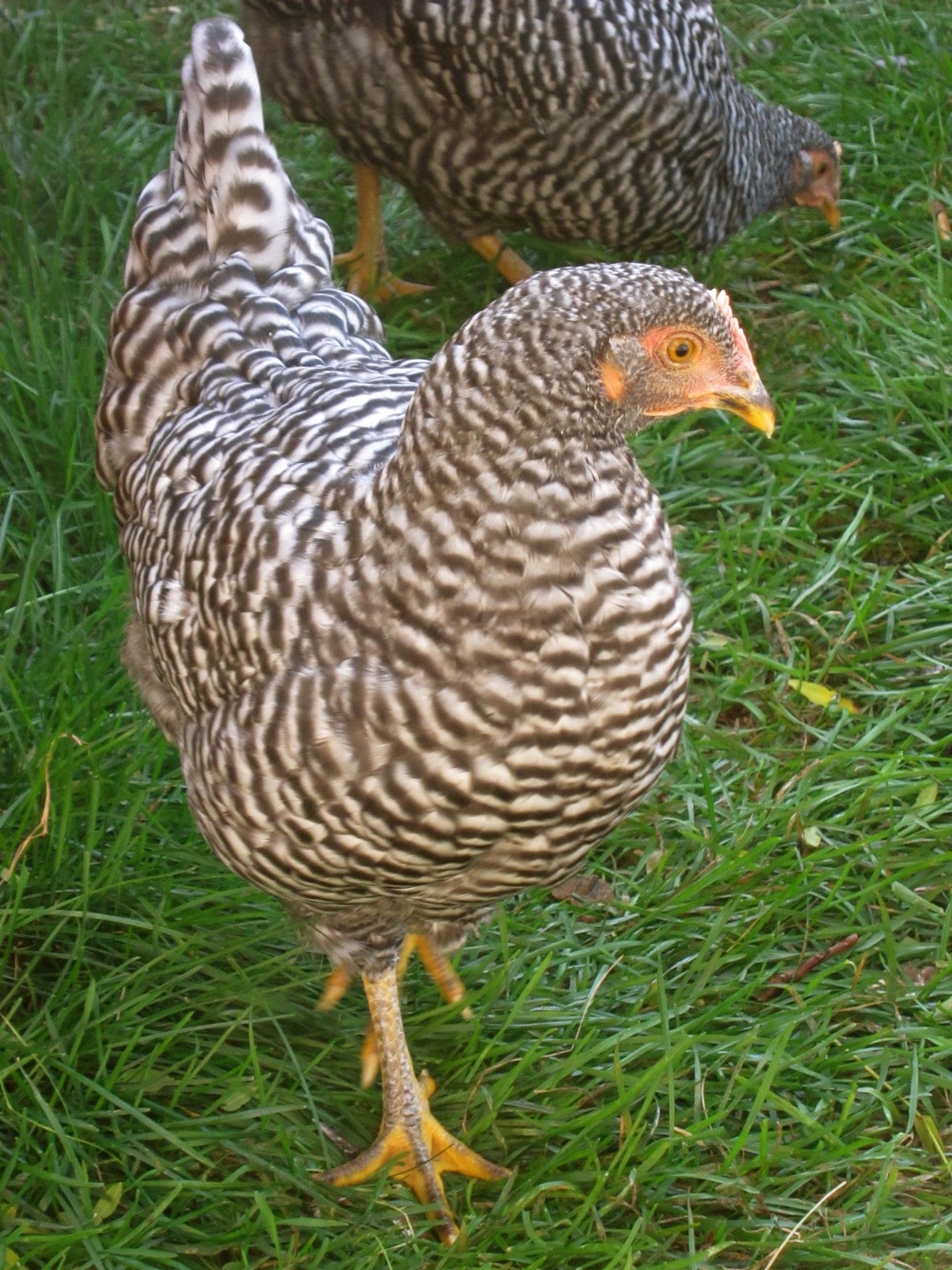
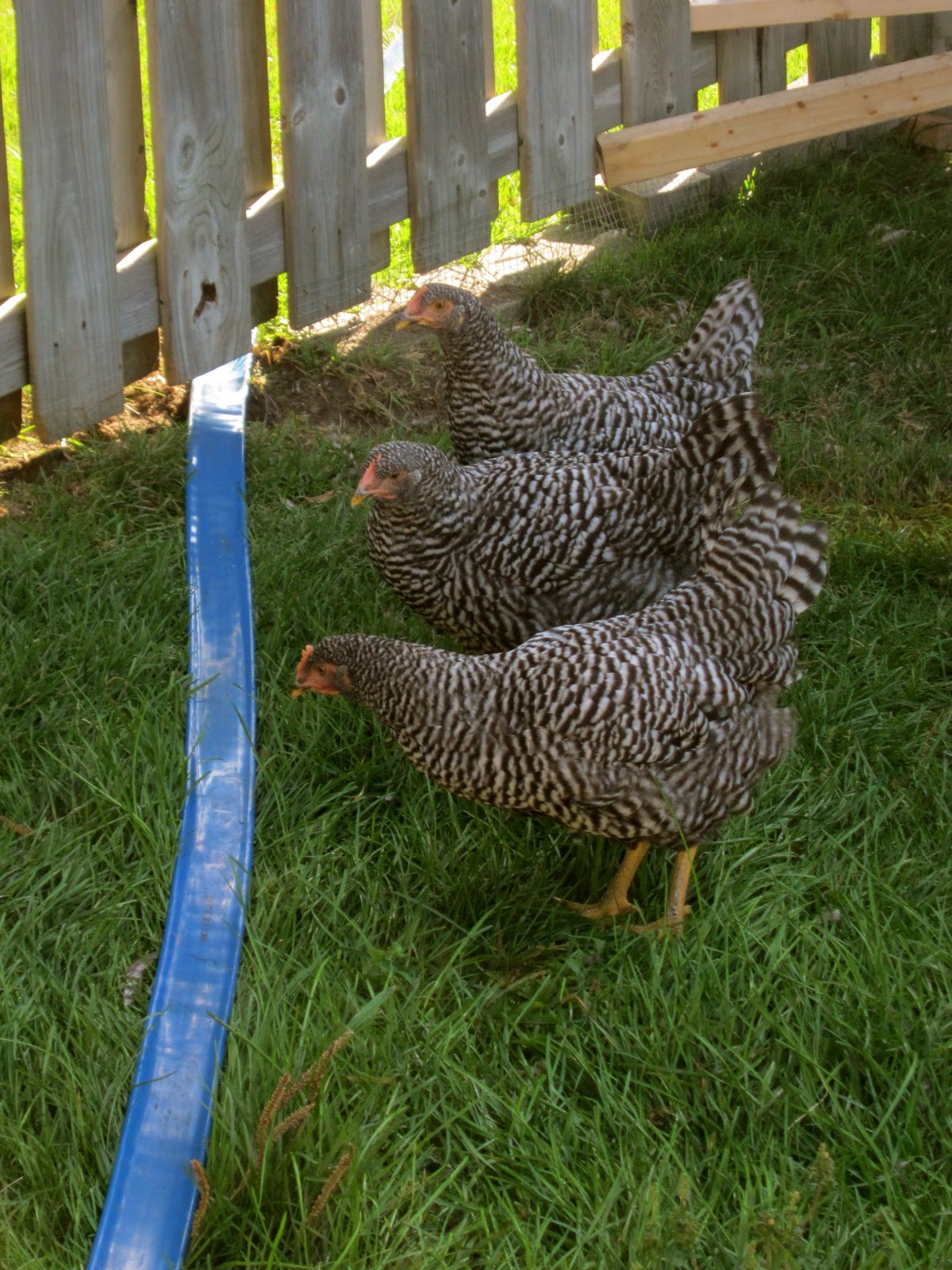
... now, I could continue, but I think most readers will get my point. I can't leave out the fact that we do have many supporters in the neighbourhood. When told about the claim that my chickens were attracting predators, many people did get a good laugh. The most common response is "Do they not see where we live (as they point to the big open field), the predators have always been here!"
I am not denying that there may be an increase in predators and vermin in the area; this I am not arguing. The thing here is, it is fall and locally we have had a record amount of rain! RAIN! YES RAIN! A far more likely culprit for the increase in unwanted wildlife. Rain causes the ground to get... WET and where do the vermin and predators go when the ground and bush are soaked???.... out of the bush and into residential areas! UREKA! We have a reasonable and rational cause! Blaming my chickens for this is giving them far too much credit. Plus, lets not forget the increase in local housing construction which is taking up plenty of the field area in which many vermin have their residence.
Now, how do I go about informing my neighbours about their ignorance? (I use the word "ignorance" lightly as it is defined as a state of being uninformed. People often see it as something far more offensive.) I do not have the time to stand at the end of my driveway and spout off to every person who happens to walk by. I thought about hanging a flyer on the mailbox to help inform people but assume it would be ripped down... since people are so willing to listen to reason (sarcasm). At this point, I think I will just leave things as they are and allow the neighbours to be ill informed and ignorant of the real issues. I can only be bothered with educating my children and close friends and family... my neighbours can go on thinking whatever the heck they want; until they come to me with EVIDENCE of their claims, I have nothing else to say.... unless they bring it up of course.
Posted by Sarahat 10/06/2011
THURSDAY, SEPTEMBER 22, 2011
Food... Hot Topic. (Beware: RANT)
When we think about food most people think grocery stores, super markets and even fast food restaurants. Why is that?? Cheap, packaged, mass produced... hormone filled, antibiotic rich, preservative abundant, corn derived, chemically altered, genetically engineered grocery store foods ARE NOT GOOD FOR YOU! Not only are they not good for you but lets not get started on the treatment of the animals at the massive factory farms which supply our local grocery stores with their meats, eggs and milk.
When I think food, I think AGRICULTURE, gardening and animals. Which in turn gets me thinking LOCAL and COMMUNITY in terms of farmers markets and local stands. Then on to SUSTAINABILITY and horticulture and then I move along to nature, outdoors, dirt, insects, heath, wellness, I could go on and on of my train of thought. If we asked our ancestors what they think about when we say "FOOD" what do you think they would say? I think they would say something along the lines of "gardening, trade, work, sustainability, and life".
Our desire for MORE has led us astray. Big corporations have made millions by sucking the life and nutrition out of food. People spend hundreds, even thousands of dollars on "food" each year. They purchase boxed meals, frozen prepared meals and very little fresh, local foods. Grocery store advertise LOCAL FOOD! Take a look at this "Local Food". Most often it has still travelled hundreds of miles to get to the grocery store. Our local stores say "Ontario Fresh" or "Canada Grown" and other such buzz. Take a closer look at the labels and see where this food comes from. Most often is it still from hundreds of miles away. I saw "Local Ontario Pears" from Jordan, Ontario which is approx 3.5hrs away and "Canadian Blueberries" from British Columbia! Now, we have blueberry fields locally but people will still purchase blueberries from B.C which is, by the most direct route , approx. 4000kms which translates into 40hrs of driving... 40HOURS!!!! Imagine the resources used in this distribution. The harvesting, packaging, transporting and then selling of the berries. Now think about this with regards to other things. Some coming from across the world... things we can grow and produce locally! They say most places in the world could be relatively self sufficient with regards to food. Imagine such a world; the resources saved!
Don't get me wrong, this is a start! Yet, it is nowhere even close to where we should be. Food should be truly fresh and local. This means produced within one hundred miles or so from your home. People often then ask "What about during the winter months?" What do we think our ancestors did??? They certainly didn't all live in the southern climates. What ever happened to natural, healthy food preservation such as canning and freezing? The cold cellars full of local and self produced foods are a way of the past??? NO! They are the way of the future! This sort of convenience first, the environment and self sufficiency last mindset is not healthy for people or the planet. We need to start thinking about the future of our children and our planet.
Can one even have any sort of food sustainability in an suburban residential area? Local bylaws are restricting raising livestock and poultry, growing vegetable gardens and even canning foods which may be classified as a Food Processing Plant. This is ridiculous! We live in a society which is being held captive with regards to our food choices and most people are totally unaware of it. So I pose the question, DO WE HAVE THE RIGHT TO FOOD? If you are part of the united nations... you do! Does the right to food simply mean you have a right to purchase food from the grocery store which the elected government (may not even be who YOU voted for) controls and regulates, regardless of our individual political, ethical and religious beliefs. If this is the case we DO NOT have the right to food. If we truly have a right to food, which I believe we do, then this in turn means that we have the right to grow and raise our own food! Towns and cities do not have the right to tell us we cannot produce our own food for our families. If I want to have chickens for eggs, goats for milk and a lush vegetable garden I CAN! As a Canadian Citizen I have the right to food!
Some evidence to this:
Our Canadian Charter of Rights and Freedoms states in section 7:
"Everyone had the right to life, liberty and security of person and the right to not be deprived thereof except in accordance with the principles of fundamental justice."
Security of person:
In 1982, a right to security of the person was added to the Constitution. It was included in section 7 of the Canadian Charter of Rights and Freedoms, Security of the person in section 7 consists of rights to privacy of the body and its health and of the right protecting the "psychological integrity" of an individual.
Also in the International Covenant on Economic, Social and Cultural Rights states in section 12:
"The States Parties to the present Covenant recognizes the right of everyone to the enjoyment of the highest standard of physical and mental health."
United Nations Economic and Social Council (COMMITTEE ON ECONOMIC, SOCIAL
AND CULTURAL RIGHTS) also has released this document outlining the right to adequate food and states :
"The right to adequate food is realized when every man, woman and child, alone or in community with others, has physical and economic access at all times to adequate food or means for its procurement.",
"The Committee considers that the core content of the right to adequate food implies:
The availability of food in a quantity and quality sufficient to satisfy the dietary needs of individuals, free from adverse substances, and acceptable within a given culture;
The accessibility of such food in ways that are sustainable and that do not interfere with the enjoyment of other human rights."
and
"Free from adverse substances sets requirements for food safety and for a range of protective measures by both public and private means to prevent contamination of foodstuffs through adulteration and/or through bad environmental hygiene or inappropriate handling at different stages throughout the food chain; care must also be taken to identify and avoid or destroy naturally occurring toxins."
Then there is Canada's Action Plan for Food Security recognizes food as a basic human right stating:
Promotion of access to safe and nutritious food is seen as a critical component of food security.
Also, the Supreme Court recognizes the right of Aboriginal peoples to traditional food gatherings but not the rights of other Canadian citizens to raise and produce their own food. It is mind boggling!
This is not to say that Towns should not be able to regulate food laws. I do believe that they should be regulated and reasonable. Lets face it, some people can get out of control with things. Having 50 chickens, 4 goats, 4 bee hives and a cow on 1/4-1/2 an acre is not reasonable let alone fair to the animals. Regulations are necessary, but must be reasonable! To tell us we can't is not reasonable or just.
Now lets look into why there are laws that restrict us from growing and producing our own food? The answer is not what most people think. It has NOTHING to do with health and the good of the people. Instead it is an old view based on Class and status! (suburb info found here p.5)
When the modern Suburbs were being developed, it was during a time where people wanted to define themselves. The rural communities and farming communities were seen as unfashionable. Those who sought to live in the suburbs were not wealthy enough to live in the cosmopolitan areas but did not want to be associated with the rural farming communities. Thus, the Suburbs were born! You may notice that most suburban areas have no sidewalks. This was due to the sidewalk being associated with the lower class citizens who were unable to afford vehicles (why would you walk when you could afford a car?). The keeping of livestock and food producing crops were seen as unfashionable and lower class as well. The problem was not that livestock was a health risk or a nuisance but that it was not modern, cosmopolitan and sophisticated.
In conclusion, let me just say that urban farming, including urban livestock, is the way of the past and the way of the future. We need to look past our noses and see the reality of our current food situation. Our food habits are major contributors to our growing obesity rate, increasing negative environmental impact.
The time for change is NOW!
Peace.
Posted by Sarahat 9/22/2011
TUESDAY, SEPTEMBER 6, 2011
Moving... maybe.
We have decided to try to sell our home. We found a beautiful home in the county of Lakeshore. It is a century old farm house that has been redone which sits on 1.7 acres of land surrounded by farmland. This home would be perfect for us to have a small orchard, plenty of garden space, large chicken coop, duck pond, a few goats and even an ice rink in the winter months for the kids. We put an offer on the home and are now trying to sell our current place. We had the "For Sale"sign put in the front yard this morning and hope to sell fast. If we are unable to sell our home we will be staying put. Either way, we will be happy with the results. If we are unable to move we will be fighting the bylaw that outlaws chickens as unconstitutional. In the meantime we will remove our birds so that an ongoing court battle and outstanding bylaw infraction ticket doesn't get in the way of us moving. If we lose the house we have the offer on we will quickly take our home off the market and bring our birds back to fight the bylaw.
Posted by Sarahat 9/06/2011
SATURDAY, AUGUST 27, 2011
To move or not to move?
Aaron and I have been talking about moving to a larger piece of land for a long time now. With the most recent events in our lives we can't help but feel it is a sign to go for it! Our local government authorities are not allowing us to live the lifestyle we want. If we are not able to supply our family with fresh, hormone free, pesticide free, preservative free and additive free foods then I can't help but think that this is no place for us to be living! Our residential subdivision seemed like the perfect place to raise a family. We are out of the big city, out of the town proper and assumed we could have some sort of self sufficiency while living here. We were very wrong. If someone were to complain about our vegetable garden we would actually have to get rid of it!!! Can you even believe that?? What has this world come to when we can't even grow some vegetables and raise 4 hens to feed our families? I read another blog, Trinity Acres, and what an inspiration she has been. In the last year they have moved out of the city, started raising and growing nearly all of their own food and recently the husband quit his job and they will be living off the land! With all of these things happening around me, good and bad, I feel as though it is the universes way of telling me to save my family from this lifestyle and get back to LIFE!! There has been a match burning in my belly for a while and it finally touched some paper and kindling and is ablaze! I am very motivated and hopeful that over the next year Aaron and I can find our dream home and get out of this poisonous suburbia. That will be the log on my fire!
Posted by Sarahat 8/27/2011 0 comments
Labels: Chickens, Vegetable Garden
Chicken War Moves to Kingsville, Ontario
This is the most recent article regarding the local battle for Urban Hens. Aaron and I will be, hopefully getting into a town council meeting to present our case soon. Kingsville is already one step ahead. Go Urban Chickens!!!
Chicken War Moves to Kingsville
August 25, 2011. 1:28 pm •
 Sarah Kacso holds one of her chickens in her backyard during an open house in Windsor on Sunday, November 14, 2010. Supporters of urban chickens were on hand to answer questions about the benefits of raising chickens. (TYLER BROWNBRIDGE / The Windsor Star)
Kingsville hosts the next battle in the urban chicken war when town council on Monday is expected to be asked to endorse the keeping of backyard hens for personal egg consumption.
It follows by weeks the chicken crackdown in Amherstburg when a young family was ordered to remove its hens following an anonymous complaint.
After Sarah Noemi Kacso and Colin McMahon brought some egg-laying chickens to their Windsor city home last year, they were so thrilled and so convinced of the logic of this immediate source of fresh, healthy, cheap and nutritious protein, not to mention the friendly, quiet demeanor of the feathered critters and their popularity with kids on the block, that they plugged into social media to broadcast the benefits. Their neighbors were fine with the idea, but, again, some anonymous prig alerted the authorities, and Windsor’s bylaws, while seeing nothing wrong with the harbouring of 80 pigeons per household, were followed to the letter in banishing the hens.
Note to the self-appointed backyard police: are you aware Windsor’s bylaws also expressly prohibit depositing scooped-up pet litter or even soiled baby diapers into the trash?
For the life of me, I cannot understand what all the chicken panic is about and why some local politicians and some local officials are struck with terror at the idea of someone in town or city keeping a hen or two (or even four) in their backyard.
The arguments against are ludicrous. My goodness, a hen today and then what’s next? Goats? Sheep? Cows? Horses?
Nope. Let those very few urban folk who so desire have some hens for personal and family egg consumption (no sales, no butchering, no roosters, no apartment dwellers). The poultry of the city slickers I know who have them don’t cause problems with smells, noise, disease.
Vancouver, which boasts the densest concentration of residents of any Canadian city, started allowing up to four hens per household last year, subject to some common sense conditions, and yet there’s still no heavy clamoring to add pigs and cows to the mix.
My own newspaper this week called editorially on people interested in backyard eggs to banish the thought and instead head out to the county to support the more than 1,700 local farms. Well, not one of those farms can legally sell you an egg at the door or from their roadside stands.
The people I know who are clamoring for city chickens are also very much the types who support local farmers. That’s the whole point – it’s about food security, both in ensuring the ongoing economic viability of close sources of food and in promoting the improved health that comes from eating nutritionally superior, locally grown produce.
Check out some of those pushing for urban chickens – they’re not the Beverly Hillbillies (without the crude wealth), they’re young, urbane, savvy, health- and eco-conscious, brimming with new ideas and very much in tune with the needs of their neighborhoods and local economies.
They’re the kinds of people you’d want next door.
Posted by: Doug Schmidt
I could not have said it better myself; AMEN!!!
Posted by Sarahat 8/27/2011
MONDAY, AUGUST 22, 2011
A Dozen Reasons to Have Urban Chickens
GoodFood World Staff, May 26th, 2011
Thinking about a few chickens? Here are a dozen reasons why you should have them in your backyard:

Fresh, healthy, delicious eggs, free of pesticides and antibiotics.
- Cruelty free raised food.
- Chickens eat table scraps, reducing municipal solid waste.
- Chickens produce a rich fertilizer by-product, high in nitrogen, eliminating the need for petrochemical fertilizers.
- Chickens eat bugs, reducing our backyard pest population.
- Keeping heritage chickens increases numbers of endangered breeds that have been replaced by industrial breeds; we need to preserve our genetic diversification especially in food production livestock.
- Backyard chickens contribute to a zero mile diet as they are as local as your backyard.
- Keeping chickens is an efficient food source as eggs are rated by the UN Food and Agriculture as a more efficient source of protein than the other four top sources, higher in value than cow’s milk, fish, beef, or soybeans. A chicken coop can be as small as 1 square meter (10 square feet) for a confined full grown large breed; eight chickens can fit in a coop that is only 10×6 feet.
- Keeping backyard chickens puts you in control of your own food source and we can access eggs year-round even when we cannot garden or in the event of disruptions in the commercial food delivery system. The UN FAO has stated that the right to food is a basic human right.
- Chickens make great pets as they are affectionate, intelligent, and entertaining.
- Children and adults receive a rich education about food sources and responsible animal keeping when they keep livestock and that teaches a positive relationship and respect for food. Knowledge and respect for food encourages healthy weight maintenance.
- Keeping backyard chickens is a historic tradition that has been recently phased out in favor of profit driven commercial food delivery. Keeping livestock is a traditional and basic survival skill. Common knowledge of basic survival skills increases the recovery of a population after a disaster.
THURSDAY, AUGUST 18, 2011
No Chickens? We're Moving! Article
Last Friday I was also on a local Country station 95.9fm. I did the interview over the phone Thursday and was not able to listen to the airing. There was an article written on their webpage about the interview. It was as follows:
NO CHICKENS? WE’RE MOVING!
August 12th, 2011 . Blackburn News

Sarah Lock says she investigated whether she was allowed to keep chickens before she brought them into her home six weeks ago. The town has a bylaw banning residents from breeding farm animals in a residential area. Since that wasn’t what Lock’s family had in mind, she next emailed the town’s bylaw enforcement office directly. When she didn’t get a reply, her family picked up the chicks, then just two weeks old.
The controversy exploded when a bylaw enforcement officer visited her home this week and told her a neighbour had filed a complaint and that the dispute “could escalate.” The officer didn’t expand on that point but made it clear, the chickens could not stay.
Lock says she got the chickens to teach her two young children where their food came from and her three year old son has grown emotionally attached to the birds. She says she wants to keep them on principal and will fight the town’s ban on live poultry, but likely from another address. A real estate agent came to her home yesterday to discuss how much the property is worth on the market.
Story by Adelle Loiselle, Blackburn News.
The photo was taken from my facebook profile without my knowledge.
Posted by Sarahat 8/18/2011
WEDNESDAY, AUGUST 17, 2011
Local Paper
The Amherstburg Echo released an article about our chicken story in this weeks issue. On the Amherstburg facebook page we received much support from the locals. The article was well written and the towns response was ridiculous of course. We shall see where this all goes. We are certainly calling out the town for their part in the issue as far as being unresponsive to our requests for information and not having the information readily available online.
The article reads:
Local chickens to fly the coop thanks to town’s orders
Lock family disappointed by town's orders
By Ron Giofu/The Amherstburg Echo
Posted 5 hours ago
AMHERSTBURG — Aaron and Sarah Lock had planned to teach their children where food comes from and to get fresh eggs.
The Park Lane Circle residents acquired four chickens July 5 and placed them into a coop in a small, fenced area on their property. Thanks to a complaint from one of their neighbors, the couple was forced to get rid of the chickens by order of the town.
The fact they were forced to get rid of their chickens was news the Locks found disappointing as they said they took consideration of their neighbors when acquiring the birds. Aaron said they bought four chickens and no rooster.
"We didn't want a rooster. They are noisy. We didn't want to disturb the neighbors," he said.
The coop is a portion of land located the furthest it could be from neighbors in the subdivision and Aaron said the location actually quieted the area down as their dog can no longer get to the fence and bark at pedestrians and other dogs. He said they have not had any smells or noise coming from the chickens.
"The cars are louder. The birds in the trees are louder," he said.
The town's bylaw officer called the couple Aug. 8 and attended the home Aug. 9 with a notice requiring the couple to have the chickens off the property by Aug. 16. Faced with few alternatives, Aaron told the Echo last week that they would likely turn them over to the same group in McGregor that a series of Windsor residents did when faced with similar chicken-related issues.
"We've had three or four people offer to take in our birds," added Sarah.
Aaron said they made an effort to call town hall in early June to see if it was legal to house the chickens in their subdivision but did not receive a response.
"We took that as affirmation," he said.
The Locks are unsure as to who complained to the town, but wished the person or people would have come to them first so they could have explained what they had planned.
"We were very disappointed when the complainant didn't talk to us," said Aaron. "I don't know the nature of the complaint. I don't know who the complainant was. We've talked to neighbors and they don't see an issue."
He said the chickens were "treated very well" and that not only would they have benefitted from fresh eggs, the manure compost was going to go into the Lock's vegetable garden.
"It's the whole cycle of food," he said.
Since they were told poultry is not permitted in the residential subdivision, the Locks are considering moving from the house they have lived in since 1997. They are thinking about moving to an agriculturally zoned area, although they considered their chickens both birds and pets.
"I think if we have to move based on this, it will be outside the town," he said.
Aaron said they never had any intention on selling any of the eggs or any other product and believed the town should be "progressive" like Vancouver and New York which he said are starting to allow urban chickens as long as there is no rooster.
"We're not causing anyone any harm," he said.
CAO Pamela Malott confirmed Monday night there was a violation. Malott received a complaint from a resident regarding the keeping or raising of chickens in the Park Lane Circle home.
"The identity of the complainant and nature of complaint, while known to town administration, is kept confidential," Malott said in an e-mail Tuesday morning. "Administration deals with any contravention to a town bylaw."
Malott stated that town staff met with the Locks Aug. 9 at roughly 3:40 p.m. adding
"they are keeping four chickens in their rear yard for the purpose of consuming the eggs the hens lay and to use the feces from the chickens as fertilizer in their garden."
The inspection disclosed the property to be in violation with the Amherstburg Zoning Bylaw 1999-52.
The keeping of "poultry in the form of chicken hens" in a residential area is not a permitted use, the town contends.
"We served Mr. & Mrs. Lock with a Notice of Violation granting them 14-days to completely cease the restricted use," Malott stated. "I am unaware of details of any contact they attempted to have with town staff."
Aaron Lock feeds his chickens in his Park Lane Circle backyard Thursday, August 11. The town issued an order against having chickens in the residential neighborhood.
Posted by Sarahat 8/17/2011
Chicken Update
I think we will be moving our chickens to a co op coop in the county this weekend. Since we have figured out who complained, I do feel obligated to knock on their door and tell them all about the abusive and despicable egg industry they are supporting. PETA has plenty of research to show how disgusting it is. People like me and my family are trying to change things and do what is right and those who want to stop us... should be ashamed!
poultry-and-eggs-industries-that-abuse-chickens
egg-industry
It is truely a disgrace how a bylaw can prevent people from supplying their families with quality, hormone free, pesticide free foods. Somewhere in our long history we have lost our way. Humans are destroying our own planet, foods and water supply with poisons and hormones and most of us don't even bat an eye lash.
Here are 3 of millions of links:
farming pesticide abuse
Poisoning our skies
Hormones and Poisons in our food
We are suppose to be the most intelligent creatures on the planet yet we are the only species who are destroying our own habitat. Our ancestors would be appauled by the state of things today. I can only hope that some day soon we get back to our roots and care about greater things than a well manicured lawn and a fancy gass guzzling SUV. What we need to be concerned about are things such as our environment, health, food and most of all our families. The future of our children is looking bleak... we need to change! We have only one planet and it needs to be saved!
Posted by Sarahat 8/17/2011
THURSDAY, AUGUST 11, 2011
So much Media
I received a call at 7:00 this morning from a local radio station, CBC Radio 1, and they asked to do a phone interview with me about our birds. Of course I said yes; I was glad to do it. I think I did a great job with this interview. I was informative and definitely made a good case for urban chicken keeping. In every interview so far I am sure to make mention on CLUCK (Canadian Liberated Urban Chicken Klub) since they have been more than supportive. I spoke about why we want chickens and also about the benefits of raising them not only for eggs but for educational purposes for our children. We simply want to provide our family with wholesome, nutritious, hormone free eggs and teach them all about the life cycle and about where food comes form.
We made the Windsor Star print as well as online. We were on A1 news and it was an amazing piece... very informative and "pro chicken!" They even interviewed people from within town and there was not one negative comment about the raising of hens for eggs in urban backyards.
We also have been in touch with 3 town councillors so far to speak about our options and changing the bylaw. We are very optimistic at this point in time, yet, only time will tell.
The Windsor Star Article:
A’burg family forced to lose chickens
BY DOUG SCHMIDT, THE WINDSOR STAR AUGUST 10, 2011
BY DOUG SCHMIDT, THE WINDSOR STAR AUGUST 10, 2011
Homeowner Sarah Lock with her son Owen, 3, feed one of four hens in the backyard of their home on Park Lane Circle in Amherstburg, Ont., Aug. 10, 2011.
PHOTOGRAPH BY: NICK BRANCACCIO, THE WINDSOR STAR
Sarah and Aaron Lock say they are contemplating selling their home and moving to a more chicken-friendly community if they can’t convince the town to let them keep their four hens.
Sarah Lock said she received a lot of positive feedback as soon as she began blogging about their efforts to get fresh, organic eggs on the dining room table, as well as about the opportunity it afforded to educate their two youngsters on where their food comes from.
But the couple got a visit Tuesday night from an officer after one disapproving neighbour referred local authorities to the Locks’ webpage at www.backyardchickens.com. An order was issued to get rid of the hens by next week.
“They’re quiet, they’re clean, they’re not negatively affecting people ... it’s so sad, so silly,” said Lock.
Before setting up a secured backyard coop and getting the hens in July, Lock said the couple tried for a month to get advice from the same bylaw office. Hearing nothing and noting the town’s bylaw permits household birds, as well as getting to know others who are raising hens, the Locks went ahead.
They learned this week Amherstburg’s bird bylaw does not include chickens.
“We could have three caged emus,” said Lock, adding her four barred Plymouth Rock chickens are quieter than the crickets in the grass of their Golfview Estates neighbourhood, they don’t smell and there is no intention of ever adding a rooster to the mix.
“We will fight to try and change the bylaw. We’ll either get our chickens back or we’ll move to where they’re allowed,” said Lock.
Calls by The Star to the municipality were referred to town CAO Pam Malott, who could not be reached for comment Wednesday.
On the same night as the Locks were ordered to get rid of their hens, a group of Windsor urban chicken lovers that formed after city council refused their request for backyard poultry received a $500 government award to expand their rural operations.
“Every time there’s a new food recall, more people are becoming concerned about their food supply,” said Philippa Von Ziegenweidt of the Windsor-Essex Coop Co-op Collective. The group, which began its egg-laying co-operative in the county in May, plans to expand its operations with more members and more hens after winning one of several grants handed out by the Windsor Essex County Environmental Committee, chaired by Coun. Alan Halberstadt.
Despite the city hall brush-off earlier this year, Von Ziegenweidt said Windsor advocates are “still keen on backyard chickens,” and she guarantees the group will return to lobby council to permit urban hens.
Ten local families belong to the co-op, which is using land offered by an Essex farmer in the spring. Members share in the chores and costs, as well as the eggs produced by 24 hens. The grant will go toward expanding the program to permit more families to join, said Von Ziegenweidt, adding there are no commercial sales.
“That’s how I grew up, with farm-fresh food,” said fellow member Sara Kelley. A Windsorite who was raised on a Harrow farm, she wants her children, ages three, six and nine, to know the advantages of fresh and healthy food and to know where it comes from.
For more on the local urban egg movement, visit the windsorurbanchickens.com blog or CLUCK: Canadian Liberated Urban Chicken Klub (Windsor-Essex Chapter) on Facebook.
more:http://www.windsorstar.com/life/burg+family+forced+lose+chickens/5237714/story.html#ixzz1VK72YEgp
Posted by Sarahat 8/11/2011
WEDNESDAY, AUGUST 10, 2011
Windsor Star is coming!
This afternoon the Windsor Star (Largest Local Newspaper) will be coming to take some photos and also did a phone interview with myself about the current Backyard Chicken issues.
I was asked why I don't erase the blog since it was part of the reason the chickens were discovered in our yard? Answer: It goes against everything I believe in. Raising Chickens is not something I am ashamed of or feel I should have to hide. Its about educating my children as well as others in the community and who may stumble across my blogs.
I am very glad that we are getting some support from the local media. This is an issue we plan on fighting for. Its not just keeping chickens in our backyard, its about understanding where food comes from, having some sort of sustainable food source and living a simpler more earth friendly way. This is much bigger than just having pet chickens in our yard!
Posted by Sarahat 8/10/2011
A1 News Interview
We had a visit from the A1 news today about our chickens! Aaron came home from work over his lunch and we both had a short interview about our backyard chickens. The man who conducted the interview actually grew up on a farm and had chickens and has very fond memories of letting them out of their coop and watching them run around. We spoke about the benefits of raising chickens and its educational value for the children. Aaron was a much better speaker than I; I was unbelievably nervous! I am just hoping I didn't say "umm" too many times and pause for to long to gather my thoughts. We shall see how it went tonight. Our story will be aired at 6pm and again at 11pm. The reporter wasn't sure if the story would be a piece done by him with some clips or if it will feature our interviews. Either way, our message will be heard by many locals and hopefully we are able to open some eyes as well as some minds and hearts.
As well as the media support, we have received some other influential contacts that are going to be assisting us with our cause and help us to keep our birds and possibly even change the laws against them. This is something that my husband and I feel very strongly about and we will fight for the right to educate our children and to make our planet a better place for our children's future.
Posted by Sarahat 8/10/2011
Ignorance!
We have recently had a visit form our local bylaw officer regarding our chickens. It turns out we are not allowed to have them. Even though I sent the by law officer an email asking if we could have chickens in our zone, he chose to not respond to my inquiry and now we are being forced to get rid of our birds. This IS NOT where this will end! We will be appealing this decision and fighting to keep our PETS! We have received much support form the chicken community, locally and abroad. We will be fighting to change this absurd law based on misinformation. We can house an Emu in our yard as long as it in caged but cannot have 4 clean, quiet hens for fresh eggs and to teach our children about wholesome foods. The complainant even went so far as to find my BYC Blog and forward it to the bylaw officer.
Some good news is that we have found a safe haven for our birds to stay while we work on changing this law. We will also be putting our house up for sale and looking at moving into an agricultural zone so that we will be free to have our chickens, goats and any other pets we choose to have enrich our lives. It really is a shame that this person will never be enriched by my family and will never be blessed to get to know us and what we stand for.
Posted by Sarahat 8/10/2011
WEDNESDAY, AUGUST 3, 2011
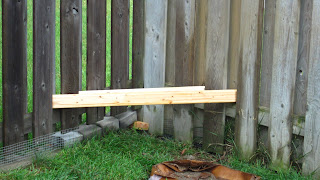
Corner Roosts
Aaron cut some 2x4's and placed them in the spaces of the fence to create the corner roosts yesterday. I went out a while after letting them out of the coop this morning and 2 were sitting on it. They also like to hop on the run and coop to roost. I even caught them on the compost bin this morning. I am hoping once they have a nice large graduated roost set up they won't bother going on the coop and run.

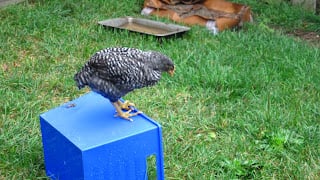
Although, they will really roost on anything that happens to be lying around, regardless of its purpose. Here is a bucket I had put a cooler in to create a cool area for the chickens to sit in. I should really have taken it out the same night.
Gotta love that face!
Posted by Sarahat 8/03/2011 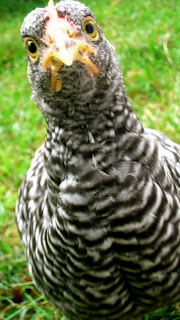
TUESDAY, AUGUST 2, 2011
Chick Update.
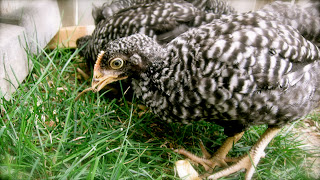
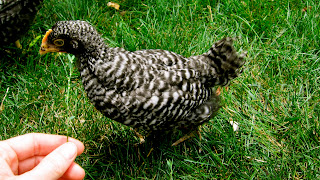
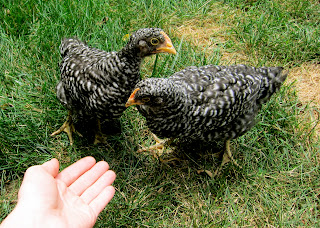
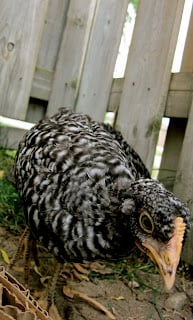
It really is amazing how fast these little chickens are growing. They are fully feathered and really filling out. We have been giving them different treats daily. We gave meal worms, earth worms, crickets, watermelon, dandelions, grapes... the list goes on. They really seem to prefer anything alive! The will chase each other and truly go chicken crazy for a worm or cricket. It is already August and the chickens are 6 weeks old now.

Aaron made a new feeder for them and we have the larger waterer so we shouldn't need to purchase much else for them for the time being. Aaron has figured out the new coop plans and will be starting on that project soon enough. I also want to create some outdoor roosts for as well. I was thinking of some different types such as free standing roosts, corner roosts or even some ladder type roosts to lean against the fence for them in the shade. The free standing roost would also add more shade for them as an added benefit. I think I, or Aaron, will build a free standing roost with graduated heights and lattice running beneath the roosts to create some good shade.
Posted by Sarahat 8/02/2011
FRIDAY, JULY 22, 2011
Hot Hot Hot!
The temperature yesterday got to a whopping 37 degrees celcius... whew! Thankfully we have the pool outside and the AC running inside. My Mom came over and we and the kids spent the afternoon in the pool. As the the chickens, man did I run around frantic for a while making sure they didn't overheat. I have read plenty about chickens dying from the heat and yesterday was definitely HOT! I found a great link on a BYC thread of a page about keeping your chickens cool. From the link I followed a few of their suggestions until the chicks stopped panting. I wet a towel and covered the open part of the run to add shade and some evaporation cooling. I also wet the ground, put in a water/ice bath, put a bucket of ice in front of a fan, threw down frozen watermelon for them to eat and put in a plastic bin with an ice pack at the back and placed the sand box inside it to create a cool room. I also just threw down some ice into the run and put a plate of ice in the cool... needless to say, I quickly ran out of ice. Today I am a bit more prepared since it is suppose to be another scorching day. I have large zip lock bags full of water freezing in the freezer, a big bag of ice from the store and 3 ice packs ready to go for this afternoon. I have already wet a towel and placed it on top of the run and have the fan going. I may also wet a second towel and place it on the floor of the run to create even more evaporation cooling... with the fan blowing and ice bags lying around it should keep the breeze a cool and the chicks comfortable.
Posted by Sarahat 7/22/2011
THURSDAY, JULY 21, 2011
What's with all the racket?!
I was quietly pulling weeds in the vegetable garden when my Mom said "the chicks are making an awful racket over there." I ran over and boy were they ever! They were running after each other jumping, flying, chirping, bouncing and sliding in the grass all fighting over... a big juicy WORM! I had wet the grass to help keep the ground cool and apparently a worm came up and the chicks went CRAZY! It was the funniest thing. When I told Aaron about this he decided to pick up somemealworms on his way home. The chicks go nuts for them. Owen even held a worm to give to the chicks. I couldn't believe how crazy they went over these things. It will definitely be a regular treat for them.
Posted by Sarahat 7/21/2011
TUESDAY, JULY 19, 2011
Introduction!
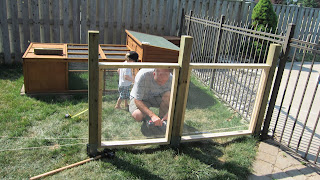
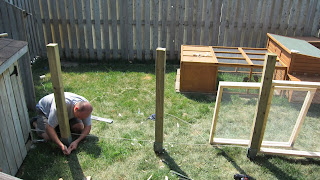
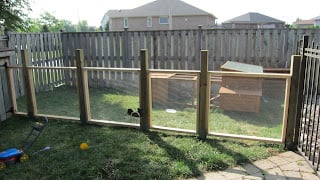
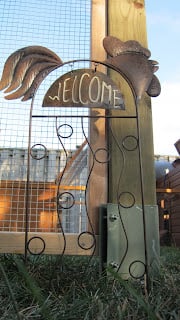
We transfered the chicks from the brooder to the coop over the weekend. Aaron put up the fence for their free range area but they are limited to the run area for now so they don't "fly the coop". The fence has yet to be stained but we thought we should let the wood weather a bit before staining it so the stain really sets in.
We also added some more ventilation to the coop since it only had one small vent in the front. We added 4 more vents in the back of the coop to allow better airflow and we can cover as many as we need to come winter. Then, yesterday a thunderstorm came through the area and the new venting we added didn't have enough of an overhang and the storm just happened to be blowing in the perfect direction to get in the coop. I ran out and covered the vents with a tarp during the storm so not much water blew in but we will also be extending the overhand a bit to keep this from happening again. We also noticed a small leak at the hinge of one of the nest boxes. Aaron went out last night to get some weather stripping and will install it to stop the leak.
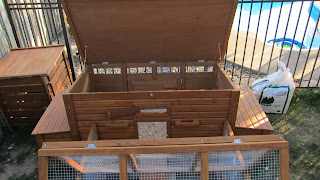
We have also decided that we will be adding to our existing coop to make it larger as well as elevate it off the ground. Basically we will be adding another larger, taller house off the back of the existing coop and raising it off the ground making one large coop! With this said, we don't want to do too much to this existing coop since we plan on taking the back off and expanding it.
Here is a rough drawing to give an idea:
|
|
[/td]
The Chickens seemed to be getting a bit cramped in the brooder and were happy to be outside with more space. We placed them in the coop and they all ran into the run straight away. Come night fall Aaron had to shoe them into the coop but in the am they had been on the roosts. Their second night they were placed on the roost and in the am they were on the other roost... so they definitely were moving around and roosting. In our reading we found that many people suggest to place them in the coop and keep them in there for a few days so they know to go back there at night. For us, the summer heat has been wicked so we didn't want to keep them in the coop during the heat of the day so we didn't follow that method. Since we only have 4 birds it was easy to scoot them into the coop at nightfall. The third night, come nightfall they all made their way into the coop. They didn't roost but instead they huddled in the corner behind their waterer.
Cute Story... yesterday in the morning it was raining (before the T-Storm rolled in) and they didn't come out of the coop until it stopped. They kept poking their heads out and step back in when they felt the rain. Once the rain stopped they finally came out only for it to start sprinkling again and they all raced back in the coop and continued poking out to look.
During the T-storm they all hid in the covered part of the run and huddled together.... such social cuddly birds!
Posted by Sarahat 7/19/2011
TUESDAY, JULY 12, 2011
A Day Outdoors

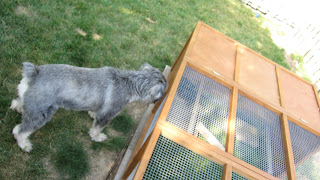
The Chicks got to spend Saturday outside. They seemed to be enjoying the grass. Although, they hid from the dog inside the enclosed area of the run. The dog just stared at them the entire time they were in the run. Once they are full grown I think our run will be small for them so will only be used when we are away. The chicks went back to the brooder in the evening but should be ready to stay outdoors in a week or so, once they are completely feathered.
I had mentioned in another post that one chick hadn't seemed to roost... well, here they all are up on the roost.
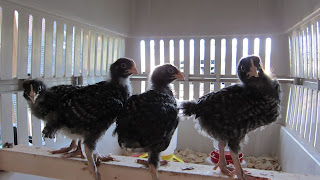
Posted by Sarahat 7/12/2011
FRIDAY, JULY 8, 2011
So far so good.
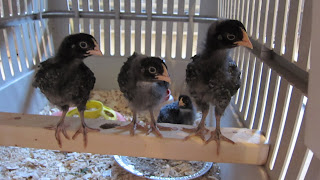
Here are some more photos for your enjoyment!
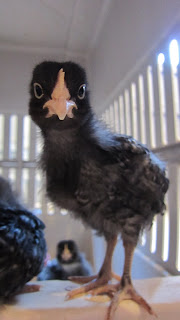
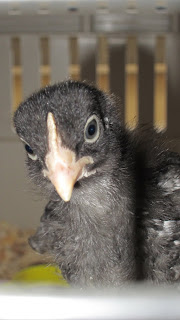
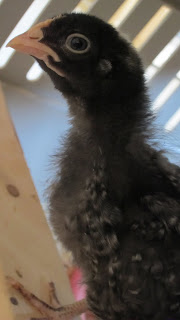
"I'm the king of the castle!"
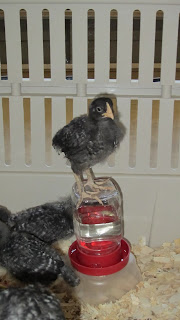
WEDNESDAY, JULY 6, 2011
They're Here, They're Here!

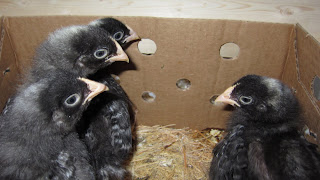
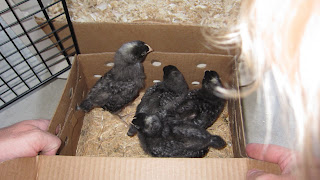
The kids were pretty excited to see the chicks. Owen was trying to get as close as humanly possible while Megan pointed and tried grabbing at them. We of course didn't let them touch them... not for a few days at least. I am heading out today to get pump hand sanitizer as well so that when anyone touches the chicks or their things we wash our hands immediately. Not only for our safety but for the chicks as well. Cleanliness is very important in preventing disease and other issues in chicks, so I have read.
Posted by Sarahat 7/06/2011
TUESDAY, JULY 5, 2011
C-DAY!
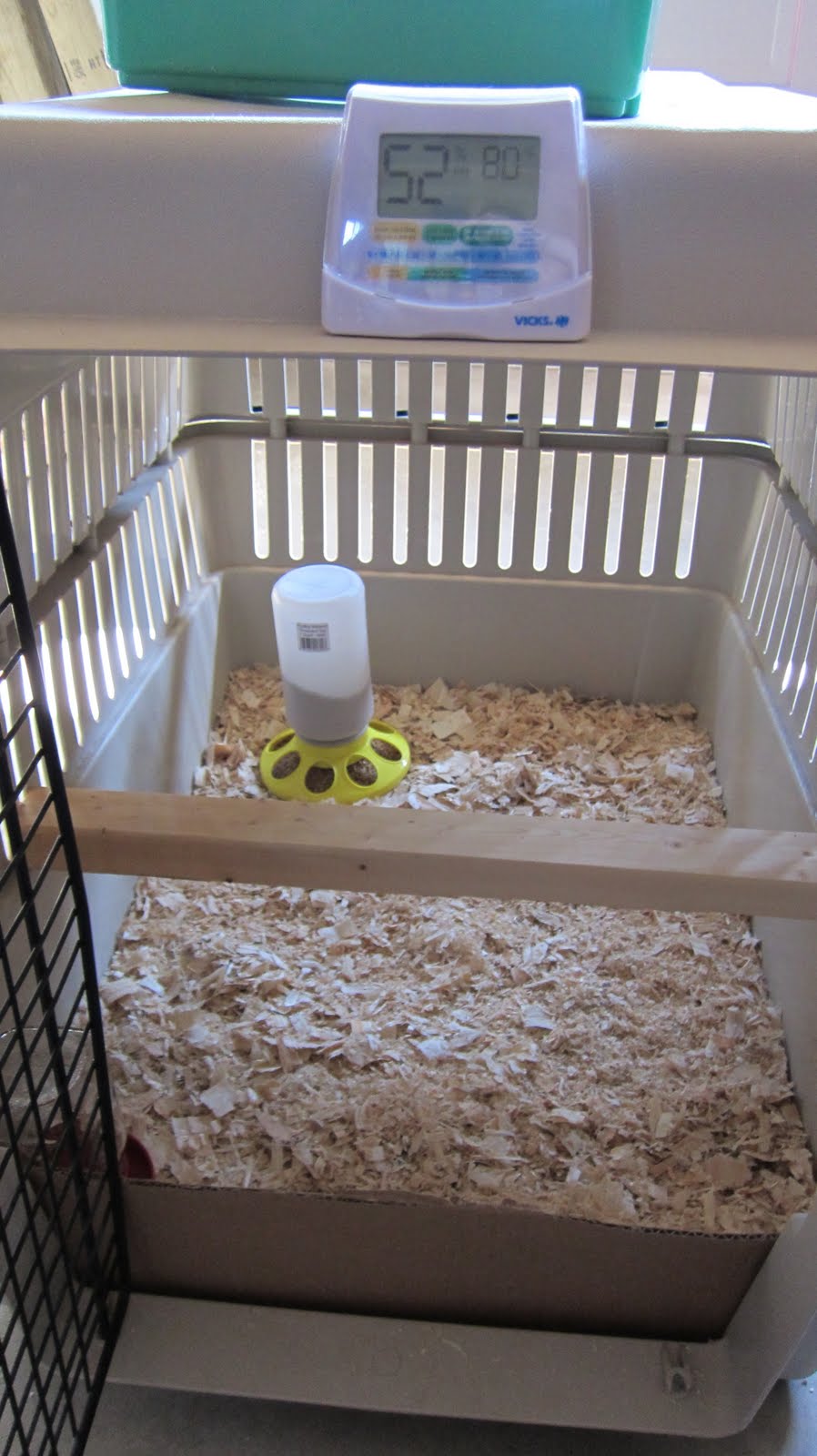
Posted by Sarahat 7/05/2011
SUNDAY, JUNE 19, 2011
Coop is installed!

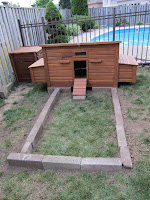
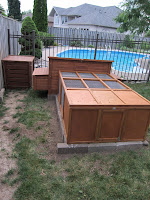
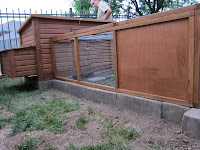
Aaron spent the majority of father's day installing the coop. We sank some blocks into the ground for our foundation and to deter and digging predators. We did the same thing around the run... which is small but it's only for when we aren't home. Since I am a stay at home Mom, this isn't too often. We will be fencing off our side yard for them to free range but will also let them out into the entire yard when we both Aaron and I are home. There are still a few things that need to be done before the chickens come but we are well on our way. We also purchased some supplies this weekend such as the feeder and waterer for the chicks as well as some chick starter. July 5th is coming up fast and I want to be sure we are ready for out chooks!
Posted by Sarahat 6/19/2011
THURSDAY, JUNE 16, 2011
Coop Progress
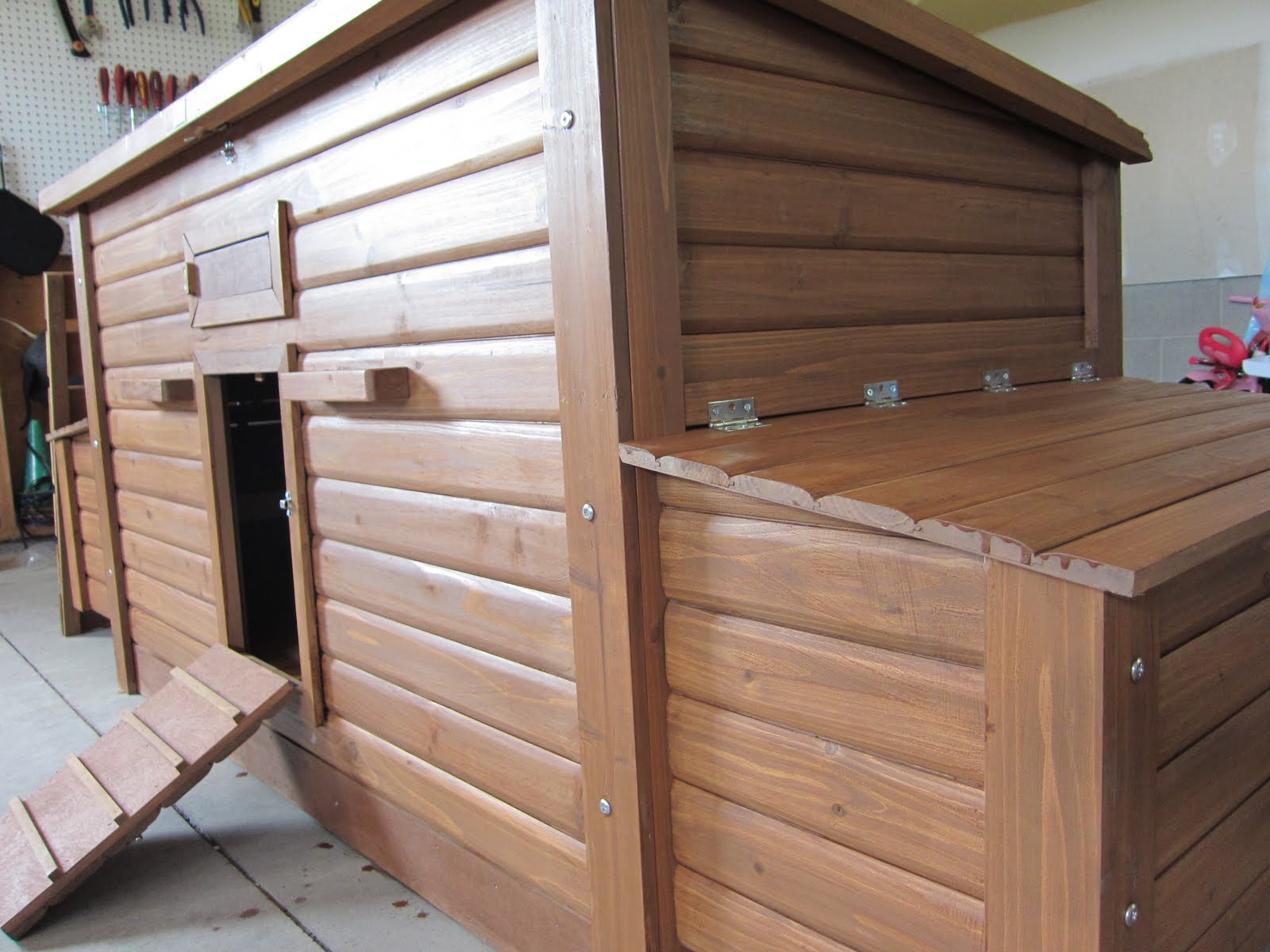
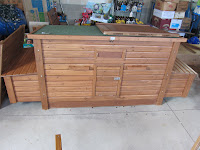
The coop is fully assembled and caulked. Aaron and I just need to figure out how we are going to lay out the area in the backyard.We cannot decide where to put the coop or compost bin. I think we will need to get the coop out there and move it around and see what looks best.
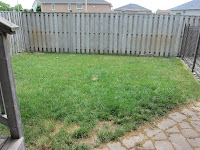
Posted by Sarahat 6/16/2011
TUESDAY, JUNE 14, 2011
Get the Facts Straight
There are so very many misconceptions about chickens. People often think of chickens as noisy, filthy and diseased animals who all have salmonella. The fact of the matter is... this is all INCORRECT! Here are some Myth Busters for you:
Myth # 1) They are noisy.
Reality: Chicken hens are one of the quietest domestic animals. They cluck softly from time to time, and will often cluck to let you know they recently laid an egg. Unless they are in danger, they do not squawk. They sleep at night just as people do and are completely quiet from dusk to dawn. They are quiet because they want to be left alone to hunt and peck and do not want to attract attention to themselves. Roosters, on the other hand, can be quite noisy as this is their role in the flock.
Myth # 2) They are dirty.
Reality: Chickens are very clean animals. They will occasionally give themselves “dirt baths” but this is actually in order for them to preen their feathers and keep themselves clean and cool. Their droppings usually do not smell, especially if they are allowed to range freely in a grassy yard and are not caged or confined in a small area. The droppings are easily hosed off and break down into an excellent fertilizer for the lawn. Just like all pets and animals, chickens need responsible owners to keep the area tidy and clean out the living area from time to time.
Myth # 3) They are “3rd World creatures”.
Reality: Chickens have been given a bad rap. Because they are so low maintenance and cost so little to raise, many people view them as a social status symbol of the uncivilized or uncultured class. This is completely an image issue. Some areas of the world have problems with stray dogs. This is not because dogs are inherently “3rd World creatures”, but rather because the animal control laws of those countries are not adequate.
Myth # 4) They carry disease.
Reality: Chickens are just like any other animal including humans, dogs, cats and others when it comes to disease. They are not any more likely to carry disease than a dog. If they are well-cared for, fed, watered and kept in a clean environment, then they are more likely to stay healthy. Diseases are much more likely to be harbored in confined animal feeding operations due to their sheer size and tight conditions than in a healthy backyard setting.
Myth # 5) They attract pests.
Reality: To the contrary, chickens love to eat insects of all kinds including worms, beetles, grasshoppers, earwigs, mosquitoes and their larvae, fly larvae, ticks and more and are one of the best methods of insect control. Chickens have even been known from time to time to eat small mice! As long as their feed is properly stored just as dog or cat food should be, it will not attract added pests either.
Myth # 6) They attract predators.
Reality: It is true that predators such as foxes, skunks, racoons and hawks often eat chickens if they can catch them. However, these same predators might eat cats, rabbits and even small dogs if given the opportunity. Chickens do not attract predators any more than these other animals. They have instinctual defenses that protect them from these predators, such as sleeping in a protected area (coop) at night and making very little noise. Most family dogs and cats generally leave chickens alone and throughout the ages have all lived together in harmony.
Myth # 7) They need a lot of space.
Reality: Free range chickens need very little space. Most poultry associations designate that chickens need about 3 square feet of ranging area. Of course they will do even better with more, but an average-sized backyard would easily accommodate 4-6 chickens -no problem. Chickens are completely content to peck around in a fenced yard and have no reason to flap over fences, especially if they are not able to look through those fences at scrumptious bugs on the other side (privacy fencing works best). A small coop to sleep in at night is required. This can be very small if it is only used for sleeping. A coop that is 3x3x3 feet for about 4 chickens would be perfect if they are allowed to roam feely during the day. A coop of this size is about the same size as an average dog house.
Myth #8) They require a lot of equipment, work, or time.
Reality: Chickens are very low maintenance. They simply need water, food and shelter. They do not need to be groomed, washed, pet, walked, spayed, neutered, or trained. You can spend as little or as much time with them as you want. Their bedding area should be cleaned out about once a month which is not much of a problem.
Myth #9) Chickens are dangerous to have around children.
Reality: While chickens are thought to have evolved from the Tyrannosaurus Rex, chickens are definitely not dangerous. Most chickens have no interest in humans unless they are feeding them. They have no teeth and could not hurt a child as a dog or cat might.
Myth #10) You need a rooster in order to have eggs.
Reality: Roosters are unnecessary in the laying process and, in fact, are unnecessary to raising chickens. Chicken hens will lay eggs with or without a rooster. The only difference is that with a rooster, the eggs may be fertilized. Without a rooster they are not.
Info taken from lifetransplanet.
and one more myth to bust...
Myth #11) All chickens carry Salmonella.
Reality: Sometimes chickens, just like other animals, can have Salmonella bacteria. When hens are detected with the bacteria only a small number of hens seem to be infected at any given time, and an infected hen can lay many normal eggs while only occasionally laying an egg contaminated with the Salmonella bacterium. Here are just some of the other animals who cancan carry salmonella: lizards, snakes, turtles, hamsters gerbils, birds, dogs, cats, ducks, horses and even Humans!
More info see Salmonella.org
Posted by Sarahat 6/14/2011
Get composting.
Since we are getting chickens and have our gardens, we figured it was due time to get a compost in. We decided to get a simple wood frame with a lid. Aaron could have built one but we decided to go the quick and lazy rout and buy one from Rona. It holds 400L and should be adequate for our needs. It was super easy to assemble and Aaron sealed it last night when he did the coop. The chickens waste (bedding, poop) will be a wonderful fertilizer and perfect for composting. Not much food waste will have to go into the compost since the chickens will eat most of the raw vegetable and fruit scraps... another great reason for Chickens.
Posted by Sarahat 6/14/2011
Ordered Chicks!
I placed my order for 4, 2 week old Barred Plymouth Rocks today from the Harrow Feed store. I was told they will be delivered to the store on July 5th. I am not sure if they come 2 weeks old or if they stay at the feed store the the 2 weeks. I am hoping they will be ready to come home on the 5th. I am just so excited to get things up and running. I think we will be keeping the chicks in the garage during the nighttime and the coop and run during the day. I ordered some books for amazon and hope they come soon. they usually only take a few days to arrive. I can't wait to start reading up on things. The books I ordered were based on reviews as well as the preview of the book available on amazon as well.
I ordered:
Raising Chickens for Dummies
and
City Chicks:Keeping Micro-flocks of chickens as Garden Helpers, Compost Makers, Bio-recyclers and Local Food Producers
I have already read so much online as well as joined a forum called Backyard Chickens. So far the people within the forum have been, for the most part, very helpful. Last night Aaron sealed our coop and run and hopefully tonight we will start getting it set up outside. I will have to have Aaron update about installing the coop and fencing. I know we will be putting down blocks as a base for the coop and we talked about putting blocks into the ground around the run as well for extra protection from predators as well as stabilization. More on the coop setup later.
Posted by Sarahat 6/14/2011
MONDAY, JUNE 13, 2011
Ten Facts About Chickens:
- It is thought that the nearest relative of the Tyrannosaurus rex is a chicken.
- A castrated male chicken is called a capon.
- Chickens will be less 'flighty' if while tending a pen or chicken house the caretaker walks backwards.
- You can literally hypnotize a chicken by holding it and drawing a line in the dirt over and over. The chicken will stay still right there as long as you do this.
- Some breeds of chickens can lay colored eggs.
- Christmas has different meanings in different countries. Christmas Eve in Japan is a good day to eat fried chicken and strawberry short-cake.
- The average hen lays 265 table eggs each year.
- There are more chickens on earth than there are humans.
- A chicken's gizzard will likely have gravel to help "chew" the food for digestion.
- A rooster will usually perform a special waltz or dance in an attempt to attract a mate.
THURSDAY, JUNE 9, 2011
Ducks!
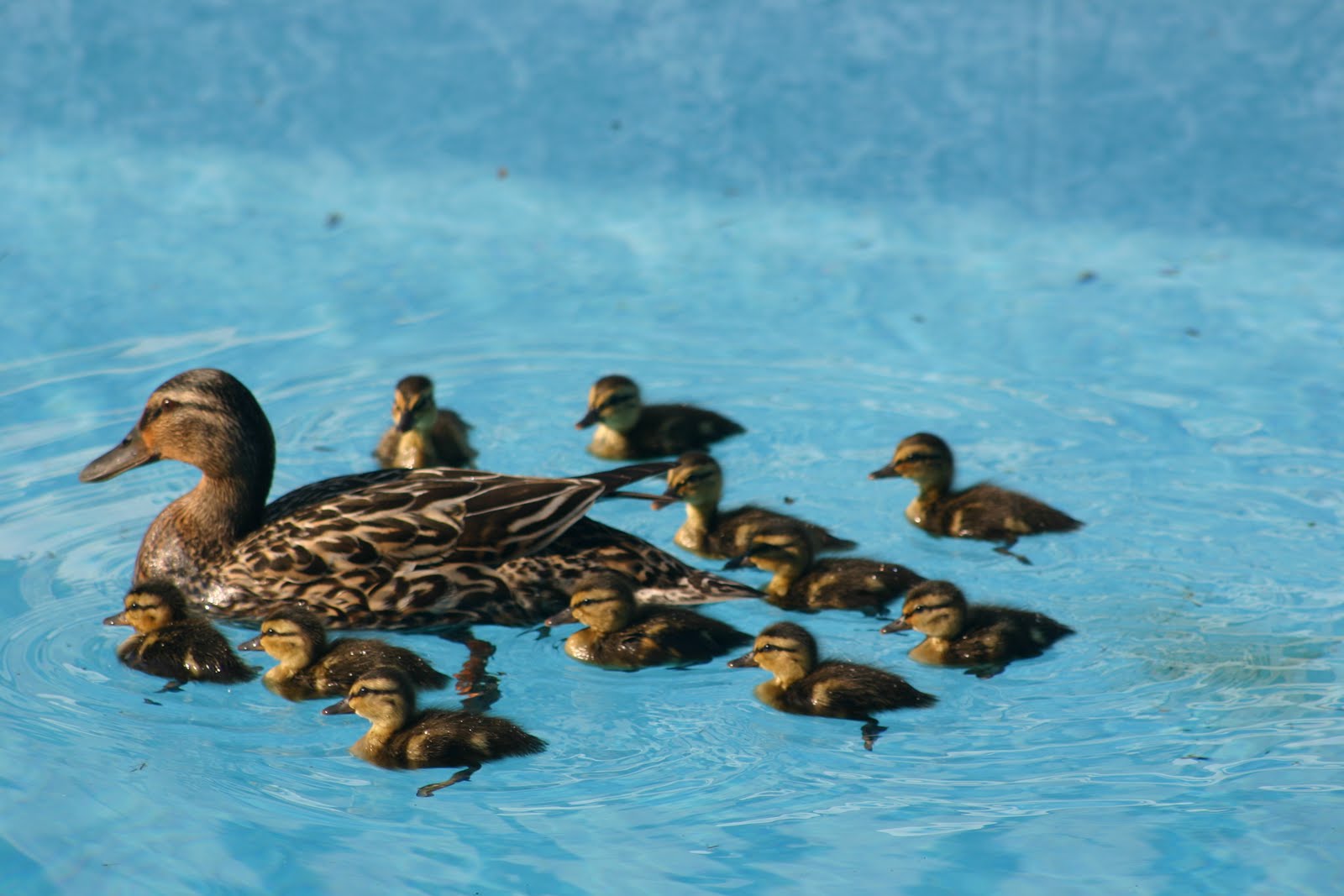
I simply have to mention that this spring we had a mother duck make her nest in a bush around our pool. We watched her sit for 2 weeks and then one faithful morning I looked out into our yard and there was Mommy duck and 11... YES 11 little ducklings! The kids both got to see them and watch them take their first swim in our pool. So cute. The celebration quickly changed to concern when they ended up stuck in our pool. I had to hop in and get them out with our skimmer net. Needless to say, they didn't stick around after that. I am sure they made their way to the river a block away or maybe the pond across the street. Either way, I did my good deed and saved them from drowning in our pool. The whole experience was part of the reason we are getting chickens.
Posted by Sarahat 6/09/2011
THURSDAY, JUNE 9, 2011
Chickens? What?
Aaron and I, in our quest to have some sort of self-sufficiency and fresh local food for our family have, made the decision to raise urban chickens in our yard. We are wanting to have as much control over the food we eat and where it comes from. We try to buy fresh, local produce when available as well as fresh local meat. Eggs are a major part of our children's diets not only a breakfast food with toast and bacon but are used in baking, salads, fritatas, and I could go on and on. If we are able to have fresh, hormone free eggs that come from clean, healthy hens then we will. We are looking into purchasing (hopefully) a coop for the yard and then getting 4 or so Hens. We have been doing plenty of research about raising hens and different breeds and such. As far as breed, I think we will go with Barred Plymouth Rock chicks. I would love to have some Polish Hens since they are so very cute but they aren't overly reliable layers. We have purchased our coop and plan on getting things up and running over the next few weeks.
Here is a photo without the nest boxes or run.
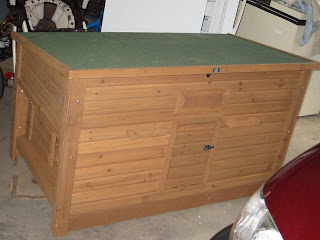
The quest for some self-sufficiency in an urban setting can be a bit of a challenge. We are taking baby steps but I do think we are on the right path.
Posted by Sarahat 6/09/2011