

tls_ranch's Barnevelders
Hi, My name is Trisha and I would like to introduce you to my flock of Barnevelders. I truly enjoy raising this beautiful breed and will continue to work to improve my flock which are spoiled with high quality food and clean housing. The flock consists of lines originating from: C. Ledford, Kelly Cratty and Johan. I also have two project lines I'm working on. The Blues are a very exciting project that was created from an out cross to Blue laced-red Wyandottes.
I do offer limited orders of hatching eggs depending on availablity. I'm not a big hatchery and keep my Barnevelders as a personal hobby and to provide my family with healthy eggs and home raised meat. Please contact me via PM or email if interested. I sometimes forget who wants eggs and loose track of emails, so please feel free to remind me, LOL.
My other Pages:
My Auctions:
I'll be updating this page with more pics and info about Barnevelders.
More to come!!!!!
First here's a brief history and info about the Barnevelder breed

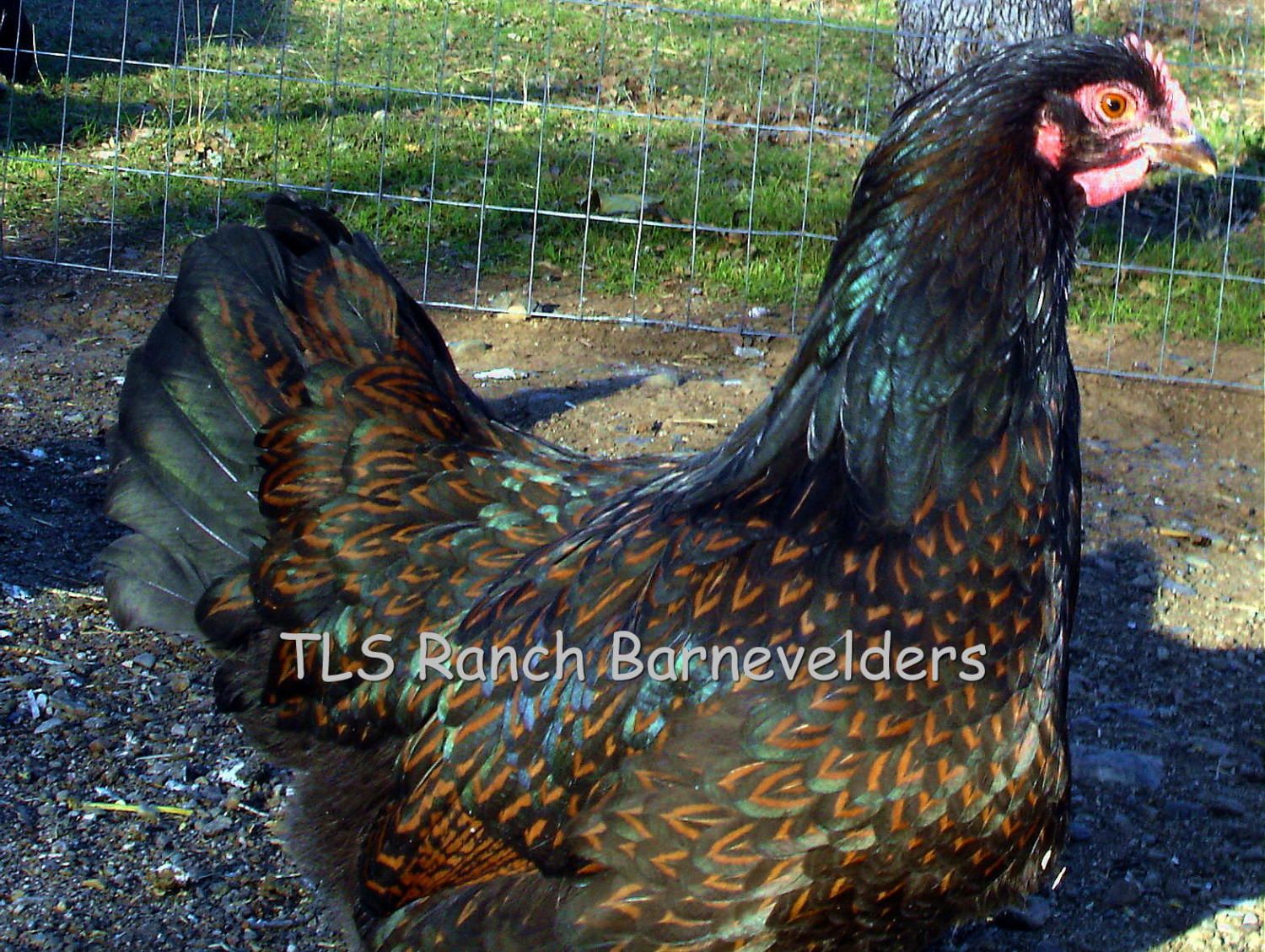
The Barnevelder was developed in the town of Barneveld, Netherlands in the late 1800's and early 1900's. Breeders crossed local breeds with Asiatic breeds including Cochin, Brahma, Malay and Langshan. An early version of the Golden laced wyandotte may also have been used along the way. Some exhibition lines were crossed with Dark cornish or indian game to enhance the lacing.
In the early 1900's the Barnevelder became well known for excellent production of particularly dark brown eggs. Just a few year's later, the interest in Barnevelders fell by the wayside as "commercial" egg laying breeds were imported from the USA. But, Barnevelders have remained popular with European hobbyists and especially in it's home country.
In the USA, Large fowl Barnevelders in the double-laced form were accepted to the APA standard in 1991. Good quality Barnevelders are still rare in the USA due to legislation /difficulty importing new blood and an outbreak of Marek's disease that decimated many show/breeder's flocks including other breeds. Much work needs to be done by dedicated breeders to bring the Barnevelder breed back as a beautiful, good laying, dark egg, and dual purpose bird.
Most common colors:
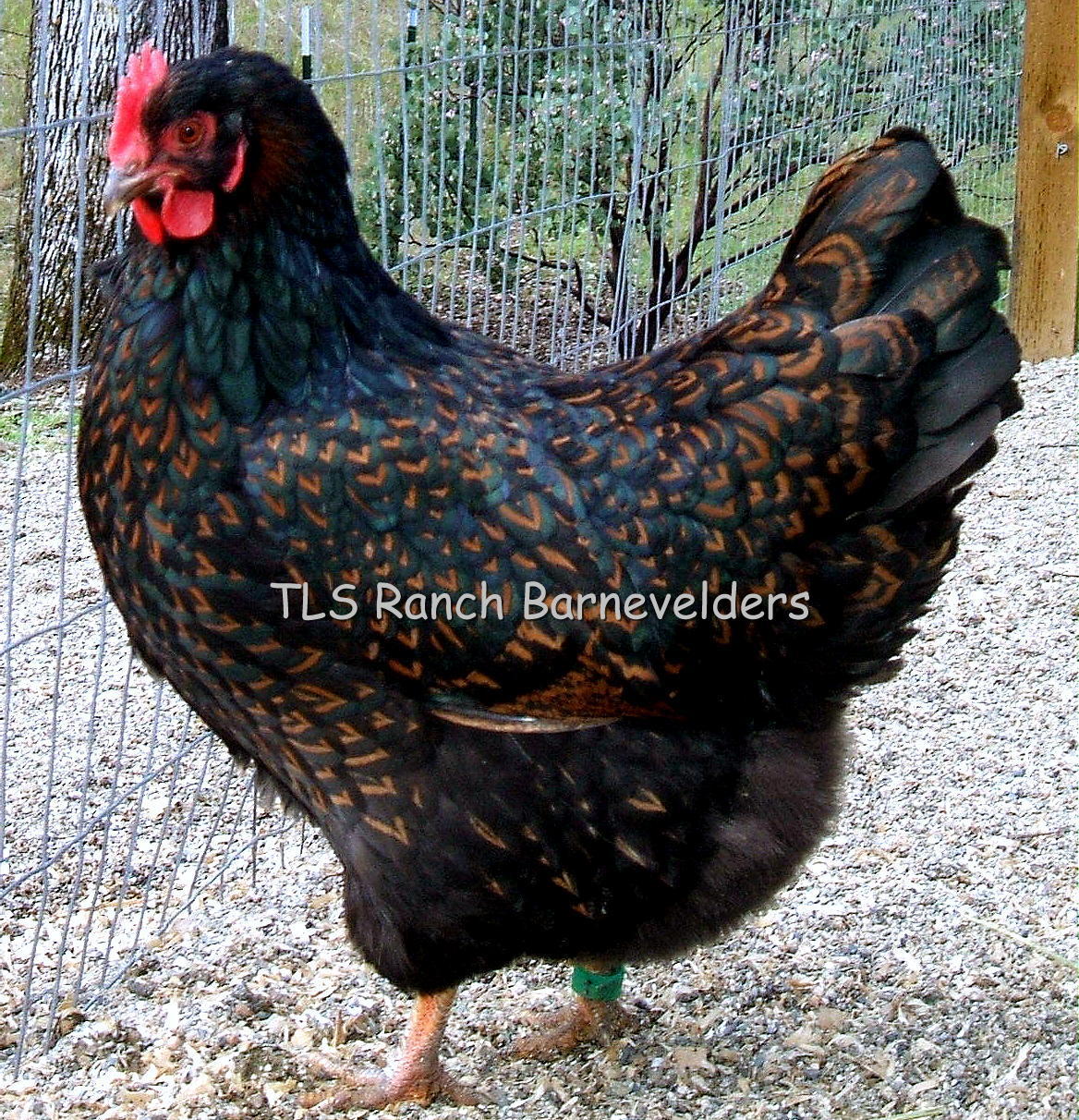
Double laced- (only APA accepted, most common)
Blue double laced
Silver Double laced
Black- none in the USA
White- none in the USA
Bantam:
Double Laced
Silver Double Laced
In other countries, such as Germany, there are other colors but they are seldom seen.
My Barnevelders
2011 Barnevelder cockerel: blend of lines vB and Johan
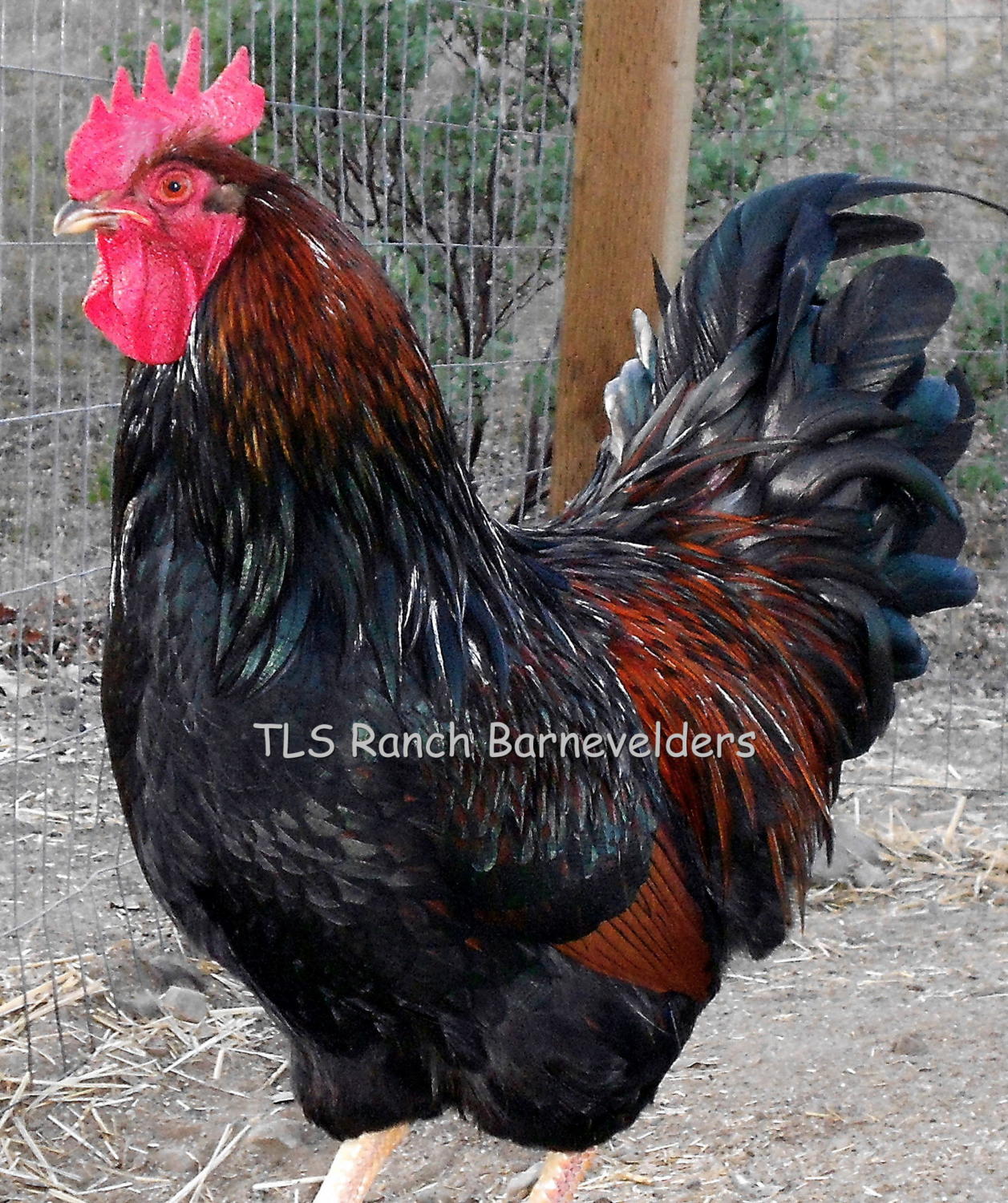
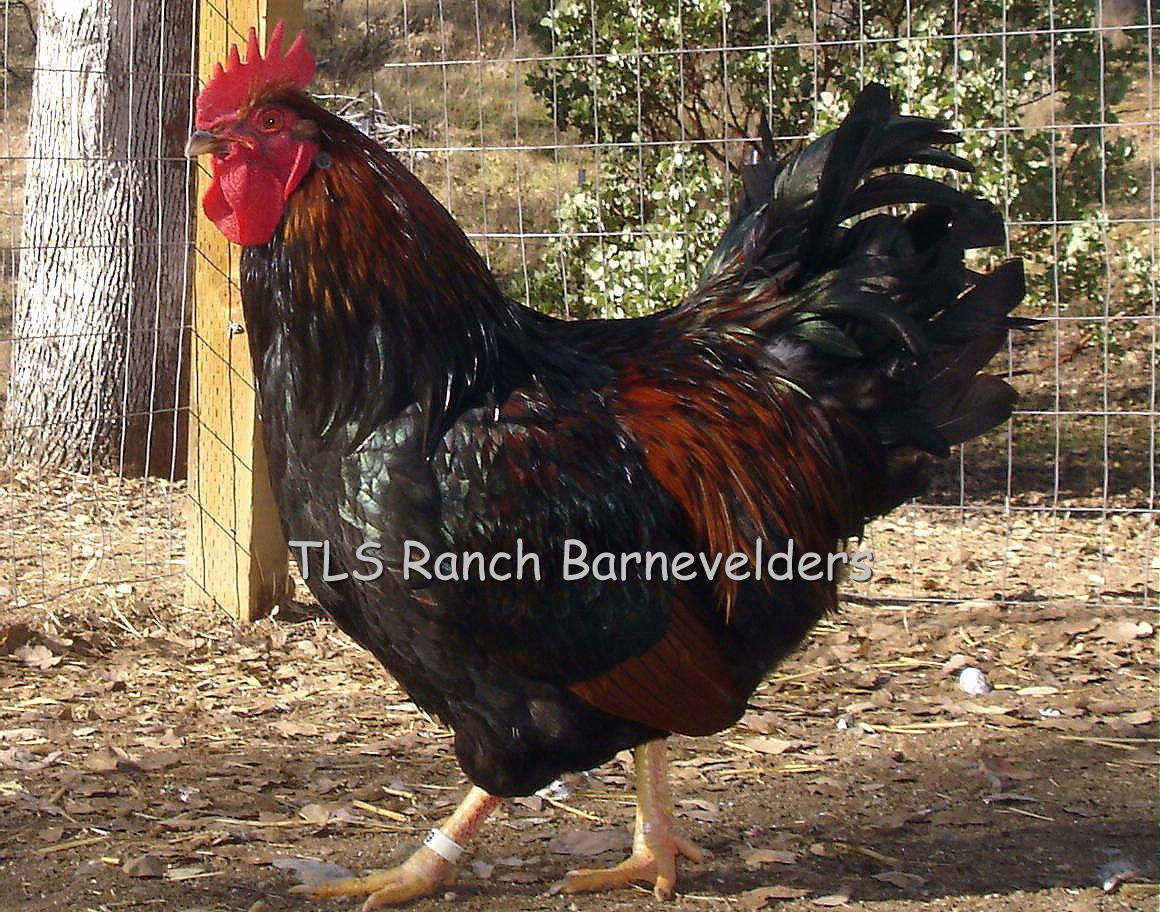
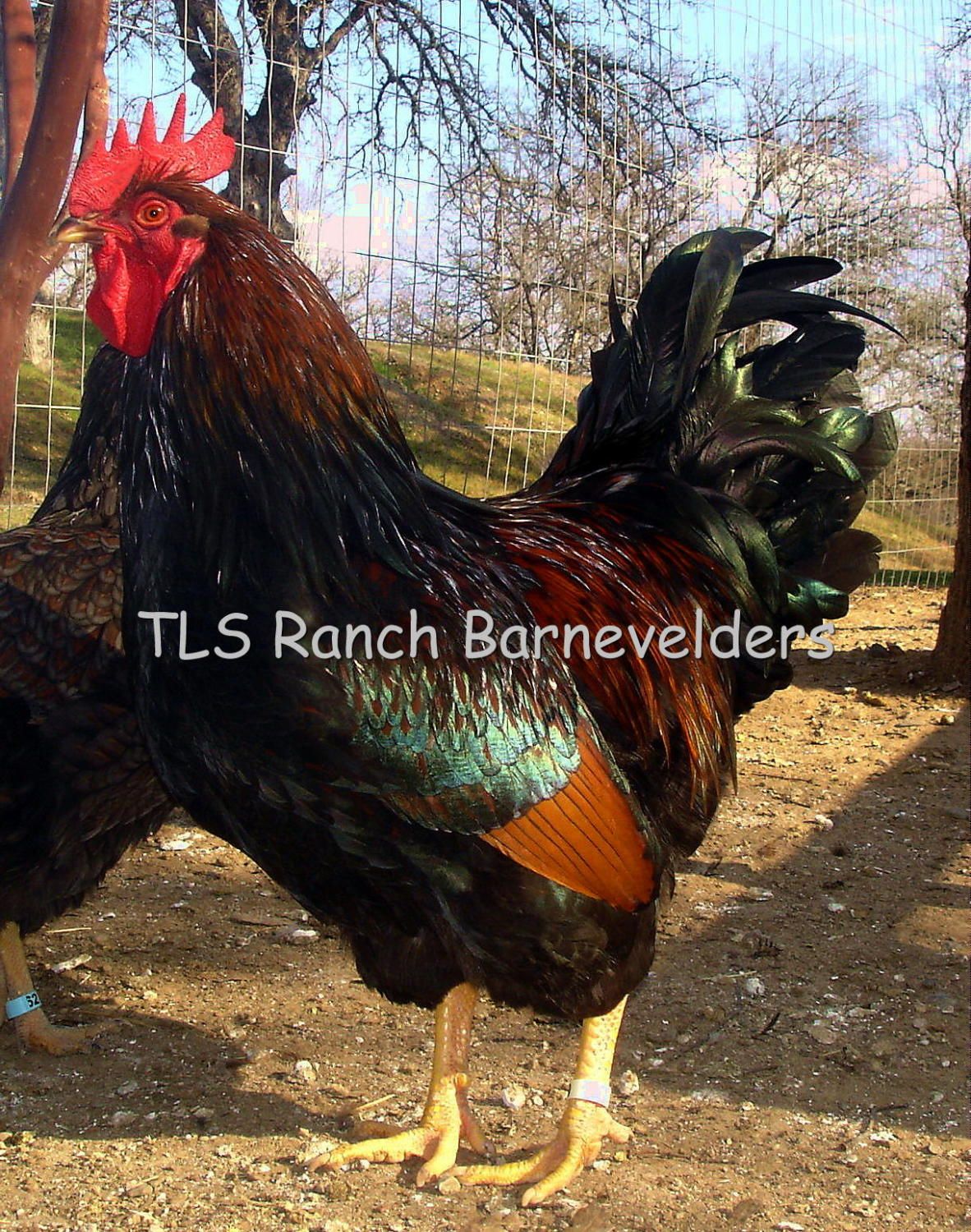
2011 Blue double laced cockerel: "project" blend of vB, Johan and Blue laced-red Wyandotte. (75% Barnevelder/ 25% Wyandotte)
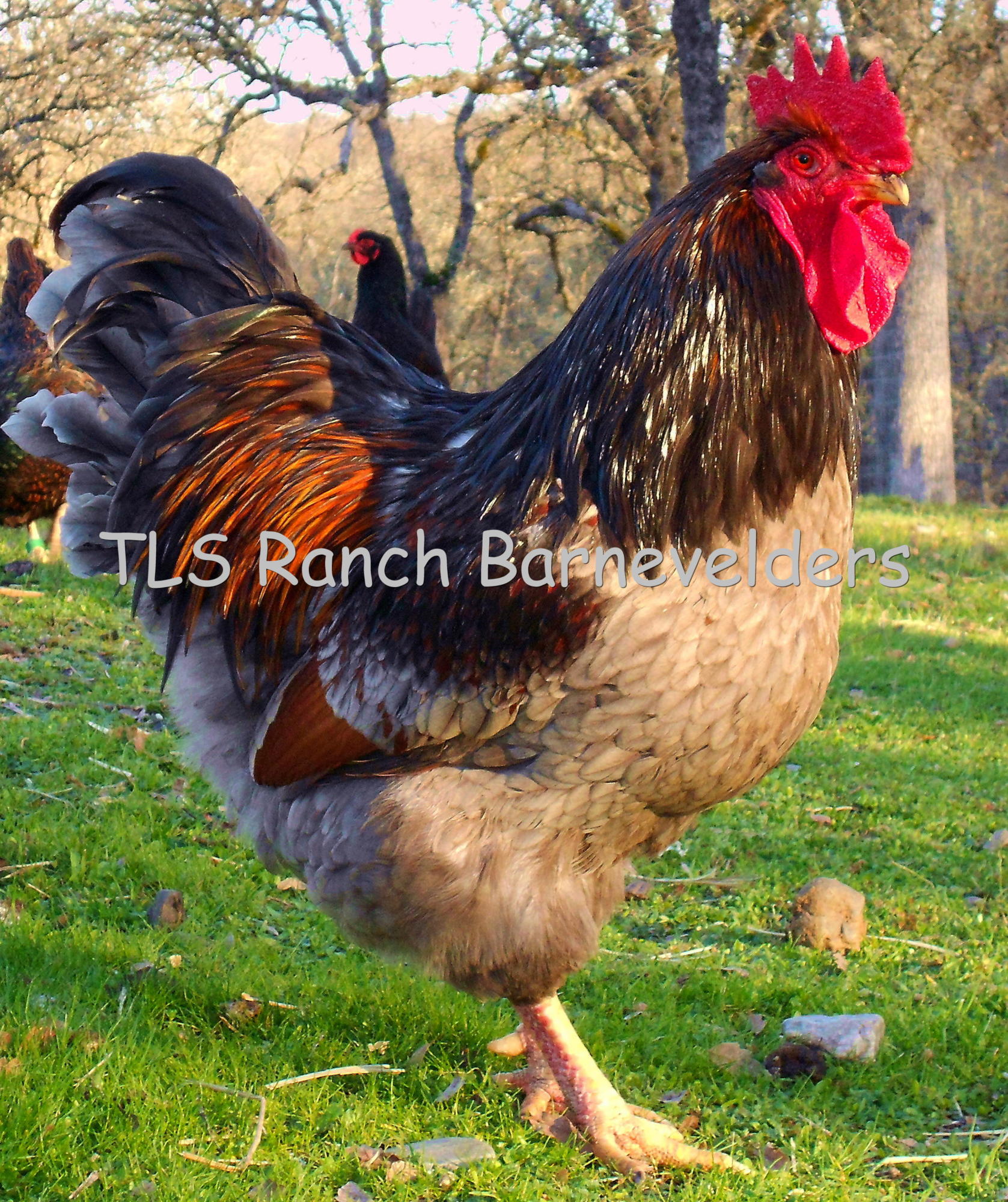
Dark blue cockerel from 2012
Light blue cockerel from 2012
Pullets and Hens:
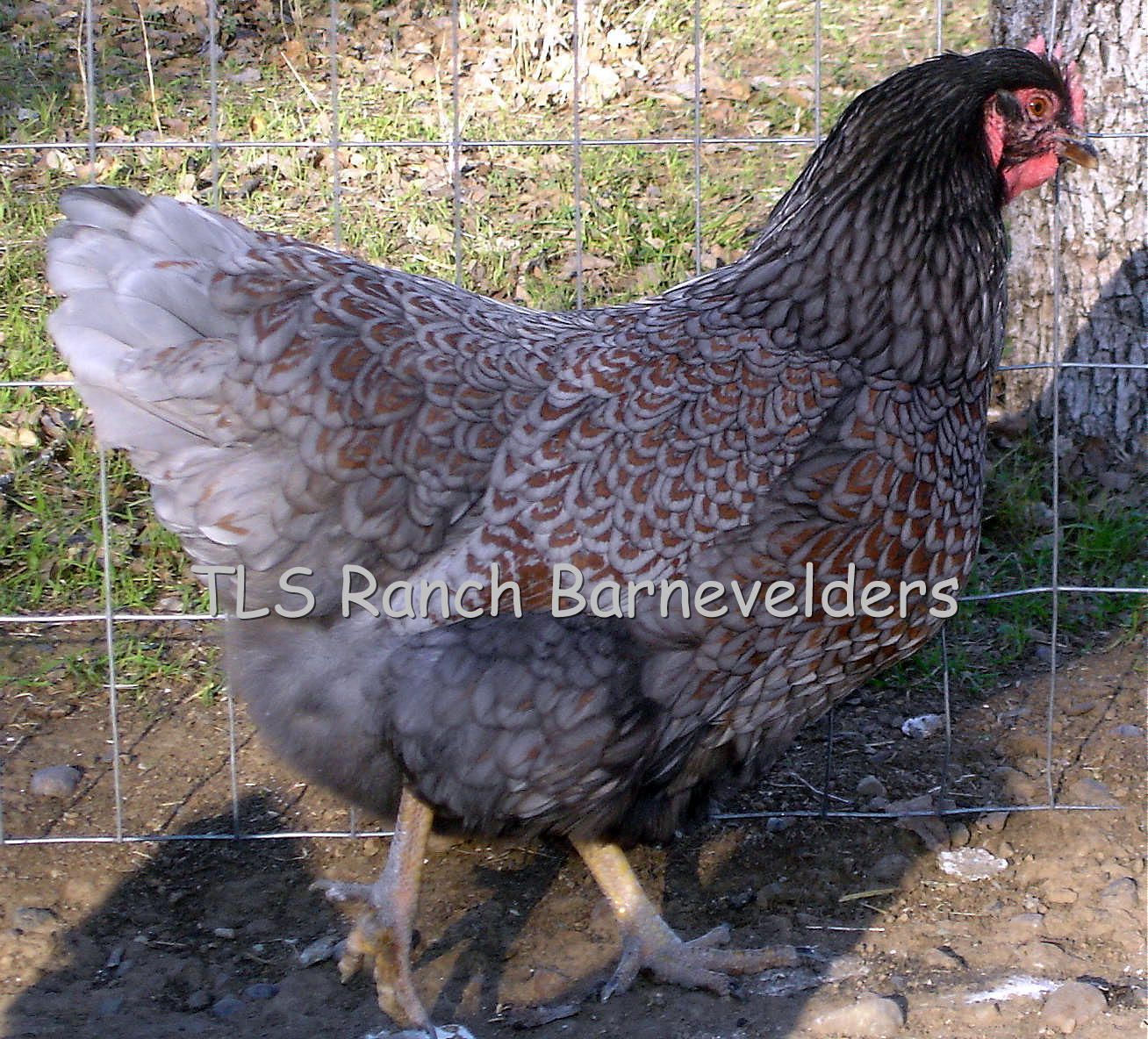
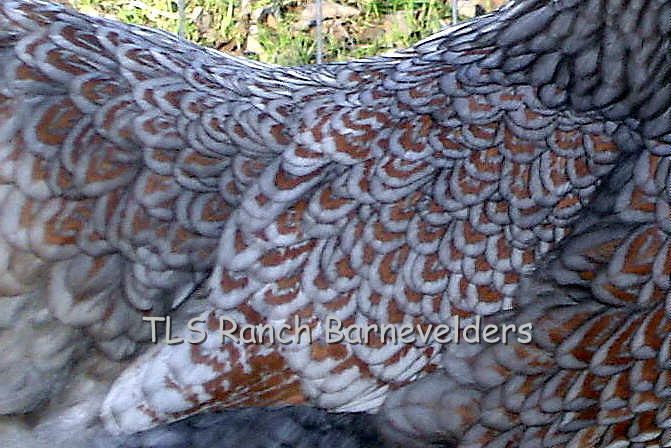
Close up of lacing on a Blue project pullet (75% Barnevelder, 25% BLR Wyandotte)

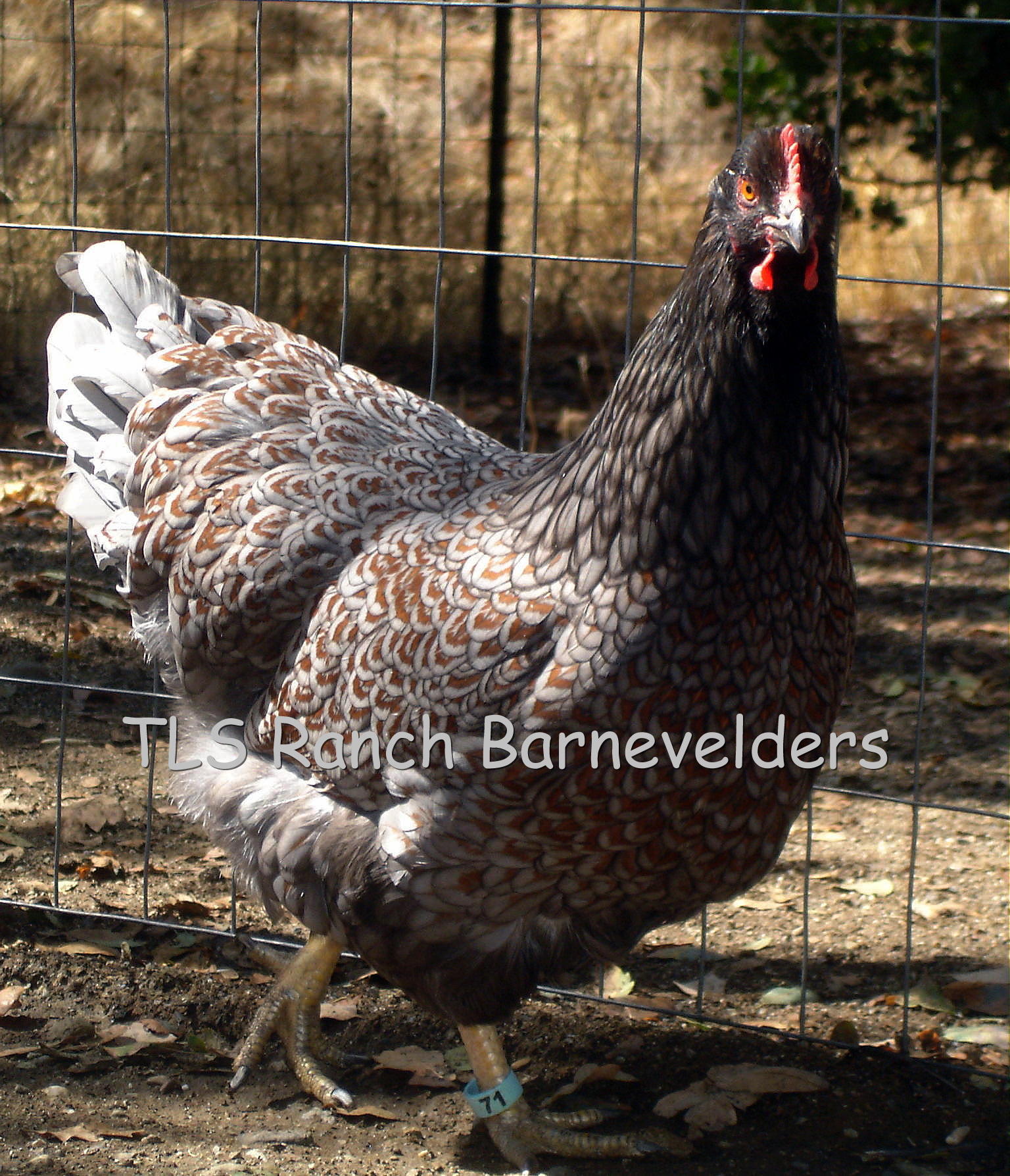
Nice blue pullet from 2012 (4th generation)
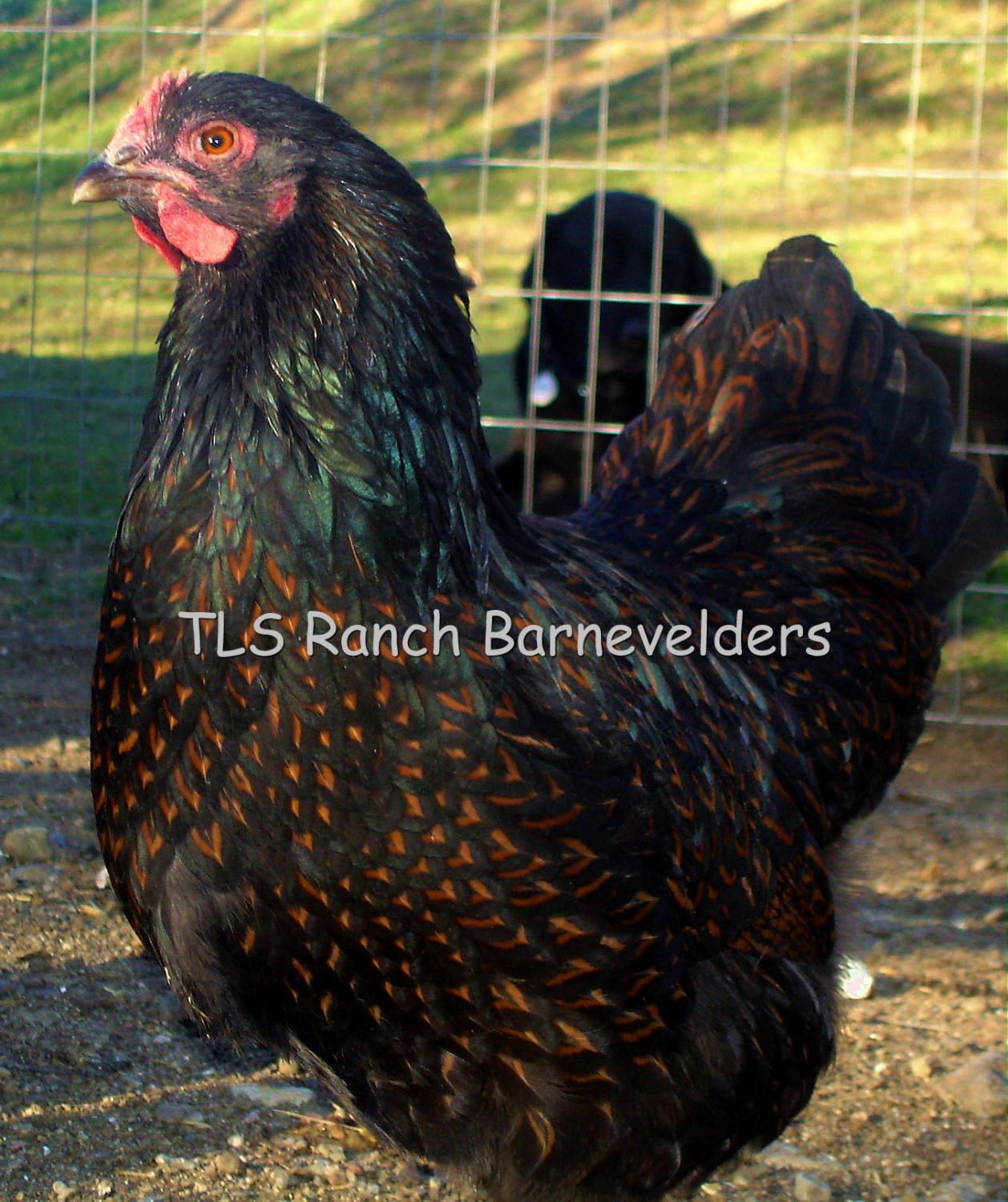
Here is a black double laced pullet from the "Blue" project line (B line) She's a tank and tends to want to go broody. But, she's a good layer of medium brown glossy eggs. Who needs a heat lamp when such a nice fluffy hen works even better?

Project 2 "C line" (click for more info)
2011 Barnevelder cockerel (C line): "project " blend of lines including vB, KC, Johan and Dark Cornish ( about 93% Barnevelder blood)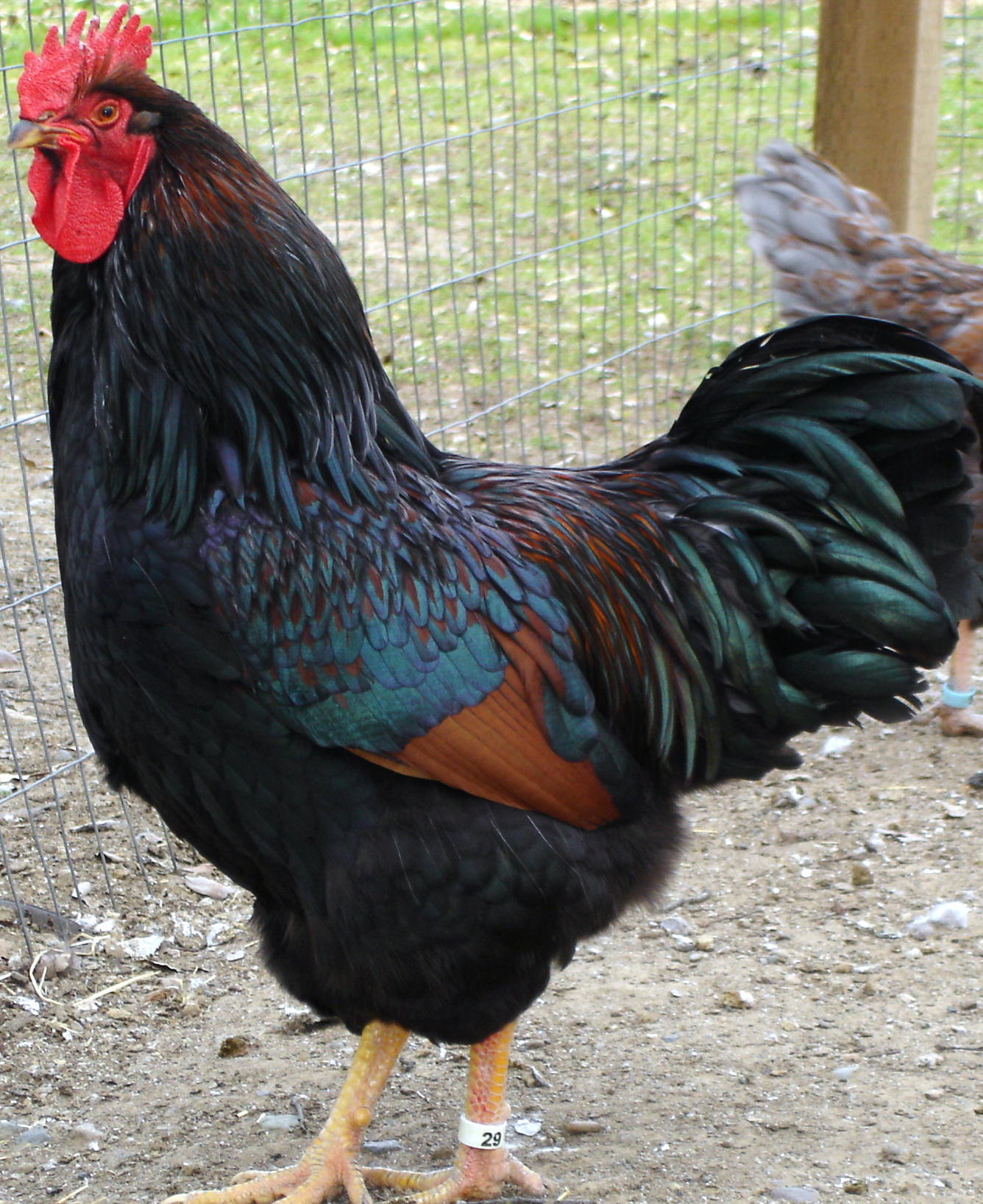
Project hen (C Line) Here she is in 2012. She had a really hard moult and for some reason her lacing is not as "clean" as it once was. But, she's back laying a beautiful dark and glossy egg that is darker than my pure Barnevelders.
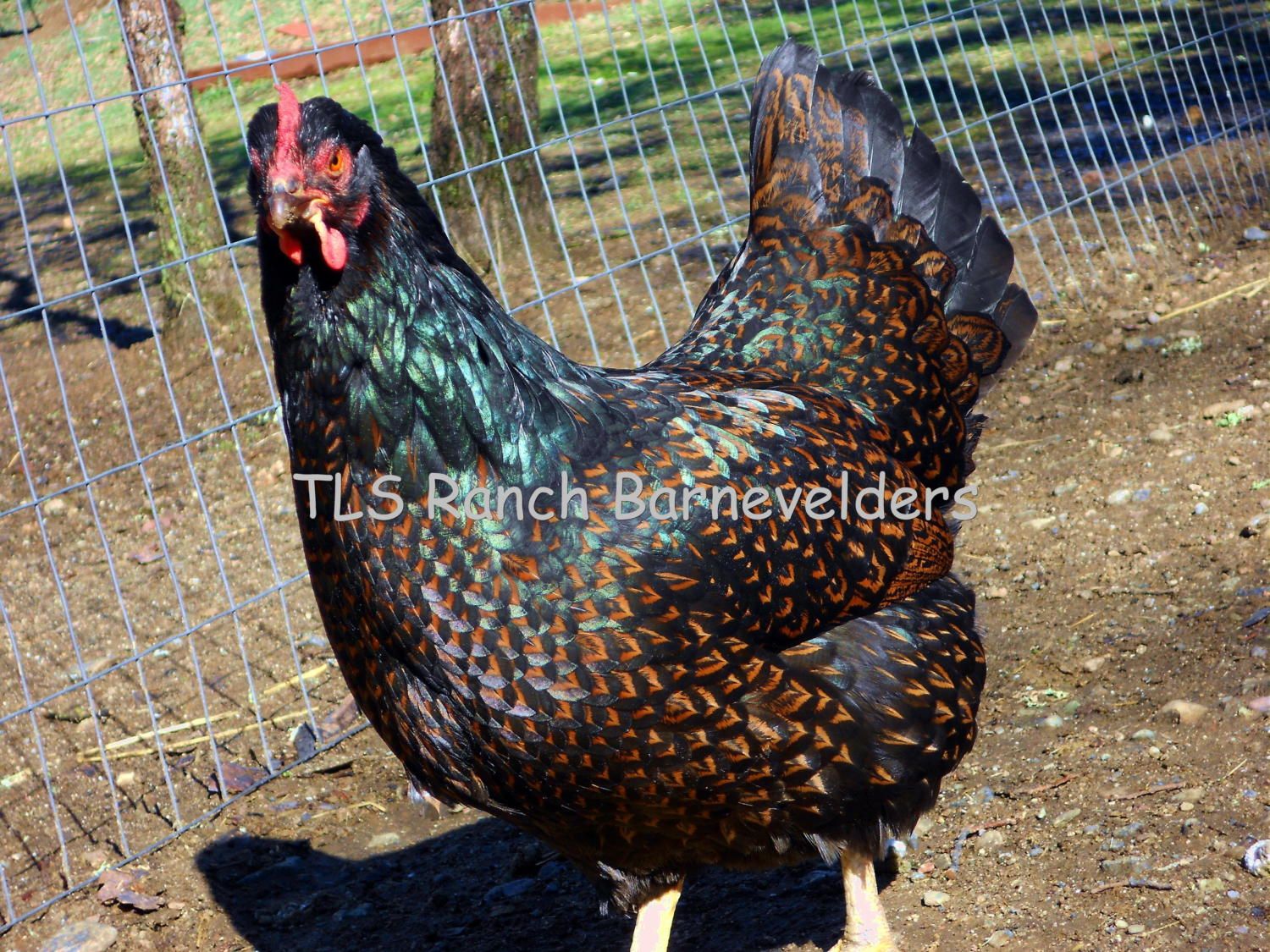
One of my best "C line " project pullets from 2011 The picture is a bit blurry, but WOW what lacing!!!! She is laying a nice dark egg.
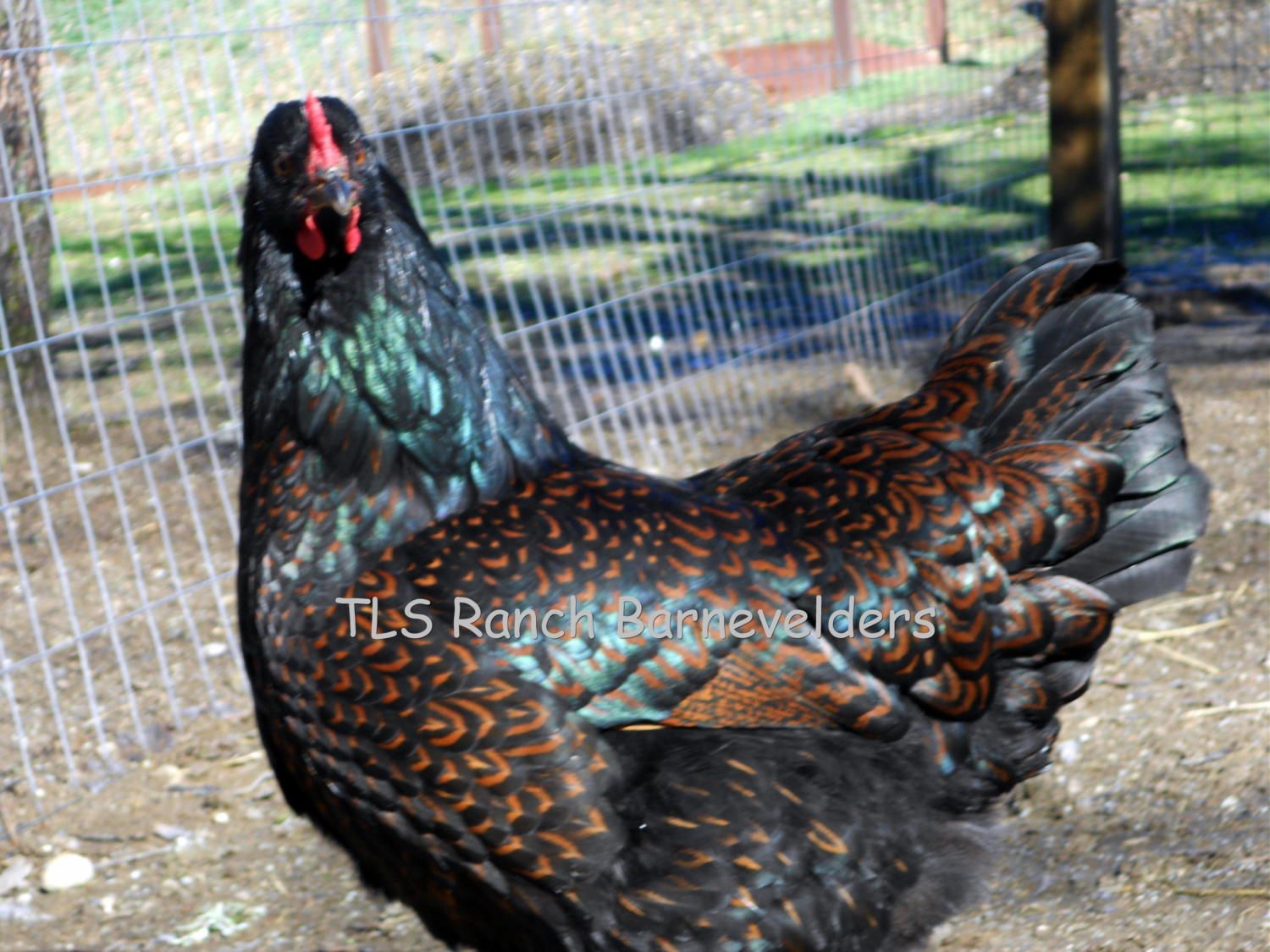
Very nice C-line pullet from 2012. Full tail, great lacing, wide and nicely sloped back. Now if she lays as dark of an egg as ther mother above....I'll be very happy.
The Eggs
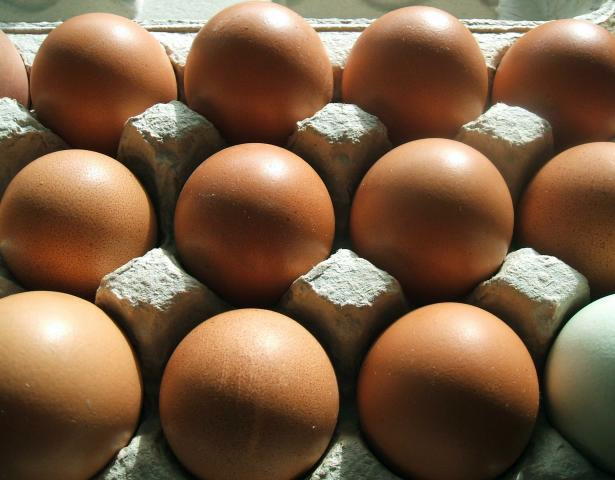
Egg color
Barnevelder eggs should have a rich coppery color and good gloss. The Barnevelders will need careful breeding and selection to bring back this trait. They do show promise that it can be done without out crossing to Marans and Welsummers which could alter the true color of the Barnevelder egg. The desired color should not be the same as Marans or Welsummers and in my opinion, Barnevelder eggs should be a rich, highly glossed shades of red brown. A shade that almost seems like oxidized iron. I also prefer speckled eggs and hope to select hens that produce the speckles
When Barnevelders were first introduced the glossy, rich colored and speckled eggs were most considered most desirable and highly sought after. The heavy gloss was thought to help keep the eggs fresher longer in times before refrigeration.
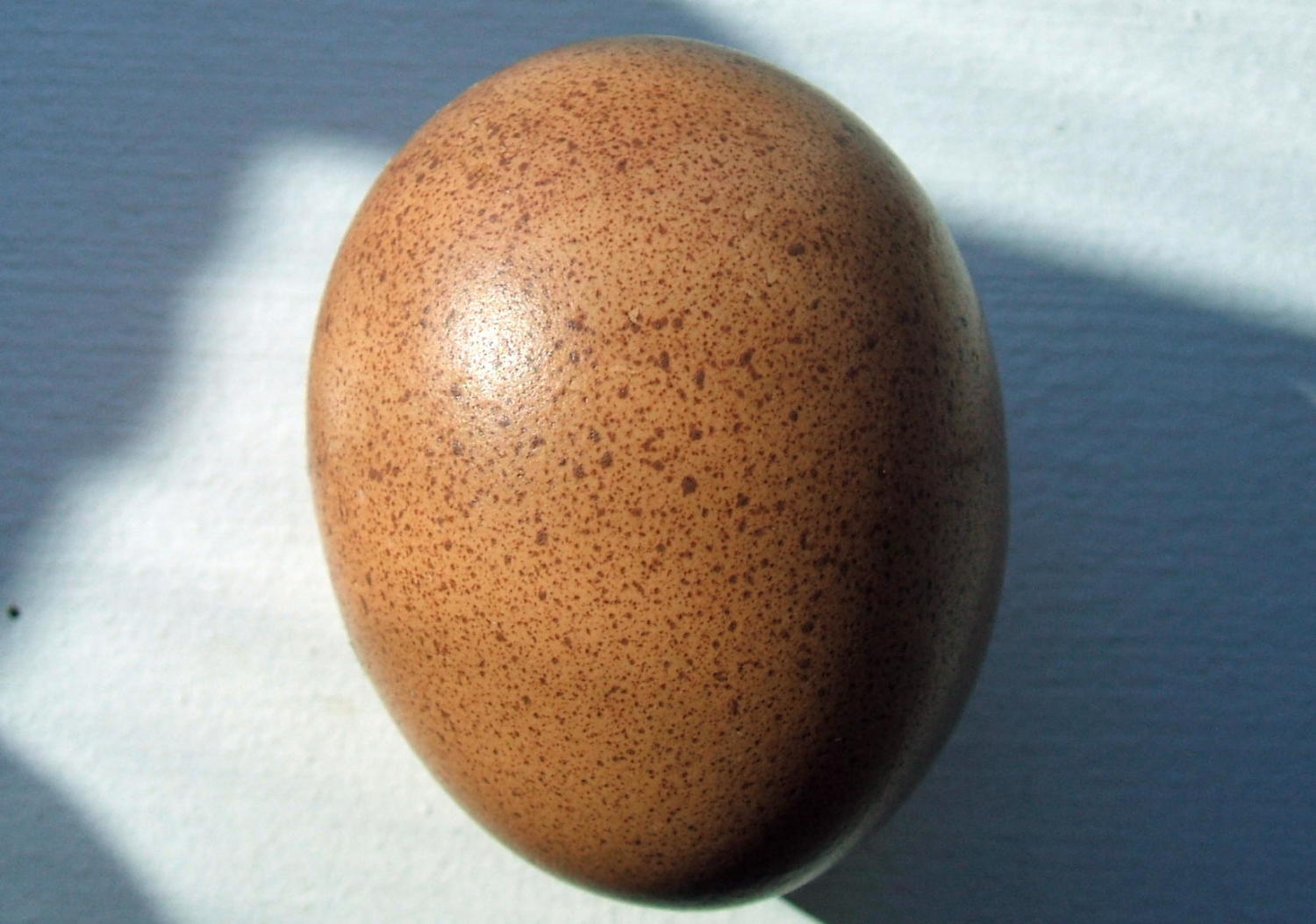
The Dark Egg Game
When breeding Barnevelders it's best to select a cockerel/rooster that hatched from a dark egg and breed him back to his mothers, aunts, or grandmothers in order to line breed and strengthen the dark egg traits. But, a word of caution here....Dark egg laying hens tend to lay less eggs because the eggs take longer to pass through the reproductive track. Hens that lay lighter eggs generally are more productive. One of the Barnevelder's breed characteristics is that hens should lay a minimum of 200 eggs per year. Egg production must ALSO be selected for by using a rooster produced by a high egg producing hen. There is somewhere around 13 (+/-) genes that are envolved in the production of dark eggs. Breeding for dark eggs is a balancing act because a breeder must balance the need for dark eggs and production capabilities at the same time. Some breeders keep two lines... one dark egg laying and one more productive/lighter laying. The breeders then "balance" by crossing these lines only when production or egg color improvement is needed in either line.
The dark egg color can also vary depending on the hen's laying cycle. Eggs tend to be darker in the begining and then lighten later on as the hen runs out of paint. Diet is also an important factor in the production of dark eggs.The dark egg pigment is sometimes referred to as "paint" and is applied to the egg as it passes through the reproductive tract.
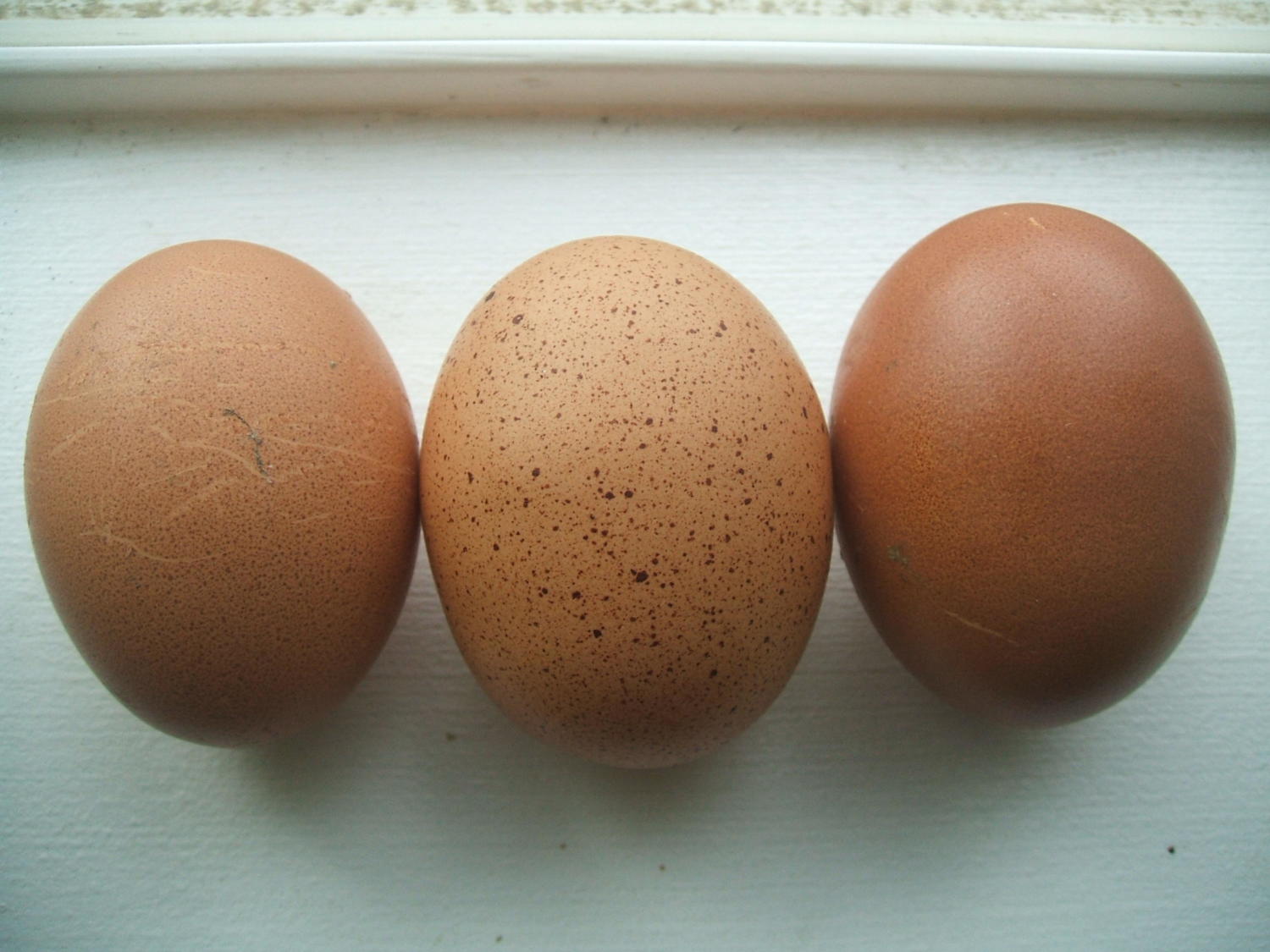
Egg color can vary a lot between birds and different lines. All but the middle egg are from pure Barnevelders. The middle egg is from on of my project pullets with a little Dark cornish in her (oddly that cross produced some darker than average layers). The lightest egg on the left came from an "exhibition" line of Barnevelders. I still have two hens from that line but have not kept any offspring from them as of yet.
More eggs showing some of the different ranges in color and speckles.
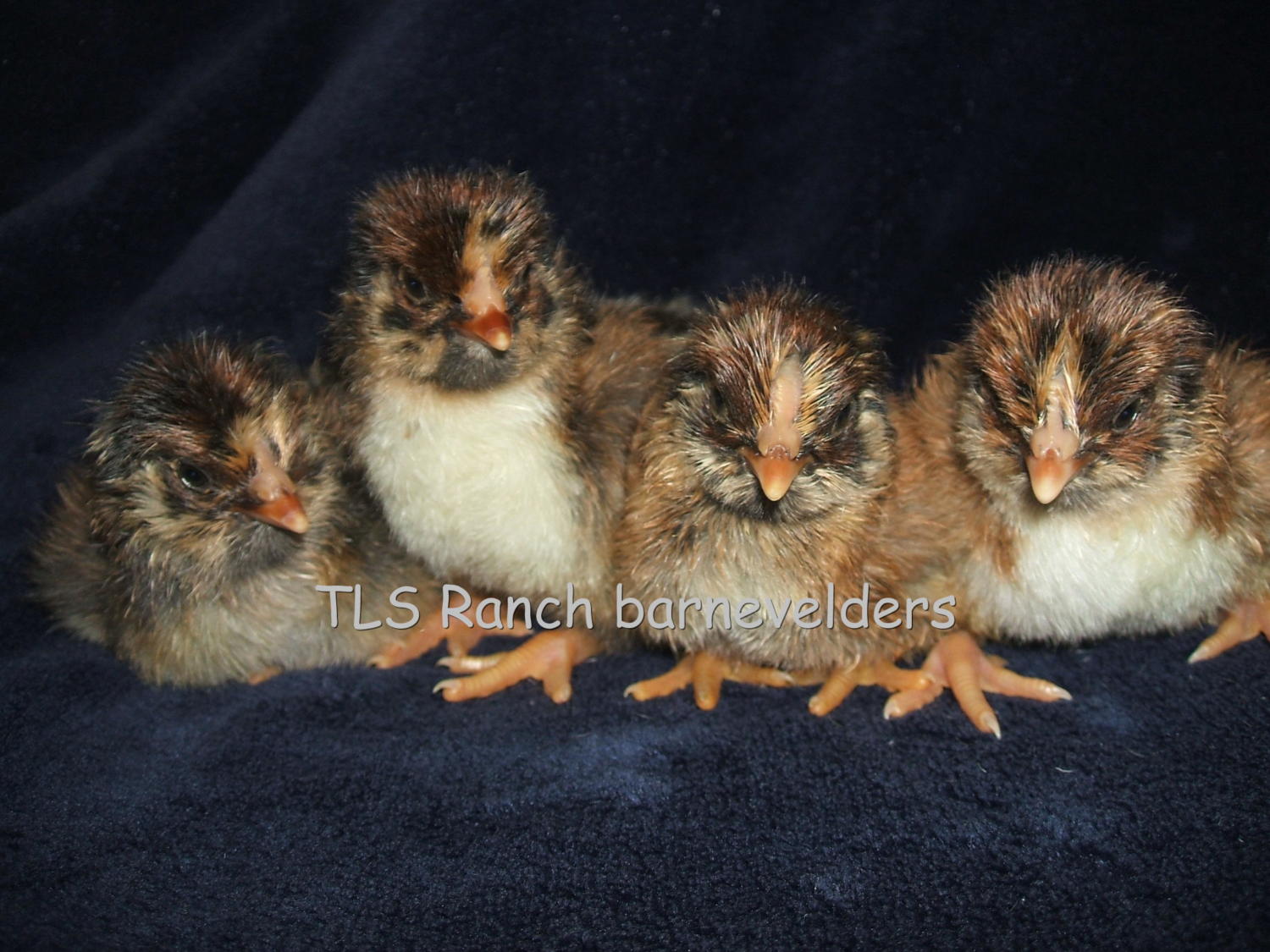
The cutest chicks ever! Well, I guess I'm a bit biased, LOL. Barnevelder chicks should be based on eb (brown) and have solid dark heads. Splashes of lighter head markings are normal, but strong "V" head markings should not be used for breeding. Chicks with "V" head markings may be e or wild-type base color and will probably not have good lacing or color.
With some lines of Barnevelders, you can sex chicks as day-olds based on breast down color. Chicks with white breasts are usually male and chicks with dark grayish breasts are female. Chicks can also be sexed by feathering rate. Pullets tend to feather out faster (tail, linger wings, back and breast). Cockerels tend to feather out slower (no tail, bare back/shoulders, shorter wings, bare breast). By four-weeks of age comb size/development also starts to become visible.
Pictured: Girl / Boy / Girl / Boy
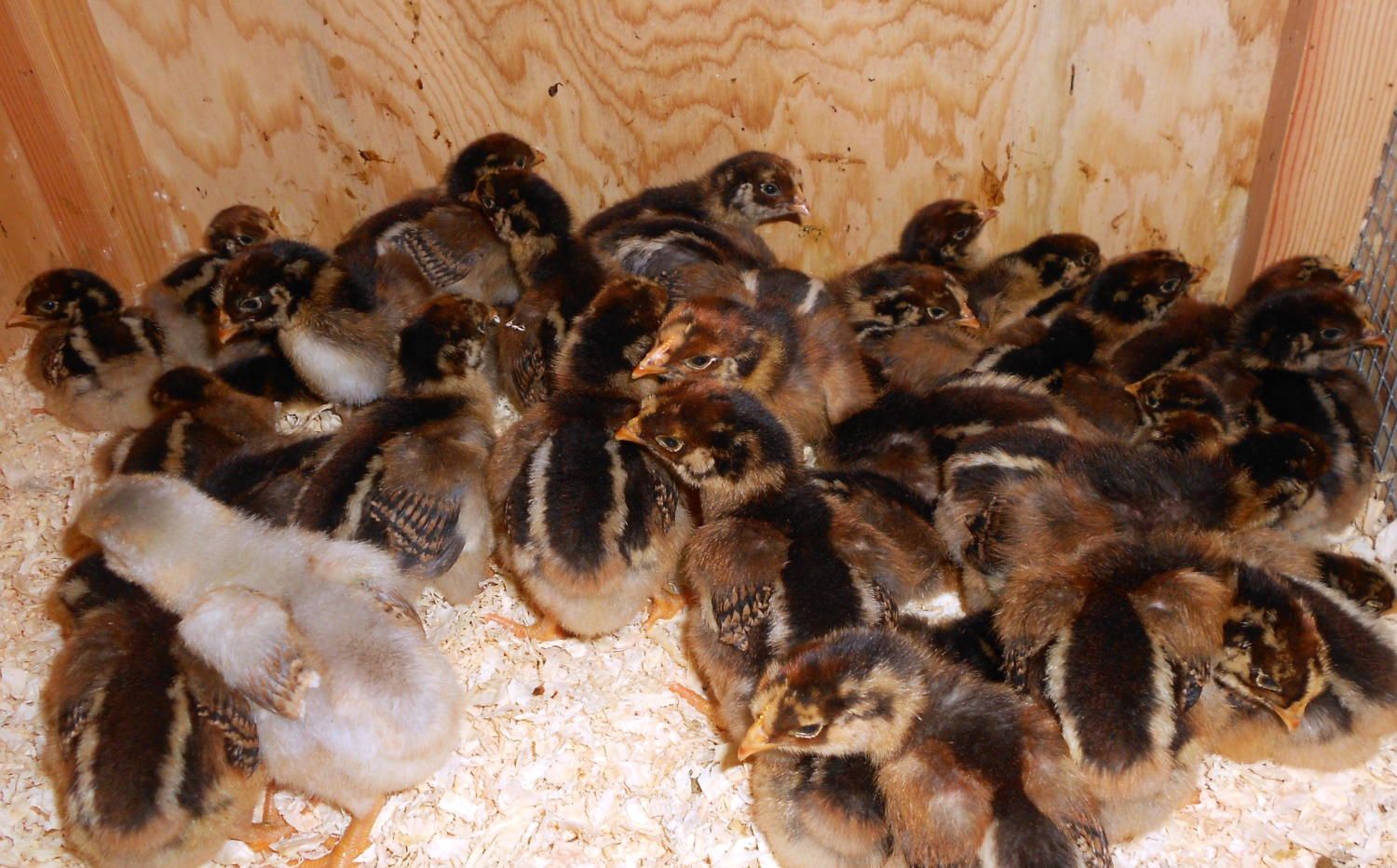
My first ever splash chick! Thought it was a cockerel because of the size, but it turned out to be a pullet
Blue chicks from the blue project. Lots of blue pullets in this hatch
Most are showing signs of having pretty good lacing.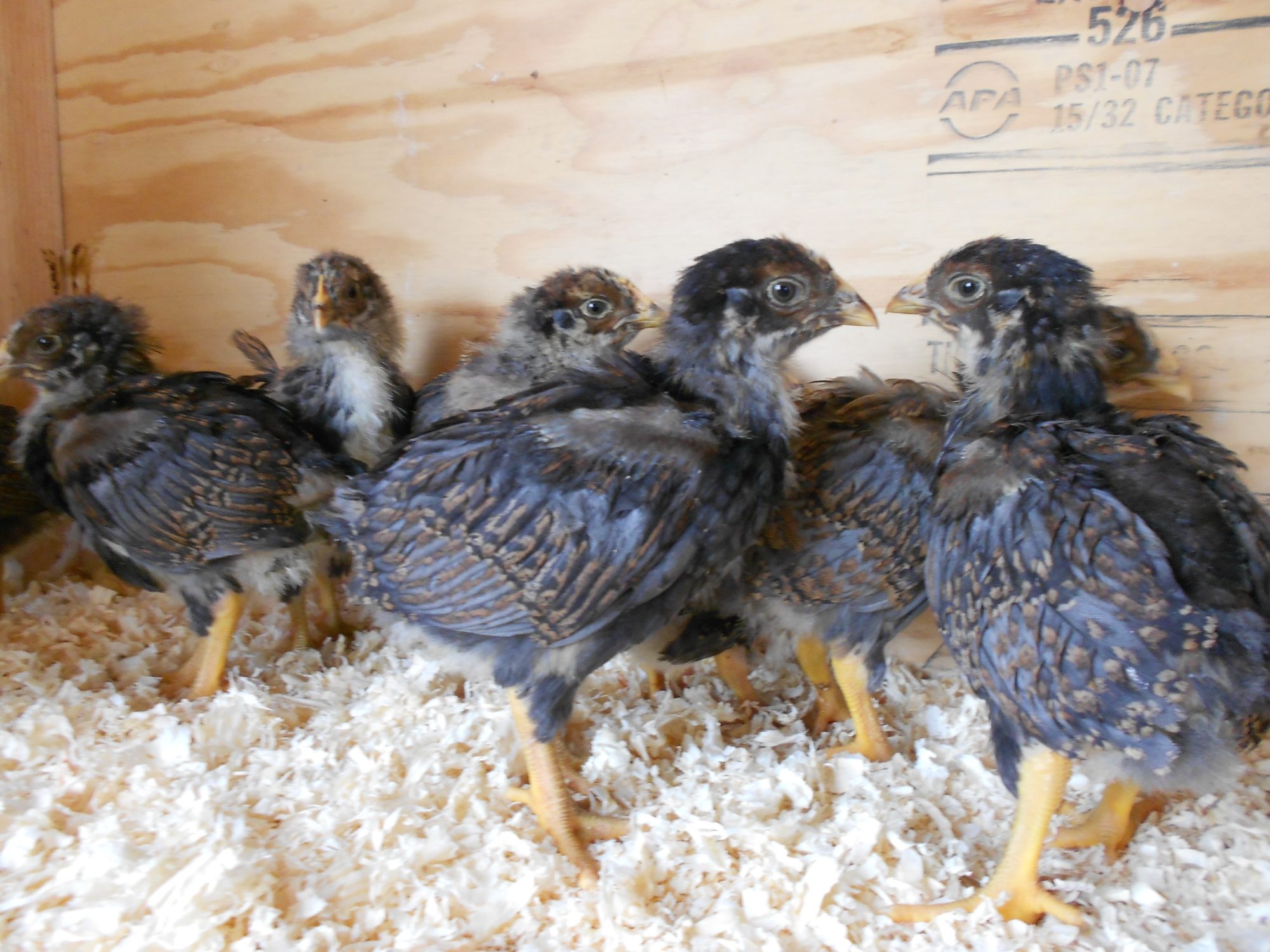
Barnevelders can go broody (some lines more than others) My hens usually make great broodies and are good mothers.

This momma hen hatched 8 of 8 eggs then nearly 4 weeks later adopted 8 (day-old) chicks from the bator. She raised all 16 free ranging during the day.

My Coop: The main coop is actually divided into 2 coops and 2 pens. Built with plenty of ventilation for our hot summers. Here in Northern Califorina, we don't have to worry to much about extreme cold, but summer heat can kill.
The Little Brooder for little chicks and or broody hens sitting on eggs. This is inside our well/pump house. Don't mind the black and green paint...the previous owner used it to mark where tools were hung on the walls. I like to move the chicks to the outside brooders and fresh air as soon as possible
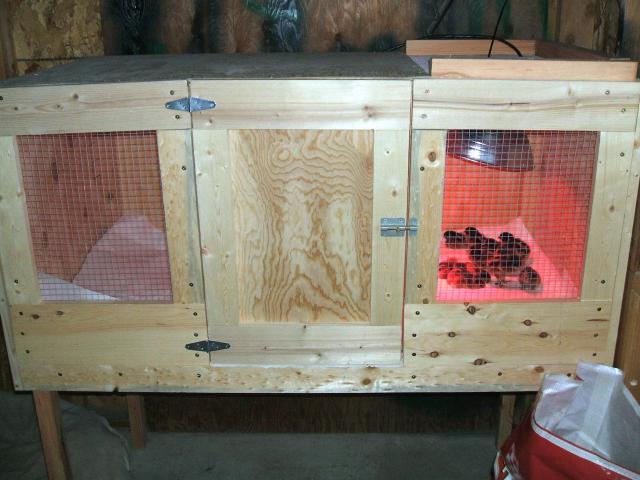
Larger three level brooder for older chicks and broody hens with chicks.
Misc. pictures
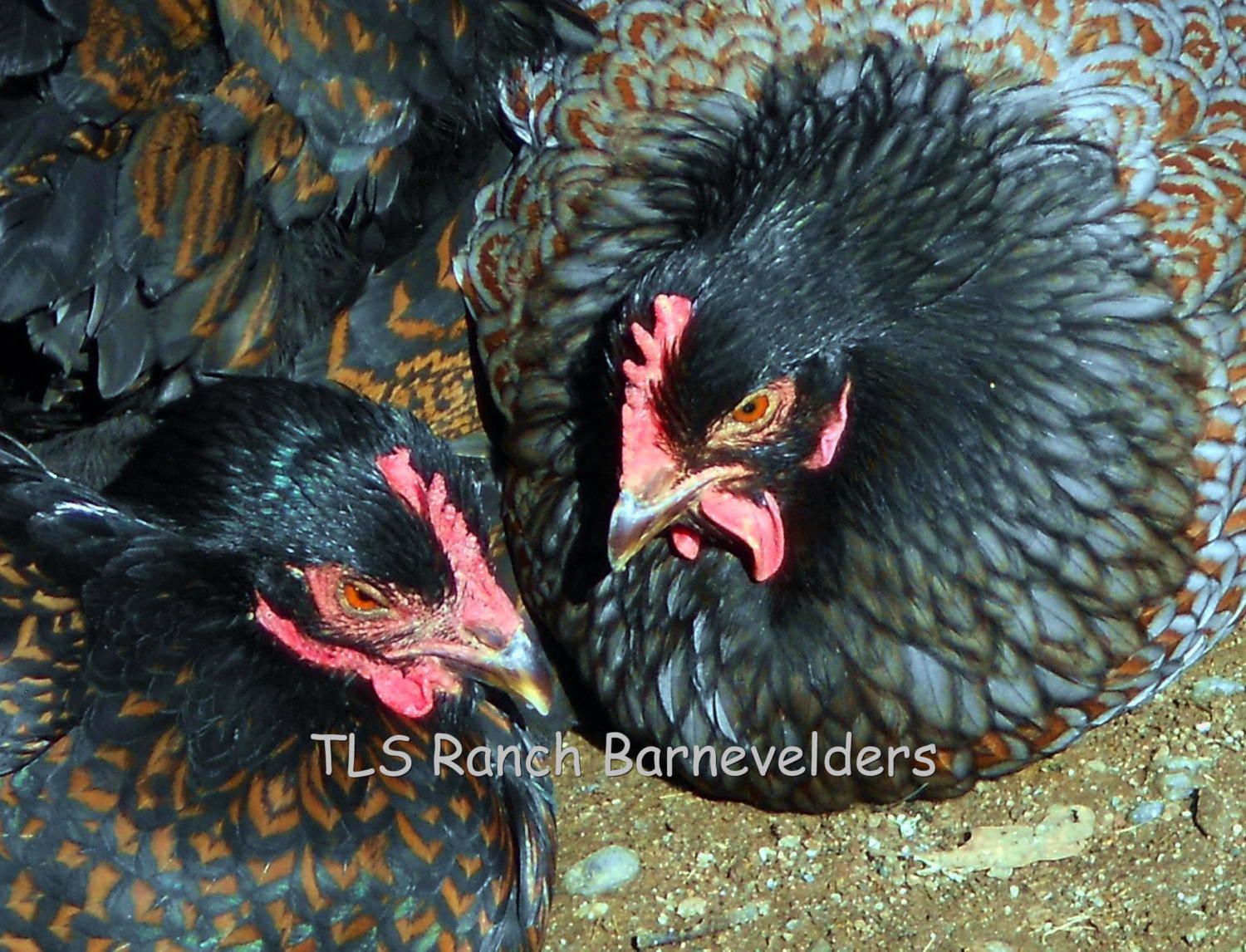
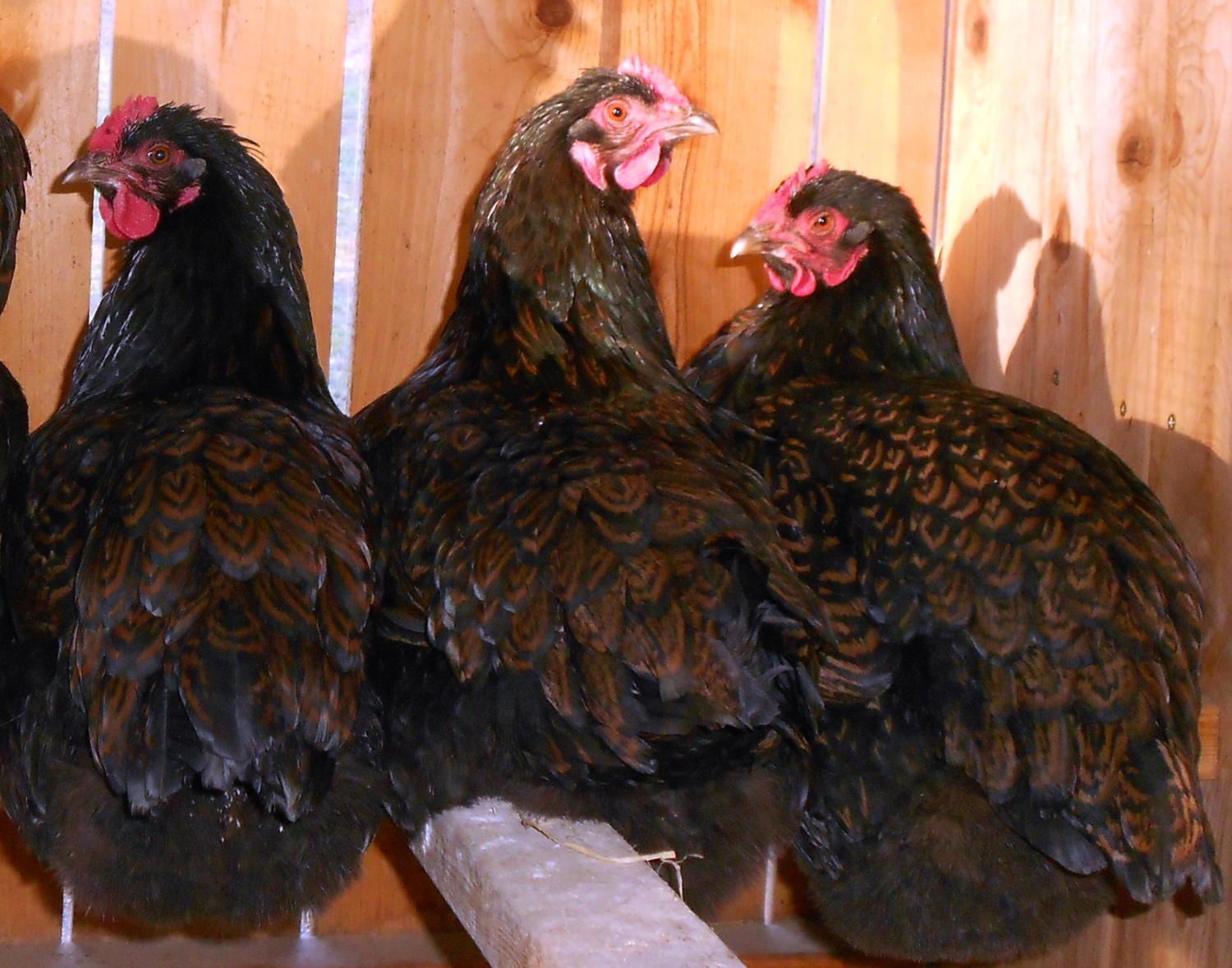
After noon nap time. I disturbed their "beauty rest" ....hence the dirty looks, LOL>
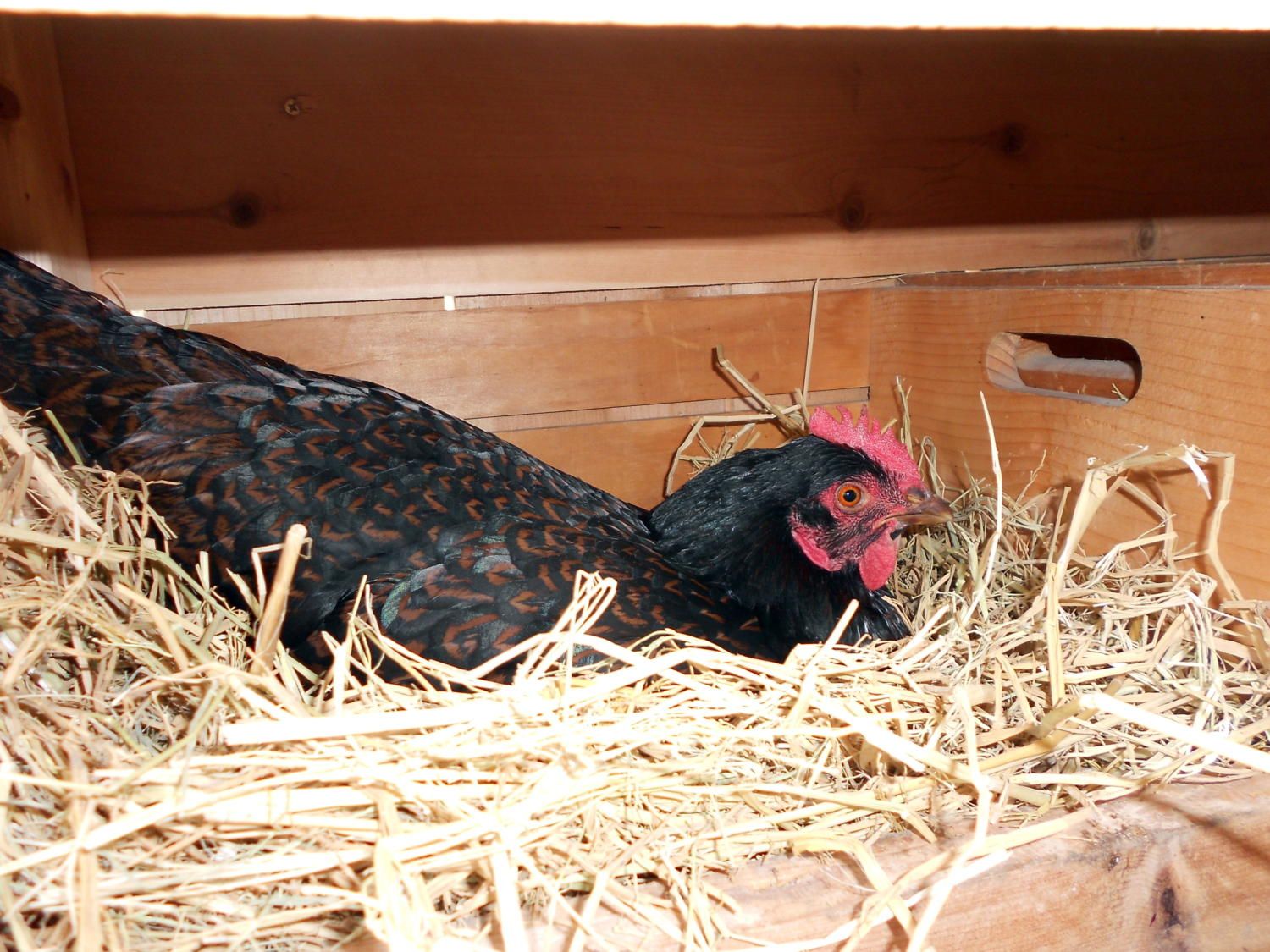
One of my hens hard at work
.
Nothing like a good dirt bath on a hot day!
.
Feeds:
I feed my flock high quality foods. Some may say I'm spoiling them, but I believe nutrition is very important when selling hatching eggs.
Feeds: (depending on availablity)
16-20% protein layer pellets (free choice) for laying hens
18-22% all flock, gamebird, meat bird/grower or medicated starter for chicks and growing birds.
19% protein"pigeon mix" with whole grains, mixed legumes, field peas etc (instead of scratch)
High quality dry cat food (grain free, real meat not meal) as a treat or supplement during moulting.
Free choice oyster shell
Table scraps, fruits and veggies from the garden.
Greens: clover/grass etc.
Free ranging when possible
