BackYard Chickens › BYC Forum › Raising BackYard Chickens › Emergencies / Diseases / Injuries and Cures › MItes or Lice? Fluffy feathers with pic
New Posts  All Forums:Forum Nav:

MItes or Lice? Fluffy feathers with pic

post #1 of 15
Thread Starter 

As everyone will very well notice, this is my first post. I have lurked here for several months, if not years. In October of last year, my wife and I added 6 chickens to our lives; 2 Buffs, 2 Barred Rocks and 2 Araucanas. With the aid of this site I have navigated my way through several issues with the chickens, from coop size, to run size, to groundcovers, etc.


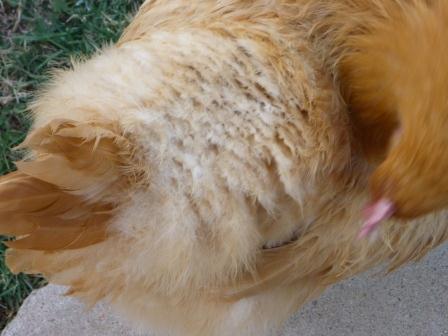
Long story short, my chickens are aggravating the feathers around their tails, giving them the effect of appearing fluffy. I have attached a photo to better explain this. Now as a brief history, originally I had straw in the run, even knowing that some recommended against it as it could harbor mites and/or lice. As soon as this epidemic struck, I removed the straw from the run, dusted the chickens with Poultry Dust, cleaned the coop thoroughly, dusted the coop with Poultry Dust and then redusted the chickens a week later. This was a week ago. During the last week I have added DE to my arsenal and added it to every known dust bathing location I could find. I haven't seen any of them pecking each other and I do notice them itching from time to time (I dunno how much is normal). Despite being confident this is a lice/mite infestation, I have thoroughly inspected the girls and I am unable to see anything.


Has anyone seen this before? Any ideas what I should do? Could it be heat here in Phoenix? My last resort is Ivermectin, but I wanted to avoid anything they might absorb internally. I am sure I probably left out some pertinent details, I will be checking back frequently and will respond accordingly. Thank you everyone for your help.


P1020378.JPG

post #2 of 15

If it's lice, it will be obvious. The feathers near the vent will look like Q-tips. Photos and more details here:http://www.hencam.com/henblog/2010/05/of-lice-and-hens/

I've never seen lice cause a hen to shred the feathers on her back like that.

Mites are harder to see. They're very tiny and hide in wood crevasses at night. You can take a flashlight and look at the roosts at night and you might see tiny specks moving. In a bad infestation you can see them on the hen. Have you looked closely at the skin under those feathers? Mites are blood suckers and you'll see evidence. If it is mite, DE won't kill them. You'll need miticides, and you should also paint the barn to seal the wood. Once you have mites it is very hard to rid the coop of them


Terry Golson

Reply

Terry Golson

Reply
post #3 of 15

 It  does look like lice destruction. 


It's the shape that makes the breed, and the color that makes the variety.


  -- -- Spa Days for Chickens -- --


Reply


It's the shape that makes the breed, and the color that makes the variety.


  -- -- Spa Days for Chickens -- --


Reply
post #4 of 15

Wow...that's a lot of fuzz/frizz!  I've never heard of that happening as a result of lice or mites???  I have to say, if I could find no evidence of lice or mites (bugs, nits, or egg clusters), I'd presume that bugs had nothing to do with it.  Have you seen this link on what to look for?  http://ohioline.osu.edu/vme-fact/0018.html

Many use a few drops of Frontline Plus to address lice/mites (1 drop on small birds).  You can look it up, but I'm pretty certain there is no egg withdrawl period with Frontline.

Oh, and all chickens scratch here and there, just like us people, dogs, cats,etc...so unless they're constantly digging at themselves, I wouldn't worry about that part...

Caretaker of a lovely mixed flock including: australorp, plymouth rocks, wyandotte, d'uccles, silkies, EEs, andalusian, and a few seramas, plus a golden retriever, great dane, and three cats.
R.I.P. Bear 2010 - "The Best Dog Ever"

Reply

Caretaker of a lovely mixed flock including: australorp, plymouth rocks, wyandotte, d'uccles, silkies, EEs, andalusian, and a few seramas, plus a golden retriever, great dane, and three cats.
R.I.P. Bear 2010 - "The Best Dog Ever"

Reply
post #5 of 15
Thread Starter 


Quote:
Mites are harder to see. They're very tiny and hide in wood crevasses at night. You can take a flashlight and look at the roosts at night and you might see tiny specks moving. In a bad infestation you can see them on the hen.


I will go out tonight with a flashlight and see what I can find.


Quote:
 Have you looked closely at the skin under those feathers? 


I have and it looks healthy to me (from what limited experience I have). When I have a minute, I will make sure to get a photo and post. 


The majority of the coop was painted in November prior to the girls moving in, but there are actually some raw areas near the lay boxes that should be painted. 


Thank you for the suggestions and keep them coming.

post #6 of 15

Yep, any cracks and crevices will harbor mites/lice/termites. Just weekly inspect your coop, 


It's the shape that makes the breed, and the color that makes the variety.


  -- -- Spa Days for Chickens -- --


Reply


It's the shape that makes the breed, and the color that makes the variety.


  -- -- Spa Days for Chickens -- --


Reply
post #7 of 15
Thread Starter 

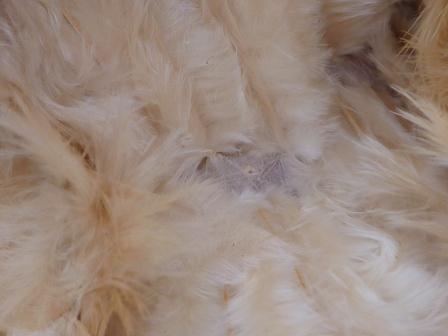
As promised, a photo at the base of the feathers in the affected area. Normal skin color, no evidence of blood, it appears healthy to me. I will use this weekend to paint the raw wood in the coop with Kilz and will likely get some Frontline Plus. I have a tendency to overreact, but its obvious to me there is something wrong.


P1020384.jpg

post #8 of 15

Looks like mites to me. Regardless of the claims of DE, I have found it is just an "ok" preventive. If you have an infestation though you may as well try and ask them nicely to leave versus using DE. Ivermectin pour-on is your best bet IMPO

post #9 of 15

http://edis.ifas.ufl.edu/ig140yuckyuck.gif

Here's a link with pics and descriptions of lice and mites, and what they feed on. Lice feed on the feather shaft while others feed on skin, fluff, or feathers. Mites feed off blood. Keep in mind that if you use ivermectin or eprinex, both are primarily wormers but will kill mites if that's what you're dealing with.


     Most people have no clue...think about it:   Forewarned is Forearmed

Reply


     Most people have no clue...think about it:   Forewarned is Forearmed

Reply
post #10 of 15

I know that feather mites make the chicken look like it's barred (but not white it's clear) That's defiantly not feather mites . Also lack of food and water does that, and I got it on my chooks often when I couldn't open them up till I was done with school because of a bobcat problem. 


It's the shape that makes the breed, and the color that makes the variety.


  -- -- Spa Days for Chickens -- --


Reply


It's the shape that makes the breed, and the color that makes the variety.


  -- -- Spa Days for Chickens -- --


Reply
New Posts  All Forums:Forum Nav:
  Return Home
BackYard Chickens › BYC Forum › Raising BackYard Chickens › Emergencies / Diseases / Injuries and Cures › MItes or Lice? Fluffy feathers with pic