Any suggestions on how we should do the floor in our coop? Either paint or linoleum is the direction we're leaning, but should we caulk as well? I heard something about mites.
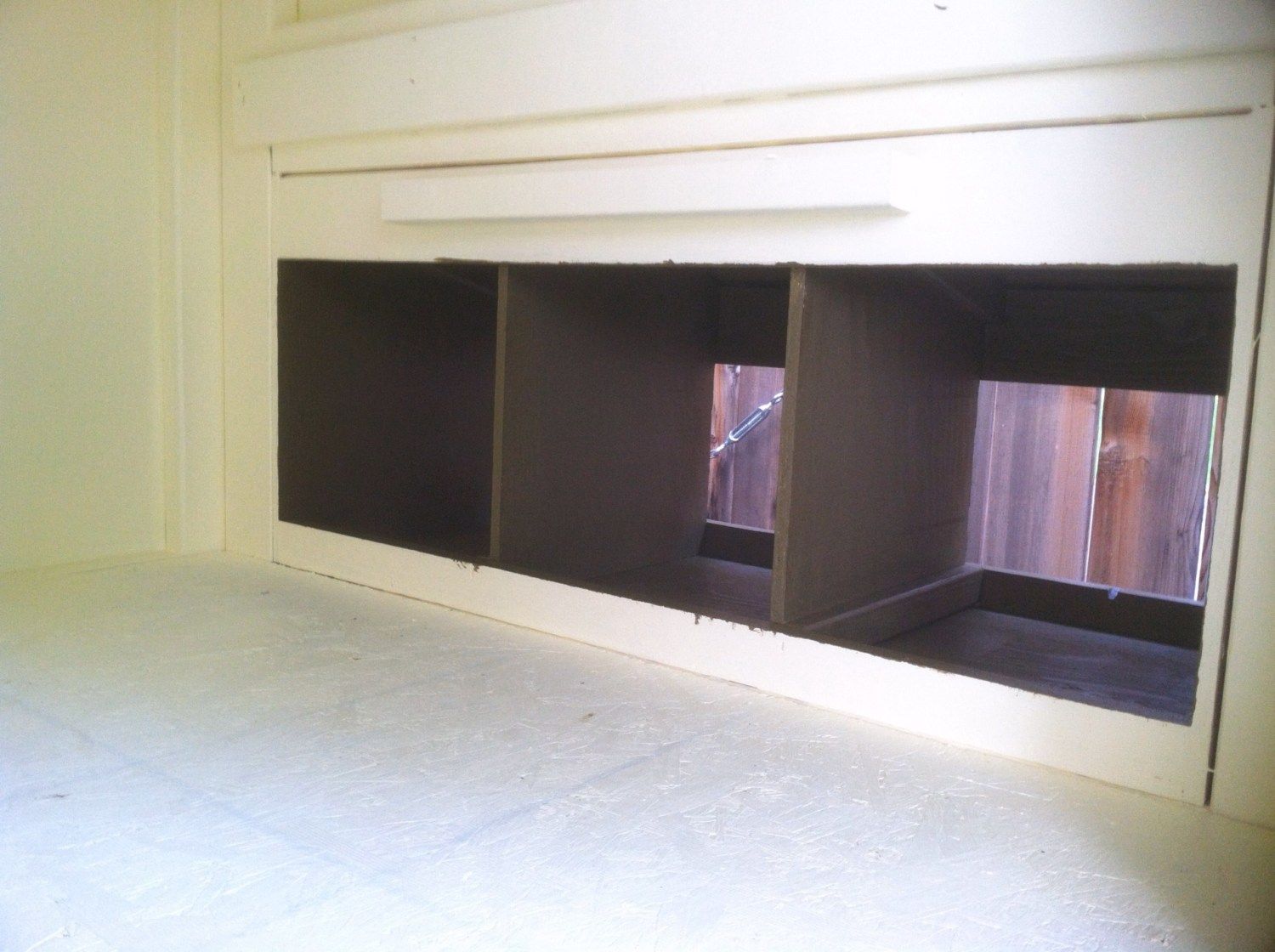
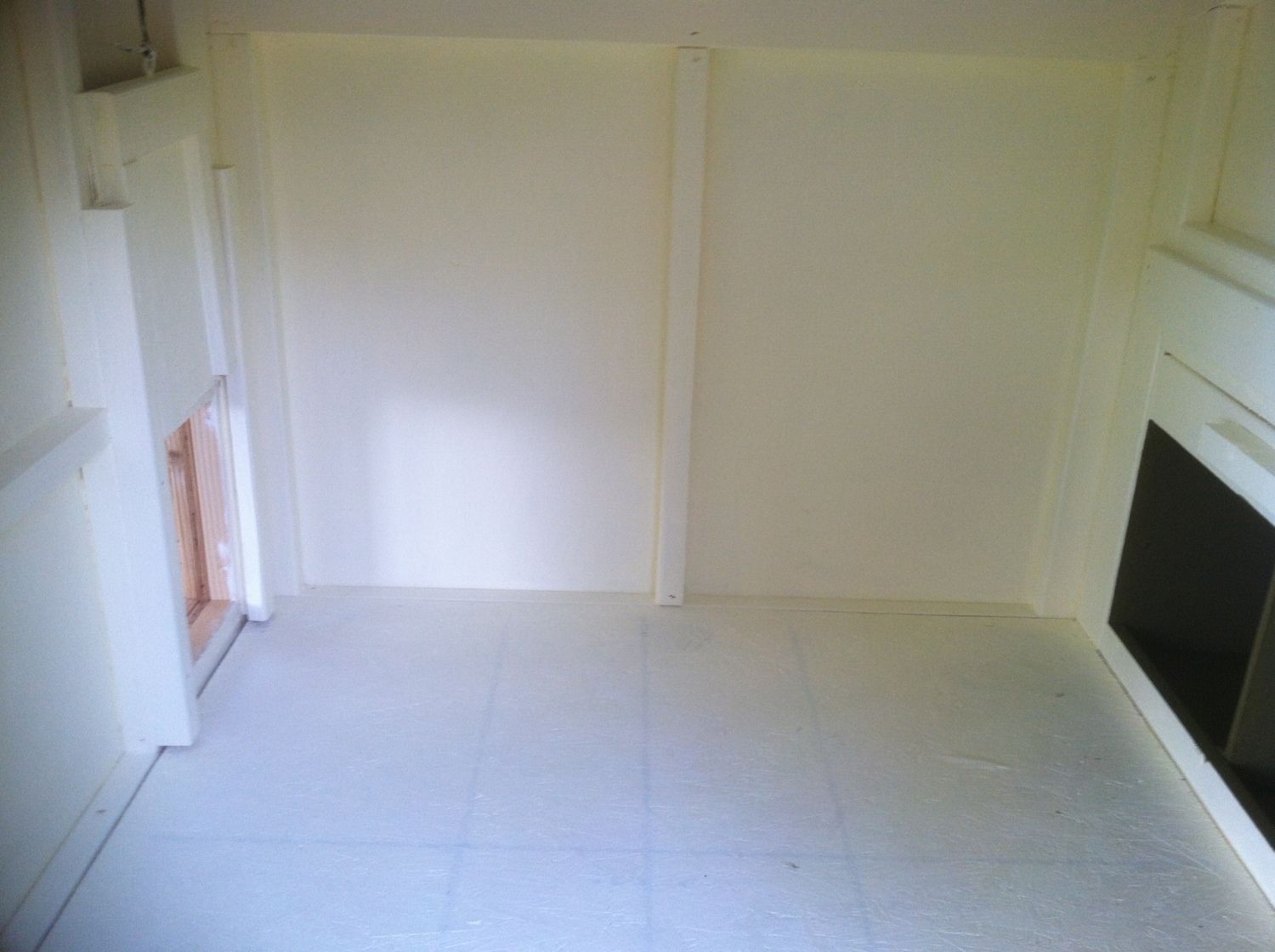
I was told the biggest risk of injury to laying hens is leg injurys caused by slippery surfaces, linoleum being a big offender. Although alot of people use it and reccomend it for ease of cleaning, we decided to go with a different suggestion, high quality exterior semigloss paint to ease in the annual/biannual cleaning with bleach and water. Also told it reduces insects, pests and mold or mildew forming on the wood surface. We painted the nestboxes a dark color(left over trim paint from our house) and the inside of the coop a light color(had to buy $39 bucks a gallon couldn't find paint store rejects as suggested in a light color, uggh, our eggs are gonna be $20 a dozen) to appear brighter when the days get short and dark......
I'm really new and just started out so have no other comparison or experience to go on just great ideas and kind suggestions from others who know what they're doing Julie
I was told the biggest risk of injury to laying hens is leg injurys caused by slippery surfaces, linoleum being a big offender. Although alot of people use it and reccomend it for ease of cleaning, we decided to go with a different suggestion, high quality exterior semigloss paint to ease in the annual/biannual cleaning with bleach and water. Also told it reduces insects, pests and mold or mildew forming on the wood surface. We painted the nestboxes a dark color(left over trim paint from our house) and the inside of the coop a light color(had to buy $39 bucks a gallon couldn't find paint store rejects as suggested in a light color, uggh, our eggs are gonna be $20 a dozen) to appear brighter when the days get short and dark......
I'm really new and just started out so have no other comparison or experience to go on just great ideas and kind suggestions from others who know what they're doing Julie
My plan was to use a slopping floor under wood shavings (DLM). It would all go down to a central point (like a shower) maybe high enough to park a barrow under. Then come clean time, pull out a slide and voila it empties for easy clean up. Under DLM I thought about some sort of high density plastic sheeting.
I was told the biggest risk of injury to laying hens is leg injurys caused by slippery surfaces, linoleum being a big offender. Although alot of people use it and reccomend it for ease of cleaning, we decided to go with a different suggestion, high quality exterior semigloss paint to ease in the annual/biannual cleaning with bleach and water. Also told it reduces insects, pests and mold or mildew forming on the wood surface. We painted the nestboxes a dark color(left over trim paint from our house) and the inside of the coop a light color(had to buy $39 bucks a gallon couldn't find paint store rejects as suggested in a light color, uggh, our eggs are gonna be $20 a dozen) to appear brighter when the days get short and dark......
I'm really new and just started out so have no other comparison or experience to go on just great ideas and kind suggestions from others who know what they're doing Julie
We've used sheet vinyl--it rips and tears eventually. We've used vinyl tiles-they eventually come up or break off corners.
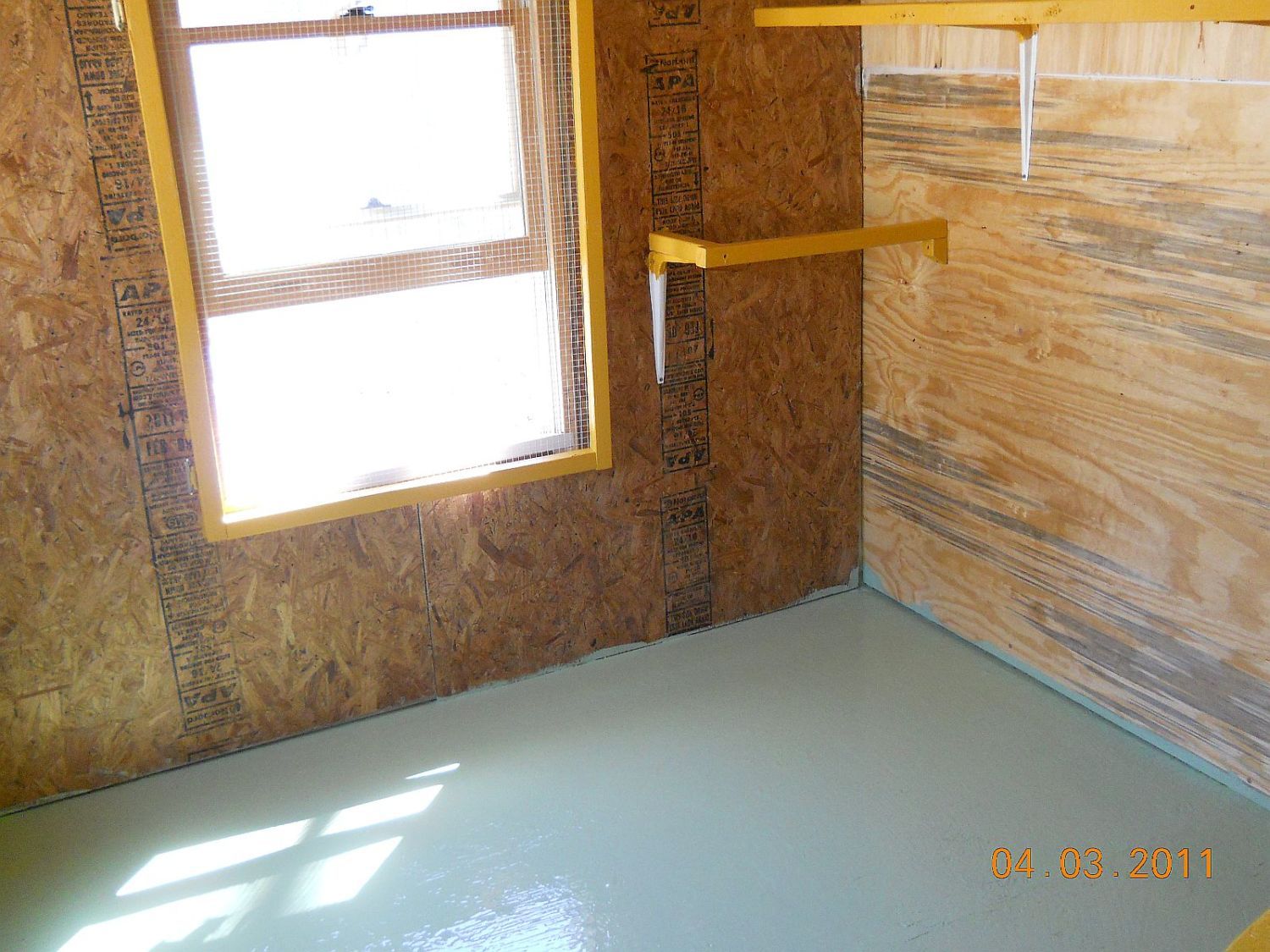
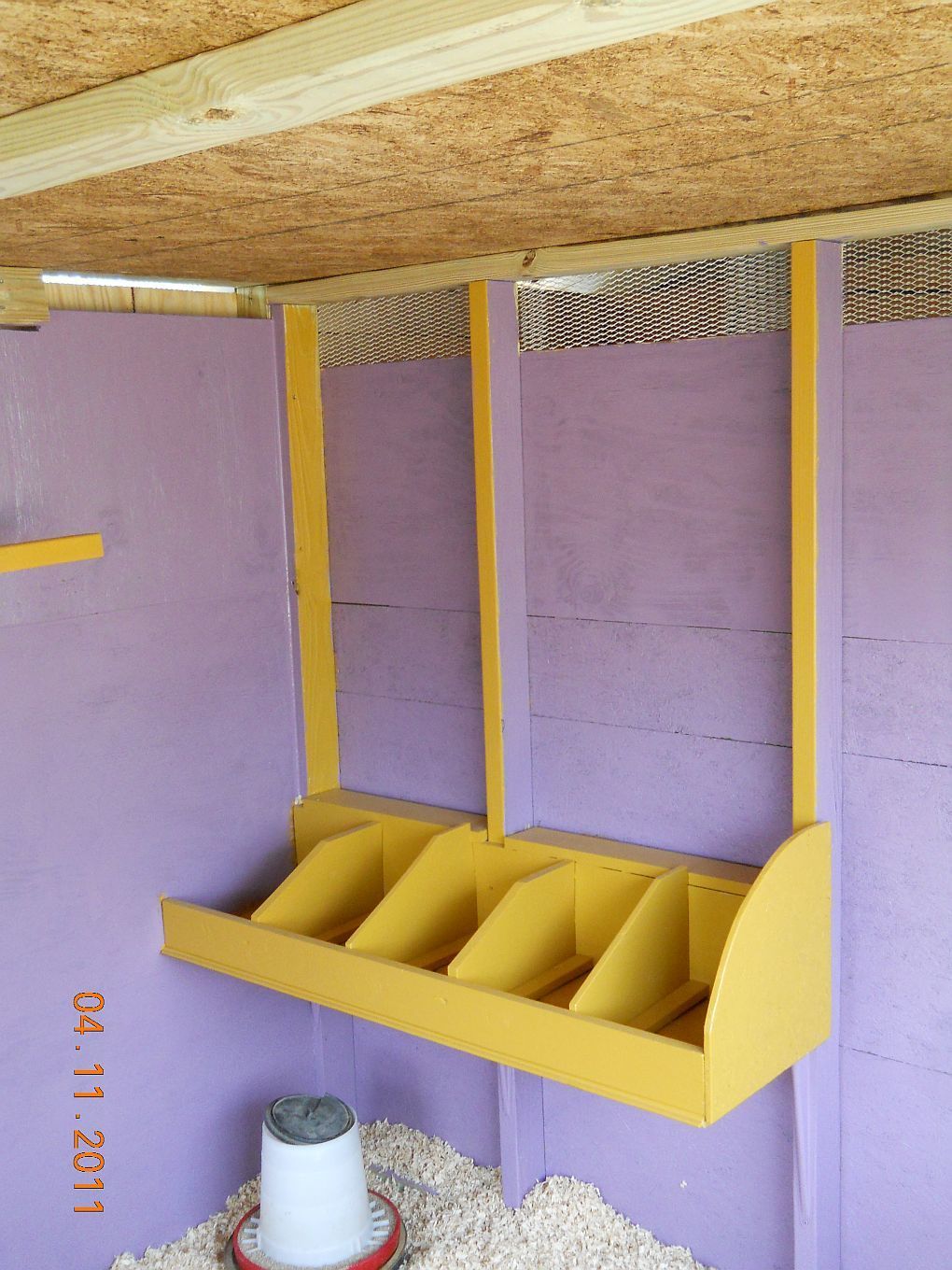
The last coop, we painted the floor with good quality oil based exterior Oops! paint from Home Depot, very thickly, getting all the cracks around the edges with thick paint, not caulk, which comes up too easily. And if you've ever seen a chicken running around with a strip of caulk in her beak with everyone chasing her and you have to chase her down before she eats it, you'll find out the hazards of interior caulk, LOL! We also did the walls and nests with other Oops! paint and it's quite colorful and cheery, as you can see.
Any suggestions on how we should do the floor in our coop? Either paint or linoleum is the direction we're leaning, but should we caulk as well? I heard something about mites.
Linoleum is much more durable than a layer of paint. The little nooks and crannies is where the mites and grubbies will make a home while they feast on the chicks and raise havick in the coop. I seal all the nooks and crannies inside the coop with Liquid Nails, but any good quality Caulk should do.
I hate to use pesticides and chemicals around my home...good home remedy to keep parasites and such out of the hen house...one that has worked for me is to mix a packet or two of chew into the litte of the coop. The chickens will work it into the litter and it simply works. If the Chickens eat the chew...well then it will clean out any internal parasites as well.
We had to remove the entire floor from the main coop addition, which was sheet vinyl. Once it ripped, it was all over. It just kept on ripping, with shavings and dust getting under the edges.
Actual hard linoleum, glued down well, not sheet vinyl, may be tougher, but we'll never use vinyl again, either sheet or tiles. Now, we have a bare wood floor in the main coop with pieces of vinyl left from the main sheet all around the edges that catch all the dust and feed, etc. Eventually, we plan to build a barn in another location and use this building for storage, but in the new place, we'll either have concrete floors or we'll use the touch oil based exterior paint again on the floor like we did in the last coop. It holds up well to moisture.
Linolium and vinyl will break down over time, and it can be a relatively short time. As it breaks down, moisture WILL get under it and can do damage to a wooden floor. Paint is OK, but it really doesn't seal the gap where the walls meet the floor. I would not use caulk, because as it ages, it starts to come loose, and as was mentioned, the chickens WILL notice and try to eat it. What I use, and IMO, it is THE best cover and protector of a chicken coop floor, Is a rubberized roof coat product I got from LOWES (Blackjack #57). This is the stuff used to seal roofs. If it can stand up to 4 seasons of all kinds of weather on a roof, from super cold to blazing heat, protecting a chicken coop floor is nothing to this stuff. It totally seals the floor gaps, and the gap where the walls meet the floor with a coat of rubber. The gap where the walls meet the floor is where insect pests like to hang out. They can't do it when the gap is sealed shut. And it is NOT slippery.
I have had this product on my coop's floor for over 2yrs, and it looks as good as the day I put it down, although I only get a look at it twice a year when I clean out and replace all the bedding/shavings. To apply, I just dumped a big dollop on the floor and pushed it around with a roller. I applied a heavy coat to the whole floor. If I wanted to, I could fill my coop with an inch or so of water. You want the BEST floor cover/protector, This is the way to go.
Jack




 Julie
Julie