
BackYard Chickens › Breeds & Supplies › Other Poultry › Quail › Coturnix Quail


What People are Saying

More Related Forum Threads and Articles

Coturnix Quail

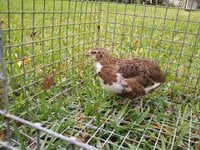
These quail are often referred to as Japanese, Pharaoh, or Biblical quail. It is said that the weak birds were captured while flying over the Mediterranean Sea and then domesticated by the Egyptians.
If you are familiar with this product, please update the details list so it is complete!
Detail Value
Breed Colors/Varieties
There are many colors including Jumbo Brown, Tuxedo, White, British Range, and Manchurian.
Breed Size
Large Fowl

Many products have multiple models (e.g. black edition, white edition, etc.). If you know of any other models of this product with a different MPN/UPC, please add them below.
Model Name/Type MPN EAN/UPC

If you know of links that pertain to this product, add them below. Be sure to fill out the full url; e.g. http://www.example.com/products/ML6782.asp


User Reviews: Coturnix Quail

Ranked #1 in the category Quail
Share Your Opinion. Rate this Item.

Share your thoughts with the community about this item so that you can help other users decide.

Write a Review
Community Rating (7 reviews)
Overall
May 3, 2012 at 4:52 pm
thequaillover12
Reviewed by thequaillover12

gosh i want a coturnix quail


April 24, 2012 at 6:08 pm
Stellar
Reviewed by Stellar
Pros: Great Egg Producers, Great meat, Perfect Pets, Many colors!

Coturnix quail are part of the "Old World Quail," a term used to describe quail in the phasianidae family of birds. Coturnix Quail, the Chinese Blue Breasted "Button" Quail, and the African Harlequin Quail are classified in the "Old World Quail" grouping.


The Wild European coturnix, also classified as Coturnix coturnix (common quail), have been widely distributed throughout Asia, Africa, and Europe, along with several sub-species. The Japanese Quail, Coturnix japonica, from which our domestic quail have been developed, are sometimes considered to be a different species, but in actuality, is identical to the European Coturnix.

They are a migratory bird, dwelling on the ground. Egyptians used to capture them and keep them as pets at the beginning of the 11th century because of their "singing" capability (which is quite entertaining). By the 1900s, the small birds became popular in Japan for their meat and eggs as they mature very fast and are prolific egg layers. There is a lot of history behind the coturnix which is fascinating.


Uses: Meat, Eggs, Pets


Projects:


There are a lot of discrepancies in size with Coturnix. Many don't believe that the bird can reach a certain size, if not more. The fact, however, is that Coturnix can reach a certain mark, due to selective breeding, good stock, proper diet, and housing. 


Varieties:


Jumbo Pharaoh

Texas A and M/Jumbo White

Jumbo Italian

English White

Italian

Manchurian

Tibetan (Dark Range)

Rosetta

Scarlet

Red Range

Tuxedo (in many combinations)


Many colors can be combined.


Finding a good breeding stock can be a problem as Japanese Coturnix are found in many areas and there really is no "quail blood lines" unless breeders have a proper program. The best advise I have is to seek a breeder who has tested their birds against diseases and that has knowledge about the breed. This is also with hatching eggs. Quality eggs come from quality birds, therefore ask the breeder questions.


People seem reluctant to invest time and money in the search for good stock but buying a good breeding stock is not a normal casual purchase. Starting with a good stock is the most important single factor in the success of any quail enterprise.

With any of the color varieties, one should pick up a plump, round, and fully feathered quail. The keel should not be felt right off the bat. The keel is the extension of the sternum (breastbone) which sticks out. However, if there is fat to insulate the bird, one should not feel the keel right away unless there is poking and prodding involved. If the bird is very skinny and the keel can be visibly seen, the bird is most likely sick, which in turn, is not desirable to start a flock with. Check the feathers and make sure there is no sign of mites or lice. When looking into the eyes, they should be clear. The bird should be be alert as well. There should not be any discharge coming from the nostrils. The beak should not be crossed, but even top and bottom. Make sure the feet are of good quality. If the the feet are puffy, swollen, or red, the bird may have bumblefoot, which is a bacterial infection. This is a cause of being on wire too long with no soft areas to rest, but also on unsanitary flooring (too much feces)


Quail eggs are Nutritious!

1. are a remedy against digestive tract disorders such as gastritis, stomach ulcer and duodenal ulcer.
2. can help cure anemia increasing hemoglobin level and remove toxins and heavy metals from blood.
3. help in the treatment of tuberculosis, bronchial asthma, diabetes and vegetative-vascular dystonia.
4. have strong anticancer effects and may help inhibit cancerous growth.
5. help eliminate and remove stones from liver, kidneys and gallbladder.
6. may accelerate recuperation after blood stroke and help strengthen heart muscle.
7. are a powerful stimulant of sexual potency. They nourish the prostrate gland with useful substances, phosphorus, proteins and vitamins and therefore help restore sexual potency in men.
8. promote good memory, enhance brain activity and regulate the nervous system.
9.strengthen the immune system slow down aging of organs and increase the life span.
10.improve skin color and strengthen hair making it shiny and voluminous. That's why quail eggs are used for facial and hair care masks.


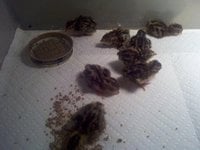
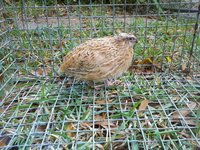
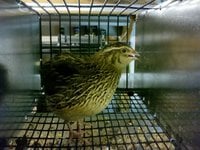
016.JPG


044.JPG

January 18, 2012 at 2:31 pm
bckyrdchknluvr
Reviewed by bckyrdchknluvr
Pros: lay TONS of eggs
Cons: I don't have more of them

I love my Coturnix quail. My three are surprisingly quiet and are pretty smart. One of my hens always comes running when I get near their pen and tries to jump into my hand...just in case I have treats. The other hen seems to lay 2 eggs in a day about every 2 weeks, and they have both missed maybe 2 days of laying since I got them at the beginning of Dec. They also love to be pet and will push each other out of the way if they think I'm not giving them enough attention.

February 2, 2012 at 7:07 pm
vancouver chicks
Reviewed by vancouver chicks
Pros: good egg layer
Cons: very high strung

A very amusing energetic bird, I have now have them hand trained but it took a lot of time and patience. Very high strung and nervous. Hops very high and takes off when startled.

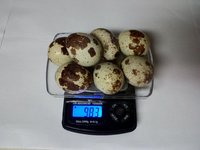
Lays almost daily. The eggs are about the size of a thumb nail. Look great boiled and put whole into

salads or as garnishes.

I feed them the same chicken crumble that I feed my chickens. Plus vegies and grains.

See All 7 User Reviews


Article: Coturnix Quail

Breed Details:

The birds as chicks need a 26% or higher non-medicated Game Bird Starter(GBS). They need a drown proof waterer and feed. As adults they weight between 8 and 14 ounces. There are Jumbo varieties and regular which weighs less. They will lay all year round if given 14 hours of light a day. LED Christmas lights work great for this. They mature in 6-10 weeks, and will lay very often unlike the clutches laid by bobwhites. While they are not good for dog training they are much more efficient for meat and egg purposes. They hatch in 16-18 days and need 45% humidity for the first 14-15 days and then 60%+ for lockdown. These are great for a beginner wanting to raise game birds as they are less aggressive. All colors of coturnix are the same. They may look different, but they lay the same and taste the same. They are great for cleaning up the bottom of an aviary and they make great pets.

LL

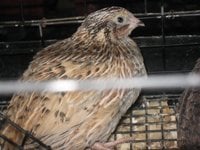
Rooster
LL
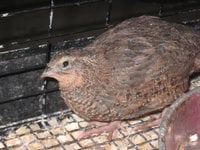
Hen
LL
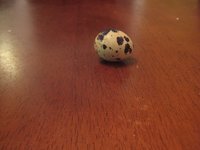
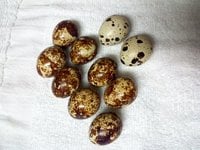
Egg
LL
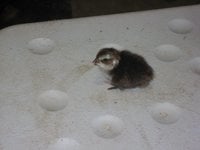
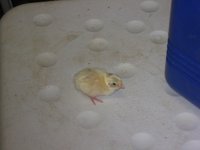
Chick
LL
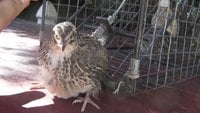
Adolescent
LL
BackYard Chickens › Breeds & Supplies › Other Poultry › Quail › Coturnix Quail