BackYard Chickens › Breeds & Supplies › Chicken Breeds › Plymouth Rock

Plymouth Rock

Posted

Pros: Can be sweet. Good layers. Almost never go broody.

Cons: Little bit flighty, almost never go broody.

Love the breed. They basically never go broody. Which can be good or bad. Great for cold climates.

Posted

Pros: Beautiful, friendly, excellent layers, very cold tolerant, do well confined.

Cons: Some have trouble with very hot weather.

I love my Rocks. They are friendly, intelligent, and they lay so many eggs I almost have trouble keeping up with them all! Very hardy, healthy birds. The hens are also pretty quiet, until they see me coming out to visit (or are laying!). My roo has a beautiful crow, not too loud, just right. Their eggs are medium brown, and the size of each egg is becoming more consistant as they age. They do very well in confinement, but they would rather be roaming. Easy to catch and handle when needed. Great breed for begginers and pros both!


I did lose one hen to the summer heat. Keep an eye on your flock if you live where it gets very hot, as they are a heavy breed. Make sure they have lots of water at all times. It helped me to put a small fan in my coop, I only had it on in the day to circulate the hot, stale air out. But as long as they have water, they should be able to beat the heat, for the most part.

Posted

Pros: very friendly and calm

they come running to my when i open the coop.  all but 1 are ok with being pet or picked up.  Great egg layers too they lay just about daily even now in January


Bought as 19 week old so were $20 each rather than the $3 for chicks

Posted

Pros: curious, intelligent, alert to predators, friendly, fast growing

Cons: can be bullies

Last summer, I purchased two white rock hens and one barred rock rooster as day old chicks. The barred rock roo was the most entertaining chicken I have ever owned! He had an unnatural interest in joining the human "flock" from young on. He often jumped into laps, begged for attention, ate greedily out of the hands of even strangers, and even learned a few tricks! The hens were not  outgoing, but were relatively docile. I have to say that I preferred the company of my barred rock rooster over the white rock hens;-)


My plymouth rocks seemed to be more alert and response to threats of predation. I was very impressed when watching my rooster protect "his" hens... we have a healthy hawk population, and "Dime" was always alert for their presence and quick to respond.


The chicks grow at a remarkable rate. While I cannot speak for their egg laying abilities, I will say that they serve their other purpose very well! We have an urban flock, so unfortunately, my friendly rooster was not allowed to stay once the crowing commenced.


Posted

Pros: Some of them love to be picked up and the havn't started laying yet but will be soon I think!

Cons: flighty every once in a while

I have 3 pullets and just love them! The should start laying just about anytime now and I can't wait these guys used to be really scared and now two of them just love being picked up!

Posted

Pros: Attractive, hardy, inquisitive, good with people. Good layers, overall healthy.

Cons: None

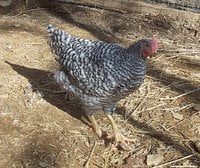
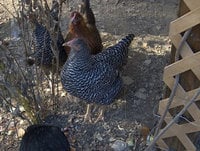
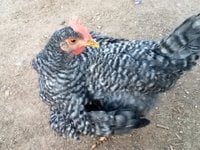
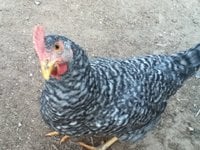
I have had Barred Plymouth Rocks for two years now. We raised them from day old chicks and they have been a delight since. As chicks and pullets they would sit on us (or our cat) all the time. They are very attractive hens. They look beautiful as they walk around our suburban yard, pecking and scratching. Quite often, one or two of them will come and sit with me when I am sitting in the yard reading. When I garden they love to get right in the soil with me to pick out the grubs. During normal conditions we get about 4-5 eggs per week from them, they are very good layers. In two years they have not gone broody yet. They moulted once and it lasted maybe three months. They are overall an excellent breed for a backyard flock. I will always have Plymouth Rocks.

Posted

Pros: Very Nice

Cons: None That I Can Think Of

Our first six chickens consisted of three Jersey Giants and three Barred Plymouth Rocks. These birds are very sweet. Of the first three we have one left, an old hen named Lieutentant Lou Striped. She is the sweetest hen we have, our former petsitter's favorite. She is getting into the years (4-5 now) and even though she is still recovering from a bear attack that took 9 of our 14 chickens in the fall she is already laying almost every day again. She is always very nice to the other chickens and is best friends with our guinea hen Yaffa Anabella. She is the only chicken we have had so far that even remotely tolerates new additions to our flock, and unlike all other breeds we have had she only pecks them if they invade her space, and sometimes warns them away with a nip when she is eating.

She is very curious, and always comes up to peck my boots when I am feeding them their daily treats, as if to say "Hey! I'm down here, give me more!"

I would highly suggest this bird to anyone who is a newbie to chickens, they are very easily maintained and lay a great deal of mediumish light brown/cream eggs.

Posted

Pros: Good Layers, Hens Are Friendly

Cons: Cranky at Times, Mercilessly Attacks New Chickens

I have 6 hens and 1 rooster of this breed. The rooster is a bit skittish and freaks out when I pick him up. The hens are friendly and pretty. The hens do attack new chickens to the point of blood. 

Posted

Pros: funny girls and good boys

Cons: none

2 great girls and 2 good boys! all grew up together and never fought.  Very easy to handle and work with. Left me eggs every day. Very protective of her young as well.

Plymouth Rock
Description:

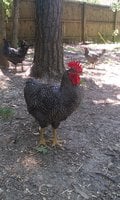
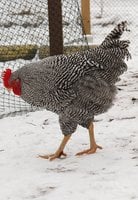
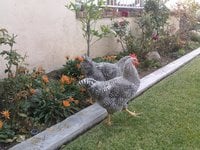
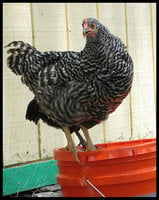
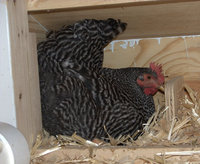
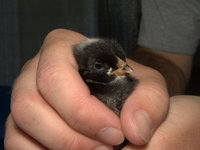
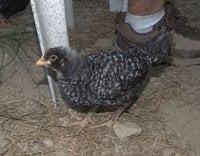
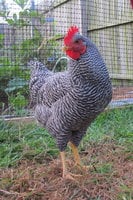
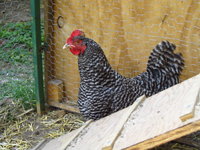
The Plymouth Rock originated in New England in the 19th Century and was first recognized as a breed in the year 1869. They created the first Rock (Barred) by using breeds such as Dominique, Dorkings Cochins, etc. After that other colors and forms of the Plymouth Rock were created. It has been a great bird due to hardiness, egg laying, broodiness, and meat production. The first production meat chicken happened to be the Barred Rock. But now The White Rock is typically the female used to create Cornish X meat chickens.

Details:
DetailValue
Breed PurposeDual Purpose
CombSingle
BroodinessSeldom
Climate ToleranceAll Climates
Egg ProductivityHigh
Egg SizeLarge
Egg ColorLight Brown
Breed TemperamentFriendly,Easily handled,Bears confinement well,Docile
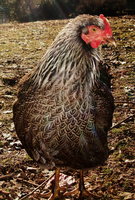
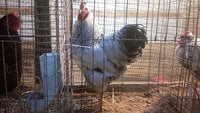
Breed Colors/VarietiesWhite, Partridge, Buff, Barred, Blue, Columbian, Silver Penciled, Black. RED
Breed SizeLarge Fowl
APA/ABA ClassAmerican
Models:
Model Name/TypeMPNEAN/UPC

Chicken Breed Info:

Breed Purpose: Dual Purpose
Comb: Single
Broodiness: Seldom
Climate Tolerance: All Climates

General Egg Info:

Egg Productivity: High
Egg Size: Large
Egg Color: Light Brown

Breed Temperament:

Friendly,Easily handled,Bears confinement well,Docile,Curious

Breed Colors / Varieties:

White, Partridge, Buff, Barred, Blue, Columbian, Silver Penciled, Black.

Breed Details:

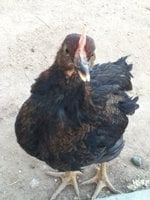
I have found that this breed is friendlier than other breeds, mine always come running and they imprinted as chicks. My partridge Rock will even let me pick her up; very docile. More active then breeds such as Leghorns, EE, and RIR. They are a hardy breed that can withstand quite a bit. I have also noticed that they also grow bigger, faster than most breeds do. Also great layers of large brown eggs and will sometimes become broody and be great mothers.

LL

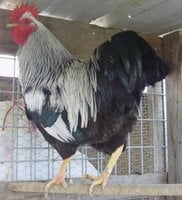
Rooster
LL
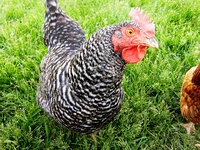
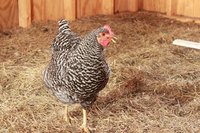
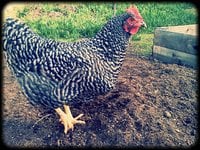
Hen
LL
Egg
LL
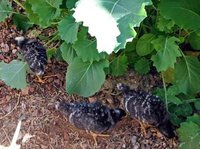
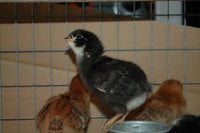
Chick
LL
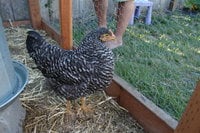
Adolescent
LL


BackYard Chickens › Breeds & Supplies › Chicken Breeds › Plymouth Rock