BackYard Chickens › Breeds & Supplies › Chicken Breeds › Rhode Island

Rhode Island

Posted

Pros: Loving, Great Layers, Wonderful Foragers

Have a feeling that my 6 RIR's are not normal. They are mellow and just want to be loved on. They do become pests when the feed scoop comes out, but other than that have not had any issues with them or do they pick on the other breeds.. The girls all give an egg a day - even through winter (no added light and only turned on heat lamp when it was 15 or lower outside). My flock will always have RIR's in it. big_smile.png

Posted

Pros: Very hardy, very healthy, excellent layers.

Cons: Flighty, can be aggro, not very personable.

I have had three Rhodies for two years now. We raised them from chicks. They do not like being handled at all and generally keep their distance. My alpha hen is one of the Rhodies. She asserts herself but is not a bully. They lay nice brown eggs averaging around 5 per week. They have not gone broody at all. They have moulted and the moult lasted several months. They are pretty birds. Given the choice again, I would reserve Rhodies for more of a farm setting where their independence and hardiness would be very desired. For a backyard flock I would probably go with a more personable breed in the future.

Posted

Pros: Nice sized bird that lays a L/XL brown egg

Cons: Roosters can be very mean

Good layers, production types don't typically go broody. The meanest roosters I've ever had were this breed, but in some settings a good tough guy is exactly what you need. The hens were great... calm, good foragers, very good layers.


Some flying ability. LOUD crowing. Hens didn't much sing the egg song after 8 months of age, so I wouldn't call the girls loud. The girls were not prone to frequent cackling.


Roosters not recommended around small children unless he's proven to be well behaved.

Posted

Pros: very friendly, lays lots of large brown eggs, not one bit aggressive, calm, happy to free range, beautiful color

Cons: no cons for Hens, i have heard that roos can be agro tho..

We have had some wonderful road island red girls. They have been very calm and quiet happy birds. They lay beautiful large brown eggs and are one of our favorites out of the six breeds we have owned. I am surprised that they are not higher on the ratings list.

Posted

Pros: Great foragers, hardy, lay alot of large eggs, rooster is large and very aggressive if he doesn't know you. Some do not consider that a pro. I do.

Cons: Never go broody. This is a plus for some, but I would have liked to hatch some more.

I think these Rhode Island Reds are the best chickens. I have had them for years now. Started with a flock o 10 hens and two roosters, Now down to 5 hens (3 originals) and one original rooster. These birds are great foragers, they go all day hunting bugs and scratching, laying in the sunshine. They lay eggs like clockwork. They are streetwise to predation and when the rooster (who is always vigilant) squawks, they scatter. They have never shown any inclination to go broody which is unfortunate IMO because I would have liked to have raised some for more hens and also to eat the roosters. I got these birds from the IDEAL Hatchery in Texas and they have been great birds. Healthy, smart, friendly, they come running when I am walking around in the yard, I turn around and they are all right behind me including the big rooster. As far as the rooster being aggressive... he is very aggressive and he never ceases his vigilance protecting his flock. I have never lost a bird to a hawk or other predator. (My chickens were kept by a friend for a year while I was moving and in that time, predators broke into her coop that was not very secure and took some of my hens. , but if given the proper support and infrastructure, the rooster is a very capable guardian of his flock. They are a cohesive unit as they move about the yard.  I would recommend the Rhode Island Red chicken especially for a beginner because they are very hardy and forgiving. And they lay a great egg.

Posted

Pros: Economical brown egg producers and excellent free range foragers.

Cons: The Production Reds is a nasty flock member. Good Heritage Red Lines are hard to find but worth it.

That right, there is more than one type of Rhode Island and they are very distinct breeds. Reds are one of, if not the most common brown egg layer to be found. While the whites are practically unknown by comparision. So lets start with a little history before some compare and contrast of the Reds.


A highly informative history on the White type can be found here: http://albc-usa.org/cpl/rhodewhite.html Please read it as I dont care to plagerize or rehash.


Next lets cover a very real issue with Reds. This issue is the "Modern Industial/Production Red"(PR) vs. the "Heritage Red"(HR). Is there a definite difference? I think so. I would point out some key differences.

To those that would differ I would point to the original intent of the breed. This is that the Rhode Island Red is to be first a layer breed, then when hens were spent a decent meat animal could be harvested as well as a breed who's males quickly grow big enough to be a respectable table bird. In this one point of fufilling the breeds original intent I will agree there is very little difference.

Now then why I can see two different breeds.

First difference I would point out is the plumage colors. There is two shades of red to be seen. The PR was not bred for much else besides egg production and due to this the firery lusterous deep mahogany plumage that the HR still wears has given way to a lighter, duller, but still red feathered bird.

I would point out size next. The PR is a smaller bird than the HR. This does help the PR with how economical it is to feed laying hens. The PR should lay more eggs on less feed. Even if its a likely smaller egg.

Lastly, and in my opinion the clearest difference; the attitudes or disposition. The HR I have had were calm, unaggressive, nonflighty and quiet. The opposite can be said for the PR I have kept. Plainly the were annoying, mean, and a nuisance on my farm. While I had them I had a horrible feather pecking issue that turned to cannibalism. I would add that this was even while the birds were freely open to range over my lawn and the farm fields in the backyard. I removed the cannibal birds, all PR, and have not had a feather pecking issue since.

The reason for this divergance in the Rhode Island Red is breeder solely selection. The HR has been pure bred to a standard while the PR has been bred purely for economic utility. If the priorities of two flock managers differ enough it can not only create disinct lines but will eventually produce a recognizably different breed.


P.S.

Seeing as hatcheries choose to sell PR labeled as Rhode Island Red it seems of little importance that New Hampshire blood was introduced in some PR lines. Ill review the Whites on a different breed profile.

Posted

Pros: Reliable layer. Lovable despite her quirks.

Cons: Aloof, bullied the new girls.

Of all my hens, she is the only one who will not let me touch her. She also made my new chicks lives hell when they were introduced to the flock. She is lovable nonetheless. 


She has layed an egg a day since her point of lay, even during the winter, without supplemental lighting. She loves to eat the live spiders that I catch in the house, as well as dandelion flowers, and she is quite vociferous while awaiting her turn in the nest box.  

Posted

Pros: Intelligent, Affectionate, Looked after the other hens,

Cons: None

Where do I begin?  My little Redhenley, nicknamed Mink (it's a long story), was the best girl I've ever had or will ever have.  She died of cancer last year.

She was an excellent egg layer, but since I don't eat eggs, I didn't care really.  She was plucky and hardy, but most of all, she was the best companion in the world.  She ruled the roost and kept every other girl in line.  She kept peace within our flock for five years.  Tillie, our Ameraucana (and Mink's best mate), would peck our Buff Orpingtons.  Mink stopped it as soon as she could.  She could chew you out a mile away, but would cuddle in a heartbeat if you openend your arms.  I'll be getting another RIR next week, and can only hope that she'll be a little like my Mink.  

Here are some pictures:


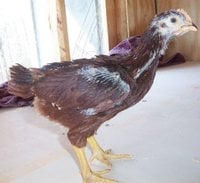
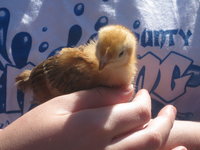
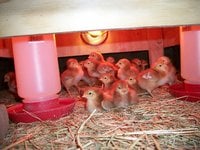
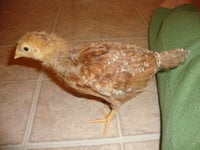
(at a few weeks old)

Posted

Pros: VERY Good Layers right thru our cold winter.

Cons: To Aggressive, Hates to be second in anything!

I have 2 and they have been laying 2 eggs a day since day one. 

Before I had they I had 6 Americana's and I would get 4 to 6 eggs a day.  Their coop and aviary smelled a bit but once I got the reds, that's when we noticed they stunk!  I had them in a very large dog cage so that I could acclimate the two girls to the Americana's.  And their cage would stink to high heaven, you would of never guessed it had been cleaned the day before.barnie.gif

I've had to put aprons on the Americana's, I wish they had neck socks also!hit.gif

Posted

Pros: Pretty, sweet, lovely personality, a great chicken

Cons: None.

I have two RIR's, they are such great chickens, not fully grown yet, but still amazing! I love my girls.

Rhode Island
Description:

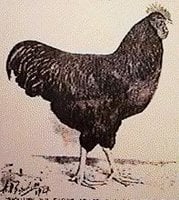
Most often when one thinks of Rhode Island Reds they are thinking of the Large Fowl Rhode Island Red as it is one of the oldest known breeds of chicken and was developed mainly in Rhode Island and Massachusetts in the mid 1840's. The first birds were bred in Little Compton, RI with the use of a Black Breasted Red Malay cock who was imported from England. This Rooster can actually still be seen on display in the Smithsonian Institution as the father of the breed. The breed was accepted into the American Poultry Association in 1904. A monument funded by the Rhode Island Red Club of America was erected in Little Compton and today is listed on the national register of historic places. It can be seen here: http://en.wikipedia.org/wiki/Rhode_Island_Red_(sculpture) The Rhode Island Red is the State Bird of Rhode Island. The breed was developed to withstand the harsh New England winters and be a very hardy bird who produced hens with excellent large egg yields and who also would dress out well and look nice on the table, a true dual purpose bird. While the names and places of origin are the same, the Rhode Island White is actually a distinct breed separate from the Rhode Island Red per the American Poultry Association.

Details:
DetailValue
Breed PurposeDual Purpose
CombSingle
BroodinessSeldom
Climate ToleranceCold
Egg ProductivityHigh
Egg SizeLarge
Egg ColorBrown
Breed TemperamentAggressive,Friendly,Flighty,Easily handled,Calm,Noisy
Breed Colors/VarietiesThe Rhode Island Red is only recognised in Red.
Breed SizeLarge Fowl
APA/ABA ClassAmerican
Models:
Model Name/TypeMPNEAN/UPC

Chicken Breed Info:

Breed Purpose: Dual Purpose
Comb: Rose
Broodiness: Average
Climate Tolerance: Cold

General Egg Info:

Egg Productivity: High
Egg Size: Large
Egg Color: Brown

Breed Temperament:

Aggressive,Friendly,Flighty,Easily handled,Calm,Noisy

Breed Colors / Varieties:

The Rhode Island Red is only recognised in Red.

Breed Details:

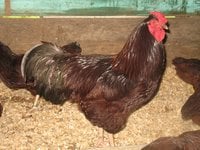
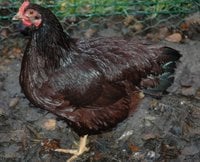
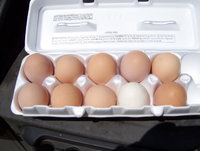
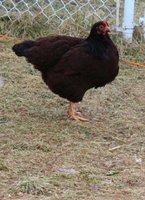
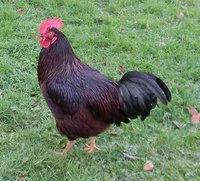
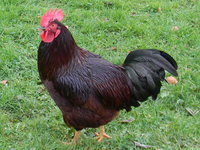
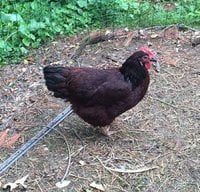
The Rhode Island Red- Large Fowl and Bantam are available as both Single Combed and Rose Combed. The red should be a deep, dark Mahogany or Rust color, the darker the better. Some birds can be so dark as to appear black from a distance, both sexes have black tails with a "beetle" green sheen. The body is best known as being "Brick" shaped for both Rhode Island Reds and Rhode Islands Whites for both Large Fowl and Bantam. The legs are clean and feather free. The skin and feet are yellow. The eyes are red orange. The beak for the Rhode Island Red LF and Bantam is Reddish Brown. Large Fowl weights as follows: Pullet 5 1/2 pounds, cockeral 7 1/2 pounds, hen 6 1/2 pounds and cock 8 1/2 pounds. Bantam weights: 34 ounces for a cock and 30 ounces for a hen at eighteen months of age Eggs- Eggs are always brown (From all varieties) and range from light to dark in color, large in size for the Large Fowl. Not uncommon for first year LF laying hens to have eggs too big to shut into a carton. Eggs are known for hatching well. Rhode Island Reds can be fiesty and a little hot tempered. Especially the cockeral but if handled a lot from early on and won over with treats they can make lovely back yard chickens who tolerate roomy confinement well. Temperments differ greatly between induvidual birds depending on sex, and method of raising.

LL

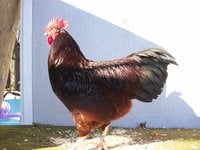
Rooster
LL
Hen
LL
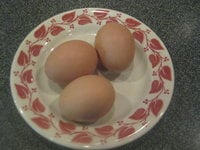
Egg
LL
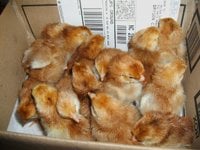
Chick
LL
Adolescent
LL
BackYard Chickens › Breeds & Supplies › Chicken Breeds › Rhode Island