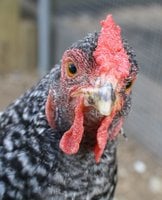
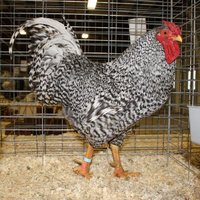
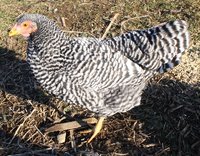
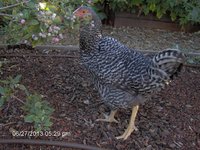
Dominique

Posted

Pros: Friendly, Thrifty, good producers, great tasting, beautiful, great mothers

Cons: Medium to large egg

I Love Dominiques! Besides being our oldest native American breed, they are spefially suited for North America. Last summer we had temperatures to 110 F for a week, and the entire summer was the warmest on record for our area. In the winter it frequently get to below 0 F. They continue to lay about 1 egg every other day. The cockerels are fantastic eating. We process ours at about 26 weeks, and they average about 5 lbs. dressed. The pullets start laying at between 18-22 weeks. Slower developing than some other breeds, this Heritage chicken breed has time to develope flavor that you don't get in store bought chicken. Very friendly, and easy to manage. In November-December 2012, our 12 hens and 1 rooster plus 5 EEs only went through 50 lbs of feed in 6 weeks. AND they still lay eggs! Some roosters can be ornery, but cull those and keep the one with good manners. The best dual purpose breed out there.

Posted

Pros: Very docile and friendly, good layer

I have a 3 of these in my flock and they are definitely the most friendly. One of them will often jump up and peck at the feed scoop as I walk into the run. Two of my three are rather old so I don't think they lay much, but the younger one is a very dependable layer. These are great hens for the beginner and are a must for any flock.

Posted

Pros: Docile, winter egg layers, long lifespan, foragers

Cons: Smaller egg size than some hybrid layers

Egg size is only downside - lay up to a large egg, a few extra large but they are not supposed to lay huge eggs as they are a smaller bird. Very feed efficient ounce per ounce get way more eggs product from them, and more meat product especially if they can free range. Love the breed, have a ton breed more each year I'm addicted. Very cold tolerant and lay lots of eggs in the winter when other breeds (even the other cold tolerant ones it seems) are slowing way down. I have tried other breeds known for their foraging abilities but the Dominiques make the other breeds look a bit lazy, they will be out in the orchard sunup to sundown and don't touch the food in the feeder if they have a choice. Beautiful birds you won't appreciate their beauty until you see a small flock of them on green grass an early summer morning. 

Posted

Pros: Quiet, Sweet, Docile, Inquisitive, Daily layer!

Cons: Can be a little bit of a bully...

We have one of these wonderful girls, Joy, and she is a consistent layer with a really sweet personality.  She is constantly talking with quiet clucks and squeals, which is so much fun to hear.  She is always interested in what you're doing, what you have in your hands, can she eat it... she's great.  Best of all, she has been a consistent layer of small to medium eggs.  She is our top bird, for being as small as she is (she's our littlest bird), she definitely can be a little bully.  She plucked the butts of her fellow girls, but a set of pinless peepers has mellowed her out.  I'd definitely recommend this breed, (even with Joy's happy plucking)!

Posted

Pros: cute,pretty,soft, friendly

Cons: none

they are very pretty and friendly i love them even the roos are nice they are very calm and SO SOFT! i love having them around they are wonderful chickensbig_smile.png

Posted

Pros: Sweet, friendly, beautiful

Cons: Can be aggressive

Our Dominique is still young and hasn't started laying eggs yet, but she is my favorite bird of the five we have (OEG bantam, Faverolle, Speckled Sussex, Welsummer).  She's beautiful and friendly.  We recently added two young hens to the flock and she has pecked the Sussex, although it doesn't seem that she hurt it.  She does like to peck, especially if you're wearing rings!  But she seems to peck out of curiosity rather than intent to hurt.  I highly recommend this breed.


Posted

Pros: Nice, able to handle, heritage breed

Cons: Can be noisy and bossy

I bought my birds about a month ago and got 2 Dominiques. Honestly I bought about 20 assorted birds and these are one of my favorites. They hang out and will let me pick them up. They can be noisy though. When I go to give the birds treats she yells and yells until I give it to her also. But I like the breed. A possum got the other one so next year I may buy a few chicks again.

Posted

Pros: gentle, curious, loving

Cons: short life

Our Dom hen was super!  She laid well and was the first of the new batch of chicks at just a few weeks old to wander into the territory of the "big girls" she had no fear.  Went broody in year 2, so we gave her 10 fertile eggs from an assortment of others, and she hatched every one.  Was a great mom, VERY protective. She died in year 3, think she was just worn out.  It was a lot of work for such a little girl.  Would recommend this breed to anyone.

Posted

Pros: Good camoflauage coloring, great layers, good in cold weather, friendly, beautiful, talkactive, great foragers

Cons: none

I purchased my first Dominiques from Cackle Hatchery in Missouri and they were very true to true Dom standard. My next pullets are on order from McMurray, because I wanted Marck's vaccinations.


My Dominiques are beautiful girls, each has a very distinct personality, the Dom hens seem to be the rulers of the roost. They have the best camoflauage from predators of any of my hens. They are great foragers, while the other hens are relaxing in the sun, my Doms are out scratching and eating bugs.


My girls were very good layers too. Mine layed a large to x-large egg nearly everyday. They also tend to be very clean chickens and keep themselves well groomed. I live in Northern NY near Canada and it gets very rainy and muddy here with lots of snow and the Dominiques keep nice and clean and they do very well in cold weather.


With Buff Orps, Dominiques are my favorite breed of hen. I'd highly recommend them.

Dominique
Description:

Dominique Chickens have endured a long and rich history. First developed by the Colonists, they were not recognized as a specific breed until the early 1800's. <p> They steadily lost popularity as Asiatic breeds became the norm on American farms, and were almost extinct by the early 1900s. The National American Dominique Club was founded to help boost their popularity, but folded in the 1930s. <p> After facing another near extinction by the 1970s, Dominiques began to again regain popularity and more people sought to add these wonderful birds to their farms and breeding programs. In the past few years however, their popularity has again waned, and many folks have moved on to other breeds. <p> The Dominique Club of America was founded in 1973 to help promote the breed and serve as a source of information and breeding stock for members working on their own strain. For more information on the DCA, visit their website at <a href="http://www.dominiqueclub.org">www.dominiqueclub.org</a>

Details:
DetailValue
Breed PurposeDual Purpose
CombRose
BroodinessAverage
Climate ToleranceAll Climates
Egg ProductivityMedium
Egg SizeMedium
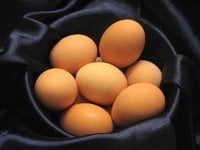
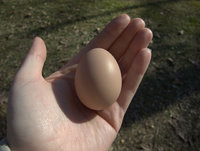
Egg ColorBrown
Breed TemperamentFriendly,Easily handled,Calm,Bears confinement well,Quiet,Docile
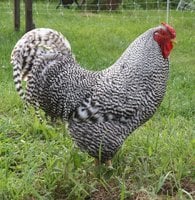
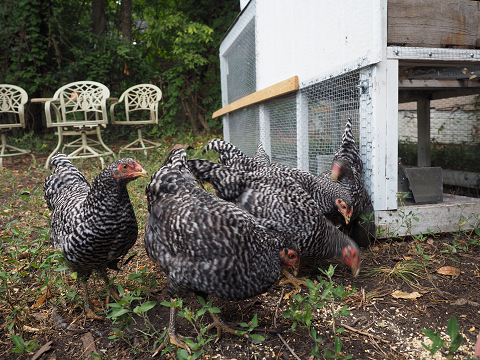
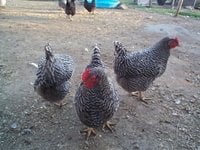
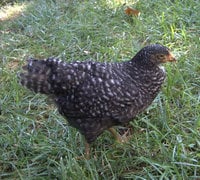
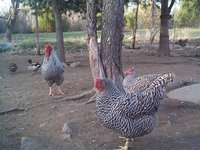
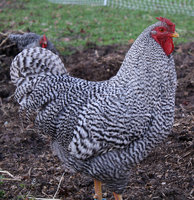
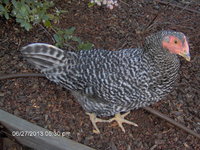
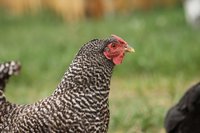
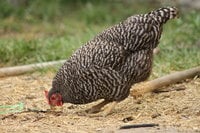
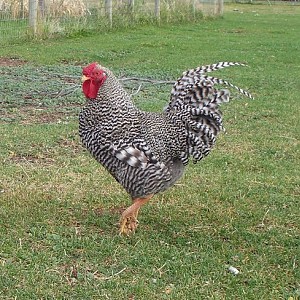
Breed Colors/VarietiesCorrect Dominique barring is not quite black on not quite white, and the bars are staggered, rather than the parallel and sharply contrasting black and white barring of the Barred Rock.
Breed SizeLarge Fowl
APA/ABA Class
Models:
Model Name/TypeMPNEAN/UPC

Chicken Breed Info:

Breed Purpose: Dual Purpose
Comb: Rose
Broodiness: Average
Climate Tolerance: All Climates

General Egg Info:

Egg Productivity: High
Egg Size: Medium
Egg Color: Brown

Breed Temperament:

Friendly,Easily handled,Calm,Bears confinement well,Quiet,Docile

Breed Colors / Varieties:

Correct Dominique barring is not quite black on not quite white, and the bars are staggered, rather than the parallel and sharply contrasting black and white barring of the Barred Rock.

Breed Details:

STANDARD
The Standard of Perfection lists the standard weight of a Dominique cock is 7 lbs, while the standard weight of a hen is 5-5.5 lbs.

Both sexes should have a medium sized head, neck carried well up, with a short, stout beak. A rose comb should be compact, firm and straight on the head, free from hollows, and ending in an upward curving spike. The neck should be of medium length, gracefully arched, and the back should be of medium length and breadth, rising with a concave sweep to the tail. The tail of the cock should be carried at 40 degrees from the horizontal. Full, round and prominent breast, moderately long thighs, with shanks fine in bone and medium length toes. Shanks and toes should be yellow in color and free from feathers and stubs.

The Large Fowl Dominique falls under the American class, while the Bantam variety is in the Comb Clean Leg (RCCL) class.

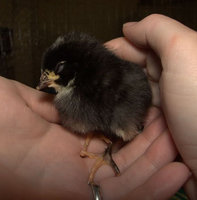
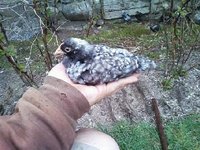
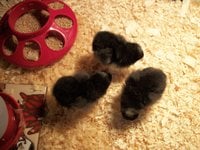
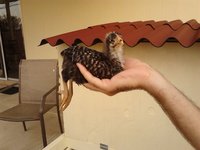
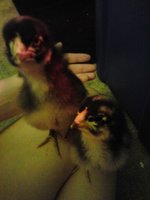
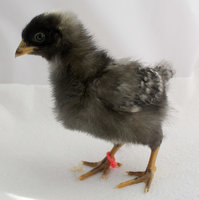
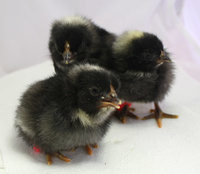
Dominique chicks are sex linked, which makes it much easier for breeders to sex their chicks as soon as they hatch. A cockerel chick has a light and scattered spot of yellow on the top of the head, while the head spot of a pullet chicks is more compact and solid. Also, the shanks & feet of a pullet chick is darker and much more shadowed than that of a cockerel chick.

STATUS
Currently, the American Livestock Breeds Conservancy lists the Dominique as being on "Watch" status. They have enjoyed a resurgence of popularity and their numbers are slowly climbing. Dominiques have the honor of being one of the breeds listed on the Slow Food USA Ark of Taste.

LL

Rooster
LL
Hen
LL
Egg
LL
Chick
LL
Adolescent
LL