Rotisserie simply provides a rotating roasting solution...i.e. no flat, slimy side when done. It is still quick, dry cooking which is toughness inducing but perfectly fine for young, tender birds.
The thing that makes older chickens tougher is all the connective tissue in the muscles that is developed as the bird exercises every day...walking, eating, etc. This same stuff is what makes beef brisket or pork shoulder/ribs tough as well. For the beef and pork solutions the best method is slow, low (below boiling temp) cooking: smoke house, bbq or braising (moist cooking in a slow cooker or oven but NOT boiling!).
If you slooooooowly raise the temp of that bird (or beef/pork cut) to NEAR boiling (180-185F) that connective tissue (collagen) dissolves giving you a ton of gelatin and leaving behind tender, juicy meat. If you raise the temp too quickly to boiling or beyond the collagen "firms up" and will never dissolve. This is what causes tough cuts or birds to toughen up.
While gelatin does not taste great on its own it adds body to the final product by acting as a flavor sponge to whatever it is cooked with and adding a mouth feel very similar to fat but without the downside of fat (heart health, floating/congealing on top, etc). This "simulated" fat feeling makes foods seem "tastier".
So, long story longer: no to the rotisserie for old birds, slow/low cook 'em for tender but FLAVORFUL meat, use the remains for better chix stock, don't boil your ribs (had to throw this last one in there....I see far too many people destroy a good rib rack this way).
References: 12 seasons of Alton Brown's Good Eats



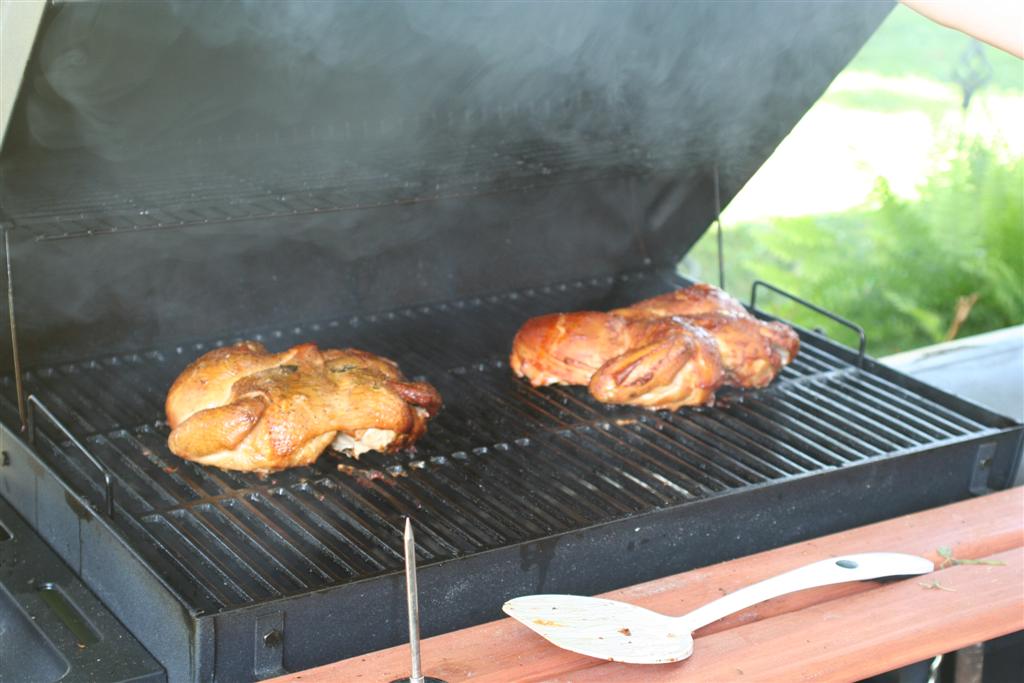


 FOOD: what are you having?
 Open Contest Egg Candling Photo Contest—17th Annual BYC Easter Hatch-Along
 BYC's 52-week Photography Challenge. Week 8: (Feb 23-March 2, 2026) Theme: Signs
 BYC's 52-week Photography Challenge. Week 9: (Mar 2 - Mar 8, 2026) Theme: Frame within a Frame
