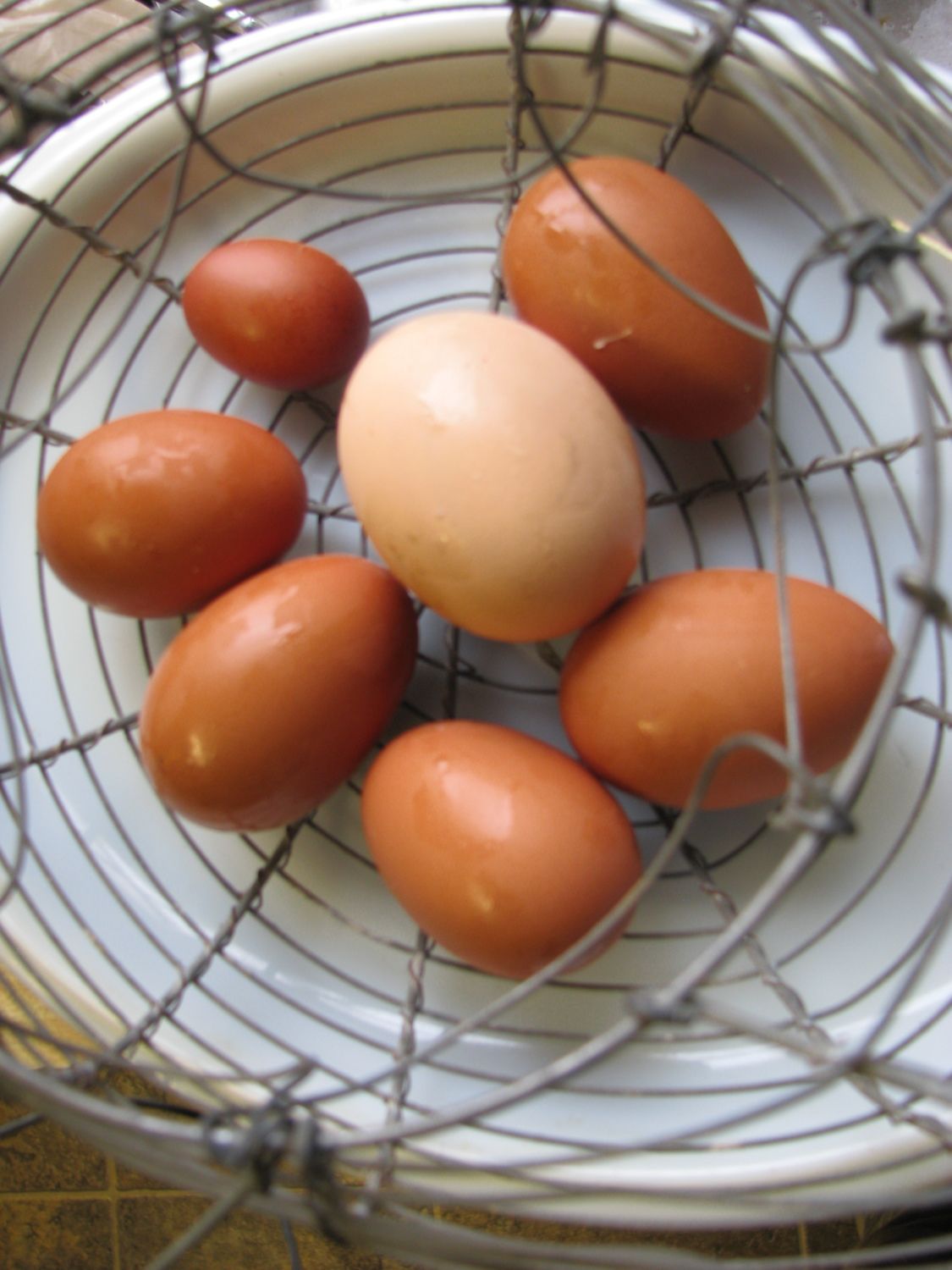
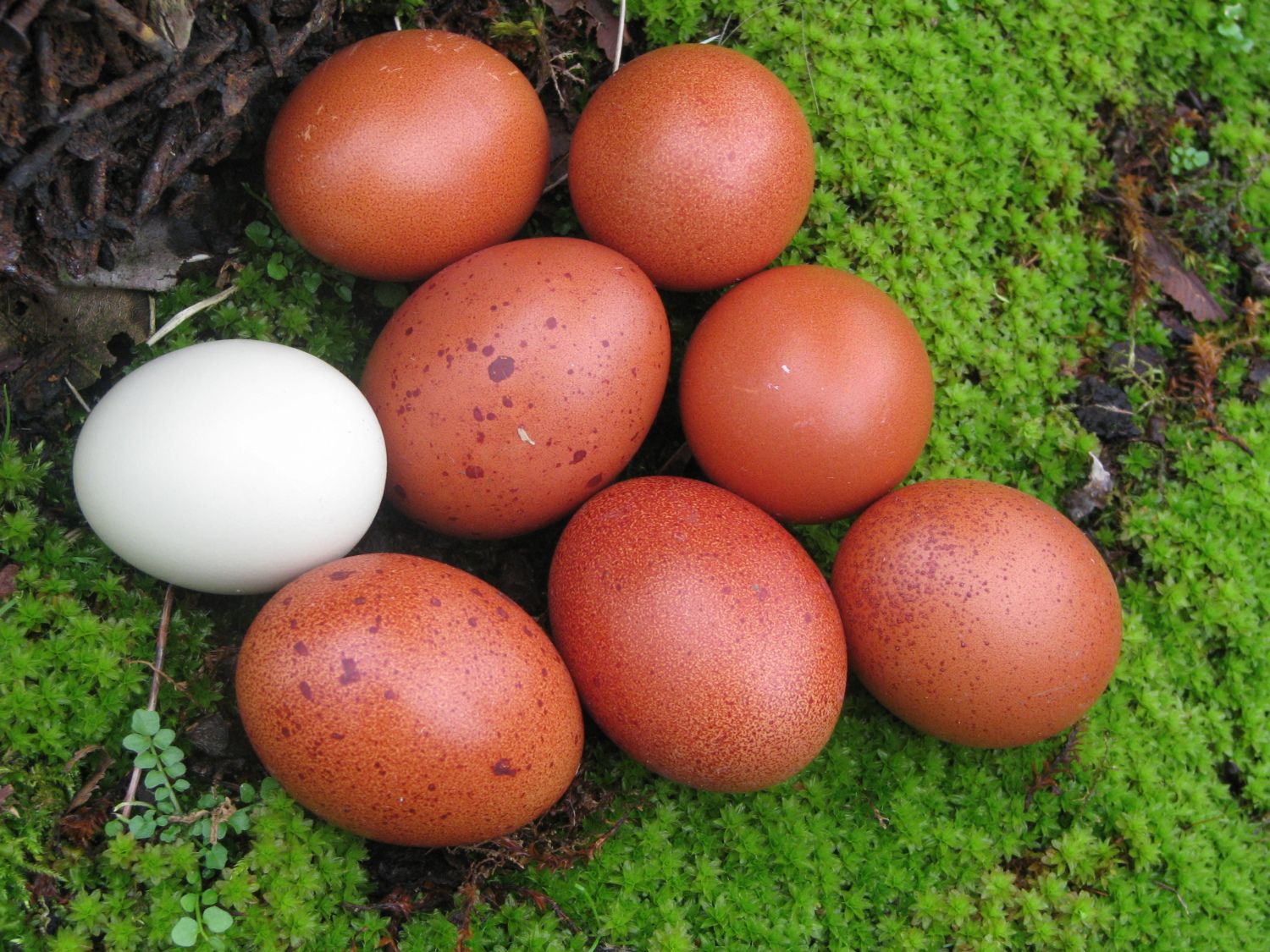
A well known breeder of marans claims if they don't lay the deep dark eggs they are not true marans.
I'm not a well-known breeder, nor am I quoting one. Just for the record. So take this with a grain of salt.
The French Standard for Marans (as stated on their web site the last time I checked) dictates that the eggs laid must be at least a 4 on the color scale or
the layer of those eggs is not a Marans
at all regardless of her lineage or breeding. A 4 is not that dark, especially when compared to a 7 on the color scale.
A Marans does not have to lay
deep dark eggs to be a Marans; only a 4 is required. Additionally, I believe there is a clause that she must only lay at least a 4 for part of her yearly egg laying cycle, which would mean that she could lay 3s some of the time.
Correct me if I'm wrong, but the American Poultry Association (APA) does not judge egg color and egg color isn't part of the Standard of Perfection (SOP) for Black Copper Marans (those being the only variety of Marans with APA approval, right?). To the APA, it's all about what the bird looks like on the outside. That's why it's good to know if the breeder is breeding for the APA SOP, which many are, or if they are breeding for egg color. It's true, though, that many claim to be breeding for both, but my light egg layer (at least a 4) just popped out of no where and surprised me. I used a son of one of the original hens for that batch of Black Coppers, bred back to two of my original hens (one of which was his mother, a standard breeding system) and that was the only thing I did differently to get a lighter (4) egg. I don't know which hen was the mother of the light laying Marans hen. It doesn't necessarily take much to have a hiccup in egg color.
Black Copper Marans are also good broodies, as in, if you get the right nick or strain, she'll go broody every spring or summer, stay broody, and hatch and raise the chicks. My Black Copper Marans are broodier than my bantam Cochin. Also, if you get chicks from the right strain, they are the very mild mannered little hens and the roosters are pretty easy, too. There's more to Black Copper Marans than just a pretty egg.

If I had it to do all over again, I would order Black Copper Marans from a hatchery and take my chances. (Plus I can order a few other breeds at the same time and brood them together.) It's a risk buying Black Copper Marans from a hatchery, but all I wanted was dark eggs. When I was dark egg shopping, I didn't care about a squirrel tail or brachydactyly or black eyes; I was just hoping I could get an egg or two to hatch into pullets. The hatcheries that have Black Copper Marans now haven't had them that long and so the chance of loss of egg color isn't as great as it could be five years down the road, if they aren't paying attention. But I suspect that the hatcheries are smart enough to keep the dark egg genetics in their Black Copper Marans. They're getting around $10 a chick; that's an incentive. It's worth it to them to only hatch the dark eggs, which is what any breeder of Marans will admit is one of the tricks to keeping dark egg color.
edit to last reference to Marans make sure everyone knew that I am only discussing Black Copper Marans.






 2nd Sick Chicken -- Coop too wet?
 Pullet laid for one week then stopped.. should I be concerned?
 FOOD: what are you having?
 Open Contest Egg Candling Photo Contest—17th Annual BYC Easter Hatch-Along
 BYC's 52-week Photography Challenge. Week 8: (Feb 23-March 2, 2026) Theme: Signs
 Open Contest Cutest Baby Fowl Photo Contest—Win a Brinsea Maxi 48 EX Connect—17th Annual BYC Easter Hatch-Along
