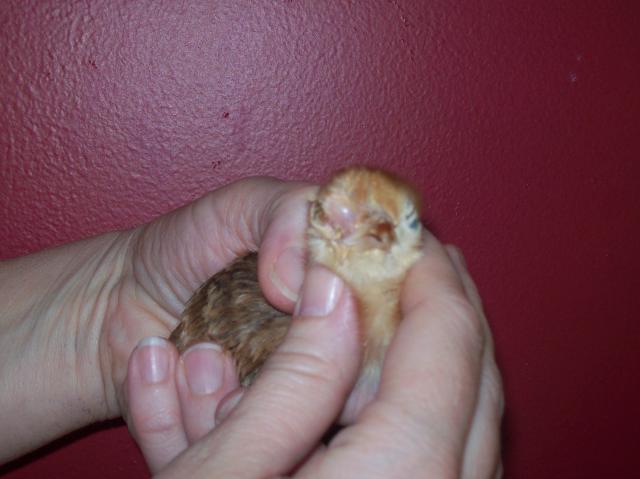
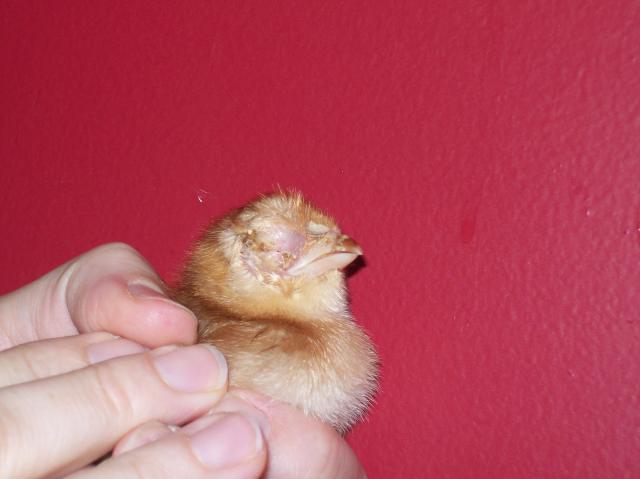
It is most likely infectious Corzya..
The head area, ocular tissue, and wattles are significantly swollen and there is a thick brown discharge from the eye and nares.
The incubation period for IC is approximately 1-3 days. The severity of infection varies depending on the age, breed, environmental stress, and presence of concurrent infections.
In the mild form, typically seen in young chickens, birds may become depressed and have nasal discharge and mild swelling of the face.
In the severe form, typically seen in young adults, there is an acute infection of the upper respiratory tract. Signs may include serous to mucoid nasal discharge, swelling of the infraorbital sinuses, facial edema including swollen eyelids that do not open, swollen wattles and intermandibular space, and conjunctivitis. If the lower respiratory tract becomes involved, rales may be observed. Signs usually persist for only a few weeks, however, if secondary infection occurs, the swelling can persist for months. Feed consumption, egg production.
IC is primarily spread through chronically infected carrier birds. Airborne transmission and contaminated drinking water may help spread the infection to susceptible birds. Chickens of all ages are susceptible; however the disease is usually less severe in immature birds. In the absence of concurrent infection, infected birds typically recover in 2-3 weeks. Hens in lay typically have a shorter incubation period and the course of the disease tends to be longer. Birds that recover frequently become chronic carriers.
IC is distributed worldwide. Both commercial chickens as well as village chickens appear to be equally at risk. The disease can cause significant economic losses in intensive poultry operations, especially in multi-age farms. In developing countries, stress factors and the presence of concurrent infections frequently exacerbate losses.
I had a bird almost exactly like that that I had to put down. Above is just some information that I found on Google.