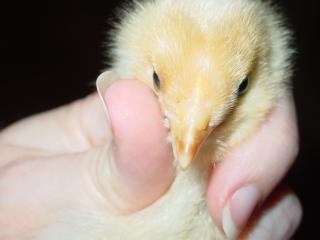
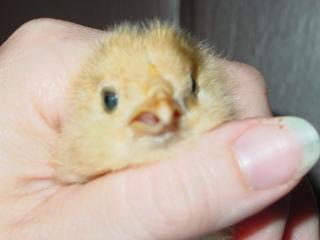
That is a very severe cross beak for only 4 weeks old. If it doesn't get much worse than that, then this chick can probably make it ok. Unfortunately, they usually do get worse and if it gets much worse this chick will never be able to eat on it's own. My cross beak hen looks about like that now, at almost a year old. At 4 weeks, her beak was just a little out of line. If you decide not to cull, you may have to feed it for the rest of it's life. You will probably also need to trim that beak because it can not wear it down naturally and both beaks will only grow longer and longer. The best way to do that is to grind the extra length off with a dremmel and a small grinding stone. Nail trimmers and scissors will work, but they are not ideal as it is far too easy for them to cause splitting which can lead to other issues. Also, a dremmel will be rotating quickly enough that it should cauterize any bleeding if you do happen to take it back just a little too far. Be sure to work in a well lit area so that you can see where the "quick" part of the beak begins and don't grind too much off.
How much and how often depends largely on the size and age of the chick. Probably 3-5cc 4-6 times a day at this age. Just check the crop frequently and feed again when the crop is empty (or very close to it). The next big concern, can this chick drink on it's own? If this chick can't drink, then you're probably not going to be able to keep up with it's water needs as it matures. Hand feeding/syringe feeding is ok, but unless you want to be syringe feeding this bird for the rest of it's life then you'll want to teach it to eat out of a deep dish. You can start with moistened crumbles, mix water with the feed until it's about oatmeal consistency, then gradually decrease the amount of water until it's just the dry crumbles.
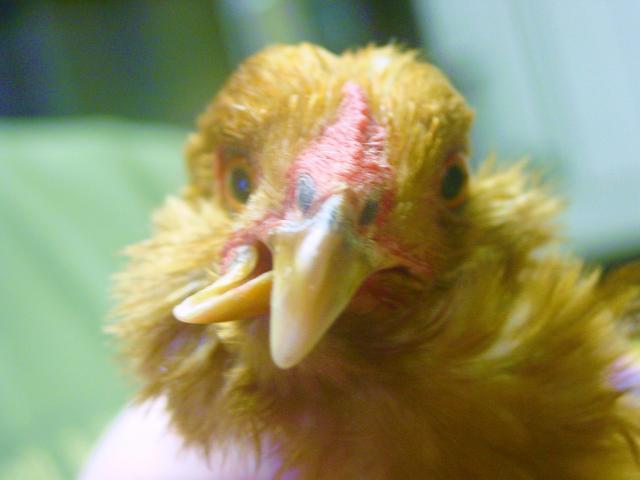
This is Buffy, my cross beak hen, at about 2 weeks:
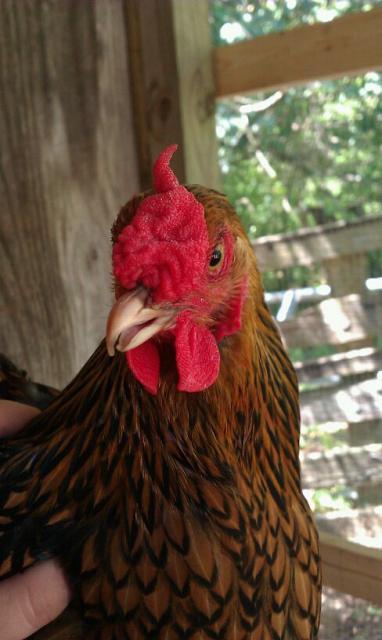
And this is her at about 6 months or so, right after a beak trim:
You can see how much worse it got. I first noticed it at 5 days old, and when I first noticed it was just ever so slightly off. At first, I could easily apply gentle pressure against the bottom beak and push it back into alignment. I was worried that she wouldn't be able to eat enough to survive once she started laying eggs. But she seems to get along just fine. She lays a med-large green egg almost every day. The only difference is that her yolks are very pale yellow compared to my other eggs because she can't pick anything up in the yard and is only able to eat the layer crumbles. It's kind of sad watching her try to pick things up, but it doesn't seem to bother her very much. And we weigh her about once a week or so to make sure she is maintaining weight and so far she's doing alright. She's definitely smaller and skinnier than the other birds, but not so much that I worry she isn't getting enough to eat.