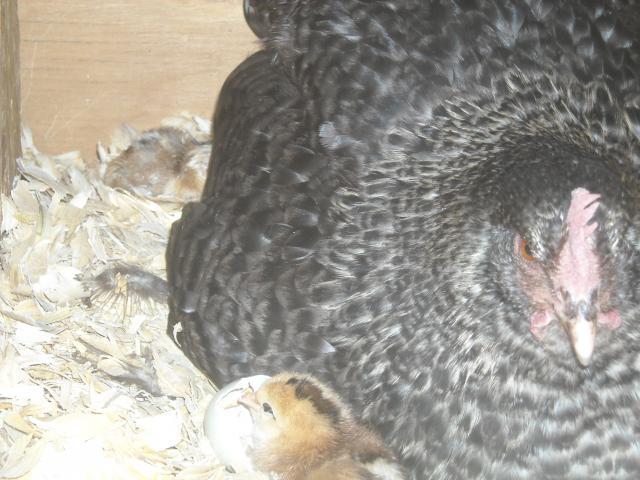
So she is nesting in her regular nesting box. It is up off the ground about 18 inches-with a chicken ladder and has a 6 inch lip on the box. I think this will be too difficult for babies to navigate.
It will be absolutely no problem for her to get the chicks down after they hatch. I've seen a hen get chicks down from a 10 feet high hay loft. She says jump and they do. Then they run to her. Getting down from 18" with a 6" lip willl not be a problem.
If I set up something for her UNDER the nest boxes, say in a plastic crate on its side is it likely she will use it?
I think this is your real concern. Sometimes my broodies do want to return to the nest to night, or maybe even a different nest. But often they will keep the chicks on the floor, usually in a corner of the coop. You can put something on the floor and she might use it. But then she might not. You lose nothing by putting something there for her if she wants to use it. And you will be surprised how well those chicks can get up into those nests, even 18".
What I suggest is to go out at bedtime and see what Mama wants to do. She may have the situation totally under control, or she may not. I have had a broody go to the nest, most but not all the chicks make it, so for the first night or two I put them in the nest with her. I have had broodies try to get them to a nest but when not all make it, she brings the others back off and they sleep on the floor. Sometimes they all make it. Often she just keeps them on the floor. You can tell by the cheeping if one does not make it. Determining that is not a problem.
Also I will put a chick waterer and feeder on the floor in this area. Can I still leave the hen feed out if it is too high for them to reach at least for now?
No. You are obvously aware of the danger of the extra calcium in the Layer. The hen will pick pieces of food out of that feeder and give it to her chicks. Within a surprisingly short time, the chicks will be jumping and flying up to that feeder to help themselves. What I suggest is feed them all the same thing, whether that is Starter, Grower, the combined Starter/Grower, or Flock Raiser and offer oyster shell on the side. That way, the ones that need the calcium can get it and the chicks will not eat enough to harm themselves. Don't get too upset if they experiment with it a bit, but they will soon learn it is not for them.
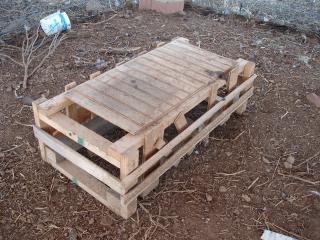
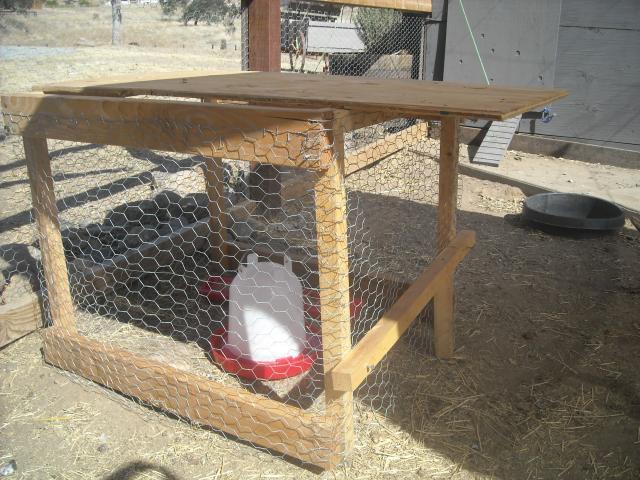
Putting some within easy reach is the right thing to do, but don't be surprised if the adults eat that first. Although it is exactly the same feed, mine think it is a special treat because it is not in the regular feeder. I built this to put over one of those red chick feeders so the adults can't get to the feed. The chicks can get in through the ends. You can cut a hole in a milk crate or come up with some other idea to give them a place of their own to eat.
I bought a batch of those pinless peepers to put on the big girls should they decide to peck the babies to death or something. One of them is going to get them tonight anyway cause she rips feathers out. Id appreciate any input from folks who raise babies integrated style. I do not have the means to separate them.
They are living animals, each with their own personalities. Most broodies are very protective of their chicks. But occasionally some are not. Occasionally you will get one of the other chickens, almost always a hen, that goes out of her way to try to harm the chicks. Not all do. Usually Mama quickly teaches her that is a no-no. Usually. If the chicks get away from Mama's protection, they are in danger from the others, but not always as much as many people fear.
Hens have been raising chicks with the flock for thousands of years. Usually it works out OK, but sometimes there are disasters. I cannot tell you what will happen with yours. I like raising them with the flock because Mama takes care of integration. I think there is less risk with Mama raising them with the flock than with me having to integrate them later. But there is risk both ways.
About how dangerous the other hens are. It does depend on each hen's individual personality, but I have a fairly laidback flock. It is not all that unusual for a two week old chick to leave Mama's protection and go stand beside the adult hens and eat with them. Sometimes the adult hens ignore the chick, but usually one soon gives the chick a peck to remind them that it is bad chicken manners for a social inferior to eat with the adults. The chick immediately runs back to Mama as fast as its legs and little wings can carry it. Mama ignores this. Maybe it takes a flock to teach a chick proper chicken etiquette. Now if that hen aggressively goes after the chick, Mama reacts pretty strongly. Therre is a difference in teaching it manners and trying to hurt it.
The only time I have had problems from other chickens when Mama raises them with the flock is when the chicks get separated from Mama and she cannot get to them to protect them. Say Mama walks out of a gate and turns back along the fence. Not all the chicks make it out of the gate and try to follow Mama along the fence. Mama does not have a good enough concept of "gate" to go back to get them. Some broodies are a lot worse about this than others. Often my rooster goes over to watch over the chicks when this happens, but I lost a chick due to something similar once. As I said, there are risks no matter what you do. There have been posts on here where they isolated the hen and chicks from the flock, but the chicks managed to get through the fence and with the rest of the flock where Mama could not protect them.
I would not move them before they hatch. I know some people do, but I would be extremely disappointed if the hen did not accept the move and quit being broody.
Good luck with it. You are dealing with living animals so there are risks involved, but it is usually a great experience.