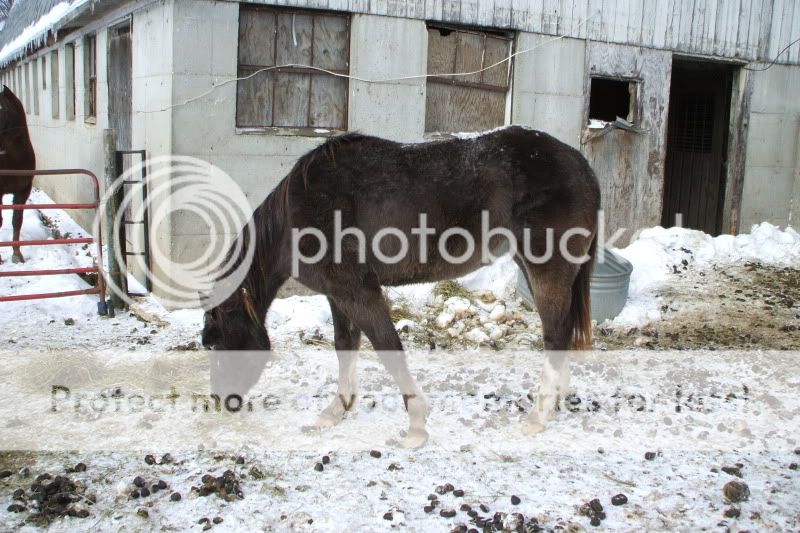
Grey is a dominant epistatic gene -- all you need is one copy of it for it to show its effect, and it overrides whatever other color genetics the horse has. So the other color genes can tell the horse to be pink and purple plaid or whatever, it doesn't matter, if there is even just ONE copy of the grey gene, the horse will be grey (white). Although in foalhood and early years of life the underlying color genetics will show, before it's finished graying out. Greys lighten with age, to the point of becoming entirely white -- some individuals can be white by 3 yrs of age, while others may not finish graying out til in their teens.
Roan is a dominant (but non-epistatic) gene; it does not override the rest of the horse's color genetics. All it does is sprinkle a lot of white hairs pretty evenly through the coat. This can range from fairly few white hairs (like maybe a couple per square inch) to as much as half the hairs being white. AFAIK there are still some things not fully understood about roan genetics, and scientists keep changin' their minds about whether it's just one gene or several different ones or one with important modifier genes or what. <shrug>. Roans do not lighten with age the way greys do; the roaning is apparent in foalhood or at least once the foal fur is shed, and after that they look basically the same their whole life. (One roan gene or modifier thereof causes any scars to grow in all-solid-colored, though)
Dun is a dominant gene that puts primitive markings on a horse (tho there are a few other genes that can do that too) and also dilutes and slightly changes the base color of the hairs. (Line some red duns up next to some sorrels and look at the differences in the range of body color, and you'll see what I mean by changing the hair color). The dun gene works on all colors (although obviously is eventually hidden if the grey gene is present, since the whole horse turns white
) A grullo (aka blue dun) happens when you have the dun dilution gene on a black or seal brown horse. The result is an odd mousy or dark-greybrown color with dark points and primitive markings. Personally I think they're *gorgeous*. Red dun is dun on sorrel. Regular dun is dun on bay.
Buckskin is a different gene altogether from dun. It is incompletely dominant: when you have just one copy of the gene (usually called the cream or buckskin-dilution gene) it creates a horse that looks rather similar to a dun but with NO primitive markings and usually slightly different more tannish coat color. Two copies of the gene give you a cremello or cream colored horse.
Palomino is the third of the "big three" dilution genes -- it is incompletely dominant and only affects red pigment, so if the horse is genetically-sorrel/chestnut and has one copy of the palomino dilution gene, it will be a palomino; if it is genetically sorrel/chestnut and has two copies of the palomino dilution gene, it will be a perlino. Which is another of these real pale buttermilk-or-white colored horses similar to a cremello but usually with an orangeish mane and tail and the eyes differently-colored (I forget which way it goes).
There are other minor dilution genes too, the only one of which comes to mind off the top of my head is the silver-dapple gene (google it -- it produces both yer stereotypical backyard shetland-pony color AND some extremely stunning platinum-on-near-black paintjobs, depending on the rest of the genetic background)
It is also possible, and not especially uncommon, for an individual horse to possess more than one of the different dilution genes, so there are multiple things goin' on at once. Which sometimes produces interesting color variations, and sometimes is really no different than if you'd only had one type of dilution gene
There are some EXCELLENT horse color genetics websites out there, with great pics of the different colors; try google or maybe someone else can suggest some of them, I don't know any off the top of my head.
Pat