Quote:
What are the symptoms of strain on the girls? Very informative post by the way.
Well it is very easy to tell but it is a bit akward to see. I have found that they will have a red and inflamed vent and almost always stop laying completely. They often loose the coloration in there wattles and comb. Also, one time my OEG mix bantam hen had really bad water-clear loose stools. My very good friend (a fellow chicken lover) is a vet and told me all about over breeding. She said many chicken lovers didn't know it even exsisted or was possible but it is in fact a real problem.
Since you wanted more information on the problem I am going to give you my experiance with this and what I did to correct it.
This happened to three of my favorite bantam hens (At the time they were only with one rooster.) They were all four rescues from an over populated flock and I had just gotten them into good health and high egg production. Then one day the quit laying and all had very red inflamed vents. I thought it mas mites or an infection of some sort and called my vet friend. She looked at them and knew instantly what was wrong. She explained to me that often young roosters who have just reached maturity have such a high sex-drive that they breed as much as they can. It almost never happens in free-ranging flocks because the hens can run away and allow him to breed only enough to fertilize eggs. In coops the hens can not out run the roosters , especially more than one or a very driven one. The way that I cured this was free-ranged the hens for about a month with no access to a rooster. This gives the vent time to heal and the hens often start laying agian (mine did but not at a high rate). Then I confined them, got them laying agian (through layers pellets and oyster shells) and then started breeding them agian. I put the rooster in with them an hour per each hen every third day, then let them out to free-range the rest of the day. At night, I return him to his private pen and lock the girls up. Since then, I hatched four out of five eggs from these hens and they have all healed well.
I hope this helps and please forgive my poor spelling
Best of luck to you and keep in mind to watch for this if you have rooster around one or two. She said that often by their third year roosters mellow out alot.
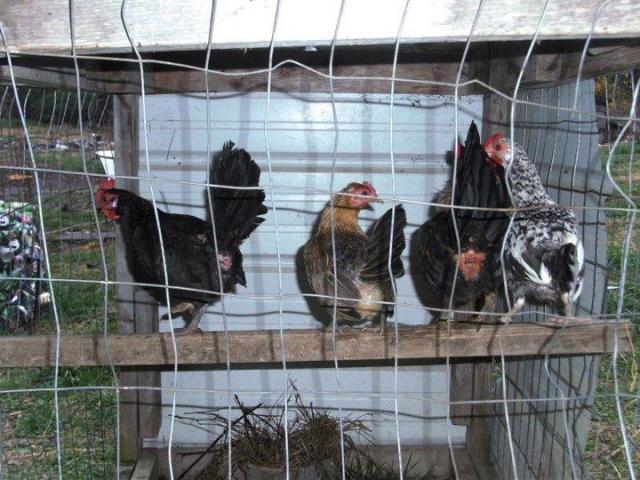
Sorry for the disturbing image but I am only trying to help prevent this from happening to another hen. I know it is very hard to look at but I promise it was even harder witness in hens I worked hard to rescue.
Here is a picture of the four when I noticed the problem (notice the vents are inflamed and their wattles/comb are pink in color)
The best information I had was my own experiance
Timothy in KY