Quote:
Wouldn't that make the offspring smaller? As well as smaller eggs"?
I would but "No Name" on a sex linked red layer and a Cornish Cross for meat and then breed the offspring together.
Someone here on BYC emailed me about genetics, and warned against any of the sex-links that carry dominant white. Like, I think some of the Red Star or Golden Comets, are some kind of all-white chicken crossed with an all-red chicken. The hens end up red and the roos white. I guess I was told the problem is, with the sex-links with one white parent, is if you introduce the White gene, you will get solid whites popping up here and there for generations to come, and they said it would be really diffcult to remove!
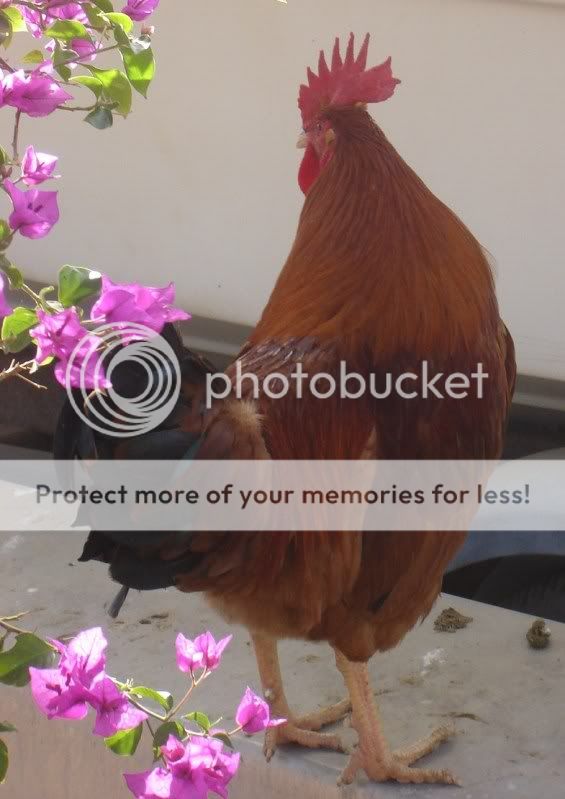
A Cornish type bird wouldn't be bad for bringing up size, someone here in town is talking about giving it a shot. But I've been using a Buff Rock over here (HUGE golden birds) and WOW are these baby boys HUGE! And bonus - I found one little white feather tip on my Buff Rock/Aloha cross roo! That should mean that he carries Mottling, and if he does, WHOO-HOO - any size issues will be totally over with this monster guy in the flock, ha ha! He's bright deep gold, because he has some New Hampshire Red, too. You can really see the contrast of that white feather tip, he is much darker gold than a regular Buff Orp or Buff Rock.
So, I took their advice, and I played it safe. NO sex-links have been used, for color reasons, which is a shame, because those are great layers! So far, I have only worked with "solid" chicken colors, like solid red, solid gold, and Sussex, and one Blue Wheaten Ameraucana hen (which is where the Alohas are getting the puffy cheeks from. That hen was an AMAZING layer.)
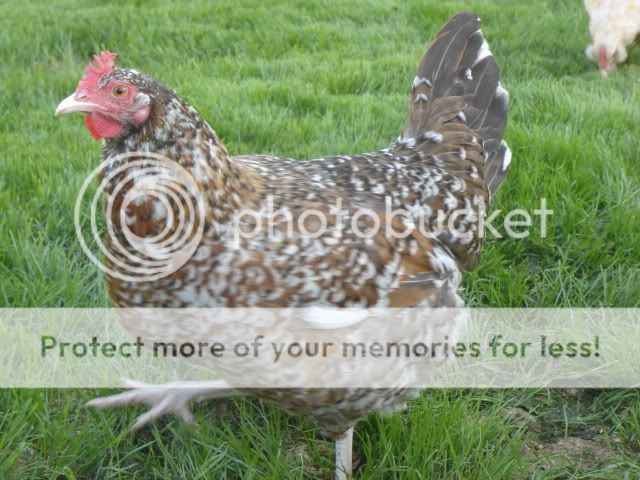
For this reason I'm recommending Buff Rock, Buff Orp, New Hampshire Red. And a dash of Speckled Sussex - but keep the Sussex in moderation, and try to pick exceptional Sussex that have great size and color, if you can find them. Small sized Sussex with little motting and dull colors who are poor layers are NOT going to help just because they carry mottling, LOL. A BYC member on here named "Buns" has some AMAZING looking Sussex eggs for sale now, BTW. A few of her hens have big bold spangles and all have these really deep, heavy bodies. They're nice!
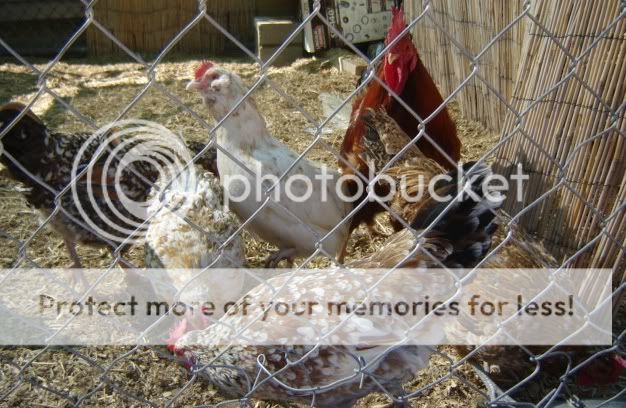
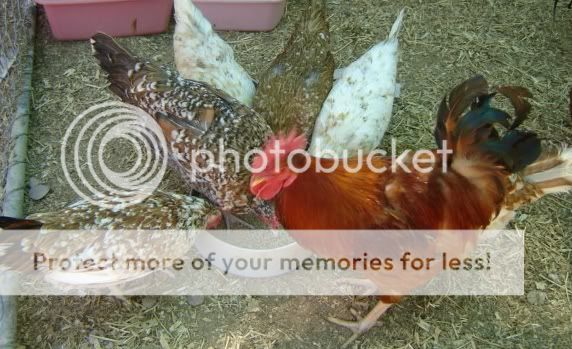
It seems if we can get the bloodline half "big chicken" and half Aloha, the babies turn out full-sized.
Maybe you can use Rhode Island Reds - but ONLY if they are exceptional layers and bigger in size. Some of the hatchery RIR around here are duller dark brown, and a bit small. I saw an
Ebay ad for someone selling eggs from a Buff Orp crossed with a RIR, and the result was a bright dark orangey chicken, nice and plump but not as "puffy" as an Orp, and I bet they were good layers from the RIR. I did order some eggs and hatched a couple, but sadly they found a hole in the fence as babies and got in the neighbor's yard, and were eaten by his dogs, argh!!! Anyway, that looked like a terrific cross that would be ideal for this program for a "base" stock on some colors.
I Just keep it light, bright, and try not to bring in anything that isn't needed, like feathery feet, unless the bird is really exceptional (a auper laying black-tailed Buff Marans and you want big dark eggs, for example, would be OK) and be prepared to work hard to breed the unwanted stuff out again.
Someone else asked about laying abilty. Right now, all of these are really good productive layers. Better layers than my purebred Buff Rock hen, and better layers than the pure Speckled Sussex hens that I used to own. They are not as good a layer as my purebred Blue Wheaten Ameraucana that I used to have, but she was exceptional, which is why I used her in the program. She was given to a friend and now at five years old, she is still laying like crazy, even in excessive heat of summer or short winter days. A trace of her bloodline runs through some of these. She is probably responsible for their good egg production. The only downside is the eggs are smaller, like the chickens themselves. If we get the egg size back up, the production is already there.
Bring in SOLID chickens, big, bright, and good layers! Don't get too exotic or crazy at this point, the Aloha stock will give you plenty of weird colors right now. Avoid dark colors or black. That's been my rules so far, LOL.
My Top choices if anyone wants to join me: GOOD Speckled Sussex, New Hampshire Red, Buff Rock. Also wonderful: Buff Orp or Buff Orp x RIR crosses; Buff or Light Brown Sussex, I think would work great.
Useable but not ideal: Anything with too much black, or carring the white gene. Avoid feathered legs UNLESS the hen is perfect in every other way (big, bright color, good layer, like some Marans.)
Avoid Polish, (wrong body type, top knot.) Avoid Cochins (poor layers, feathery feet) Aviod sex-links with white gene (will give you solid white babies.)
Unknown: Welsummers. They are pretty dark and boring in color, but hey, that is EXACTLY the body shape I'm going for!
http://www.feathersite.com/Poultry/CGP/Wels/BRKWelsummers.html
Note the long tail on the males and the kind of "jaunty" fan tail on the females, my Alohas show this, and I'd love to keep it. The Welsummer or Sussex is the goal overall body shape goal. So Welsummers wouldn't be bad if you can offset the dull color with something bright.
The person who told you the information about the red Sexlinks was incorrect. The reason red Sexlink males are mostly white is due to having one copy of silver, the females do not have this. Since dominant white replaces black pigment, it would be very useful in getting rid of the black in your Alohas. The only way you would get mostly white birds would be if you crossed the red Sexlink to one of your blue or black mottled Alohas, or crossing to Alohas with the silver gene. Do not use red Sexlink males though, as they would introduce silver which would result in the gold being eliminated.


 It really ought to be interesting
 You should trying getting one of your 4th or 5th generation hens to breed with a Mille Fleur D'ulle roo or gold phoenix roo. I really suggest it: dealt with cross-breeding before. Very fun!