please take a look at these ?'s

fowlsessed

Crowing
13 Years
Joined
Nov 16, 2011
Messages
1,538
Reaction score
112
Points
296
Location
east Tennessee
I've got one chick who hatched way before the rest of the other eggs who are just barely piped. My question is how long am I safe leaving him in there for? Also what are the pros and cons between dry hatching and wet hatching? and what are they exactly?(wet and dry hatching) thanks
 
Last edited:
New born chicks can survive up to three days without food or water. They absorb yolk just prior to hatching for nutrients. I've left chicks in incubator for near two days as others were piping and popping out like corn.

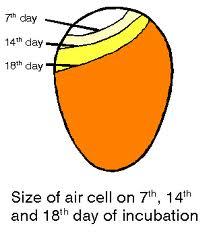
Don't get confused by "dry" hatching. It's a relative wording that should be changed to 'dryer' hatching. In a nut shell the egg needs to lose 11 to 13% of it's water weight for great hatches. You can monitor that by actually weighing or monitoring the air cell growth during incubation. Old sources for humidity guides give high humidity recommendations, on the order of 50-60% first 18 days and up to 80% last three days. This quite frankly is ridiculously high. The dryer your incubation the more water loss from eggs. If you run 40% first 18 and then check air cell progress to perhaps dry out for a day or two then back you'll do well. My next hatch I'm shooting for 35% and thinking air cell will grow to right size (proper egg weight loss) without adjustment. 60%-65% is a good lock down humidity. An egg wont lose moisture at 65%, higher humidity can cause problems.

Keep in mind that temperature is the most important factor to great hatches. Humidity is secondary, even third when factoring egg turning. As long as your not too dry or too wet things will hatch.



This is a good illustration on air cell development. The importance of this is the chick will internally pip into this air space prior to pipping the shell. If there is no space to pip into it will drown. As for problems with humidity at hatching there are two biggies: If too dry the egg membrane will shrink onto the chick making it impossible to move. If the humidity is too high the egg yolk won't absorb fully and the album will get gooey, making a sticky paste, chick can't move again-gets stuck to shell and is major cause of pasty butt.
 
What's funny is look at the nature of it...

What ever gets a hen to go broody she sits on eggs. She will leave them for periods to feed and water herself naturally. Her sitting on eggs creates a humid environment or at least maintains one. In a broodies last few days she does not eat or leave the nest. She hears and feels the eggs under her so stays on it for that duration. Humidity rises as she never leaves and as they pip and zip goes up again. Nature.

Nature is cruel in the fact that only the best survive, that will be the first to hatch. A Broody hen will kick eggs out when she needs to feed again or eat/kill those she thinks are not strong.
 

New posts New threads Active threads

Back
Top Bottom