Thick Legs

Yes, she poos and eats and seems content.

I'm going to get her now. Bring her closer to the house.

I am sure her sibs are going to be really pi$$ed at me, they all hang together.

I'll be back.

Thank you all.
 
I was thinking a venous abnormality of some kind. It wouldn't be trauma related, as its in both legs.

My best opinion? This chick has a birth defect of some kind that is preventing good blood flow and normal development. As your other chickens of similar age, and different ages, are doing fine on your laying rations, I would say this bird had something wrong with it internally at hatch.

I butchered a hen a while back that had never layed and whose comb hadn't developed well. She had one lung that was smaller and more pale than the other. She probably had other defects that I did not discover because I hadn't examined her other organs closely.

 
Bee I think you are right. I took more pictures, I'll get them up soon.
 
10986_09-17-08_1458.jpg


In with the chicks

10986_09-17-08_1504.jpg


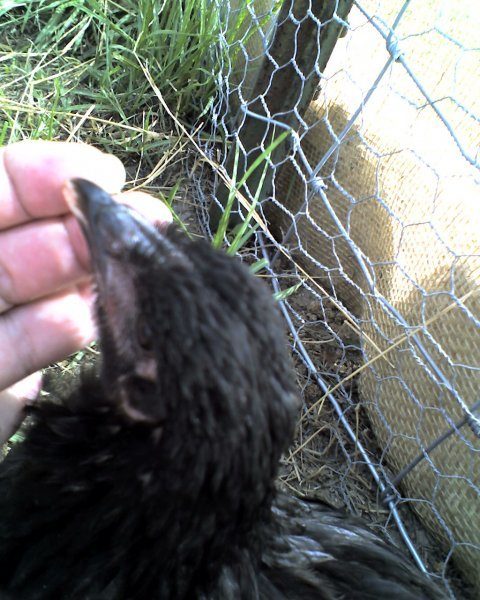
Tiny comb

10986_09-17-08_1503.jpg


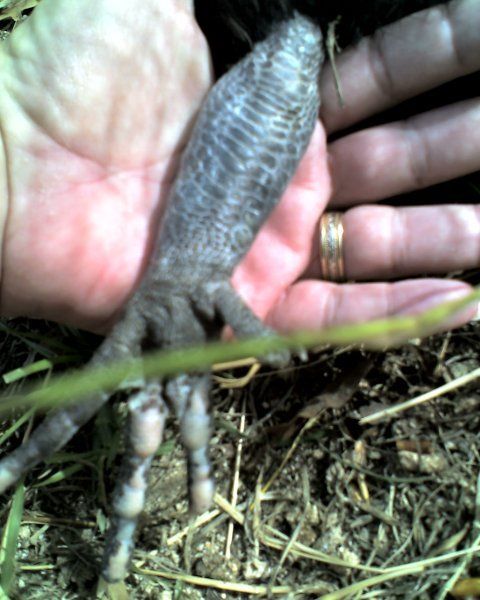
I have medium size hands

10986_09-17-08_1500.jpg


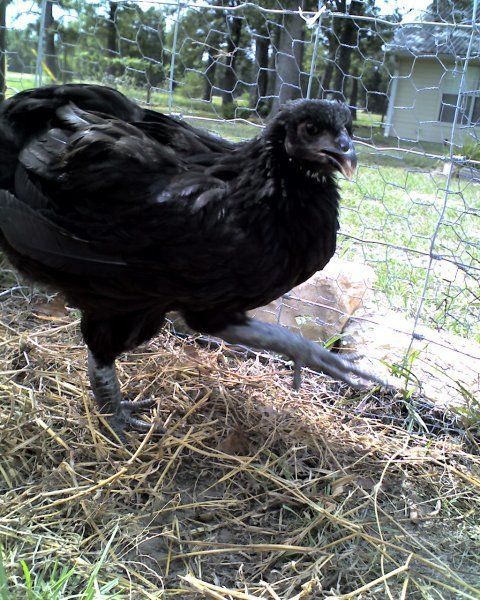
Walking away
 
She looks wrong in more ways than one but it may be just the way she has to walk with those legs. Her conformation and proportions are all off for a pullet her age.

I know folks don't like to kill their chickens, Vickig, but this is one I would definitely cull before wasting anymore feed on her. Something definitely wrong there.
sad.png
 
I agree Bee.
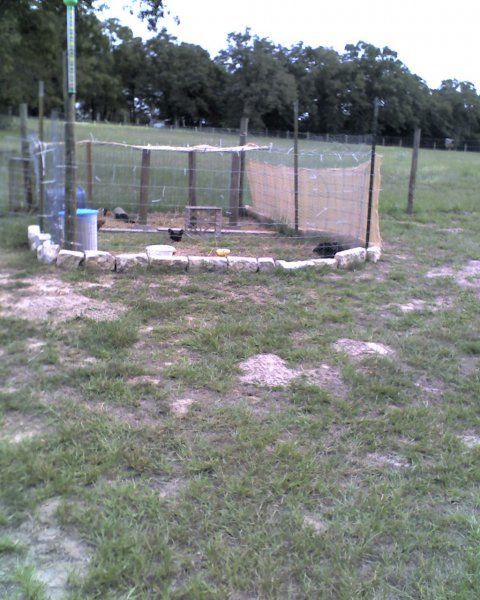
She is completely away from the other hens and the chicks at this time.

I don't mind feeding her, but if she is in any kind of pain or quite possibly infected......

Thank you all for your help.

Vicki
 
I know this is a very late response, but wanted to post in case others came across this thread.

This bird almost certainly has a disease called avian osteopetrosis (= thick leg disease), which is caused by avian leukosis virus. As avian osteopetrosis (AOP) progresses, the bird's legs will begin thickening in the middle, and eventually become football-shaped. The thigh and wing bones may also be affected in the same ways. It is basically bone tumors growing out of control.

Some questions that would help diagnose AOP:
- Are the swellings hard to the touch? (AOP: yes; soft tumors or swelling will be squishier)
- Are the swellings cool/normal temperature to the touch? (AOP: yes, usually; hot swellings indicate inflammation)
- Did they seem to start in the center of the lower leg and move towards the joints? (AOP: yes; broken or infected bone could be anywhere)
- Did they appear in the left and right leg around the same time? (AOP: yes, although the size of the swellings can vary between right and left, they should be present on both sides)

If it is AOP, you can expect:
- new swellings on the thigh bones, feet, and wing bones (harder to see but you could feel them)
- these will start in the middle of the bones and move towards both joints
- for the same bone (i.e., just looking at the upper wing bone or the foot), swellings will present on both the left and right sides of the body around the same time
- the new bone tissue is weaker than normal bone, so it is easier to fracture
- progressively reduced mobility to immobility


Because AOP is transmitted virally, it is very important to separate infected birds from the rest of your flock, and especially from chicks, who are highly susceptible to the virus. If you obtained an infected bird recently, there is a strong possibility that it was already infected when you got it. We don't know how extensive this virus can be transmitted across different bird species, but it seems to be most common in chickens and turkeys. Because it results from a virus, antibiotics are unlikely to do anything helpful for AOP.


I am a researcher at Des Moines University (Iowa) who studies the origins and history of this disease in birds. If you think one of your birds might have AOP, please contact me via pm on this forum or by email at [email protected]. I am interested in obtaining euthanized birds for research, so that healthy birds do not have to be infected to study how this disease affects the skeleton.
 

New posts New threads Active threads

Back
Top Bottom