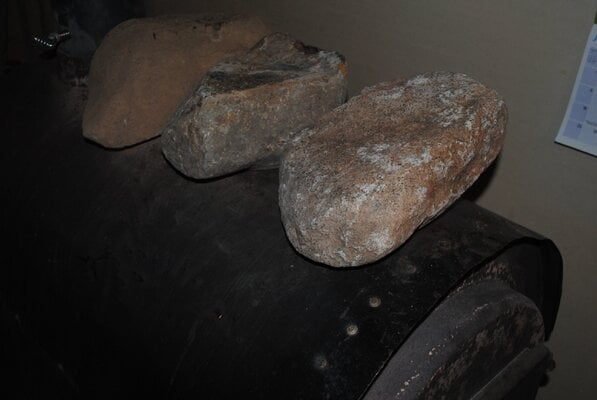
I’ve always heard of people using hot rocks to keep them warm in sleighs and cars before they were heated and wanted to put that principle to use, along with the principle that hot air rises.
This method uses a 5 gallon bucket with nipples and an insulated ‘jacket’, along with a hot rock. I keep this inside the chicken coop. Since the bucket has a lid on it, I am not concerned about adding excess moisture to the coop. We heat our home with wood, and I can put a rock on top of the wood stove to get the rock hot.
I built an insulted box to keep the rock in. The box is approximately 14” square with a removable top. I insulated the inside of the box with that pink insulation board, the kind with pink panther on it. I used the 2” thick stuff that has an R value of 10. The box is sitting on a piece of that insulation as well. The lid of the box is not insulated so the heat from the rock can get out and heat the bottom of the bucket. The rock takes up almost the entire area of the inside of the box. I sewed a bag for the rock to go in so it would be easier to carry out to the coop and get in and out of the box.
I cut a piece of the pink insulation the same size as the bucket lid and then wrap a piece of flexible insulation around the bucket. I had an old sleeping mat I used for camping that I used for this. It had been cut up and used for something else before this, so it wasn’t long enough to fit around the bucket. It was in 2 pieces, so I used zip ties to get it long enough to fit around the bucket. Then I sewed a cover for the whole thing so the chickens wouldn’t peck at the insulation. Unfortunately, I didn’t take a picture of the insulation before I put the cover on it. I ended up tacking the cover to the insulation, so it was easier to get on and off the bucket.
I have a 6’ x 12’, coop that is not insulated and I don’t heat it. The coop is one I can stand up in. This is my first year of keeping chickens and I got 5 pullets at the end of August. I use the deep litter method, but at this time of year, there isn’t any composting going on, so no heat is coming from that.
Since everyone’s idea of what ‘cold’ means is different, I kept track of the temperature inside and outside the coop and the times I brought water in and out. The end of January is when I put this into action. I live in northern Wisconsin and that is usually the coldest week of the year. This year was no exception. I think it was colder than usual too.
I would usually bring the bucket and rock out to the coop about a half hour before sunrise, between 7 and 7:30 am (end of January). I would bring the bucket and rock inside about an hour after sunset, between 5:30 and 6 pm. I filled the bucket about 1/2 full of warm water. I would have filled the bucket more if I had more muscles.
I never had to change the water more than once a day. I would change to a new hot rock when I changed the water as well. From my limited data, it looks like if the inside temp gets above 0 for part of the day, the nipples won’t freeze. I also just used what I had on hand for insulation around the bucket. Really, it’s not even insulation. It was a sleeping mat…. And it was in 2 pieces. If I can get my hands on some decent, real insulation, the right length, so no gaps, it might work better.
I’ve added a few numbers in this article just to show you how it is working. I’ll put a comment in with the full list of data for any other data geeks like me.
All temperatures are in Fahrenheit.
This method uses a 5 gallon bucket with nipples and an insulated ‘jacket’, along with a hot rock. I keep this inside the chicken coop. Since the bucket has a lid on it, I am not concerned about adding excess moisture to the coop. We heat our home with wood, and I can put a rock on top of the wood stove to get the rock hot.
I built an insulted box to keep the rock in. The box is approximately 14” square with a removable top. I insulated the inside of the box with that pink insulation board, the kind with pink panther on it. I used the 2” thick stuff that has an R value of 10. The box is sitting on a piece of that insulation as well. The lid of the box is not insulated so the heat from the rock can get out and heat the bottom of the bucket. The rock takes up almost the entire area of the inside of the box. I sewed a bag for the rock to go in so it would be easier to carry out to the coop and get in and out of the box.
I cut a piece of the pink insulation the same size as the bucket lid and then wrap a piece of flexible insulation around the bucket. I had an old sleeping mat I used for camping that I used for this. It had been cut up and used for something else before this, so it wasn’t long enough to fit around the bucket. It was in 2 pieces, so I used zip ties to get it long enough to fit around the bucket. Then I sewed a cover for the whole thing so the chickens wouldn’t peck at the insulation. Unfortunately, I didn’t take a picture of the insulation before I put the cover on it. I ended up tacking the cover to the insulation, so it was easier to get on and off the bucket.
I have a 6’ x 12’, coop that is not insulated and I don’t heat it. The coop is one I can stand up in. This is my first year of keeping chickens and I got 5 pullets at the end of August. I use the deep litter method, but at this time of year, there isn’t any composting going on, so no heat is coming from that.
Since everyone’s idea of what ‘cold’ means is different, I kept track of the temperature inside and outside the coop and the times I brought water in and out. The end of January is when I put this into action. I live in northern Wisconsin and that is usually the coldest week of the year. This year was no exception. I think it was colder than usual too.
I would usually bring the bucket and rock out to the coop about a half hour before sunrise, between 7 and 7:30 am (end of January). I would bring the bucket and rock inside about an hour after sunset, between 5:30 and 6 pm. I filled the bucket about 1/2 full of warm water. I would have filled the bucket more if I had more muscles.
I never had to change the water more than once a day. I would change to a new hot rock when I changed the water as well. From my limited data, it looks like if the inside temp gets above 0 for part of the day, the nipples won’t freeze. I also just used what I had on hand for insulation around the bucket. Really, it’s not even insulation. It was a sleeping mat…. And it was in 2 pieces. If I can get my hands on some decent, real insulation, the right length, so no gaps, it might work better.
I’ve added a few numbers in this article just to show you how it is working. I’ll put a comment in with the full list of data for any other data geeks like me.
All temperatures are in Fahrenheit.
| Morning | Evening | daytime Max | |
| Outside coop | -28 | -15 | -13 |
| inside coop | -21 | -5 | -4 |
| frozen nipples at 12:30 | |||
| outside coop | -16 | 2 | 2 |
| inside coop | -11 | 3 | 3 |
| frozen nipples at 1:00 | |||
| outside coop | -7 | 15 | 21 |
| inside coop | -1 | 19 | 24 |
| no frozen nipples | |||