
faa34c79_IMG_18.jpeg

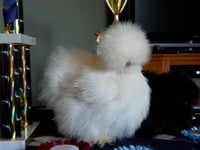
Silkie

The silkie chicken was developed in the southeast asian countries or china.It was valued as a medicinal food item because of its black skin and bones

General Information

Breed Purpose
Ornamental
Comb
Walnut
Broodiness
Frequent
Climate Tolerance
All Climates
Egg Productivity
Medium
Egg Size
Medium
Egg Color
Light Brown/ white
Breed Temperament
Friendly, Easily handled, Calm, Bears confinement well, Quiet, Docile
Breed Colors/Varieties
Grey, Blue, Splash, Partridge, Buff, Black, White are the standard colors with many off standard & derivative colors in existance today.
Breed Size
Bantam
APA/ABA Class
Feather Legged
Color
Grey, Blue, Splash, Partridge, Buff, Black, White are the standard colors with many off standard & derivative colors in existance today
d3dc30a9_Tulip_Buttercup_Cam_3.jpeg

The Silkie breed was developed in the southeast Asian countries or China. It's named for its atypically fluffy plumage, which is said to feel like silk. The breed has several other unusual qualities, such as black skin and bones, blue earlobes, and five toes on each foot, whereas most other chickens only have four. They are often exhibited in poultry shows and come in various colors. It was valued as a medicinal food item in Asia, because of its black skin and bones, and was thought to be particularly good to reinforce body immunity and protect from emaciation and feebleness. It also is reported to treat diabetes, anemia, female reproductive functioning and postpartum disorders. Marco Polo gave the first accounts of Silkie chickens in the late 13th century. As trade route between East and West were established, the Silkie was brought to Europe. Records have shown that in the Netherlands, they were sold as the product of crossing a rabbit and a chicken!

Nowadays the breed is very popular for the purpose of pet chickens as well as exhibition. They are not good layers, averaging 3 eggs per week, but are known and valued for their exceptional broodiness and are often used for hatching eggs from other breeds. They are also considered very good pet chickens, especially for children and are known for their friendliness and docile temperaments.

The breed was officially recognized in North America by acceptance into the Standard of Perfection in the first year of publication which was 1874.

6dc02698_coco1.jpeg
Silkie juvenile

cfaa7b1b_IMG_6253.jpeg
Silkie chick

29dd774f_DSC_0125.jpeg
Silkie rooster

81ea9419_Tulip_5monthsold.jpeg
Silkie hen

For more information on Silkies and their owners' and breeders' experiences with them, see our breed discussion here:

https://www.backyardchickens.com/threads/chicken-breed-focus-silkie.1048544/

Latest reviews

Fluffy babies
Pros: They're hilarious.
They're small and don't take up much space as they will pile together to sleep.
They like cuddles.
Cons: Picky eaters.
Their batteries die when it's dark and will come sit next to the kitchen door to be picked up and put away (but is this really a con?).
I have loved silkies for YEARS just because they're adorable. when we decided we wanted to have our own chickens for eggs (we eat a lot of eggs..), I initially wanted to go with a breed that lays every day but since I had my oldest daughter with me and she got to choose, of course we came home with 5 silkies haha.
They've only just recently started laying after freeloading for 6 months, and they all lay different colours of eggs so I can tell which egg is whose (helpful for when we want babies!).
Purchase Price
5€ each
Purchase Date
1/04/2025

Attachments

  • 1.jpg
    1.jpg
    1,006.1 KB · Views: 99
so cute and fluffy
Pros: Roosters are friendly!!
Fluffy and cute
very laid back
Love the crest and beard!
Cons: I don't like that they're usually sold as straight run, with sexed females being very expensive
My hen with a big crest and beard can't see, at all. Sometimes gets picked on. When i have treats she wobbles over and circles around, not being able to get to the treats because she can't see properly.
I love this breed, I just wish they were more often sold as sexed females.
Purchase Price
6$ but straight run
Purchase Date
april 2
Nicest, cutest, and fluffiest babies ever.
Pros: Amazing pets, great hatchers, sweet, can be kept in a smaller space.
Cons: Low egg production and eggs are small. Also take up to a year of age to start laying.
I have a few and I love them to death. Got to say that they're my fav breed. They take a long, long time to lay though.

Comments

I purchased some Silkie Chicks almost 3 years ago, on a whim, for a friend and her daughter. They weren't cuddly, sweet, or even the least bit friendly - but they liked to eat And eat. And eat. Today, I find them to be the most amazing chickens I have ever known. They are my best free rangers and foragers, the little Roos absolutely rule the large fowl Light Sussex Roos that hang out with them, and the hens are perhaps my most prolific egg layers. They hatch their eggs, are good mothers, and never wean their babies. At least one of my Roos has adopted a hatchiing and raised him as his own. The six I started out with are now 18, not counting all I've given away. Silkies are so easy to keep: they eat just about everything, are happy to graze all day, and they don't need much of a fence to keep them contained. Mine like to roost, sleep, lay, and brood in elevated discarded Dogloos, the smaller the better; they are not like other chickens, they are going to take over the world, and they should be classified as a different species altogether.
 
They do lay eggs, just not an everyday layer and they do go broody a lot. Best incubators ever :)
 
oh thats cute! my chickens NEVER go broody for some reason... i would love to get one....
and there eggs are ok to eat and every thing?
 
Certain breeds have their purpose :) layers are good at laying. Dual purpose are slow to lay but hey we can eat them or keep them for eggs :) The silkies they lay but they are excellent mother hens. The eggs are good to eat to, just smaller. I recommend you get some, they are so sweet!!! they do have trouble roosting, so ours is babied and picked up to roost for the night. And you can always add any eggs to them when they go broody. My other hens will likely never go broody.
 
I agree with the aggressiveness, my roo is quite the attacker. I'd honestly get another silkie if it was a pullet. I do love the looks but the personalities on the ones I've met are nowhere near the hype I hear, haha!
 
@kherokee Our Silkies as pullets were not instantly friendly or trusting. We kept one in-house for 3 months until she was old enough to integrate with the flock so she is our friendliest. Also, after we re-homed some bully LF the Silkies relaxed more and were not so timid around us. I can't keep them away they are underfoot everytime I go outside. They love gathering around me while digging in the garden to catch worms and bugs! My oldest Silkie trembles when I pick her up she is so excited - she knows she is getting a treat!
 
@Sylvester017 aww thats so sweet to hear! I do hear a lot of nice things about Silkies (ladies to be specific). My boy was raised inside as one of my best buddies until puberty hit. He's all hormones now I suppose
1f602.png
 
Iam looking for another silky. I only have one now and want to get a companion for her, Hen only and age doesn't matter. I have had her for around a year. she is so sweet. I'm not sure of her age, she was an adult when I got her. She is a good layer but this is not important to me so would be happy with an older hen that's not laying.
Thanks for any input.
 
Silkies are awesome...they need companionship with their own kind and are (in my opinion) super friendly....

I have males and females...all live in complete harmony..

I have hatched both male and female here..they are handled from a very early age and accept all handling without problems..females tend to go broody every three months...they will set on any egg and hatch ducklings as readily as any chick...

They are a huge attribute and I have only praise for this wonderful breed.
 
I purchased 10 Silkie chicks about two years ago, mostly to entertain my friend's daughter. They WERE entertaining, but none were sweet or friendly, despite all the great treats, special attention, and frequent handling we all gave them. The cockerels lived to spar, and two of them became absolutely homicidal. The hens did not start laying until 13 months, and what they did lay, they brooded (and quit laying) all together, without a single hatching. So I incubated and did hatch some eggs myself and ended up giving most of the chicks away, to people I didn't even know.

Today they are my favorite flock.. The hens are amongst my best layers, they brood and hatch their chicks as a group, and they all participate. The roos have mellowed and are very respectful of their keeper, they take care of the babies and will defend them to their death. My Silkies are my best free Rangers, and they freely venture out in the snow and cold weather. They don't waste food and will clean up just about everything. My queen Mama hen grooms her Roo. My Silkies range with my large fowl, and while they keep to themselves, they don't bother or are themselves bothered by any of their much larger cousins. On the rare occasion when a Silkie roo faced off with an LS roo, the Silkie was NOT the weaker bird (my Saint dog broke it up). All of them are friendly now (am sure they're in it for the food), but they really don't like being picked up and are very independent. They do have the most musical and sweet little chitter-chatter though. The eggs my hens lay have disproportionately sized large yolks, and some of us here think they are the best flavored. I just don't have enough characters left to extol the virtue of Silkies. Get some.
 
Silkie hens are about the best of mothers for chicks. After she hatches her own 6 or so chicks you can add chicks which have hatched in synchrony just pop a brace of 18 eggs of any preferred bread in the incubator. The two groups should hatch within 24 hours of each other. Add the incubator chicks to the brood the first night after hatching and "Mom" will do her best to rear the lot. This works best if the broods are hatched in mid spring or just after since the hen cannot cover all the chicks simultaneously. Adult cocks have larger extended wattles while the hens' are abbreviated. Also 5 month old cockerels have rather wide massive looking combs. It's all in knowing what to look for. Happy chick rearing!
 
I LOVE silkies! They so super sweet and very talkative. Their small size makes them easy to pick up and handle and I think they are best suited to pet chickens, rather than production. So agree that they aren't "economical" in that sense. We have 7 eggs in the incubator right now :) I agree that they seem slower to mature but once they start to, the cockerel is pretty easy to tell (usually) from the pullets. We like to compare his comb to a klingon's (from Star Trek) forehead. It grows to be a big roundish comb, whereas the hens have barely a comb to speak of. Hope it helps!
 
The young males have the feathers on their heads 'slicked' back, the young females feathers stick straight up. Even though they lay small eggs they lay regularly and are setting machines.
 
I LOVE silkies too..whether boys or girls! My only ones have been boys and my first one was so talkative and funny, that I got two more who were boys.
 

Item information

Category
Chicken Breeds
Added by
Super Admin
Views
187,849
Watchers
74
Comments
417
Reviews
295
Last update
Rating
4.37 star(s) 301 ratings

More in Chicken Breeds

  • Cochin Bantam (Pekin)
    The cochin bantam is a bantam breed originating from China. It is known for its fluffy butt...
  • Easter Egger
    Easter Eggers are mixed crossbred X chickens created in barnyards by hobby farmers all around...
  • Barred Rock
    Adventurous, sociable birds!
  • Starlight Green Egger
    A lightweight breed that is a great egg producer!
  • White plymouth rock
    With a super kind temperament and 4-6 eggs per week, you really can't go wrong with this breed!

More from Super Admin

Back
Top Bottom