Cornish Cross X Cornish Cross

KellFarm

Hatching
7 Years
Joined
Mar 12, 2012
Messages
8
Reaction score
0
Points
7
Hello BackYard Chickens!

I wanted to post regarding an experiment we ran last month, or more truthfully in the past year.

We raised Jumbo White Rock Cornish Cross broilers last year from Ridgeway Hatchery. Not a single chick died, they grew quick, big, and strong, just as expected. We used the Salatin style method, with a mobile pen, the Polyface ration, just corn, soybeans, oats, calcium and Fertrell Nurtibalancer-Organic.

Out of the 33 we singled out the best foragers. We are not experienced we just isolated a couple that would really go after bugs. Fast forward, nothing but positive experiences, except our rooster may have blew out his leg. We have kept them light, fit and active.

The Hen started laying around 8 months, stopped around 9 months, and has been laying regularly now for months 11 and 12. She hatched this day last year. Consuming the same ration from start to finish, she laid fertile eggs. We incubated in groups and at one point we had two make it in incubation to day 16, feathered with much yolk still out of the body. Nearly at the Hen's birthday, her first chick hatched. I am watching it drink water at this moment.

I wanted to post on here to document it.

What do you call a cornish cross mixed with a cornish cross?

I made a video for our farm, if you skip to 1:30 in the video you will see it. I think it is exciting!
 
Last edited:
I looked all over BYC as the chick hatched.

Details

The pip appeared on Monday Night. It was straight out of the shell, not into the air sac. I didn't realize there was a difference. Someone said the clock starts from pipping, and 24 hours should be how long it takes to hatch. So I set that in my mind. As another poster noted, the first 24 hours in this case were not productive. The chick just breathed.

Maybe around hour 23 the breathing turned to a bit more peeps and a few pushes. By 24 hours there were cracks running from the pip hole around 3/5ths of the egg. Me having the 24 hour clock set in my head, and the time being nearly 11:00pm, I pushed the egg to crack enough to expose the chicks eye. From this point it took about 15 minutes to pounce out.

The fluid with the chick was loose blood, a couple tiny clots, what looked like albumen and the trail from gut to shell. I wondered whether letting the chick push the extra couple hours would have soaked in the fluids.

I am a novice what do you think?

I want to mention again, I think the chick being cross bred with cross, heavy birds managed well, is awesome.
 
I looked all over BYC as the chick hatched.

Details

The pip appeared on Monday Night. It was straight out of the shell, not into the air sac. I didn't realize there was a difference. Someone said the clock starts from pipping, and 24 hours should be how long it takes to hatch. So I set that in my mind. As another poster noted, the first 24 hours in this case were not productive. The chick just breathed.

Maybe around hour 23 the breathing turned to a bit more peeps and a few pushes. By 24 hours there were cracks running from the pip hole around 3/5ths of the egg. Me having the 24 hour clock set in my head, and the time being nearly 11:00pm, I pushed the egg to crack enough to expose the chicks eye. From this point it took about 15 minutes to pounce out.

The fluid with the chick was loose blood, a couple tiny clots, what looked like albumen and the trail from gut to shell. I wondered whether letting the chick push the extra couple hours would have soaked in the fluids.

I am a novice what do you think?

I want to mention again, I think the chick being cross bred with cross, heavy birds managed well, is awesome.

the humidity during incubation sounds like it could have been a little high.. that would explain the excess albumen

letting the chick hatch completely on it's own is the preferred method.. simply because if you intervene a little too soon the chick won't have shut down all the veins and absorbed all of the yolk... however there are times when you do need to decide whether to intervene or let nature take it's course.. that's a choice that only the owner of the eggs has the right to make.. in this case .. had it been me.. I would have left him alone for a bit longer

how many eggs were incubated each time?.. did you crack open the eggs after incubation was over to see what kind of condition the chicks were in?.. that info can tell us if the chicks were developing normally and also if the humidity had been too high or not
 
I opened the vents on Sunday afternoon, I'd say I was trying to go with high humidity. Last time we had a lot of failed hatches, and when we cracked them at day 25 they were completely developed, but rubbery. These were a friend from church's eggs. Bantams and mixed breed layers.

When the eggs we hatched failed, it was day 23 when I cracked them open, I candled them and saw the dark mass, with an air sac and a transparent tip, not veins. When I cracked those, like I said, they were feathered but still had yolks. The yolk was probably the size of the head. I saw a few posts out in the internet that spoke about particular vitamin deficiencies causing failure around 16-18 days. I do not have a tool to measure humidity. I tried to increase my temperature because the last time I incubated with great failure the few that hatched came late, around day 23.

I'd like to get a consistent, easy to use incubator. I am encouraged that our newest chick came healthy and on time. I certainly would appreciate more tips or instructions.
 
I opened the vents on Sunday afternoon, I'd say I was trying to go with high humidity. Last time we had a lot of failed hatches, and when we cracked them at day 25 they were completely developed, but rubbery. These were a friend from church's eggs. Bantams and mixed breed layers.

When the eggs we hatched failed, it was day 23 when I cracked them open, I candled them and saw the dark mass, with an air sac and a transparent tip, not veins. When I cracked those, like I said, they were feathered but still had yolks. The yolk was probably the size of the head. I saw a few posts out in the internet that spoke about particular vitamin deficiencies causing failure around 16-18 days. I do not have a tool to measure humidity. I tried to increase my temperature because the last time I incubated with great failure the few that hatched came late, around day 23.

I'd like to get a consistent, easy to use incubator. I am encouraged that our newest chick came healthy and on time. I certainly would appreciate more tips or instructions.

ok.. since you don't have a hygrometer try this..

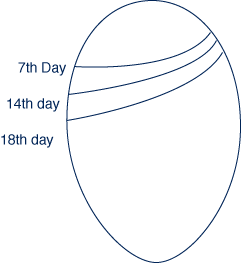
start the next hatch without adding any water to the bator.. and monitor the air cells


if the air cells begin to be too large for the corresponding day of incubation, add water to the bator
if they are on track leave the humidity alone

leave all the vents open

at lockdown make sure the vents are still open and raise the humidity (not sure what kind of bator you are running)

basically you will be letting the eggs tell you what you need to do
 
Last edited:

New posts New threads Active threads

Back
Top Bottom