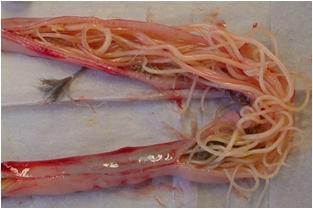
A few worms cause no harm. A heavy load can kill. Since there's no way to completely stop worms from reappearing, it's quite acceptable to make a choice and either go with management/organic deterrents or with commercial wormers.
Each side has its drawbacks, but a big drawback of being gung-ho with commercial wormers is the certainty of eventual worm resistance. The more often you use the same wormer, the quicker resistance occurs. Rotating wormers merely slows this process down. Alternatively with organics you have to work at managing worm loads by moving birds to new ground or replacing the top surface of soil twice a year (if they're cooped), mucking out and changing floor litter.
Chickens definitely can handle a small load of worms. They have this thing called an immune system, which if the bird is in good health with optimum diet (especially minerals like copper and cobalt) and good management can actually inhibit worms from embedding in the intestine. This isn't true of all worm species but it's certainly the case with common problem worms like roundworms. It's also possible to breed birds for worm resistance, as there is some genetic difference between worm resistance in individual birds. This is why even in a flock with poor management and high worm burdens some of the birds will be in good health while others are dying.
There's no way of eradicating worms from the soil unless you have a completely sterile (i.e. dead) backyard. You can't stop grubs, earthworms, ants etc from turning up, and it's pretty hard to stop wild bird droppings from appearing in the pen. What you can do is decide which way to go, whether to rotate commercial wormers hoping that there will be a next generation of effective wormers (it's been a while between scientific breakthroughs on that score, and in sheep in my country, for instance, agriculture departments are starting to suggest farmers select worm resistant animals to breed from, as the sheep worms are becoming resistant to all available wormers), or use some combo of management, diet, herbs and/or breeding for resistance.
EDIT:
Signs of a heavy worm infestation are diarrhea, mucky bottom and weight loss. That would be time to treat with something known to be effective (whether a herbal wormer or an industrial one). You can treat an individual bird if you see one showing symptoms, as there's no need to treat the whole flock, and all that does is increase speed of worm resistance against the wormer.