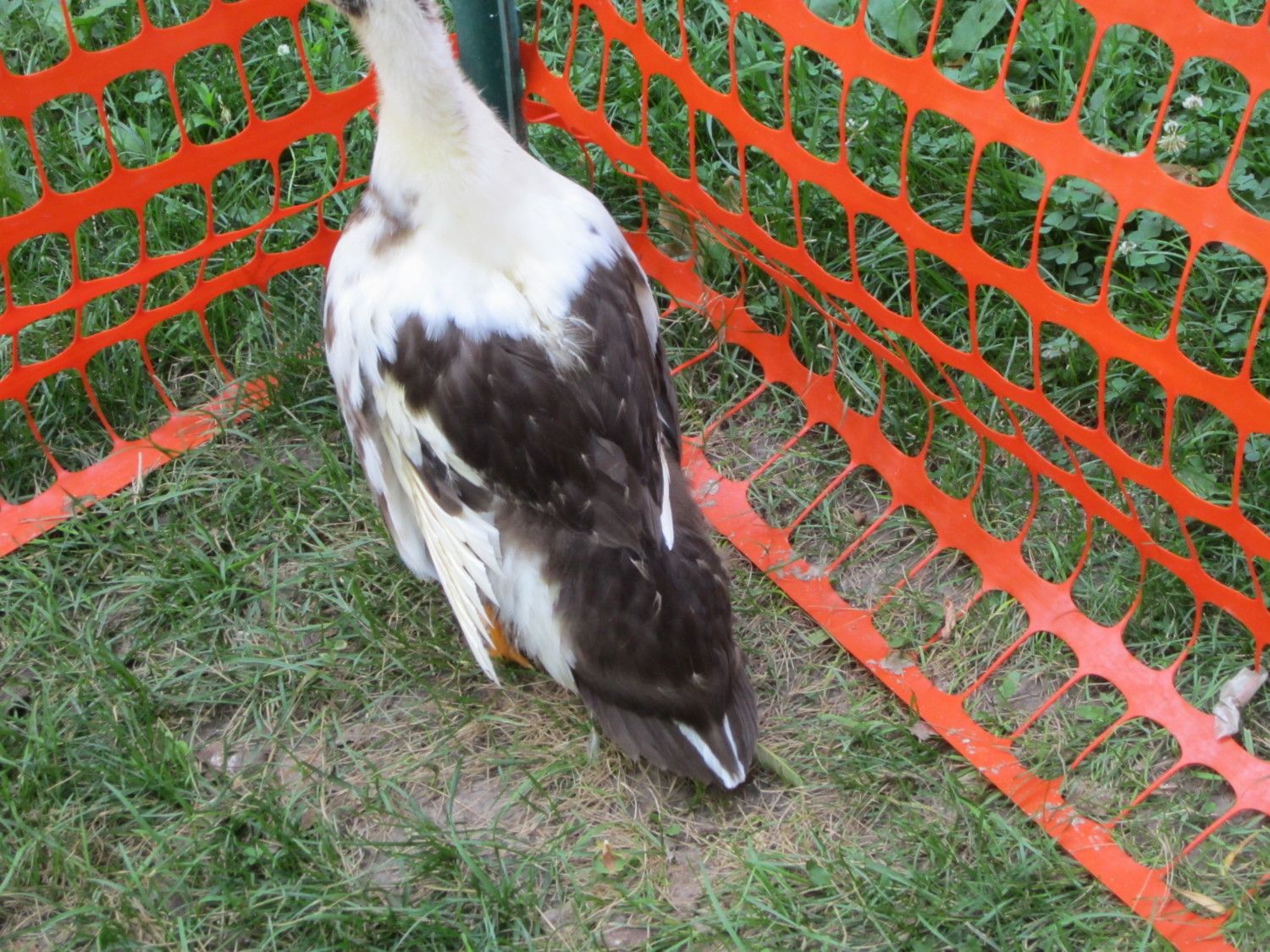
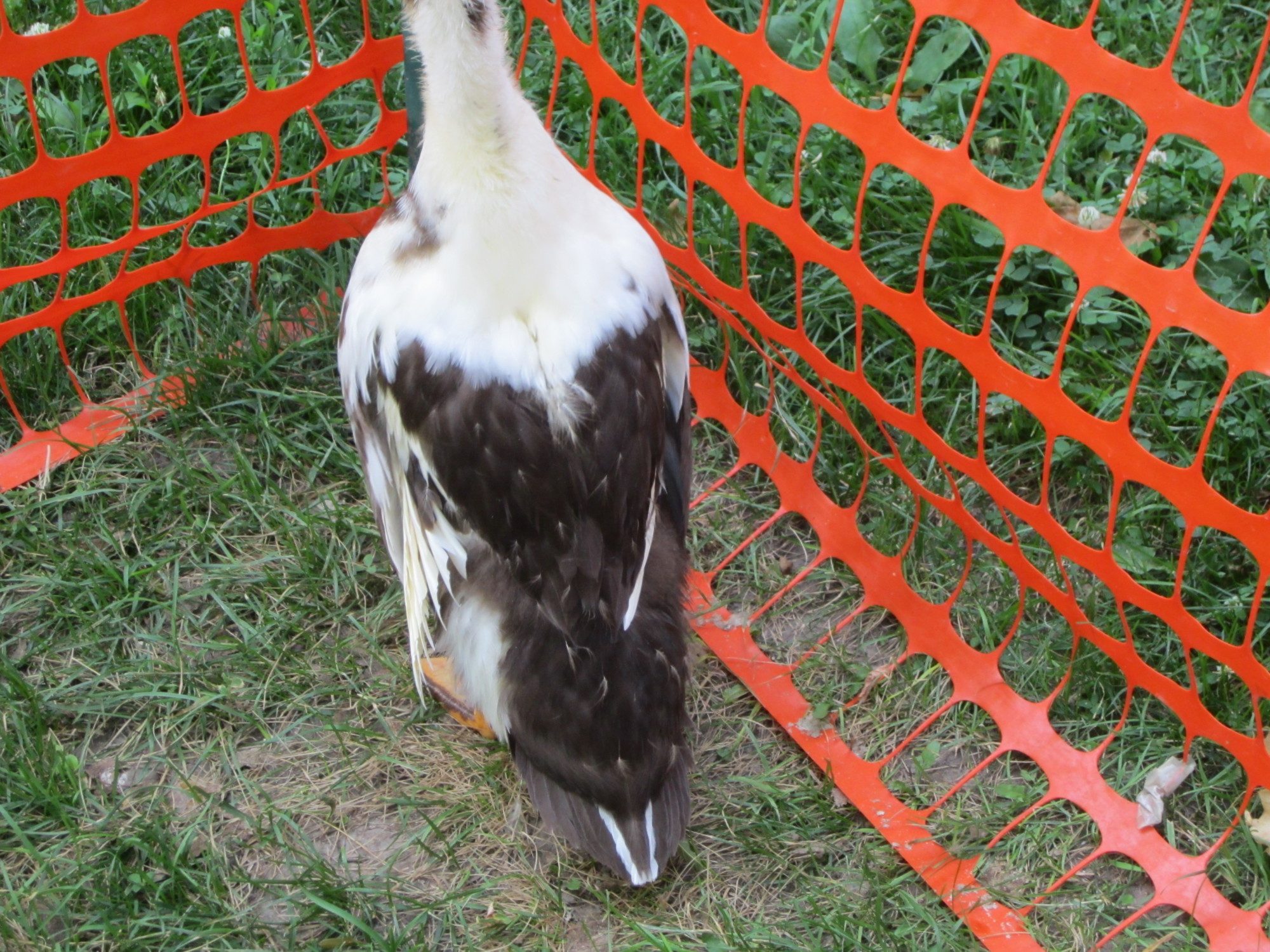
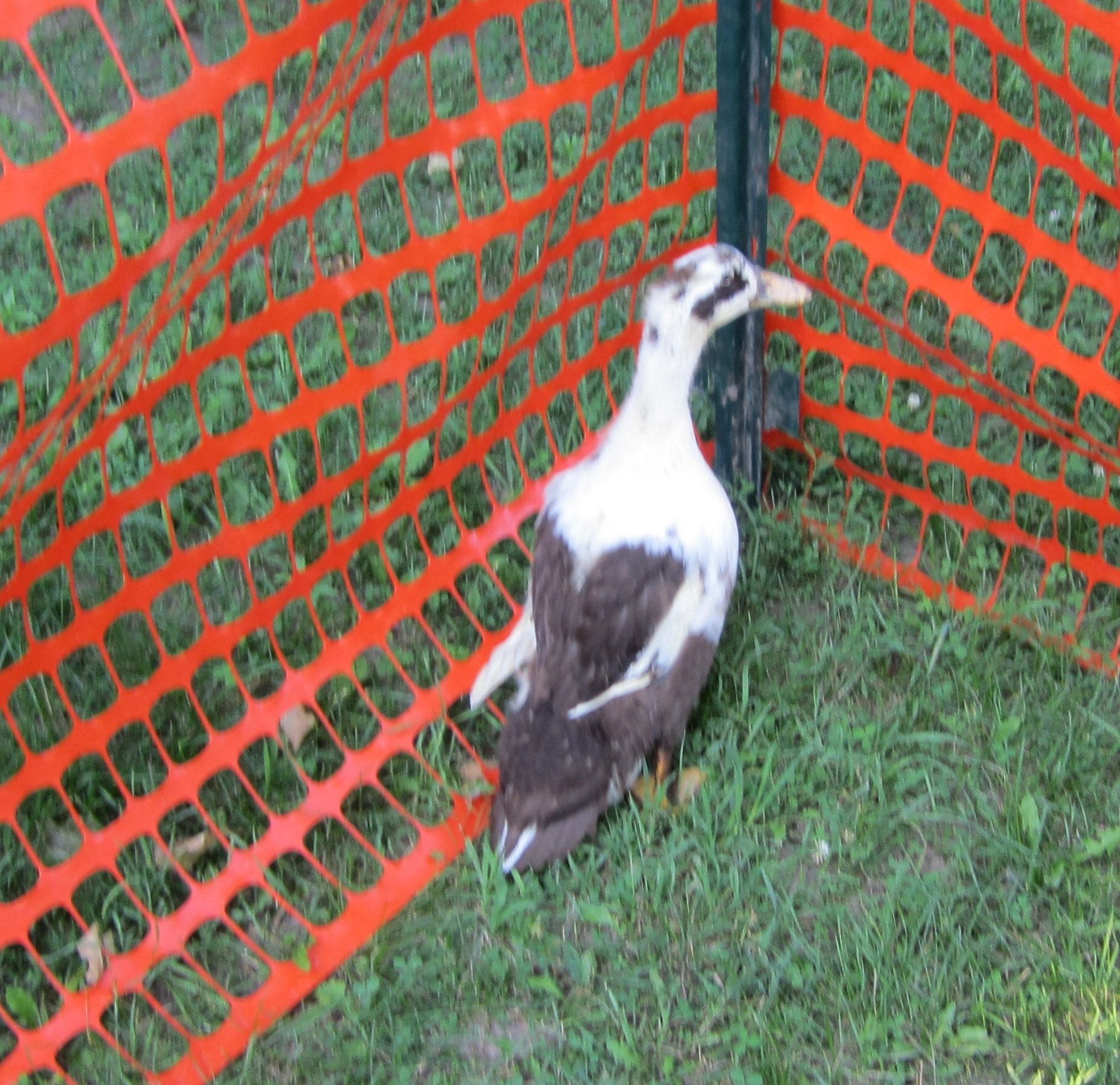
Is this angel/twisted wing?

wordgirl

One of the Shire-folk
16 Years
Joined
Apr 14, 2009
Messages
1,611
Reaction score
202
Points
391
I think it is, but I'd like to have some others either affirm or disagree with my guess. I feel bad - I should have wrapped her sooner, but I wasn't sure whether it was angel wing at first because I wasn't sure why she would have it. She's 6 weeks old, and her feathers are growing in the fastest of my five Anconas.


I don't know what caused it, if it is angel wing. I thought we'd been doing pretty well to avoid it, trying to keep protein down and letting them graze/exercise outside, but perhaps not.
sad.png
For the past few weeks, they've been grazing outside in a pen for at least 6-8 hours almost every day with a shallow pool (about 3-6 inches), and she's been on a 18% protein chick starter with cracked corn added to get the protein down to about 15-16% since she was 2 weeks old (about one part corn to five parts starter). She was on a 20% protein (plus more corn) for about 3 days or so when we ran out of our normal starter and had to get it from a different feed store. Is there something else that might have caused it, or did I do something wrong?

Thanks for the help!
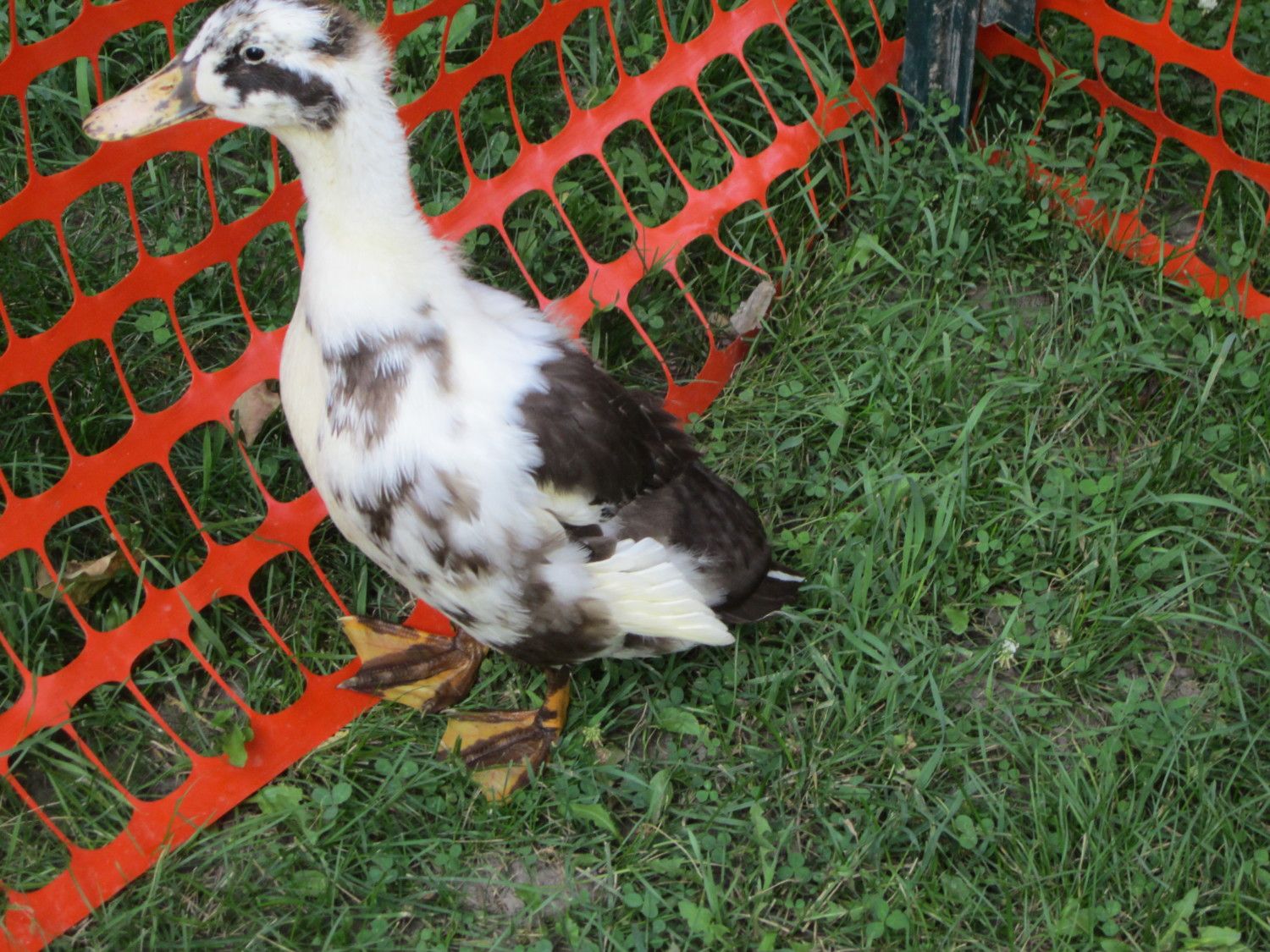
 
It looks like early onset of angelwing. Wrapping it should fix it pretty easily. There is a sticky on top of duck section with pictures to show how to wrap. Also, I'd switch the corn to rolled oats. It is much better for them!
 
Ok first so anyone else reading isn't confused.

Angel wing can effect any and all water fowl

Twisted wing tip is exclusive to Sebastopol geese due to their curly feathers.


Angel wing juts out from the body, looking similar to hitch nickers thumb, and is correctable if caught early and wrapped. (see sticky at the top of the duck area) some ducks are predisposed to this condition, so no matter how much care is given to feed and exercise they can still develop it.

You want to catch it and wrap the wing while the flight feathers are still growing in and have blood in them. If the feathers have hardened correction through wrapping won't help/correct it.


Twisted wing tip is a condition that Sebastopol geese can have on set as late as their second year molt. The end of the wing starts to turn (twist) inward towards the body. There is no treatment for this as simple as wrapping like for AW.


Hope this helps clarify the two conditions.
 
Thanks, Iain Utah and Celtic!

Iain - I may switch to oats when I've finished this bag of corn. I debated for a while about corn vs. oats and went with corn, but maybe I'll switch to oats when I can. :)

Celtic - Thanks for the clarification! I apologize if I called it the wrong thing - I added the "twisted wing" part because that's what Holderread calls it in his book.

I have been trying and trying to follow that sticky - and I can't figure out how to turn the wing tip and wrap it so that it's in the right position. It doesn't look that hard, but as soon as I've got it wrapped, it looks just as bad. :/ Any advice?
 
You shouldn't be turning the wing. You place the tip back under the Reston the wing in the natural folded relaxed position. Have your helper hold the duck still and then wrap the wing. You can wrap the wing right to the body on a duck with a single wing showing AW condition. Then no worries about getting it too tight, or pinching the wing tip.

No worries on the phrasing, wanted to clarify incase someone else reads it down the road.
 
You shouldn't be turning the wing. You place the tip back under the Reston the wing in the natural folded relaxed position. Have your helper hold the duck still and then wrap the wing. You can wrap the wing right to the body on a duck with a single wing showing AW condition. Then no worries about getting it too tight, or pinching the wing tip.
No worries on the phrasing, wanted to clarify incase someone else reads it down the road.

Thanks Celtic - I think I finally figured out how to do a one-wing wrap, although I still didn't get it quite how you do it in the pictures. Originally I had both wings wrapped because I couldn't get the one wing in the right position. I think it might have been a little harder because her wing is so big and feathered (she's 6.5 weeks old), or because since it's not super bad AW I couldn't exactly see where on the wing it was turned wrong, so I didn't know what I was supposed be putting in the right position, if that makes sense. Anyway, I'm going to go out to check on them this morning and make sure the wrap is still on. She got the double wing wrap off the first night, because I'd gone back to loosen it sine I was worried it was too tight. Even then, her wing looked better yesterday than it had before wrapping. How long would you recommend keeping it on? Thanks so much for all your help! :)
 
Last edited:
Thanks for information on angel wing. I think BOTH of my ducks have it. The one has it on the left wing and the other one has it on the right wing...interesting, but seeing how as they are cayugas, and I'm not sure if they're male of female yet it's how I'm telling them apart. They are about 8 weeks old now so I'm not sure if it's too late to wrap.
 
new2ducks - If they've still got blood in their wing feathers, I'd definitely try wrapping. :) Also, if you're trying to figure out whether they're girls or boys, if they have a hard quack, it'll be a girl, and if it's a much quieter, kind of "wongh", it's a boy (at least, that's how I've seen it described - my drake, about 6.5 weeks old, has a kind of voiceless sound he makes. He only just stopped peeping (or it still have some of a peep in it maybe - I can't remember). :) Although, sometimes it's a bit tricky to tell - I'm sure I've got 3 girls and 1 boy, but the 5th duck I can't figure out yet. Vent-sexed, she looked like a girl, and she sounded like a girl for a while, but it's not a really hard, loud quack like my other girls. She's also about as big as my drake, but I don't know if that is just coincidence. :)

I like Cayugas - they're so beautiful! :)
 

New posts New threads Active threads

Back
Top Bottom