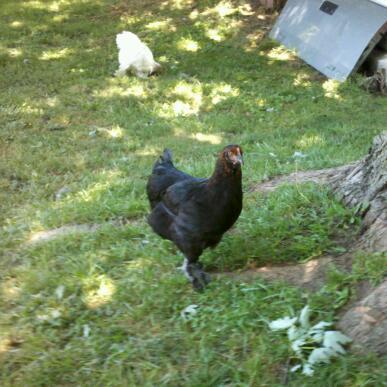
Well, the eggs in question are from a hatchery RIR hen. Fertilization is from my late flock manager Vic, a Marans. All I have of either is memories and and an incubator full of eggs. I really wish I had individual pics of the many variations I had in the first two hatches. Most were destined for freezer camp, but now it will be about rebuilding my flock.
If you keep hatching only the darkest eggs you will eventually have a flock that lays a fairly consistent dark egg. Some of the eggsperts can comment on whether you can make them darker beyond a certain point, or whether or not you would have to add in some genetic material from ladies that lay darker than what you have. My new Copper Black hen has laid 2 eggs now, both darker than any RIR egg I've gotten, but not quite up to snuff for a Marans. Both are still a bit small, but then again the 2 new RIR hens are the same, laying smaller than what was normal. Still waiting to get beyond this first week before judging eggs due to moving stress.
Again, from a non-experts point of view, I suspect that over breeding for certain traits will degrade other traits over time. For a dual purpose bird, 3-4 eggs a week should be normal, but selecting for number of eggs over color will lighten the eggs over time. I would think that, since Marans eggs are "painted," fewer eggs might be darker than from a hen laying 6 eggs a week. Just like breeding towards a hen that lays early will result in smaller hens, and carried out to its natural conclusion will eventually mean smaller eggs. Whereas a hen allowed to fully mature before the biological clock starts ticking will generally be bigger, healthier, and more meaty. Why else do you think men are hardwired to look for the shape of a woman's hips? A woman with wider hips can handle the stresses of child bearing better than one with very narrow hips. Nature will always have us outclassed.
I am new to Marans and poultry genetics in general, but I understand a little about nature. Breeding poultry for the backyard produces a different bird than nature would create. We can create amazing things through our meager knowledge of animal husbandry, but nature will always select for survivability.