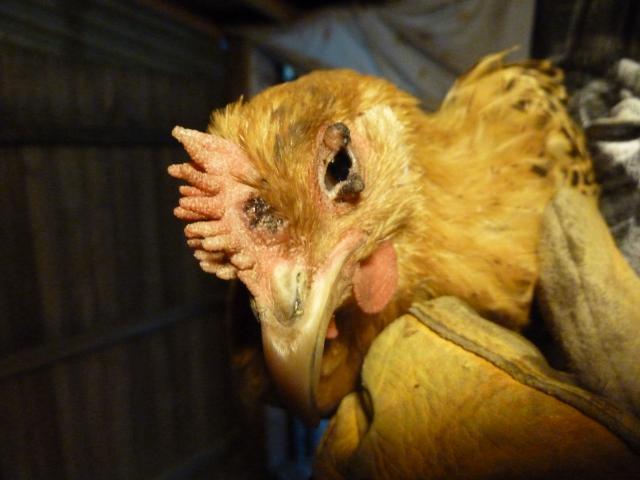
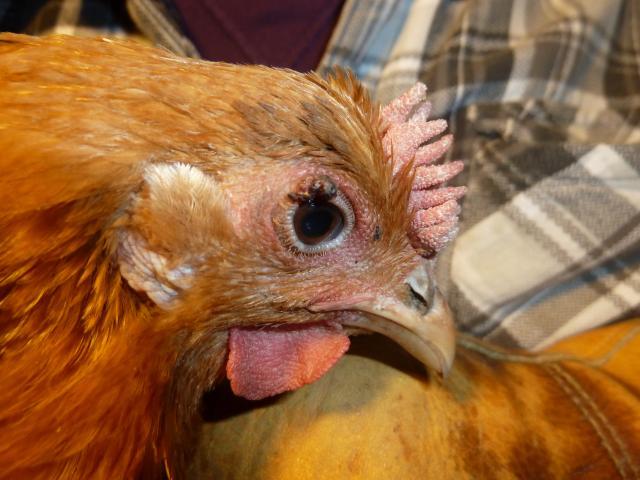
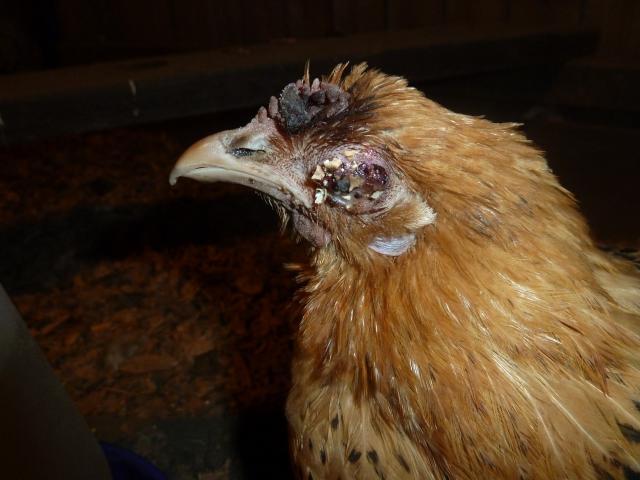
OK, from another newbie.... To me, the things on the eyes look like dry pox. Which is very treatable. The discharge from the nose is something different, but acting lethargic might be normal with such a condition - the two we had that had BAD dry pox, were also acting very quiet and disinterested. The first one we put down as we had no idea what was wrong. (Talk about lack of knowledge... I have leared tons since then from this forum and other articles online and our vet now also) The small chickie that got it, I continued treating him as he just wouldn't die, and what I did from reading up online and my own incentive (and later my vet told me that's the way to go also) - swab the lesions with a q-tip dipped in iodine (careful enough not to put it inside the eye, have to hold them pretty good but gentle and safe) and for the night I put on Fucidine cream all over the shut eyes. Then in the morning I began to wipe their eyes with cotton pad dipped in strong black tea or camomile, just to soak it - I would just gently brush the cotton over the shut eye and make sure it soaks it a little. Then fucidine (trouble with Fucidine is that his mommy was trying to pick it off of his eyes, but I quickly stuck him under his mommy for the rest of the day). I changed thus, sometimes iodine and sometimes soaking and Fucidine. (Apart from this treatment my vet for our next Dry pox victims prescribed Ganadexil (enroflaxicin) 1 ml / 1 litre for 5 days in drinking water, but I have a feeling they would have been fine without it perhaps.)
I also read to confine the birds in a small cage to find water and food readily, so that's what I did (my worst chickie with his mommy, his litter sister was better so she was left in the same room with others who also had some warts on their combs but not nearly as bad.) Anyways, the little one's eyes began to open, little by little. I believe for a couple of days he was eating only VERY little on his own, if at all, but one morning I brought him some boiled and mashed up egg and just put a piece in his mouth as he couldn't see, and boy did he begin to eat (I held it right in front of him so every peck would render at least something in his beak.) Little by little he began to improve and now he's grown so much you can never tell he had a problem. We called him Salvu, and his sister - Mercy, for it was not just our efforts for sure, someone "upstairs" gave us a hand.
Here is a pic of him.
And here's a pic recovering, 10 days later:
I really hope it's just dry pox, but do a search for Wet Pox on this forum and you'll find how people treated that and also how it looks (their mouth, from what I understand, needs to be cleaned good to get out all the stuff that grows there).
I also know that dry pox can come in a combination with something else - recently in a litter of naked necks we saw coryza symptoms PLUS definitely dry pox on their skin.
Good luck to you and I'll be looking forward to other posts to see what the more knowledgeable people will make of the symptoms you desrcibe.