What is the best incubator?

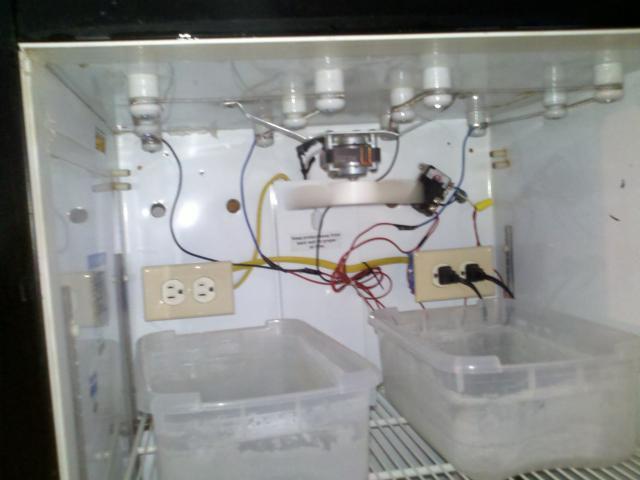
Home made all the way. Pics show a water heater thermostat, upgrade that to a Zoomeds thermostat/humidistat and a reptifogger. That will be my upgrade this week. you can easily get 5 turners on 5 shelves and use the bottom for hatching. Made using a store type pepsi cooler, 5 1/2 feet high.
59227_2010-12-11_09-52-25_324.jpg

59227_2010-12-11_09-52-36_846.jpg

59227_2010-12-11_09-52-53_235.jpg

59227_2010-12-11_09-53-00_223.jpg

59227_2010-12-09_08-37-22_835.jpg
 
Quote:
So the Dickey's sounds like a good bator as well.
smile.png
I'll look into that one and the Sportsman and I'll have to check on the number of chicks my coop will be able to hold until they're old enough to cull and sell off. I'm hoping to start some what small since my husband is nervous about my abilities to handle so many birds, lol. I know I can do it since I have a history of raising up to 100 birds at a time. But he doesn't get it yet.
wink.png


The Brinsea has a number of votes here too. I'll check into it real quick.
 
Quote:
Is this a very compicated type of bator to make? I don't know if I'll get hubby's permission to do one like this. I guess I depends on the coplexity and time involved, not to metion money, lol.
wink.png
 
Quote:
I like your advice and will definitly look into the LG bator, but I do have a question after reading your cheat sheet. Does altitude make a difference in the need for humidity? I live at just under 5,000 ft so we really have among the lowest natural humitity in the air here. Does that effect an incubators tempuratures or humitity levels? I'm sure I could figure it out if I played with it some, but I know the altitude can effect cooking sometimes, would it be the same with the bator?

Our humidity is about 11% during the winter and can be over 80% during the summer, though the inside is generally under 30% regardless of time of year, except during the few weeks where we can have the windows open. I don't really see any difference at all, for the most part- the heating element seems to take the humidity out unless I have water in the unit, so it's consistently low until the last few days when I put water in there.

I know some have had theories about humidity and altitude, but I'm certain I've heard others say they use a method similar to the cheat sheet at higher altitude. The most important thing is getting the temp stable FOR DAYS prior to loading, and make certain it stays stable. The second most important thing is keeping your hands off and trusting it not to remain high or low when it seems out of range. It generally won't remain that way long enough to affect the interior of the egg, and tweaking the thermostat will start a roller-coaster of temp spikes and dips that will make you nuts over the course of three weeks.

That said, the digital machines are great because you can skip that stabilization part, but you pay through the nose for it.
 
Last edited:
Quote:
I like your advice and will definitly look into the LG bator, but I do have a question after reading your cheat sheet. Does altitude make a difference in the need for humidity? I live at just under 5,000 ft so we really have among the lowest natural humitity in the air here. Does that effect an incubators tempuratures or humitity levels? I'm sure I could figure it out if I played with it some, but I know the altitude can effect cooking sometimes, would it be the same with the bator?

Our humidity is about 11% during the winter and can be over 80% during the summer, though the inside is generally under 30% regardless of time of year, except during the few weeks where we can have the windows open. I don't really see any difference at all, for the most part- the heating element seems to take the humidity out unless I have water in the unit, so it's consistently low until the last few days when I put water in there.

I know some have had theories about humidity and altitude, but I'm certain I've heard others say they use a method similar to the cheat sheet at higher altitude. The most important thing is getting the temp stable FOR DAYS prior to loading, and make certain it stays stable. The second most important thing is keeping your hands off and trusting it not to remain high or low when it seems out of range. It generally won't remain that way long enough to affect the interior of the egg, and tweaking the thermostat will start a roller-coaster of temp spikes and dips that will make you nuts over the course of three weeks.

That said, the digital machines are great because you can skip that stabilization part, but you pay through the nose for it.

That's great to hear! I'm glad the temp and humidity inside the bator seems to stay stable reguardless. I'll remember to preset the bator multiple days before loading it so I'm sure it'll stabilize properly. I printed off the cheat cheat so I can look back on it when I'm ready to try hatching my first batch of chicks.

Thanks so much for the great tips ChooksChick, it really is a big help to me!

hugs.gif
 

New posts New threads Active threads

Back
Top Bottom