Light, Buff, Dark, Gold, Black, White, Blue, and Blue Columbian.
Breed Size
Large Fowl
APA/ABA Class
Asiatic
There has been considerable controversy over the true origins of the Brahma breed, but appears to have developed in the US originally, from birds imported from China. They were send off from the port of Shanghai and were thus known as "Shanghai birds". Brahmas as we know them were first exported to England in December 1852, when George Burnham sent nine "Gray Shanghaes" to Queen Victoria as a gift. The Dark Brahma variety was developed by English breeders from this stock and later exported to the United States, where the Brahma was the principal meat bird from the 1850's to around 1930. Some of these birds were very big, with males weighing in at up to 18 lb and females at 13 lb.
The Light and Dark Brahma were developed and included in the first edition of the American Poultry Association's Standard of Perfection in 1874 and the Buff variety was added in 1924. The Australian Poultry Association has accepted black, blue, partridge, crele and barred varieties of Brahma in addition to the standard light, dark, and buff.
Brahma eggs
Brahma chick
Brahma juveniles
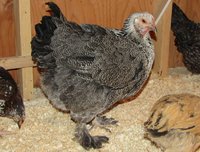
Brahma hen
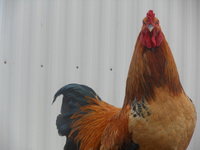
Brahma rooster
For more about Brahmas and their owners' and breeders' experiences with this breed, see our breed discussion here:
Pros: So fluffy!
Cuddly
I love the feather pattern!
Cons: not heat hardy
My brahma is so cuddly and fluffy. I love her so much even though i'm pretty sure she hates me. I'm in New England, and we have cold winters (why I got a brahma) and very hot summers (which i forgot to consider). Also very unpredictable weather. My Light brahma is very big and covered with dense fluff, not great when we got a heat wave this year. However I'm definitely getting more brahmas, I love their massiveness, maybe a buff.
Hi, Duck
I can't answer on bantams apart from yes, they would be smaller.
Hi, Corny
We had Buffs and the roo too went to a fox; the hens we sold on after they peaked laying-wise. We've had a crap time with a fox recently. B*st*rd killed over 400 euros of birds including all of this year's Light Sussex and guinea fowl breeding stock.
Wow this has not been my experience at all except for their easy-going nature! My girls are fairly consistent layers of HUGE light brown eggs! I get about 5 a weeks from each of them. They have yet to go broody yet but are only 8 months old. I have two light brahmas (hatchery stock) and a trio of buff brahma chicks. My large dominate roo was a light brahma and we adored him, he was incredibly protective and sweet to his harem. We lost him to a skunk attack a few days ago. I will be getting another brahma roo and will always have brahmas in my flock! Beautiful and stately birds!
Many of this users reviews list "The bird is very aggressive". That sounds like the bird didn't get TLC (Tender Loving Care) when it was a chick. So, I'm just saying for anybody looking for a bird that this person has reviewed... don't trust these reviews!!!
Sorry but I have to agree with this review. I have some 4 week old chicks now and not sure I want to keep them. They are pretty lazy and foraging for food is foreign to them. Yes I know they are only 4 weeks old but my other chicks who are a week younger do. These chicks wont even scratch in the dirt but wait for me to fill up the dish then gorge themselves. I keep reminding myself to keep them a bit longer to see if somehow the light will go on and the chicks will do more than just sit at the feed dish or sleep. So far neither has happened. Oh and my chicks are not hatchery chicks but from a good farm so cant blame poor quality on their personality.
my chicks are doing great! they are friendly, forage around in the brooder and do a lot of dust bathing. They scratch and dig a lot!. They also eat a lot. These reviews made me laugh out loud!! in a good way )
I have a light bantam brahma chick that is the ugliset thing ever right now....but she will one day be a princess She was picked out of a mixed bantam bin of easter chicks that has been dyed pink and blue. She is the only bantam in my coop and stands her ground among 7 much larger hens. She is spunky and loves to be held.
Animals970 - Hilarious comment, as a birds bird-aggression level doesn't have anything to do with how it is raised (as anyone with half a lick of chicken sense would know). It all boils down to surroundings, food, and largely, the genetic makeup. I can also tell you, they always had more than enough space and more than enough food to go around, not to mention the treats, free ranging, flock blocks, dust bathing pits, corn to pick at every day.... lol!
Also, perhaps you should put some glasses on and actually read what I actually wrote. I always post if the breed tend to be BIRD AGGRESSIVE. Not just aggressive toward anything.
Tara - that's interesting. What hatchery did you purchase from? It may just be the difference in quality.
I have 5 month old light brahmas. They are wonderful little chicks. . . and love people! Can't speak to their laying abilities, but compared to the rest of my flock (orphingtons, australopers and jersey giants) they seem by far to be the most social little ones I've ever owned.
What age do your brahma roos start to crow? I have a 5 mo old stanard light brahma roo not crowing yet. Im getting a light brahmabantam trio delivere dto me in abiut a week. im excited.
We still have a light Brahma hen from the first chickens we ever had. She's 5 years old now and for 4 of those years she was the flock mistress. Even now there are few who will get in Tweedle's way without risking a peck but to people she is the sweetest bird you could ever hope for. She likes her scratch fed from the hand and if you aren't watching closely she will walk right into the house.
No, she doesn't enjoy being picked up but once there she will gladly let you hold her or sit on your lap and be pet and schnuggled. She is the lady we use to introduce the grandkids to the chickens because she will let them pet her. Wonderful breed!