
Navigation
Install the app
How to install the app on iOS
Follow along with the video below to see how to install our site as a web app on your home screen.
Note: This feature may not be available in some browsers.
More options
You are using an out of date browser. It may not display this or other websites correctly.
You should upgrade or use an alternative browser.
You should upgrade or use an alternative browser.
-
 330fba56_P1010089.jpeg444.5 KB · Views: 5,444
 -
 5948f2d5_IMG_2436.jpeg2.3 MB · Views: 5,150
 -
 c0376a09_IMG_2368.jpeg2 MB · Views: 5,471
 -
 73ea1b1e_IMG_2520.jpeg2.1 MB · Views: 5,426
 -
 13129426_IMG_1792.jpeg1.9 MB · Views: 5,180
 -
 a5a2aa2e_IMG_2685.jpeg1.6 MB · Views: 5,502
 -
 700.jpg68.8 KB · Views: 8,214
 -
 chick.jpg82.5 KB · Views: 3,980
 -
 juvenile.jpg459.6 KB · Views: 3,694
Jersey Giant
- Added by Super Admin
- Create date
- Updated
The Jersey Giant is the largest chicken variety (roosters average 13 lbs., hens average 11 lbs.)....

- AGeese
- 4.00 star(s)
Pros: Cold Hardy, Independent, Dominant, People friendly, Healthy, Resilient.
Cons: Bullies, can be on the loud side at times, will cry and moan.
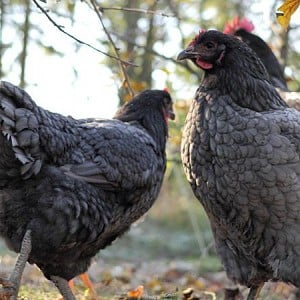
Judging by the two Black Jersey hens I have, which are around three years old now these chickens would seem to be a good dual purpose heritage breed to have on the homestead. While I keep them for eggs, they are not prolific layers, typically giving around 5 or 6 eggs (each) a week during the spring and summer. However laying will taper off during the winter significantly.
While bred to be a large table bird, mine are not at the top end as far as expected weight for this breed is concerned. I believe they are somewhere in the range of 6 to 7 lbs.
Their maturity comes a bit later than your production types which is to be expected for a heritage breed. They may not begin laying until around a year give or take.
When it comes to their place in the pecking order, they're on top of it. Between the two they share leadership over my small flock of Buckeyes, one Black Copper Maran, and one up and comming Black Sumatra cockrell. However one of them is dominant over the other.
These Jersey girls demand respect, and require submission so as long as the other birds don't challenge that or submit all is well after (they remind any protesters who's boss.)
They do often wander out on their own, but will sometimes pair with their flock mates to hunt down bugs, grubs, worms, and critters. They're good at finding what they need out to pasture including grass and keen to alert for a snake or a hawk over head.
Purchased from Meyer Hatchery, these two were and remain very healthy. One survived a vicious dog attack which left her with punture wounds through her back. With the help of my Vet she has fully recovered as if it never happened.
They're not big fliers, but will roost high if given the opportunity. I generally don't worry too much about them as they take care of themselves, and know their limitations as far as weather and temperature changes or extremes. When it's hot they'll dig down in the shade. During the winter they fluff up and conserve engery, but do require plenty of food and water if weather prevents them from seeking it out themselves. It's always a good idea to have food on hand regardless of the season to make sure they're getting what they need to thrive.
When it comes to people they're not shy, and like to be fed. If you do that regular enough they will come to expect it. They can be very vocal when they want attention or you miss feeding time.
I recommend this breed for people in the Midwest with cold temperatures, who free range. Definitely a breed worth preserving.

While bred to be a large table bird, mine are not at the top end as far as expected weight for this breed is concerned. I believe they are somewhere in the range of 6 to 7 lbs.
Their maturity comes a bit later than your production types which is to be expected for a heritage breed. They may not begin laying until around a year give or take.
When it comes to their place in the pecking order, they're on top of it. Between the two they share leadership over my small flock of Buckeyes, one Black Copper Maran, and one up and comming Black Sumatra cockrell. However one of them is dominant over the other.
These Jersey girls demand respect, and require submission so as long as the other birds don't challenge that or submit all is well after (they remind any protesters who's boss.)
They do often wander out on their own, but will sometimes pair with their flock mates to hunt down bugs, grubs, worms, and critters. They're good at finding what they need out to pasture including grass and keen to alert for a snake or a hawk over head.
Purchased from Meyer Hatchery, these two were and remain very healthy. One survived a vicious dog attack which left her with punture wounds through her back. With the help of my Vet she has fully recovered as if it never happened.
They're not big fliers, but will roost high if given the opportunity. I generally don't worry too much about them as they take care of themselves, and know their limitations as far as weather and temperature changes or extremes. When it's hot they'll dig down in the shade. During the winter they fluff up and conserve engery, but do require plenty of food and water if weather prevents them from seeking it out themselves. It's always a good idea to have food on hand regardless of the season to make sure they're getting what they need to thrive.
When it comes to people they're not shy, and like to be fed. If you do that regular enough they will come to expect it. They can be very vocal when they want attention or you miss feeding time.
I recommend this breed for people in the Midwest with cold temperatures, who free range. Definitely a breed worth preserving.
- Purchase Price
- $5
- Purchase Date
- 2021
Last edited:
- JewelsJj
- 5.00 star(s)
Pros: Very calm, quiet and sweet
Cons: Very shy
I have recently purchased 3 Black Jersey Giants. I have with them 3 Barred Rocks and 6 Gold Lace Wyandottes. These girls are sweet and laid back. One of them, Annie loves to be on my lap or arm for pets and snuggles, and she doesn’t appreciate when I pay attention to others. My other 2 girls Betty & Pearl are shy. They don’t want pets or to be picked up but they come for treats and eat out of your hand and they come close to just “hang out” by you. I don’t mind if they take a bit longer to mature. I love them
- Big Egg 1090
- 3.00 star(s)
Pros: medium to large 8 months old
Cons: small eggs, smaller than red chickens
I felt and was told these Jersey Giants from McMurray Hatchery would lay larger brown eggs than any other breed. Now, after 8 months the eggs are small eggs like bantie eggs. Some are not dark brown at all. I am at a loss on this even with the best feeds and care. I have over 275 dollars in these 15 giants 13 hens, 2 roosters.
- Purchase Price
- 90 dollars, 15 birds
- Purchase Date
- 8 months ago

- 3m1javt
- 5.00 star(s)
Pros: Hardy, Large, Docile, Nice Roosters
Cons: None!
We are 1 year into owning a flock of 30 JGs. We raised a straight run and butchered our excess roosters for meat. We have a large family (7) and one of these birds is plenty for us. We experimented with processing ages and found the roos had filled out adequately around 7-8 months (5 lb skinned carcass) Meat was fantastic! We had a bachelor pasture of electric poultry fence to keep out predators and they didn't eat much, we fed them high protein feed along with all our table scraps and garden excess.
Now for eggs, we have been very pleased. We must have got a good strain because we've gotten more eggs than I expected and sooner... all the hens were laying between 6-7 months, very regularly. And thru the winter they have been fantastic. Remember they must have access to water 24/7 to keep laying, so if their water is freezing that's going to be a factor. We have 28 laying hens and have gotten 33 eggs in the last two days! I am thrilled as it's only February. We think we found our favorite dual purpose breed! PS. Nice roosters are so appreciated when you want to keep a breeding flock!
Now for eggs, we have been very pleased. We must have got a good strain because we've gotten more eggs than I expected and sooner... all the hens were laying between 6-7 months, very regularly. And thru the winter they have been fantastic. Remember they must have access to water 24/7 to keep laying, so if their water is freezing that's going to be a factor. We have 28 laying hens and have gotten 33 eggs in the last two days! I am thrilled as it's only February. We think we found our favorite dual purpose breed! PS. Nice roosters are so appreciated when you want to keep a breeding flock!
Attachments

Last edited:

B
Big Egg 1090
May i ask the weight and size of your giant eggs? Mine are very small after 8 months and good care.

- the_peanut_coop
- 5.00 star(s)
Pros: Doesn't bully, keeps pecking order alive, lays large eggs (even huge ones on occasion) and lays them often, pretty friendly
Cons: N/A
I love my JG Honeynut! She's black and so pretty in the sunlight. She isn't loud, and she's besties with my d'uccle (who thinks that she is actually the queen of everything) 
the_peanut_coop
 Good idea. Jersey giants are great birds.
Good idea. Jersey giants are great birds.
the_peanut_coop
And they lay super fantastic eggs. Mine still lays every day reliably.
the_peanut_coop
UPDATE: Appearently likes grape lollipops?!

- darkbaysfordays
- 5.00 star(s)
Pros: Friendly, curious, big.
Cons: Kind of plain just being all black.
Jersey Giants are sweet, inquisitive, and like to snuggle.
- Purchase Price
- $3.95
- Purchase Date
- April 17, 2020

CyndieRauls
I am so in love with this breed.... I have 10 9-week olds. Considering leg bands because it is hard to tell most of them apart 

- Trevorusn
- 5.00 star(s)
A beautiful breed, not only cause of their awesome size but also due to the beautiful sheen their plumage gives off. They have generally mellow personalities and are an incredibly enjoyable addition to any flock that can support their ample frames.

- Mitchellwhitey
- 5.00 star(s)
Pros: they lay everyday
friendly bird
friendly bird
Cons: they peck at eachothers vents and one has a partial prolapse
Overall a great bird and great layer but they always peck at eachothers vents and I think you'd get that with any breed.
- Purchase Price
- 15
- Purchase Date
- 3/3/18

- WendyT8
- 5.00 star(s)
Pros: They are always calm, get along well with all the others in the coop, and are dependable, regular layers, even through the winter.
I love my Jersey Giants! They are beautiful birds, calm and friendly, get along well with the others in the coop, and are regular layers even through the winter. I got them because I wanted to be able to get eggs for a while, and these are slow growers, therefore, lay for a longer period of time. So far, I haven't found any downsides!
- Purchase Price
- 2.50
- Purchase Date
- April 12, 2018

- Acre4Me
- 5.00 star(s)
Pros: Docile, good sized eggs, attractive
Cons: Large - seem to eat more feed
Nice, large, docile, attractive. We purchased 2 straight run BJG. Ended up with one male, one female. We like this breed a lot of the six breeds we purchased. Female is a reliable layer of large brown eggs. But, they are large and very fluffy. Would imagine they might not be a good choice for very hot climate.


- Purchase Price
- $2.12 per chick/ straight run
- Purchase Date
- Feb 28, 2018

- ThatsneakyHen
- 5.00 star(s)
Pros: Their sweet kind pretty and much more!
Cons: Their too cute!;)
Their perfect For my girls.They grew up together and are unseprateable! She'll peck for worms to give her family and is very sweet. They are nice and sometimes they can peck but otherwise perfect!


- chicken-rooquacks
- 5.00 star(s)
Pros: docile, calm, truly gentle giants
fairly good layers
Great for a self-sufficient flock that eliminates the need for day old's in a box, or an incubator
far less health problems than other large breed/ meat birds.
fairly good layers
Great for a self-sufficient flock that eliminates the need for day old's in a box, or an incubator
far less health problems than other large breed/ meat birds.
Cons: while i personally don't use them for meat, i could see this being a con for a farm that depends on the combination of a low cost with a high profit value.
i first came across the Jersey Giant by accident, in a pile of day-old's i'd adopted from a hatchery.
I read up on the breed and was amazed to find it not only an "ok" breed, but quite ideal for my flock. Since i am aiming at a docile, self-sufficient flock, this chicken breed is perfect for me!
My main aim was to eliminate any aggressively-prone breeds, the need for day-old's in a box, or having to incubate the eggs, myself. I wanted a chicken who was not only a good incubator, but a good mother.
I'm about to test out for myself their reputation as good mothers, with my first broody black JG hen. The Sire is a black Silkie rooster (another favorite breed) , so this will be interesting to say the least!
I read up on the breed and was amazed to find it not only an "ok" breed, but quite ideal for my flock. Since i am aiming at a docile, self-sufficient flock, this chicken breed is perfect for me!
My main aim was to eliminate any aggressively-prone breeds, the need for day-old's in a box, or having to incubate the eggs, myself. I wanted a chicken who was not only a good incubator, but a good mother.
I'm about to test out for myself their reputation as good mothers, with my first broody black JG hen. The Sire is a black Silkie rooster (another favorite breed) , so this will be interesting to say the least!

- ProbablyDusk
- 3.00 star(s)
Pros: -Largest chicken breed.
-If castrated, they can grow to 20 pounds.
-Roosters normally weigh up to 13lbs, hens weighing around 10lbs.
-Are generally docile and calm.
-If castrated, they can grow to 20 pounds.
-Roosters normally weigh up to 13lbs, hens weighing around 10lbs.
-Are generally docile and calm.
Cons: -The Jersey Giant takes around 7 months to reach full size.
-Are good layers, but are more often used for meat.
-Slow to mature, and have a poor feed-to-meat conversion.
-Are good layers, but are more often used for meat.
-Slow to mature, and have a poor feed-to-meat conversion.
To start off the review, we might as well go over the history of the Jersey Giant (or JG for short).
JG's were initially bred by Thomas and John Black in the 1880's with the intent of replacing turkeys, meaning that they take a very long time to mature, but also have a lot more meat than other breeds, since they are the largest chicken breed.
More often that not, JG's have black feathers due to their heritage, which consists of Black Javas, Dark Brahmas, Dark Corhishes, and Black Langshans.
As we can deduce from the breeds used to create the gentle giants, JG's have a poor feed-to-meat conversion, they eat much more than what they give out, and are gigantic birds. The hens boast to be at least 20 inches tall, while the roosters take the cake with their height of 26 inches!
While JG's lay a fair amount of eggs, they run the risk of being broody, which halts their egg-laying period for a spell. Overall, JG's are also fairly cold-hardy and calm, leading them to have a decent temperament.
To recap, if you are looking for a meat bird, this is definitely your type of bird if you are willing to spend more time and money on it, they make great mothers and good layers, and have a decent temperament of being calm and docile, often times being called "Gentle Giants."
If you are looking for a cost-efficient bird, then this bird is not the one that you should be looking for.Cornish or Delaware breeds give less meat, but cost less than the JG's diet would cost your wallet, and grow faster than them, since an average JG takes approximately 7 months to grow to full size.
JG's were initially bred by Thomas and John Black in the 1880's with the intent of replacing turkeys, meaning that they take a very long time to mature, but also have a lot more meat than other breeds, since they are the largest chicken breed.
More often that not, JG's have black feathers due to their heritage, which consists of Black Javas, Dark Brahmas, Dark Corhishes, and Black Langshans.
As we can deduce from the breeds used to create the gentle giants, JG's have a poor feed-to-meat conversion, they eat much more than what they give out, and are gigantic birds. The hens boast to be at least 20 inches tall, while the roosters take the cake with their height of 26 inches!
While JG's lay a fair amount of eggs, they run the risk of being broody, which halts their egg-laying period for a spell. Overall, JG's are also fairly cold-hardy and calm, leading them to have a decent temperament.
To recap, if you are looking for a meat bird, this is definitely your type of bird if you are willing to spend more time and money on it, they make great mothers and good layers, and have a decent temperament of being calm and docile, often times being called "Gentle Giants."
If you are looking for a cost-efficient bird, then this bird is not the one that you should be looking for.Cornish or Delaware breeds give less meat, but cost less than the JG's diet would cost your wallet, and grow faster than them, since an average JG takes approximately 7 months to grow to full size.
- Purchase Price
- N/A
- Purchase Date
- N/A

- A1Blues
- 5.00 star(s)
Pros: Dual purpose breed: meat/ brown eggs, Color varieties; blue, black, white, splash colors, Gentle, good mothers, hens : 10 lbs- cocks up to 23 lbs., great 4-H projects, tolerant to heat/cold temperatures w/ proper housing, lay at 5-6 months
Cons: Due to size they like to eat, Roasting breed verses fryers, hatcheries do not have the splash/ blue colors, but do have blacks and whites, slower to mature, possible leg problems if exceeding 18% protein levels,
WE HAVE RAISED QUALITY BLACK, SPLASH, AND NICELY LACED BLUES SINCE 1977- Hatching eggs, Baby chicks, Started birds, Adults, Shipping available! Web at www.mariasjerseygiants.com


- Purchase Price
- 0
- Purchase Date
- 0

- Mace Gill
- 5.00 star(s)
Pros: Beautiful birds, surprisingly good layers
Cons: Go through more feed
We had gotten a pair of Jersey Giant pullets to add to our little flock of Austalorps, after a little political adjustments, they fit right in.
We weren't raising them for meat, just adding to the flock. Oddly enough, they lay very well! Their eggs are smaller, but just as tasty!
They are every bit as beautiful as our Australorps. Not so noticeably larger, but perhaps they are 'fuller' in appearance?
We weren't raising them for meat, just adding to the flock. Oddly enough, they lay very well! Their eggs are smaller, but just as tasty!
They are every bit as beautiful as our Australorps. Not so noticeably larger, but perhaps they are 'fuller' in appearance?

- MillersFarm
- 5.00 star(s)
Pros: Great layers, Very friendly, quiet!
Cons: Slow at growth
I have 6 Jersey giants at home right now, 1 rooster and 6 hens. All the hen are so sweet and love to be petted. We also have a Jersey giant that had went broody and hatched two chicks so far, still waiting for 15 more to hatch. But shes so sweet and loving. She wont leave her nest at all unless her two chicks need to eat or drink, A great mother she is!. The rooster Is very calm and quiet. we had another rooster but we had lost him, The two pinned a hawk down and had killed it before i could shoo them away. Hes very friendly and never fights with other roosters. If i had to pick a favorite breed i would chose Jersey giants. There excellent foragers and fit in very well with our other flock members. They even get along with our turkeys!

- birdwrangler057
- 5.00 star(s)
Pros: Large, good layers, cold hardy, and sweet
Cons: They can sometimes be jumpy, but overall they're great
Great hens, If you are looking for some chickens, these are the ones!

- teria
- 4.00 star(s)
Pros: Sturdy, cold resistant, adapted to our flock easily, great foragers, affectionate and attention seeking
Cons: Can be noisy, especially when they want attention or think you have a treat for them.
We have two Jersey Giants. Both hens, we got them together as chicks. They have always been so interesting, not just because they are bigger than our other chickens, but, because of the vocalizations they make that are often very un chicken like. They chortle, and warble, and coo like doves. They have beautiful feathers and are super soft. One of ours is more social than the other, so, as a breed standard I am not certain if they typically are more like one or the other. Aunt Singe is our less social giant, but, she still likes to hang out and chat with us. Wednesday is very attached, especially to me, and likes to hop up on the arm of any chair I'm in and just chats away. She likes to be petted. Aunt Singe will tolerate petting, They were both raised with our Golden Sexlink chick, but, they aren't necessarily attached to her as much as she is to them. They are fine being on their own. They are very good foragers, and get along well with the rest of our flock. Initially, when they were just teenagers, the older girls would run them off and not let them roost with them at night, but, over time, and with their size becoming more of an asset, they worked their way into the flock and have a spot about the middle of the pecking order. They are regular, pretty much daily, egg layers of pretty light brown eggs. If we lived in a less populated area perhaps I would give them a five star rating, but, due to their tendency to sqwak and complain very loudly I have to rate them lower overall.

- Trish1974
- 2.00 star(s)
Pros: None so far
Cons: Bad attitude, flighty, looks like a turkey
I acquired my Jersey Giant on accident; she was supposed to be a black australorp like the other 2 I purchased with her. (There were total of 5 pullets purchased along with her that she was raised with from chicks). From day one she was standoffish and very flighty. I figured she would calm down with time. Over the past month 2 pullets are now letting me pick them up and will jump up on my lap, and two others (the australorps) will eat out of my hand and sometimes let me stroke their chest. The Jersey Giant won't come anywhere near me and still spooks easily sending the whole flock into a tizzy. She will not even approach the feeder unless I leave the pen. She is 6 months old right now, does not have a red comb or wattles, making her look like an ugly turkey. Hopefully she will pretty up. I will likely send her up the road come spring if she does not prove to be a productive layer.
*** UPDATE: 1 YEAR LATER *** Over a year later, my BJG is STILL everything she was when I originally wrote this review. She is still wild and very flighty. Still very ugly. Her comb never grew to full size and she has a really small head with wild eyes. Her eggs a year after she started producing are STILL pullet sized! She herself never got very big, slightly smaller than my Australorps. I don't like her any better than I did a year ago but I'm not going to disrupt the flock by getting rid of her. She is of hatchery stock (Townline to be exact), so if you are going to try this breed I highly suggest finding a breeder of quality stock.
*** UPDATE: 1 YEAR LATER *** Over a year later, my BJG is STILL everything she was when I originally wrote this review. She is still wild and very flighty. Still very ugly. Her comb never grew to full size and she has a really small head with wild eyes. Her eggs a year after she started producing are STILL pullet sized! She herself never got very big, slightly smaller than my Australorps. I don't like her any better than I did a year ago but I'm not going to disrupt the flock by getting rid of her. She is of hatchery stock (Townline to be exact), so if you are going to try this breed I highly suggest finding a breeder of quality stock.
- Purchase Date
- 2016-08-10
B
Big Egg 1090
I am really pissed off by being told by McMurray that the eggs would be dark brown and huge. What a lie, my two red hens from Rural King lays eggs twice a big and twice as dark brown and each egg will make two of the giant eggs which are not so brown. I feel like suing them for false advertisement. I have wasted over 8 months of care and over 275 dollars in money for 15 of them. I should have bought the Rhode Island reds.

- Country Marans
- 5.00 star(s)
I bought five of these from Cackle, only two years later did I realize I actually had 'just black chickens.' They were runts! Smaller than the Buff Orpingtons I had had previously. Nice chickens. Wish I had had some.
×