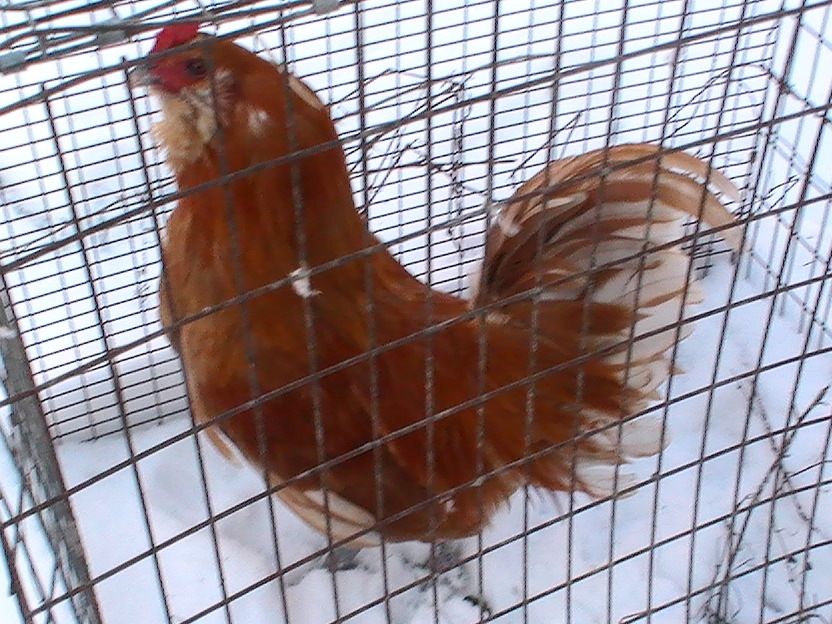
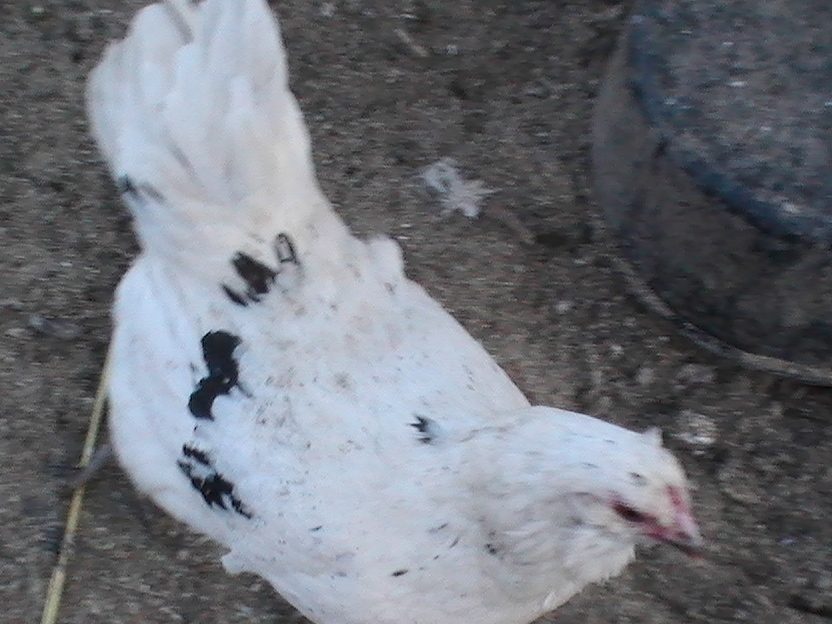
Ameraucana thread for posting pictures and discussing our birds

Yes you can.Almost nobody has.Black is the usual go to color.I have some of this cross in the incubator now.You will get blacks split for lavender and recessive white.I made this cross because the bantam whites I have are excellent layers of large [for bantam] eggs of a sky blue color.I hope to bring these traits into my lavender line.Be aware that recessive white can pop up later but careful planning will prevent this.First choice is to use a lav rooster on these split pullets.About half of those chicks will carry recessive white.Test cockerels of this second generation on white hens if no whites are produced then he is free of white.Use him as a breeder.You can also test pullets to be totally free of white in your line.This prodigy test takes time but well worth the effort.You will have a more diverse gene pool than most.

My white pullet also lays nice sized, sky blue eggs.
 
Sorry if I confused anyone.Dominate white hatch yellow recessive white are usually smokey at hatch but can vary depending on what color they are based on.2 copies of recessive white can cover any color.2 copies of dominate white can also cover most colors but is not as effective on red.Ameraucana are recessive but not always.I have been developing dominate white in bantam and large.The advantage of this is 1 copy of dominate gives a mostly white bird with some color showing.Easier to weed out after a cross.
That is the exact color of the chicks I hatched 2 weeks ago, I thought wow weird, but they are now getting their new feathers in. So now, if I wanted to go on with these whites, would you line breed them. Please everyone remember as Pips and Peeps mentioned I am a newbie, probably won't have purchased biddies like this, but I got the pair for 1$ in a raffle helping 4-H. The owner (didn't get name) was also showing some there. They were pretty birds and now the eggs are an extra, she lays well. So I have them and might as well hatch some chicks and see where it goes, so I asking help from all you experienced peeps. I love the blue eggs.
The original ? involved mixing the lavender and white. Which I will not do. Just trying to figure out how to set up some pens for breeding. My Lavenders are only week old.
So any suggestions would be appreciated. Thank you Michele
 
That is the exact color of the chicks I hatched 2 weeks ago, I thought wow weird, but they are now getting their new feathers in. So now, if I wanted to go on with these whites, would you line breed them. Please everyone remember as Pips and Peeps mentioned I am a newbie, probably won't have purchased biddies like this, but I got the pair for 1$ in a raffle helping 4-H. The owner (didn't get name) was also showing some there. They were pretty birds and now the eggs are an extra, she lays well. So I have them and might as well hatch some chicks and see where it goes, so I asking help from all you experienced peeps. I love the blue eggs.
The original ? involved mixing the lavender and white. Which I will not do. Just trying to figure out how to set up some pens for breeding. My Lavenders are only week old.
So any suggestions would be appreciated. Thank you Michele


Breed your whites together and select for the best color and other traits.Selection is the key to breeding.Not all purebreds are worthy of being breeders.Which is where newbies sometimes get confused.I remember early on making matings that I knew would only produce 10 out of a 100 worthy of consideration and then keeping a pair or trio.The secret is what you select more than what you used.


Jean is right and I sometimes forget what it was like when I didn't know some of these things.I encorage you to learn by reading and by experience.I will try to pass on what I know.I have tried many color crosses that most avoid.Mostly because I want to know.I will try to post a picture of a pen of birds I used this year.The hens are from a buff x white mating .I had no wheatens to use and only1 project buff rooster to use due to a predator attack in mid day while they were out on free range.Nobody would think to use these as breeders but I believed I could bring them back to buff.I will try to get pics of the ones I saved from this mating tomorrow.Sort of a picture guide on what happened.
The rooster is 3/4 buff 1/4 wheaten the hens 1/2 buff 1/2 white.Now I will try to add pics of what I saved from this.
 
You can see the wheaten influence in the one pullet.They are a dramatic improvement in color from the hens they are from.Somehow the breeders ended up at the bottom of the post.Now by selecting for the best buff color I weeded out the recessive white without having to do a progeny test.See how the black shows up on the buff x white hens.By not keeping any of those in this generation I will eliminate the white gene from this project plus pick up some genetic diversity that is not out there yet.Still aways to go before the color is right but a cross back to buff will put back the genes needed for good buff.Mating these 3 birds will also work as the genes will recombine and segregate.Some would be better than the parents.Again selection is the key.Now here is something to think about.This also proves black can be turned into buff.Think about it there are genes that turn the black tail buff and genes that turn red to buff so that means any variety with black and or red in it can be used to bring genetic diversity.Wheaten has been viewed as the only choice but there are other choices that will work.Think for yourself and try new things if like.
 
You can see the wheaten influence in the one pullet.They are a dramatic improvement in color from the hens they are from.Somehow the breeders ended up at the bottom of the post.Now by selecting for the best buff color I weeded out the recessive white without having to do a progeny test.See how the black shows up on the buff x white hens.By not keeping any of those in this generation I will eliminate the white gene from this project plus pick up some genetic diversity that is not out there yet.Still aways to go before the color is right but a cross back to buff will put back the genes needed for good buff.Mating these 3 birds will also work as the genes will recombine and segregate.Some would be better than the parents.Again selection is the key.Now here is something to think about.This also proves black can be turned into buff.Think about it there are genes that turn the black tail buff and genes that turn red to buff so that means any variety with black and or red in it can be used to bring genetic diversity.Wheaten has been viewed as the only choice but there are other choices that will work.Think for yourself and try new things if like.

Jerry, If I'm understanding the highlighted part, that you can tell which of the hens carry white by the black in their tail, can you tell us how you know the hens with the black showing in their tails are carrying white? Other than the obvious, that you know they are buff x white, what about the black in the tail says they carry white?
 
Jerry, If I'm understanding the highlighted part, that you can tell which of the hens carry white by the black in their tail, can you tell us how you know the hens with the black showing in their tails are carrying white? Other than the obvious, that you know they are buff x white, what about the black in the tail says they carry white?

What I am looking for is to not include the very black ones with buff.As you can see most of the hens carrying white almost look like poorly colored brown reds.Black in the tail is a wheaten trait.By the time all the black is out, all of the white genes will be gone also.Including the few that pass for the wheaten look.
 
Okay now to show what a cross to dominate white can produce in large buff.The first pic is arooster the next are 2 pullets.They are from a dominate white/black hen and a buff rooster.The 3 and 4 photos are of a couple of cull from this mating.Note the black in the pullet.She inherited that from the black/white hen.The cockerel has too much red and too much white in the tail.No one would reccomend this cross but as you can see It worked for me.I will use the original buff rooster on these pullets and should get some fairly good buff.Please note how dominate white did not have much effect on buff.Again once I have good buff color the white will be gone.So you you can see for yourself why I do not consider white as don't do it topic.You have had achance to see the results without spending Time or feed on it.
 
I'm not sure how to start a new thread under the Ameraucana heading so here goes...
In October I got 8 blue purebread Ameraucana chicks from a gal in SW PA. One of the little roos is developing an interesting cream color on the tops of his wings as well as blue/cream striping beginning on his hackles and saddle feathers. Still subtle. I will try to find the camera later to show you what I mean. I'm new to this...is this a normal coloring? All the others are various shades of blue.

Thanks in advance!
Cari
 

New posts New threads Active threads

Back
Top Bottom