California - Northern

Another thing I learned recently was that the blue color comes from an enzyme made in the Liver! The healthier the liver the bluer the shell will be.

Chickens are amazing!

Ron
Whoa. So if I wanted green eggs...I need to do what? Both my layers are brown layers...so I would need to what breed my Marans with a blue layer hen and her off spring has olive colored eggs? (trying to make my brain understand how this work lmbo)

And is that called making an easter egger chicken?
 
Last edited:
Hello NorCaL!

Anyone know of any local markets where I can bring my roosters to sell off? It was my first season incubating and I ended up with more roosters than hens! It's unfortunate because the roosters have more personality than the hens. They've begun crowing at about 16 weeks of age and I can't keep that much testasterone in the flock.
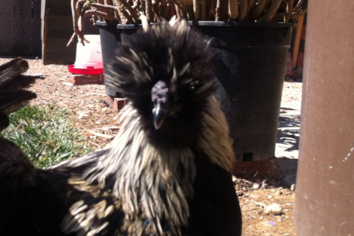
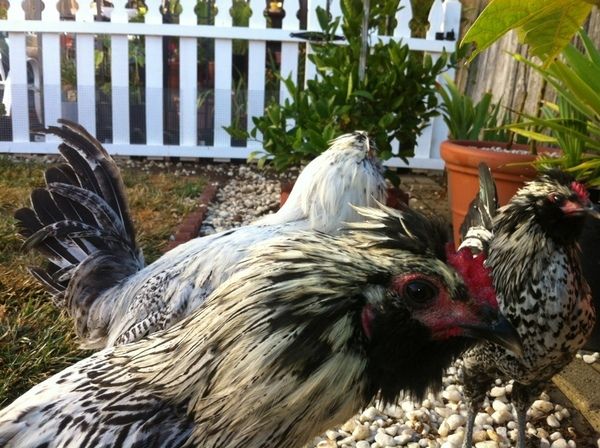
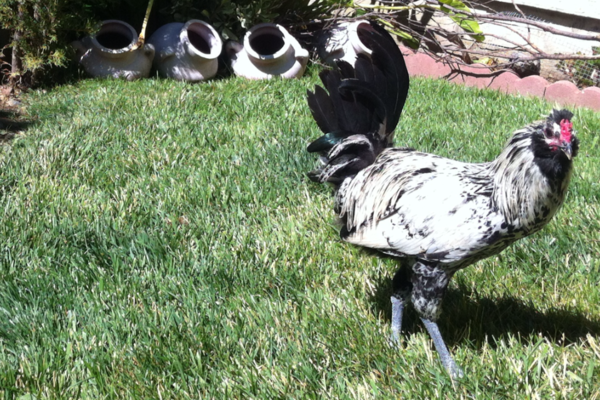
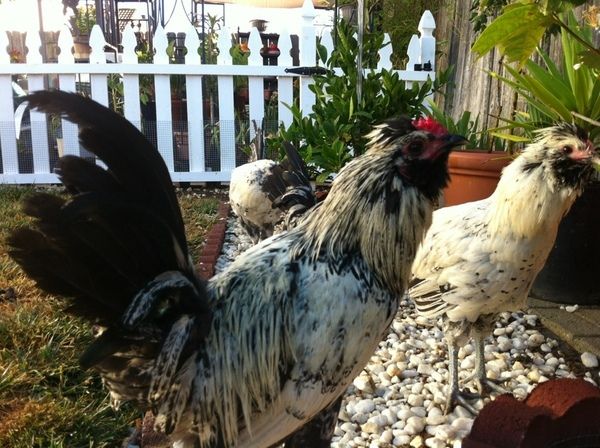
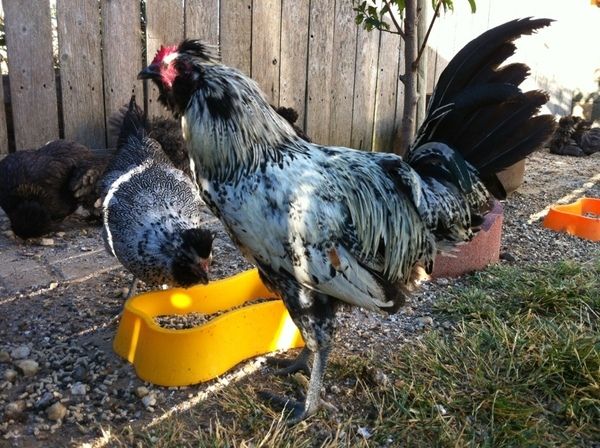
I've 16 week old Bearded SL Polish(male) x Ameruacanas(female) cockerels. They're playful and handle really well and they have been raised on organic non-medicated feed. The ones with the darker coloring and black tails come from a Green Egg Laying Ameraucana Hen, the lighter ones from the Blue Egg Laying Ameraucana Hen. You can see their parents on my profile page. We have 7 cockerels left!


I also have 16 week old Sizzle Cockerels, (9th generation now!)


You all have first dibs, of course
big_smile.png

Please PM me for any inquiries.

Thank you very much!

CHAD
 
Does anyone know the name of the place in sacramento that will process chickens. I called last summer and now I can't remember the name. They had a 10 chicken minimum supposedly for $25 for 10 at least last summer. Anyone know the name?

I had already grabbed your post in my multi response, but I see you already got your answer. It's called New American Poultry, I think it's on Broadway.


I thought you had swabbed their throats to check for gapeworms? I wonder why you didn't notice such a large chunk of plastic before. Oh well, hopefully it is well now.

For future reference tho: there is an awesome vinegar & baking soda thread on this site that explains how to make a "gas chamber" to cull chicks... I had to use it once & it worked great!

I think the easiest (at least on the human involved) is car starter fluid on a rag. Place the chick in an old ice chest, drop in the rag, place the chick and close the lid. Within minutes they are gone. Dry ice works as well, but not exactly easy to keep on hand. I have a chick I need to euthanize right now and bought what I needed a couple of days ago. It's just so cute, I'm having trouble bringing myself to do it.

(Can they lay 2 x a day??)

Nope, it takes 26 hours. That's why a bird will lay a little later each day, once they reach later in the afternoon, they generally will skip a day and then start out early again. Of course, this is the norm and there are the rare exceptions.

Deb
 
Quote: The brown coat is one of the last things to happen in the egg cycle. The eggs are usually darkest after a molt. Then they lay lighter eggs at the end of the laying period before the next molt. The Molts get to be more frequent and harder as the hen ages, so less eggs are laid because of that. The brown egg layer that is laying the white egg may be getting ready to molt, or did she just finish a molt?

You are getting about a 70% egg laying rate. That is good, especially with older hens. A lot of heritage breeds will lay 5 or 6 per week, so won't lay every day of the week. Aveca says you can flip the hen over and check her vent. If it is moist and large(compare with a Hen you know is laying) then she is laying.

Ok, yes they can lay more than one egg in a day. They lay an egg on average every 23 to 25 hours, so rarely they can lay one early in morning and then later in the evening the next day.

I don't think mine have ever done that. It's more likely with Hybrids and I only have two of those. The best I have gotten is 10 eggs out of 12 layers then the next day I might get 6 out od 12. That reminds me, I need to get more egg customers.....

old.gif
Whew...Ron
 
Thank you for the tip on the blood! I am floored that one day separated caused the 'sick' one to attack all the others. Like viciously. Is that normal behavior?

Oh gosh - puppy pads of all the things! I am using newspaper and pine shavings from now on. Why they thought that would be edible is beyond me but I am SO glad I do not have sick chickens and that I do not have to cull anyone.

Such a relief about your "sick" chick! So glad they're going to be OK. I'm thinking you are sort of having a chicken owner's "trial by fire." Now a chick attacking!
barnie.gif
 
I had already grabbed your post in my multi response, but I see you already got your answer. It's called New American Poultry, I think it's on Broadway.


I thought you had swabbed their throats to check for gapeworms? I wonder why you didn't notice such a large chunk of plastic before. Oh well, hopefully it is well now.


I think the easiest (at least on the human involved) is car starter fluid on a rag. Place the chick in an old ice chest, drop in the rag, place the chick and close the lid. Within minutes they are gone. Dry ice works as well, but not exactly easy to keep on hand. I have a chick I need to euthanize right now and bought what I needed a couple of days ago. It's just so cute, I'm having trouble bringing myself to do it.


Nope, it takes 26 hours. That's why a bird will lay a little later each day, once they reach later in the afternoon, they generally will skip a day and then start out early again. Of course, this is the norm and there are the rare exceptions.

Deb
I didn't really 'look' for anything. I had never opened a chicken mouth before and I was by myself. I was afraid of hurting him. I managed to get the swab down his throat (both throats) and the Orp wouldn't actually let me open his mouth all the way- I basically cracked it open and got the swab in and then gently and slowly inserted the swab until the tip was hanging out (hard to describe). But I am kicking myself for this- I should have looked. It was literally pasted to his tongue. I had to rub and rub and rub to slowly 'roll' it up towards the tip of his tongue and even then when I was tugging it off I had a moment- of oh my gosh what if this IS part of his tongue? But then it came free. I think this time when I looked I figured opening his mouth really wide even if it caused discomfort was better than death surely? So my bravery extended that far. Other than being annoyed it did not seem perturbed. I had also contacted the breeder and sent her the video and she said it looked like something was more likely in his throat. I had thought that several times but really don't know about chicken illnesses too much. He is acting fine now. He is no longer cracking his mouth open. He is swallowing fine. His breathing isn't weird. They are all right now enjoying some fresh cantaloupe. I was in tears when I pulled that plastic out of his mouth. The ducks used to pull at the stuff but chickens have beaks that are nice little pointy tools and I overlooked that. :(

And to add: the picture my son snapped he got when I had already pulled it half way up. It was WAY way down there. I was going to use tweezers (I have special long ones) but the end that I could reach was glued flat and I didn't want to hurt him if I pinched his tongue or something. So the qtip worked nicely.
 
Last edited:
The brown coat is one of the last things to happen in the egg cycle. The eggs are usually darkest after a molt. Then they lay lighter eggs at the end of the laying period before the next molt. The Molts get to be more frequent and harder as the hen ages, so less eggs are laid because of that. The brown egg layer that is laying the white egg may be getting ready to molt, or did she just finish a molt?

You are getting about a 70% egg laying rate. That is good, especially with older hens. A lot of heritage breeds will lay 5 or 6 per week, so won't lay every day of the week. Aveca says you can flip the hen over and check her vent. If it is moist and large(compare with a Hen you know is laying) then she is laying.

Ok, yes they can lay more than one egg in a day. They lay an egg on average every 23 to 25 hours, so rarely they can lay one early in morning and then later in the evening the next day.

I don't think mine have ever done that. It's more likely with Hybrids and I only have two of those. The best I have gotten is 10 eggs out of 12 layers then the next day I might get 6 out od 12. That reminds me, I need to get more egg customers.....

old.gif
Whew...Ron
I love reading all this!!
 
I get back from Spain on Friday and have a chicken dilemma on my hands starting on Saturday. We'll call it "8 Chickens..1 Coop.." Lol. My dilemma is that I am bringing home 3 different "groups" of chickens that haven't met eachother and I have one coop to house them in. How should I socialize them so I can house them together?? Here's the "groups":
Group 1: Marraduna Basque's - 1 cockerel, 2 pullets - 13 weeks - Have been together since hatching
Group 2: Marraduna Basque - 1 pullet - 13 weeks - Was hatched with the other Basques but seperated at 8 weeks. Will be rejoining them on Saturday.
Group 3: Barnevelders - 4 pullets - 9 weeks - Have been together for 4 weeks now.
The coop is big enough for them (in fact could hold a bunch more) but I know you can't just throw them all together and hope they get along. Any suggestions?
I love that I'm sitting in another country, while everyone's partying because of the Eurocup win, and all I can think about are my chickens! Ha!
 
I get back from Spain on Friday and have a chicken dilemma on my hands starting on Saturday. We'll call it "8 Chickens..1 Coop.." Lol. My dilemma is that I am bringing home 3 different "groups" of chickens that haven't met eachother and I have one coop to house them in. How should I socialize them so I can house them together?? Here's the "groups":
Group 1: Marraduna Basque's - 1 cockerel, 2 pullets - 13 weeks - Have been together since hatching
Group 2: Marraduna Basque - 1 pullet - 13 weeks - Was hatched with the other Basques but seperated at 8 weeks. Will be rejoining them on Saturday.
Group 3: Barnevelders - 4 pullets - 9 weeks - Have been together for 4 weeks now.
The coop is big enough for them (in fact could hold a bunch more) but I know you can't just throw them all together and hope they get along. Any suggestions?
I love that I'm sitting in another country, while everyone's partying because of the Eurocup win, and all I can think about are my chickens! Ha!
Well I'm no chicken expert but we ran into this with ducks. We took some of the orange mesh construction fencing stuff and split the coop with it (easy to tear down). They could see each other but not GET to each other. After a couple weeks we let down one side and watched for the day. Had to put it back up for a few more days. Then was able to take it all the way down. The goslings will have to share with the ducks until next Spring so we will have to put of the ugly orange divider. But it works. It would be trickier with 3 groups of chicks though so maybe there is a way to modify this?
 

New posts New threads Active threads

Back
Top Bottom