Chicken Run Fencing Advice

WildchildT

Hatching
7 Years
Joined
May 6, 2012
Messages
7
Reaction score
1
Points
9
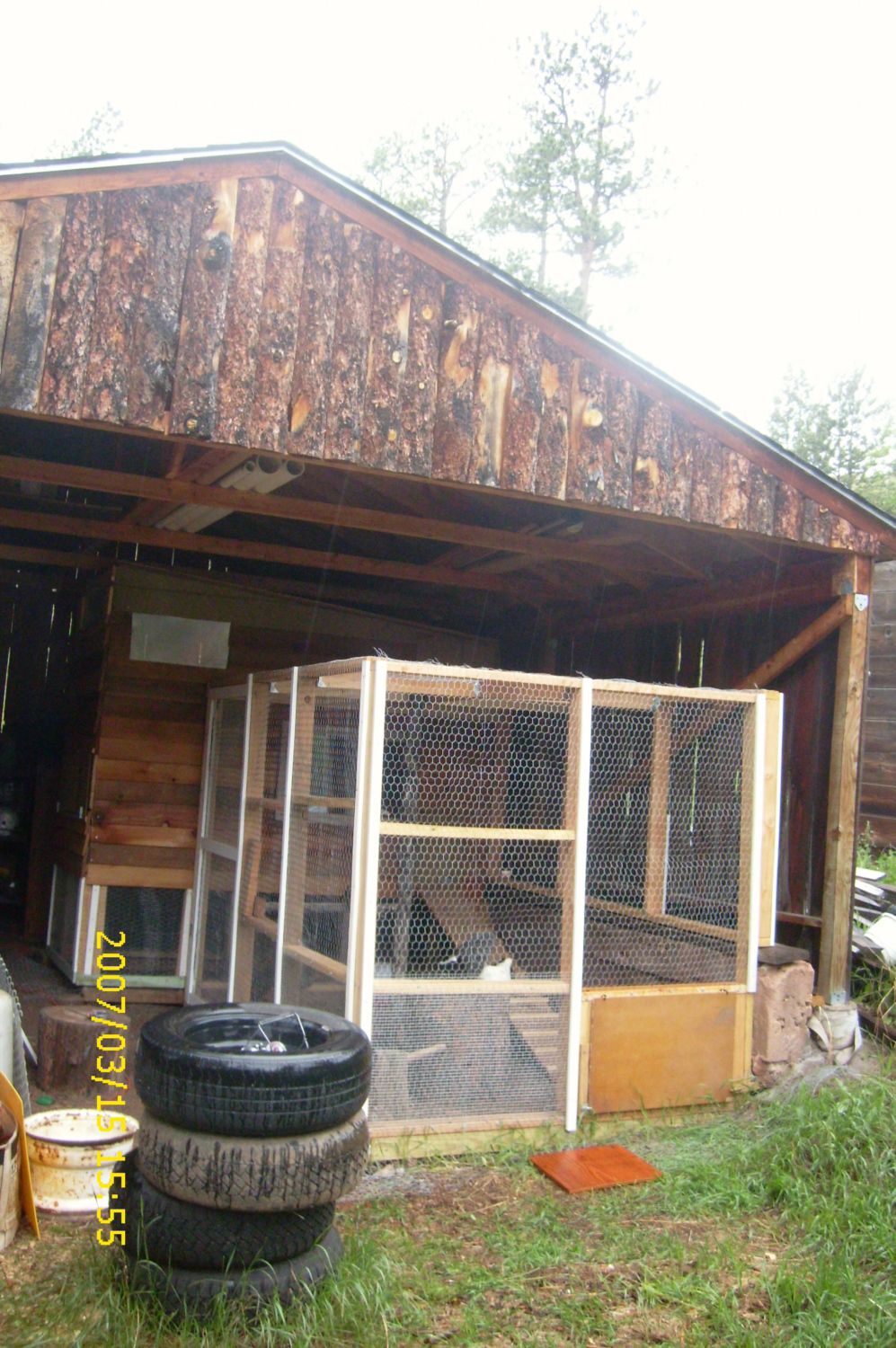
I live in Colorado (predator heavy: fox, coyotes, hawks, etc) and am a newbie at this whole thing. I have seven hopefully hens, five regular/large breeds and 2 silkies. We are almost finished constructing the coop and now adding on the run. Our original plan was to build a chicken tractor but the project became exciting and therefore overbuilt. My DH is still convinced in the future he can put it on a flat bed trailer type of tractor or big wheels but I'm not holding my breath. So, since the coop is at least for now permanently fixed in place, we are making a detachable run 8 x 12.

My question is how to fence it all in. We are using heavy duty wire throughout the run with hardware cloth (small tight heavy wire boxes) on the lower portion so that coons and fox can't swipe their paws in to catch the chickens. The top will be fenced and also have a light corrugated roof for our winters and bad weather.

I have been told that coyotes and fox will dig but do I need to worry about this if I bring the chickens in at night locked tight in the coop? If I do put wire on the entire bottom of the run, will it damage the chicken's feet if it is not fully buried?

My other option is to build the run as a permanent fixture also and bury the edges of the fence (fanning out 1-2') to prevent the digging by predators AND then build a moveable smaller run that I can allow them to "free range".

What sounds more logical? Any advice or tips?
 
I am beginning my run as well. I am going to fence the bottom anyway because I have dogs and so do my neighbors. Also to keep rodents and snakes out. I'm alao using hardware cloth all the way ip necause raccoons can climb, rip and get in.
Basically, I'm going to spend the extra cash now and build Fy. Knox.
 
Sounds like your on the right track. Thats a big run to ever think about moving. I would make it permanent and go with a smaller tractor. Good job on using the hardware cloth and covering the top. I wouldn't worry about covering the inside floor completely with wire. Bury the hardware cloth at least two feet out from the sides of the run and you will be fine. Leave the inside exposed for the chickens to scratch in. A predator won't start digging two feet away from the side of the run so when they hit wire they can't go any farther.
 
It's hard to build a conventional tractor for seven chickens that is easy to move unless you move it a lot. There are ways to do pastured poultry with larger numbers of chickens, but these might consist of runs protected by electric fencing and maybe livestock guard dogs. Usually, these are not covered against flying predators either. In a tractor you don't need a big coop if they have access to the outside all the time, but that can open you up to digging predators.

I had a tractor that was 64 square feet for 8 chickens. It was two 4' x 8' sections that I linked together. It was still a pain to move. If I did not move it every two to three days (rain makes a difference on timing), the grass was gone and it started to stink. Some people move their tractors twice a day. It depends on size, number of chickens, and your particular climate and grass. A chicken tractor is a commitment. How do you plan on taking a trip and getting it moved regularly?

I often see foxes and coyotes out hunting during the day. That does not mean they have rabies or are sick or anything like that. It just means they are out during the day. They do tend to hunt a lot more more at night, but maybe they had a bad night or maybe they have babies to feed. But night is clearly your biggest time of danger. They are more active and they have more undisturbed time to work.

I use a philosophy of a predator-resistent run during the day and a predator-proof coop at night. Most of the time I let them range inside electric netting because of dogs, but I can lock them in the run if I need to. I find that dogs during the day are my biggest problem and we have all kinds of coyotes and other things out here in the country.

If you do secure them in a coop at night, the coop needs to be larger or you need to get up at the crack of dawn to let them into the run.

There are a tremendous number of ways to do these things, but they take different methods of management. I really like having a permanent large coop that I can make predator-proof and a large fixed run that is highly predator-resistent but not completely predator-proof. That gives me a lot of options on how I can manage them. If you wish, you could do this plus have a fairly light-weight tractor so they can have day trips outside. But we are all different. What would work for me might not suit you.
 
I also live in Colorado, up in the mountains where we have coyotes, foxes, raccoons, bears, mountain lions...let's see, hawks, owls, weasels... Anyway, I purchased my first 8 chicks in the spring of 2011. My coop and run were constructed with predators in mind. I started with chicken wire, but after reading the predator thread on this forum went back and reinforced the bottom 2 feet with a layer of hardware cloth. The top is covered in chicken wire and there is a 2 foot "skirt" of chicken wire around the outside to discourage digging. I filled any gaps or low spots outside the coop with rocks before I put the skirt over them. I was careful when building the coop to be sure there were no holes or gaps that a weasel could squeeze in. After stapling the fencing to the frame, I went back and reinforced with screws and washers and then said "heck with it" and screwed a trim piece of wood to the outside of the frame, sandwiching the fencing between the trim and the frame. My coop and run are built inside an open-fronted garage/shed, so the run is protected from snow, hail and rain, and they enjoyed it's use all winter long.


I only lost one of my chicken this year to predators and that was to a bobcat while the girls were out free-ranging in broad daylight. Since them I don't let them free range unless I have the dogs out and I'm working outside. (During the winter when there wasn't much work to do outside I'd just sit out with a cup of coffee and a book and read for an hour or so). I haven't seen any evidence that the coop or run have been messed with, no attempts to eat through the fencing or dig under.

I bring in their food into the house at night, because I think a bear would be perfectly able to break into the run if it thought there was food (they've climbed up onto my neighbor's deck and trashed the grill and the bird feeders)

So,I think you are doing all the right things. I'm not sure there is anything you could rationally do to make your run bear-proof, but if you take the food in at night and don't leave garbage around that will attract bears I think you greatly reduce your chances of problems. Good luck! I consider my first year a great success and purchased more chicks this May.
 

New posts New threads Active threads

Back
Top Bottom