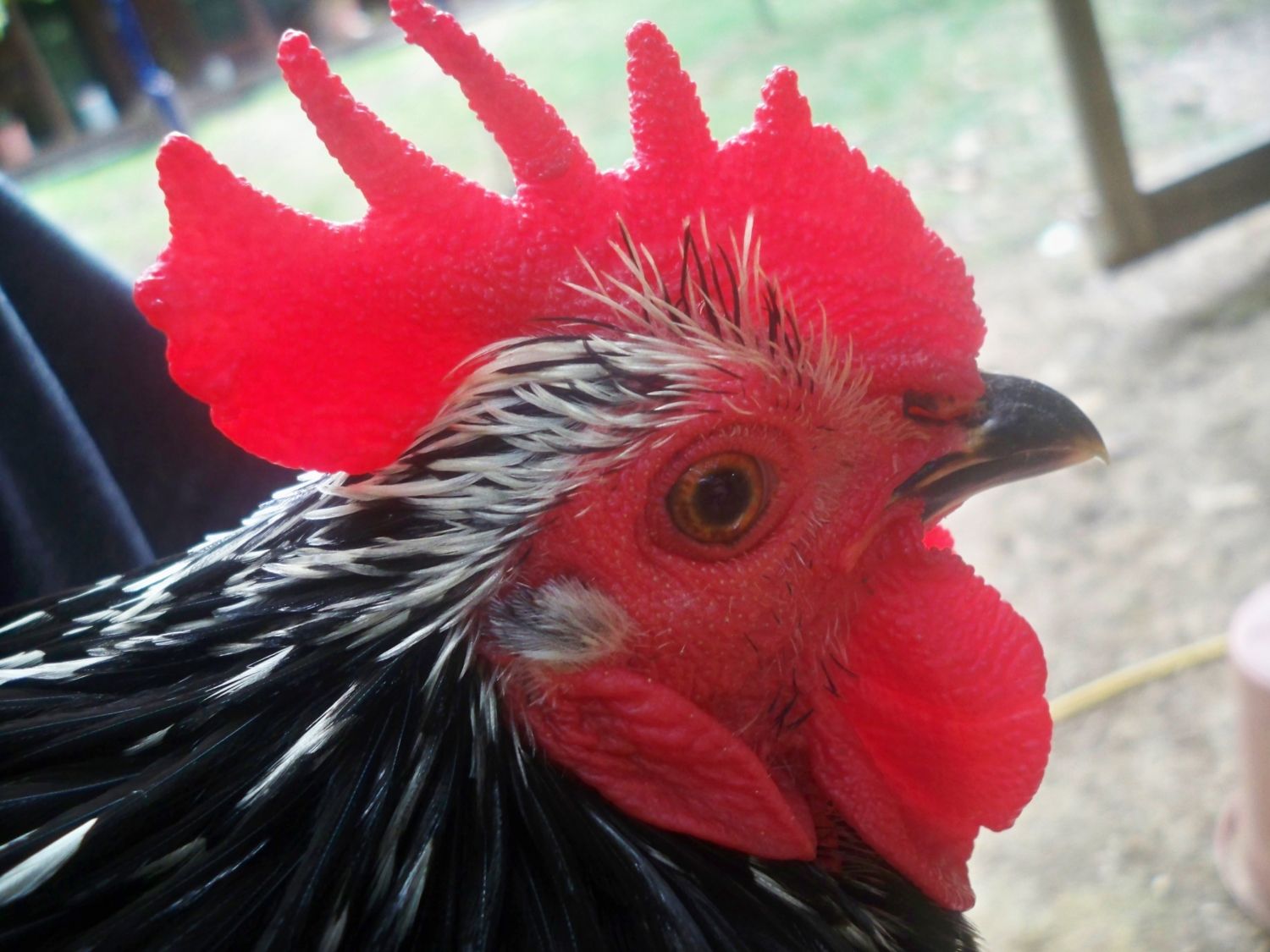
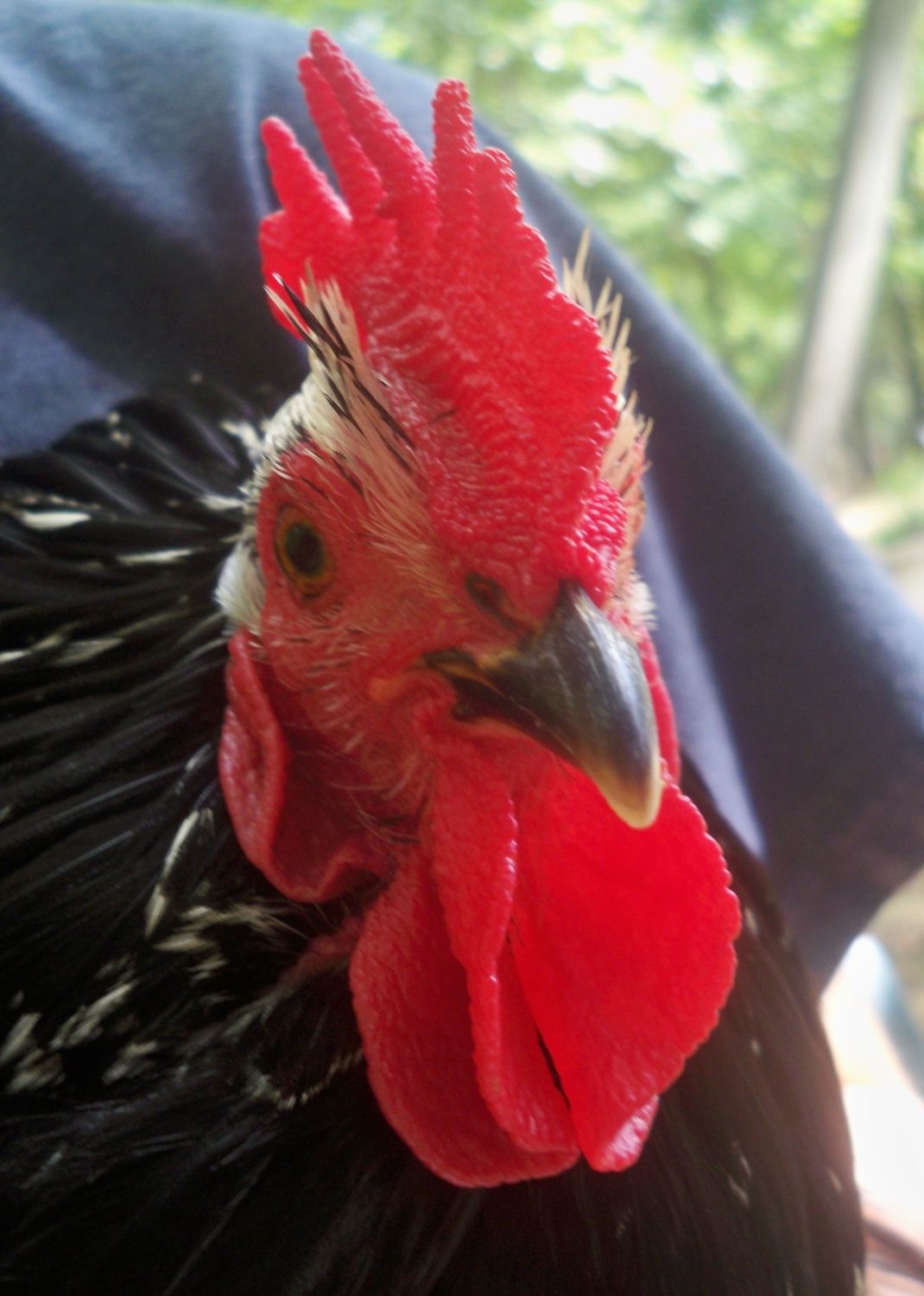
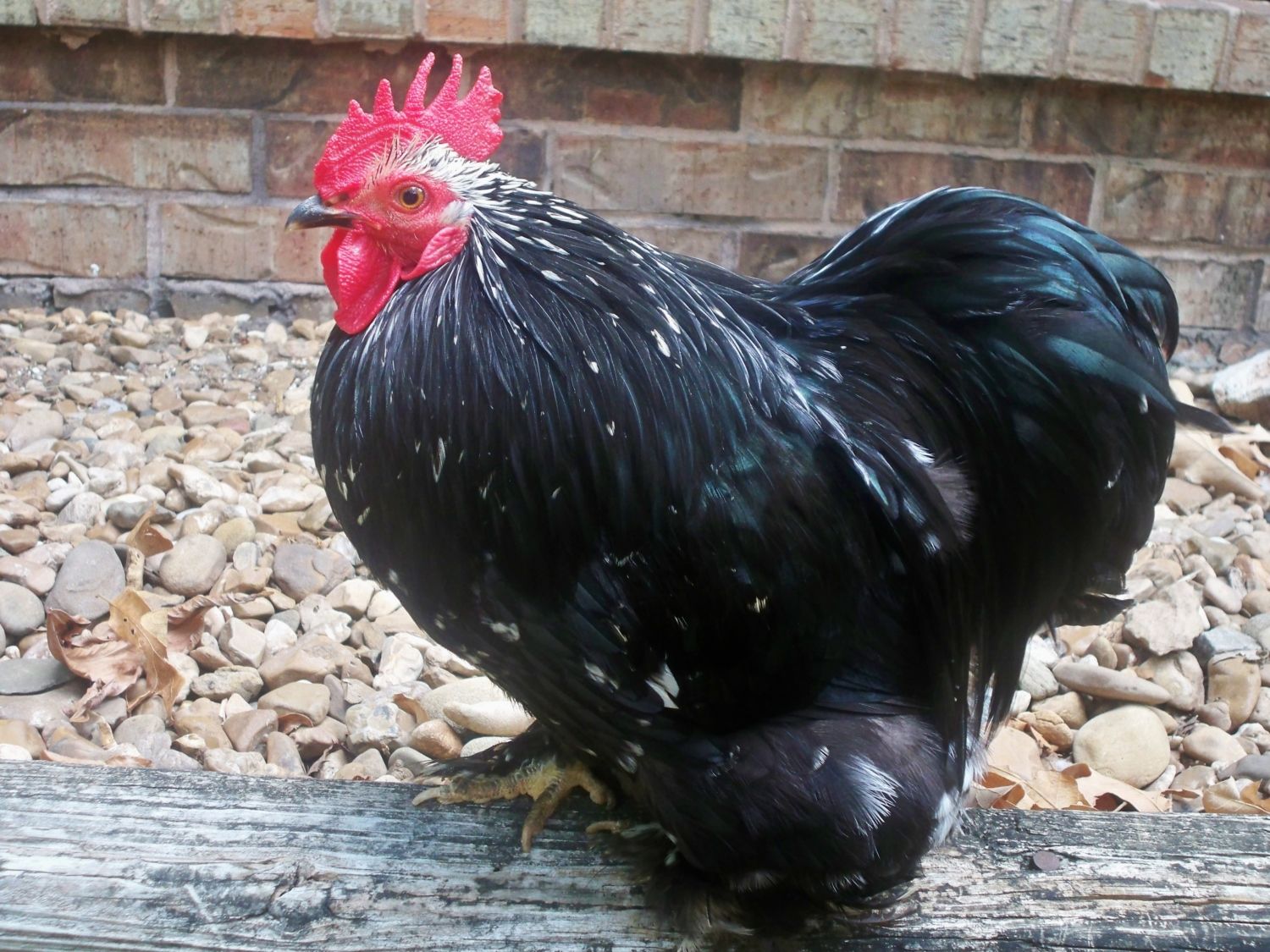
I've wondered about "deep" as well. I think I understand broad and short, but not the "deep". And for the bantam females, it says "fairly full in skull". What the heck does that mean?
I'm pretty sure now that I have at lease one, maybe two, crow head hens. Almost a straight line from the top of their head to the tip of their beak. Maybe the "deep" refers to that line - I'm thinking a deep curve in that line - rather than straight?
I just spend a lot of time studying the pictures on Cochins International. And remember, a bird can win one day under one judge, and be marked down another day by another judge. They have to interpret the standard as well. And a lot depends on the competition that particular day as well.
And I listen to what the Master Breeders are saying, but sometimes I have to temper that with the fact that many of them hatch 100's of birds in one season. They will cull for points on a comb at an extremely early age - as soon as they can accurately be counted. And I'm assuming they have the years of experience to recognize at an early age a crow head. Keep in mind that they are already working with excellent stock (for the most part). If I was hatching 100's of birds, I could afford to cull for points at an early age as well.
But I'm only hatching 2 - 3 dozen a year, if I'm lucky. And I'm also working with laced birds, so it's important to me to see how their lacing develops as well. Balancing type with pattern is very frustrating.
We all have to be comfortable with what we are willing, and can afford, to grow out. And just because I may grow them out a bit longer, does not mean that I will use them in my breeding program.
If you look closely at the combs, wattles and heads of the show winners on Cochins Intl, they do not all look the same, nor are they all perfect. But they all fit the general description in the Standard with no defects, and they all appear to be in correct proportion.
But speaking of Judging, they do have a "General Scale of Points". These are the maximum points possible for the areas we are discussing:
Beak Shape 2 Color 1
Comb Shape 5
Ear Lobes Shape 2 Color 2
Eyes Shape 2 Color 2
Head & Face Shape 3 Color 1
Wattles Shape 2
From there they start deducting points. As we move further thru the other body parts, you will see how every little part fits into the whole, and you have to make the determination for your own personal flock as to what you will cull and when. If I know everything I'm hatching has the possibility of being quality exhibition stock, I'm going to get rather picky and selective early on. If I'm not sure about the quality of what I'm hatching, or if I don't have the experience and knowledge to know exactly what I'm looking at in a chick or juvenile bird, I may be more afraid that I'm throwing the baby out with the bath water. Does that make sense???
A well-known breeder of exhibition SL Wyandottes posted a month or so ago on ShowBirdBid that last year, he focused and culled out all poor leg and primary wing color - no matter how great the birds were. He focused on just those two points last year - and he is reaping the rewards this year.
Sometimes you just have to chose what battles you are going to fight and when. A Master Breeder may chose to cull a bird because its beak color is wrong - his flock is that excellent that he can drill down to these details. For me, beak color may be the least of my problems (at least this year!!)
Sorry, I'm rambling again - I'd better go eat dinner. Hopefully, Craig or maybe Tom if he's watching will pick up the conversation.