Quote:
I wasn't singling you out. I'm sorry if you thought so. I've just seen so many of these threads go south lately.......
I do think you're right, the APA won't change the whole standard for one variety. What I would hope to see is more of a meeting in the middle. I think the english orp brings that to the table. What I've seen of the american orps that are most ly hatchery stock (that is a caveat for sure) is it's just not even looking like an orp.
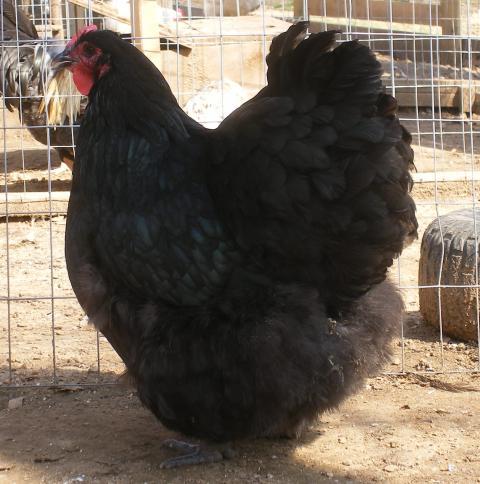
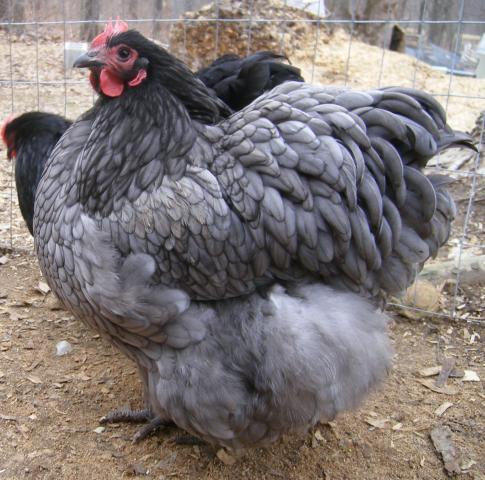
This is what I think about when I look at my birds.......
Shorter, stockier, wide stance, big breast short curvy tail, small head, smallish comb. To me, this is what an orpington should look like. I may be TOTALLY wrong, but it is what I think of when I think ideal.
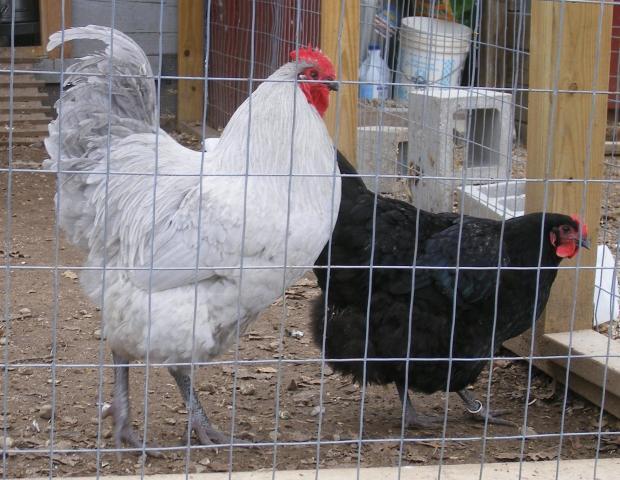
I've got this split on my split hens. He's not as nice as I'd like, but he is by far the best split from last year. he's a bit too deep in the "U" and he's too leggy, but he is a big improvement from the previous years breedings. He is the result of a F3 lav roo over a SQ black hen.
NOw this guy! This guy is just stunning in my mind. He is currently over my lav F5 hen. He will be over all my lavs from this year and then we will see where those splits go. He is also going to be shown this year.
I agree completely with what you said about using english to get the quick turn around. And that is exactly what I'm working on as well. Last year I didn't keep any of my lav chicks from the lav roo/split hen breedings. For the very reasons you talked about. One, I think the color is too dark. i too prefer the pearly coloration. And tow, because although the roo was decent, the offspring were not enhancing themselves toward the standard.
Like I said, I like the english look. I am a bit dismayed by the reports of low fertility due mostly to too much feathering. I think that by breeding towards the middle we end up with a bird that is more like what was originally intended. Pretty, but practical.