~MALAYSIAN SERAMA THREAD~ (PICS!!!)

Status
Not open for further replies.
Quote:
Pretty girl! You seem to know your genetics well so I'm not questioning you, just curious...

I know there are splits or carriers of the chocolate gene in cockerels since they carry two copies if the gene, but I thought hens could only have one copy and that it is always expressed. Does blue hide sex linked chocolate in pullets? Very curious.

And I NEED to see the blue and chocolate combo boy!
 
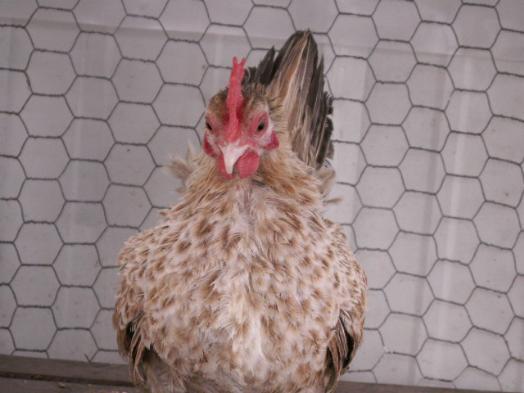
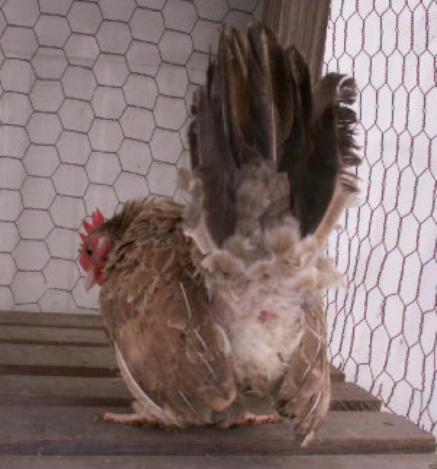
Here is the full sister to the 2 young roosters
If she is chocolate, and one of the roosters is chocolate, wouldn't that have to mean that both parents were chocolate?

8809_cici_26dec2010_03.jpg


8809_cici_26dec2010_02.jpg


8809_cici_26dec2010_05.jpg
 
Quote:
Both parents would have to carry chocolate. A chocolate hen bred to a not-chocolate roo would create all chocolate pullets and roost split to chocolate. For true sex-linked chocolate (which is very rare but not totally unheard of) the males would have to have 2 copies.

Most birds in this country are actually dun, which works similar to the way blue works. Double-dun is also called chocolate, but is genetically different from the sex-linked chocolate.

ETA: Chocolate should be very dark brown, similar to a dark blue but with brown instead.
smile.png
 
Last edited:
Quote:
Both parents would have to carry chocolate. A chocolate hen bred to a not-chocolate roo would create all chocolate pullets and roost split to chocolate. For true sex-linked chocolate (which is very rare but not totally unheard of) the males would have to have 2 copies.

Most birds in this country are actually dun, which works similar to the way blue works. Double-dun is also called chocolate, but is genetically different from the sex-linked chocolate.

ETA: Chocolate should be very dark brown, similar to a dark blue but with brown instead.
smile.png


Agreed! And to complicate matters even more, aside from true black, it seems that none of the birds any of us are working with are solid chocolate (or blue), so we have to first work on isolating those two colors...taking those blue or chocolate babies and crossing back to the blue/choc parent, to isolate and strengthen those colors. That's why I'm saying so many Pullet Prayers nightly!!! That's also why I'm waiting with bated breath for my "blue" and "chocolate" babies to grow, hoping that they keep their present color!

Whew! I'm not asking for much, am I???

Talk about having a Christmas list!
 
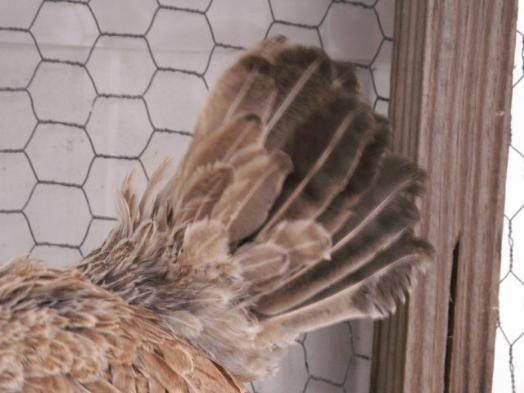
I'm still not convinced any of mine are chocolate, at least the true, sex linked type. Wish there were color tests for chickens like there are for horses. All of my horses have been tested for color genes. I'm going to be doing some close linebreeding and see what comes out. I really wouldn't mind chocolate wheatens but would like to work on getting the color perfected if it's chocolate. I may try this young hen with my black /barred rooster. His color isn't that complicated and barring is dominant so if she's chocolate, wouldn't there be some chocolate barred? or with the wheaten, a chocolate crele?
 
Actually, this young rooster has some red in his neck hackles so bred to a hen with chocolate and wheaten, then wouldn't that produce some crele chicks in the regular crele color and some chocolate?

8809_benny23_dec2010_01.jpg
 
Last edited:
Quote:
Both parents would have to carry chocolate. A chocolate hen bred to a not-chocolate roo would create all chocolate pullets and roost split to chocolate. For true sex-linked chocolate (which is very rare but not totally unheard of) the males would have to have 2 copies.

Most birds in this country are actually dun, which works similar to the way blue works. Double-dun is also called chocolate, but is genetically different from the sex-linked chocolate.

ETA: Chocolate should be very dark brown, similar to a dark blue but with brown instead.
smile.png


Agreed! And to complicate matters even more, aside from true black, it seems that none of the birds any of us are working with are solid chocolate (or blue), so we have to first work on isolating those two colors...taking those blue or chocolate babies and crossing back to the blue/choc parent, to isolate and strengthen those colors. That's why I'm saying so many Pullet Prayers nightly!!! That's also why I'm waiting with bated breath for my "blue" and "chocolate" babies to grow, hoping that they keep their present color!

Whew! I'm not asking for much, am I???

Talk about having a Christmas list!

That's one of the biggest problems, the color genetics are so messed up on the serama. A friend of mine does have true, sex-linked chocolate seramas...he couldn't figure out why he was only hatching hens that color
lol.png
 
I was reading about wheaten and black and read that you can't get a solid black when there is a wheaten parent, that wheaten is dominant over solid black. So that would mean to me that I would never get a solid chocolate with my birds ( if they're actually chocolate).
I'm not sure how barring and wheaten work together but I would expect to be able to get a crele pattern with chocolate if the hen is chocolate. So, I'm thinking seriously about moving Cici (my chocolate suspect hen) in with the Barred rooster.......
Any comments?
 
Shelley,
Obviously poultry color genetics are a whole lot more complex than equine genetics but as far as the Serama's, I think it's just a matter of time and breeders focusing on unwinding all the twisted genes to start getting some of the basic, known color genes. I have a friend in California with a single horse carrying nearly every color gene a horse can have, some of course are on the same locus so they can't occupy the same location but still, a Lot of color/pattern genes. Simply breeding to a horse with only a base color and no modifiers can drastically reduce the number of color genes that the foal will get but it's more likely that a few generations would be needed to further remove genes to the point a foal is a simple black, bay, red or brown base color. I think the same can work for the Serama. I'm not sure how important that will be for me since I love the crazy combinations and surprises but for those working so hard for APA approval, well it's an amazing feat to see some of them breeding true.
 
Status
Not open for further replies.

New posts New threads Active threads

Back
Top Bottom