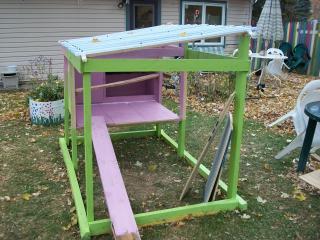
There are really THREE different things not just two: metal, or PVC plastic, or polycarbonate plastic.
PVC is about the cheapest. And with reason. It does not hold up well to hot or cold temperatures, is brittle and gets more so with age, carries no mfr warranty against hail, and has a short lifespan. Absolutely don't use it somewhere with real cold winters or in a situation where greenhouse-y heating will make it quite hot; and honestly I would not recommend it for most other applications either. Light-transmitting wall panels in a mild un-windy climate, maybe. Basically though it doesn't last well and so it quickly becomes a waste of money
Polycarbonate is generally around twice the price of PVC. It is great stuff, lasts a fairly long time (not *as* long as metal but metal can easily lasts as long as *you* do or longer
), withstands heat and cold without becoming especially brittle, typically is warranted against hail damage, and if you live in a snowy climate it is kind of nice how slippery the polycarbonate is (makes the snow slide off easily). I would recommend it in situations where you want a translucent or transparent panel.
HOWEVER YOU DO NOT want a ROOF to be clear, in almost any situation whatsoever. For a lot of reasons I won't take up space with here, No you cannot usually get useful wintertime heating from a clear roof -- there are other ways to do it, but not a clear roof. Translucent I am not sure about how it performs in a hot summer, I would *think* it would be undesirable but I don't know. I do like it for my run roof, though!
If you use either PVC or polycarbonate, YOU HAVE TO USE THE WAVY FILLER STRIPS. The reason: to avoid having the panels self-destruct due to thermal movement, you are required to predrill an extra-large hole for the screws. Because the rubber gaskets on the screws will not necessarily 100% waterproof these oversized holes, you don't want them in the valleys and must therefore screw through the *peaks*. But the roofing material is very soft and flexible and if you do not have the wavy filler strip underneath, you will either damage the roofing badly or it will be attached so loosely that wind easily rips it off. So the wavy filler strips ARE NOT OPTIONAL.
Metal roofing is generally partway between the cost of PVC and the cost of polycarbonate, depending on what gauge metal you have to use and whether you're getting plain galvanized vs paint-baked-on. It lasts virtually forever, certainly as long as you will ever need it to last and then some
It is much more of a nuisance to cut than the plastic roofings are (you can just use *scissors* for them, woo hoo! Metal requires huge snips or a circular saw and many sparks and much noise), but not actually hard to work with. The metal itself gets hot in summer but I do not have personal experience with whether plastic roofs actually render a building any much cooler in hot-summer climates.
There used to also be fiberglass roofing panels, which were a pain (literally) to work with especially if they had started weathering but honestly I liked them and I wish they still manufactured them but I sure have not been able to find a source at least not in this part of Canada. I do not know how the price today would compare with pvc/polycarb/metal if they *did* still exist.
No matter whether you use PVC, polycarbonate or metal, be aware you will have a condensation/humidity problem if you do not insulate the underside of the roof if you're in a cold-winter climate. (Exception: if it's basically an open-air coop with MASSIVE amounts of ventilation).
Personally I think metal is the most sensible choice in most circumstances, unless you have spare change to stimulate the economy with and want to be all designer-y about how the coop looks. There are exceptions. For instance I used translucent (not clear) polycarb for the runs on the E side of my chicken building because they are shaded most of the day and can really really use the extra light; and I'm really happy with how it came out.
No matter what roofing you choose, READ THE MANUFACTURER'S INSTRUCTIONS about what supporting structure it needs and exactly how to install it (including how much unsupported overhang you allow). Otherwise it voids warranties, weakens the roof, and makes it sometimes VERY vulnerable to blowing off or collapsing.
I would hazard a guess that something like 1/3 or more of the BYC coops that I see pics of, that have metal or plastic roofing, have it installed INCORRECTLY. This drives me crazy.
Good luck, have fun,
Pat