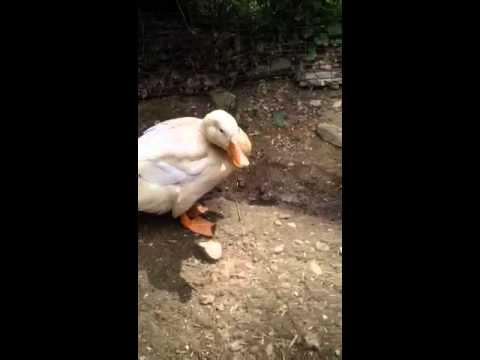
I'm looking at getting ducks (I'm thinking 2?) but there were a few things I am unsure about and need advice/help on

1-what sex to get? Female or male? I want two of the same sex so don't get lots of ducklings!
2- do you clip their wings so they can't fly? Or are their flight feathers you can remove, which seems like a nicer thing to do?!
3- how often/much/what do they need feeding?
4- Im getting a shed to keep them in, what do I need to make sure is in the shed? E.g, water, food, bedding etc.
5- how much time do they take to look after per day?
6- how often/long will they need to be let out in a run for per day? And in the winter or just warmer months?
7- will the shed need to have a heater or something in the winter?
And finally...what is the best breed to get? I definitely don't want to raise them for meat, I'm not overly fussed about eggs, but I would like low maintenance and quiet ducks...not sure neighbours fancy being woken up at 2am by a noisy duck! Also preferably small, and not needing a lot of food/big water areas?
Hope someone can help, any advice appreciated!
1. If you don't care about getting eggs, then I would go with two males. Males are quiet, and females are loud. If you want eggs, a good quiet small breed is Australian Spotted (and surprisingly tameable). I have a breeding pair that you would hardly know exist, they are so quiet. My female only quacks when there is something wrong (ie: fox, no food, no water, etc. ). Also, a duck is quiet at night unless there is something wrong (predator, etc.).
2. You would only need to clip flight feathers from the bantam duck breeds, as
most of the larger breeds do not fly. They will flap and run and jump off the ground, but not fly.
3. How much feed will depend on the breed. A bantam duck will only eat about 1/2 cup of food per day if allowed some forage. My Spots get a cup of food per/both, plus a small handful of oats and a little handful of dry cat food each day with fresh water. The cat food gives extra protein when forage is low (as in winter months). During mating season, they may eat more than that, and also during a molt. But a 50lb bag of feed lasts the year, just about. (For that reason, I buy them Mazuri waterfowl, as it will retain its nutrition for up to a year if stored properly, as opposed to other feeds that lose their nutritional value after 5 months of being milled.)
4. I house them in a small chicken tractor with an attached pen for stretching their wings. (They are very happy in their tractor and feel very secure.) They climb up the short ramp into the nesting/coop area to sleep at night, and she lays her eggs in the nestbox. The coop and nest box have pine shavings for bedding. I keep a plastic dog dish (easy to clean/sanitize as they are messy) inside the tractor with food and a rubber bowl for water, as it takes to freezing better (I can bend it to get the ice out and refill easily). The coop/tractor is approx. 2ft wide by 4ft long. The covered pen/run is approx. 3ft x 4ft x 4ft. This gives them enough room to graze and dabble, stretch their wings, and room for a small contractors pan for swimming in. I have found that this pan (approx. 1 1/2'x2') is plenty enough for them to swim and mate in. They are very happy with it. It is easy to clean and very durable. During the winter months I usually switch over to a dish pan, just enough to take a bath, but not something they'll want to hang out in all day.
*For a bantam breed, you will want your housing to be in a
totally enclosed area, as predators by air are numerous and a great threat. (think bird netting, etc.) For larger breeds this is not an issue once they are of size. Therefore a shed in a run or fenced yard is adequate.
I keep my larger breed ducks in a shed within a fenced run (20'x65') within a fenced yard. This way, on nice days they can forage in the yard, but on wet days they stay in their pen so as not to destroy the yard with their dabbling and drilling. They have straw for bedding in the shed, as the pine shavings tend to hold the ammonia and wetness more, but the straw is hollow, so it has an opportunity to dry out better. I can remove the clumps of messiness and replace or top off the straw, and it creates a nice insulating layer in the winter. *(my shed has a dirt floor. I always line the wooden floors of my coops with linoleum for easy clean-up. Preserves the wood and can be sanitized.) Because it is a much bigger space, I hang a heat lamp for the very cold nights/days in the duck shed. They seldom use it, but the barn cat sure appreciates it! Once they are adults, I keep the water and food in the pen and not inside the shed, as ducks will play in the water endlessly and make a terrible mess of things. "Storey's guide" (Dave Holderread) says adults can go several hours without water as adults (nine or ten, I think). So first thing in the morning, I let them out and they run to the water bucket and then to the food. Then the swimming pool! (rinse, repeat
 5.
5. Time: the bantams in the duck tractor take about 15 minutes a day, unless I have to move them very far. (I move the tractor around the yard every couple of days to give them new areas to forage, and to keep the drilling down to a minimum.) In the winter I use wooden boards to keep the wicked winter winds off of them. I have some old windows that I use to board up the South/Southeast sides so that the sun can come in, and then board up the North and West sides with wood for more insulation. When the temps dip to extremes, I remove the run, and enclose them into the 2x4 coop/tractor only, using the windows on the south side so they can see what's going on. I also will give them straw bedding on the ground to protect their feet. On these days, they will not get swimming water. The bedding will need changed every other day. The water will need refilled/redone every 6-ish hours, as the rubber bowl does not allow freezing to happen as quickly as plastic. (Oh, forgot to mention that I leave the feed and water available at all times for my little Spots. They don't seem to make such a mess as the larger ducks do. Plus, they are technically "outside" all of the time, as they are on the ground.) Therefore, feed/water, swimming water, moving, clean out bedding, about 1/2 hour at most on a bad day; about 10-15 minutes on a good day. (You can't help but stand there and fraternize with them, so add this into that time
The large ducks take a little more time, as there is more food/water involved. They have a full-sized heated water bucket in the winter, and another in the outside run. Also they have a kiddie pool in warm weather, and a contractor pan in the winter. I use a larger shallow rubber dish for their feed. I usually allow about 2-3 cups of food per duck during the off season, plus extras (cat food, oats, etc.) These guys will eat! I go through probably 4-ish bags of food per duck per year. But this will depend greatly on the duck's foraging ability. Ancona ducks will forage for 2/3 of their food, which saves lots of money on food. BUT, this also means that they will tear up your yard in the process. (Learned the hard way.) My Welsh Harlequins forage well, but are not half as destructive. The Rouens did not forage much, and ate a ton! I did not keep any other breed long enough to give good info. WH are also a little smaller than the other two breeds I mentioned, which makes a difference, too. (Lots of different things to factor in.) So, clean-up, feed/water, etc., I would say about 30 minutes on average, to an hour for more cleaning, plus a couple hours for major cleaning of the shed.
6. The ducks prefer to be outside most of the time. My big ducks will be let out into their inner pen first thing in the morning. Then I let them out to forage on nice days (not soggy or too cold) at or after lunch when the chickens are done laying and let loose. Everyone forages in the fenced yard until evening, when they all come to the back door so that I can herd them back into their pens for a light supper, and then lock up at dusk. My bantam Spots stay out in their enclosed run most of the day, and put themselves to bed at night, at which time I dump their swimming water on cold nights so that they are not tempted to stay in the pool, and board them up against the wind/weather.
Hope this helps!