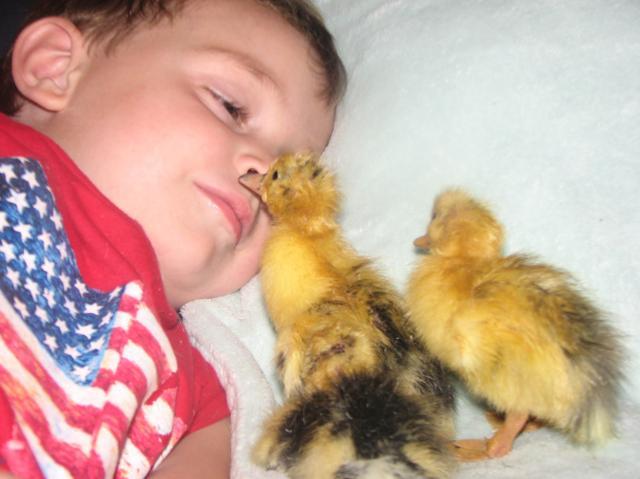
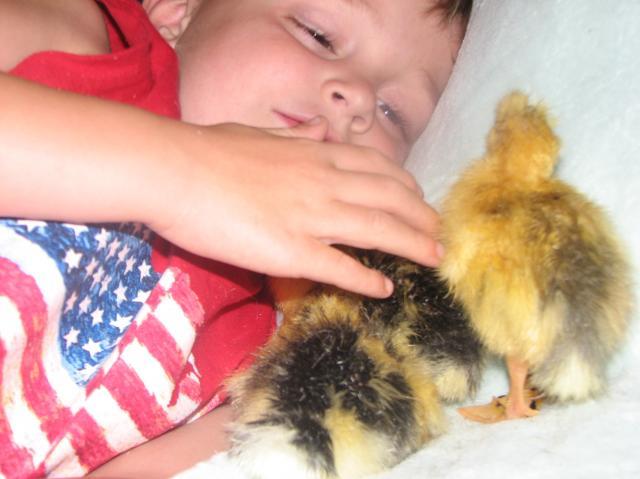
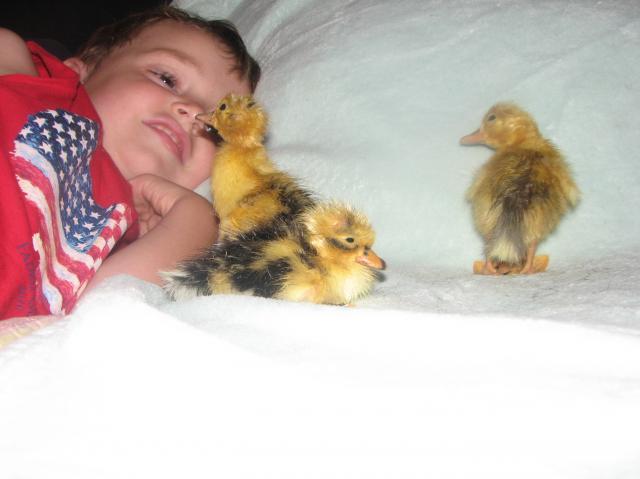
ADORABLE. I LOVE them. I WANT some. SOOOOOOOOO cuuuuuuuttttteeee!!!!
And yes, I think that one is blue. The first time I hatched a blue runner, I thought it was silver because the ducklings have such a silvery hue to them. I don't know a ton about duck genetics (I've received many a correction & much help on this board from folks with more knowledge than I), but you can make me feel smart by asking about blue, because I can explain that one! Woot! Here:
* Black, blue, and silver (also called splash) are considered part of the same spectrum, and any of those colors may occur from a blue x blue breeding.
* Black results when a bird receives TWO "extended black" genes and NO "blue dilution" genes.
* Blue results when a bird receives TWO "extended black" genes and ONE "blue dilution" gene.
* Silver or splash results when a bird receives TWO "extended black" genes and TWO "blue dilution" genes.
So if you cross a black bird with a blue bird, the offspring can be black (because they will all receive extended black genes, and may not receive a "blue dilution" gene at all), or blue (because they may receive one blue dilution gene), but not silver (because the black parent cannot contribute a blue dilution gene, so there's no way for them to have two blue dilution genes).
If you cross two blues, the offspring will all receive two extended black genes, but may receive any combination or no blue dilution, so you will get offspring of any of the three colors in the spectrum.
If you cross two silvers, the offspring will always receive two extended black genes and two blue dilution genes, so all offspring will be silver.
If you cross silver with black, the offspring will always be blue, because they will receive the two extended black genes plus a blue dilution from the silver parent and no blue dilution from the black parent.
If you cross silver with blue, the offspring may be blue or silver, because in addition to the black, they will receive a blue dilution from the silver parent and may or may not receive blue dilution from the blue parent.
To me, the fun of breeding blues is in the element of surprise at hatching time. Plus, any blue or silver bird can have a certain amount of "bleed through" from the black called "ink spots" which are considered a fault in the Runner breed standard, but I think they are beautiful and add to the individual character of the bird. It's also possible for any black/blue-spectrum bird to have white feathers appear. I think they are unattractive in blacks because part of the charm of the black is the sleek iridescence, but in blues and silvers I think they are very pretty for the same reason ink spots are.
Of course, in an ancona, ink spots and white spots would have no impact on the breed standard, because you *want* them to have odd patches of color here and there. I want to develop a Runner with a similar unpredictable pattern, because I think it is so cool. That's another reason I'm working with blues and blacks (and fawn/whites because they happen to carry a gene I can use to break up the color patches).
So... anyway, that's my genetics lesson for the day. That's pretty much the extent of my genetic knowledge. Hope it helps!