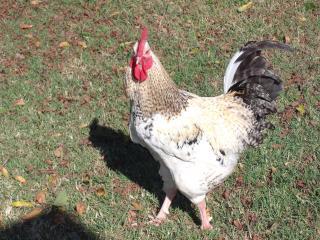
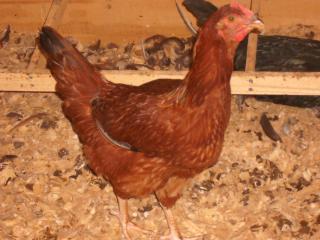
There is a little difference in most dual purpose breeds in configuration. Some give you a little more breast meat and some more in the thighs or drumsticks. But I find those differences are more in the line of the chickens than the breed. Not all Delaware are created equal, for example. Some specific Delaware will have different body configuration than others. The stock you start with is very important. The same is true with all breeds. The Cornish, not the Cornish Cross but the true Cornish, give pretty good breast meat. Most of the rest are probably going to be better in the dark meat department. Cornish are not known to be great layers compared to many other though. There are always tradeoffs.
I suggest you look at breeds that are going to produce white or light-colored chicks. The reason, as others mentioned, is the pin-feathers. If you skin, that does not matter, but if you pluck, it might. I'd expect a Delaware rooster to produce white offspring, but with black barring in the neck, tail, and maybe wing feathers. Still a nice carcass from the pinfeather aspect. A BO rooster will lighten the color of the Sussex feathers (I'm assuming Speckled Sussex. Not sure what you mean by splits). Whether that is enough to suit you or not, I don't know.
With a Speckled Sussex rooster, the Delaware will give you a sex link. The hens will be dark red with a black tail and the roosters will be white with black barring in the tail, neck and wings. The BO hens with that rooster give you a chicken that is reddish, somewhere between the dark mahogony of the SS and the Buff of the BO. Not a sex link.
Here is a shot of my SS rooster/ Delaware hen cross.
I have limited experience with different breeds. I find age and sex has more to do with the differences in processing than breed. Not so much in hens, but an older rooster seems to have more connective tissue that makes it harder to process him, especially if you try to skin him. Those older roosters always take me longer, whether plucked or skinned.