Romelove1
Chirping
- Nov 7, 2020
- 23
- 39
- 59
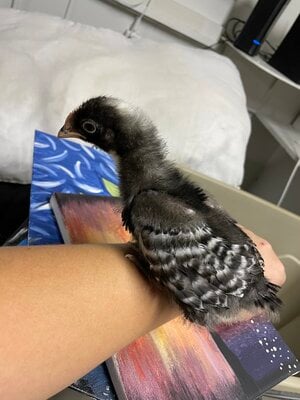
I am supper conflicted about the sex of my barred rock storm. I keep getting mixed answers on Facebook and figured I’d finally come here. It is almost 5 weeks old.
Follow along with the video below to see how to install our site as a web app on your home screen.
Note: This feature may not be available in some browsers.
Hi there, welcome to BYC!I am supper conflicted about the sex of my barred rock storm. I keep getting mixed answers on Facebook and figured I’d finally come here. It is almost 5 weeks old.


Hi there, welcome to BYC!
I'm gonna give you a solid answer.. Or at least try.. according to an educated guess more than an opinion. Also hopefully help understand why the answers are so mixed and empower you to.. uh.. be just as confused, lol!
In barred chickens.. the male offspring get a double dose of the white barring gene from their dame.. giving males a lighter appearance than females with white bars being double wide than black.. on females, the bars are more even in appearance and look darker overall. The biggest challenge being that it at times seems subjective.. and I can't discern what I think I'm seeing, especially with varying growth stages.. some hens are lighter.. Gender related saddle feathers start to appear by 12 weeks in most non hen feathered breeds.
Traditionally.. the dark leg wash on the front was also sex linked and notably female.. that trait has been muddled. The auto sexing trait has also been virtually eliminated from most lines.
I would like to see a better photo of the comb and wattles.. but what I'm currently seeing.. and stated age.. looks pullet. Most straight combed cockerels tend to share their gender early (4-ish weeks).. starting with red in the wattles and then to the comb.. behavior is also usually different.. running around getting into everyone's business, towering over others, etc.. noting Barred Rocks when included in my flocks have always been the top hen.
To ME.. *the white does look wider than black*.. but unless the other pictures show much more red comb and wattle than what I think I see.. I mean I see zero wattle or redness of any sort.. I see pullet.![]()
Hi there, welcome to BYC!
I'm gonna give you a solid answer.. Or at least try.. according to an educated guess more than an opinion. Also hopefully help understand why the answers are so mixed and empower you to.. uh.. be just as confused, lol!
In barred chickens.. the male offspring get a double dose of the white barring gene from their dame.. giving males a lighter appearance than females with white bars being double wide than black.. on females, the bars are more even in appearance and look darker overall. The biggest challenge being that it at times seems subjective.. and I can't discern what I think I'm seeing, especially with varying growth stages.. some hens are lighter.. Gender related saddle feathers start to appear by 12 weeks in most non hen feathered breeds.
Traditionally.. the dark leg wash on the front was also sex linked and notably female.. that trait has been muddled. The auto sexing trait has also been virtually eliminated from most lines.
I would like to see a better photo of the comb and wattles.. but what I'm currently seeing.. and stated age.. looks pullet. Most straight combed cockerels tend to share their gender early (4-ish weeks).. starting with red in the wattles and then to the comb.. behavior is also usually different.. running around getting into everyone's business, towering over others, etc.. noting Barred Rocks when included in my flocks have always been the top hen.
To ME.. *the white does look wider than black*.. but unless the other pictures show much more red comb and wattle than what I think I see.. I mean I see zero wattle or redness of any sort.. I see pullet.![]()