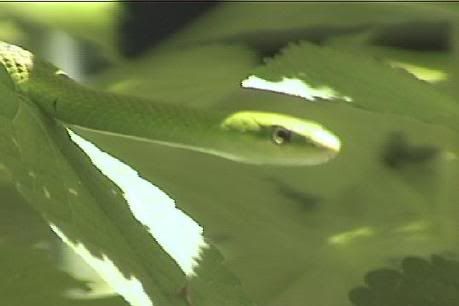
Coral snakes are not aggressive or prone to biting, and account for less than a single percent of the number of snake bites each year in the United States. Most coral snake bites occur because of accidental handling of the snake while engaged in an activity like gardening.
Most species of coral snake are small in size. North American species average around 24" in length, but specimens of up to 35" or slightly larger are not unheard of. Young are normaly 5-7 inches however they still have enough venom to kill an adult human. South American species can get much larger. They are thin bodied snakes, with a head the same width as the body, small eyes, and a rounded snout. Aquatic species have flattened tails, to act as a fin, aiding in swimming.
Most species of coral snakes are ophiophagous, feeding primarily on other, smaller species of snakes, but they will often also consume lizards, and infrequently, small rodents. Aquatic species are known to be specialists in feeding on freshwater eels, but sometimes will also consume knifefish. Coral snake venom is much stronger than is generally considered necessary to subdue their typical prey items.
Due to the small size of coral snakes, along with their having much smaller fangs than pit vipers, bites are frequently ineffective and have some difficulty penetrating shoes or even thick clothing. This along with the fact that coral snakes are not aggressive creatures and reclusive makes bites quite rare. However, coral snakes are highly venomous, being the only relative of the cobra found in the New World. Despite their relatively small size, their venom is a powerful neurotoxin, quite capable of killing an adult human. No deaths related to coral snake bites have been reported in the United States since coral snake antivenin became available. Before that time, the estimated case fatality rate was 10%.
HOWEVER, any bite from a coral snake should be considered life threatening and immediate treatment should be sought. Often there is very little reaction around the bite area, as opposed to the pain and swelling usually associated with a viper bite, and systemic effects can delay manifestation for 8-24 hours. This potential delay in symptoms makes treating coral snake bites particularly tricky, and often results in preventative treatment whether one is displaying symptoms or not. Once the neurotoxin takes effect, it causes the neurotransmitters between the brain and muscles to malfunction. Initially symptoms are slurred speech, double vision, difficulty swallowing, but can quickly progress to muscular paralysis, and even respiratory or cardiac failure if not treated.