Hey Mike, glad to see it's working for ya.
You remember me chatting the partridge up with you a while back, right
well, I've been chatting with some folks overseas who've been working on MF cochins (pekins) for nearly 5 years and I have learned something new today. I remember maybe it was Amazondoc who spoke about the genetics of mille fluer and how it takes buff columbian and mottled but, Ione also mentioned how she specifically wanted to focus on wheaten downed and she said that unless you focus on one particular down color, that we will never get them to breed true. Now, speaking with this Australian person, I kind of had an ah-ha experience ..doesn't take much to get one of those out of me
But, anyway, she said that MF can be made on either wheaten or partridge based downs and that the two versions of mille fleur will be different but both are acceptable versions and that it is important to consider when purchasing new birds to improve your existing milles... that, if you're focussing on one, the other could totally throw a wrench in the program.
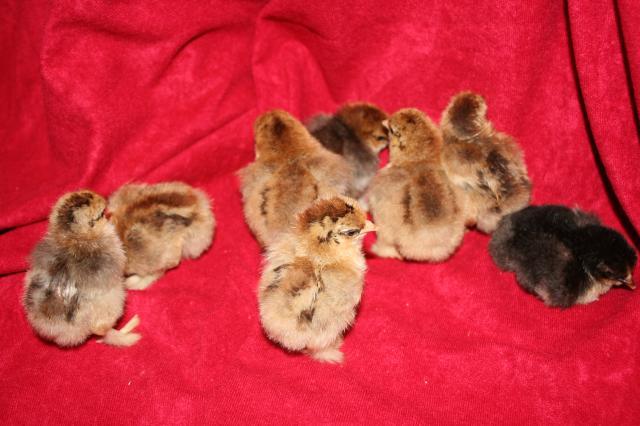
With wheaten, you will get males with a brilliant red as the wheaten gene is more condusive to the mahongany gene. Lynne, that's why when we hatch a yellow bird and in two days the black comes in the wings and we know... IT'S A BOY! Then, the red comes in and most of the time the breast pattern can be clean and distinctive though the hackles and saddle are more difficult to get black in. With wheaten based females, you will begin to get washed out looking girls with very little black. This can be worked on by including kind of a mix of other genes and, this person also said that it's acceptable to have the differing down colors and that may help you decide early on who's going to turn out like what... though I couldn't imagine ever getting to a point where I wouldn't get any surprises.
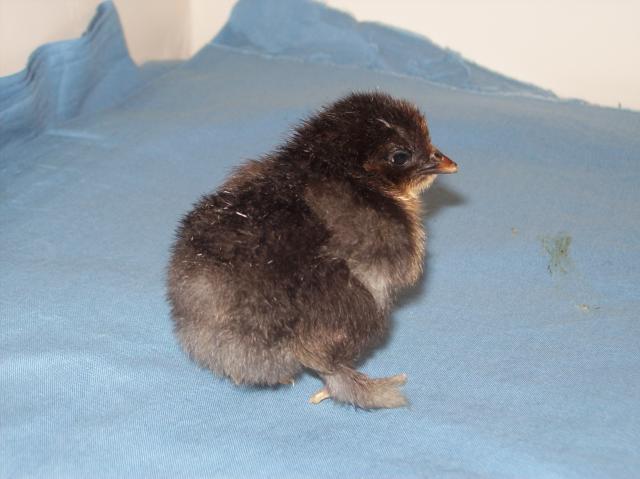
With partridge based birds, the males will have darker breasts... maybe even all black at first. As you hatch and cull, you can get the tri color in a great pattern but, overall, the males will be darker.
while the girls seem to have a more even distribution of pattern though there can be smudgy looking, even penciled looking lacing effect to the pattern. The females will be richer in base color and have more black.
This may not be correct... it's more here say, I guess but, I thought it sounded good and made some sense and thought interesting enough to share.
Now, I look in my brooder and see the rainbow of colors and am thinking
ETA: I forgot about duckwing... they say you can create MF on duckwing.