I know there is a lot to go through with this thread and the previous MFC thread.. you'd have to do some searching to find it. BUT, the info is priceless. You can click on the link in my signature page for my "Mille Progress Page" which will lend a lot of insight.
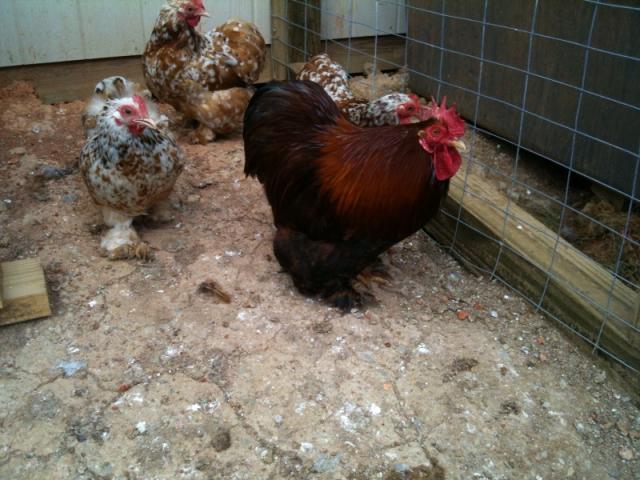
Basically, we are using many different genes to blend together to make mille fleur which only began some 3-4 years ago for most of the lines you're seeing on these pages. What that means is that all those ingredients manifest themselves in different levels in our chicks. Our job as breeders, when starting a new variety, is to select the best birds to move forward with to benefit the variety. Some of those darker birds maybe shouldn't be used but, they are a side effect of our main goal. If you're just looking for speckled beauties for your backyard, then these darker babies may work. They will sill grow out to be beautiful with speckles and splashes of color and some prefer them but, if you're looking to improve a breeding program, then purchasing hatching eggs is a crap shoot. ... a blend of all the ingredients popping up every which way. For me, particularly, (I know Lynne has better patterned specimans than me so you will have better luck getting nicer colored birds from her) but.. for me.. Im STILL hatching 70% dark chicks in some clutches... some clutches it was 50/50. Mottled was used in my line just two generations ago and I still have one Mo girl with brassy hackles... so... the chances of me getting an excellent patterned mille is relatively low. I plan on hatching nearly 150 this year (would've made it sooner if I didn't lose nearly 100 in a 120 degree temp spike this week

but, I'll have to do a lot to make an improvement and go into my 2012 breeding season with new, better birds. I didn't accomplish that last year. Seriously. I kept 1!!!!! bird from last year. That's how difficult this new variety is. MF is said to be THE most difficult variety to get right and, after a couple of years, you'll understand why
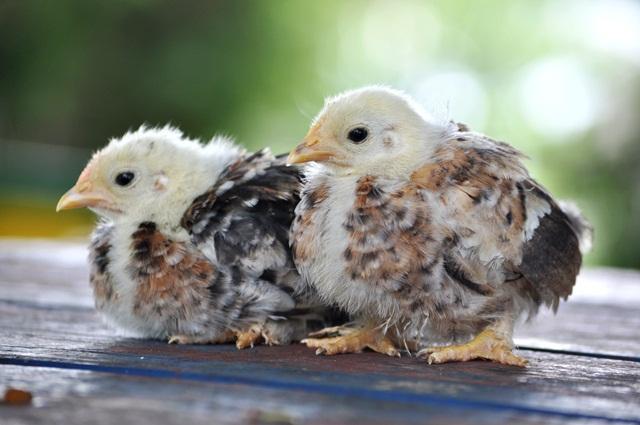
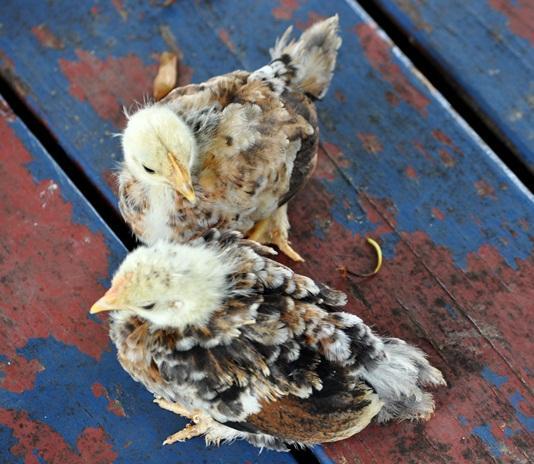
all this jibber jabbering and I still didn't answer the question... the white ones are "wheaten" They are the most condusive to the "mahongany" gene and the boys will be vibrantly colored and may have better chest presentations but will lack black on the tips of the hackle and saddle feathers. The wheaten females I've hatched have been dissapointing.
The chipmunks seem to be the best patterned.. for me. They have a rich background color where the wheaten females seem to be washed out. They seem to have more speckles too.
dark orangey/red chicks with black on the back are taking after their buff columbian parentage and will be restricting black from the breast. Females most likely won't show much pattern.
dark black chicks with white breasts are mottled and may have brassy hackles and saddle
dark gray chicks will be lighter than the black mottleds and display brighter colors but will have too much black like hackle black, tails black, breasts black mottled, etc.
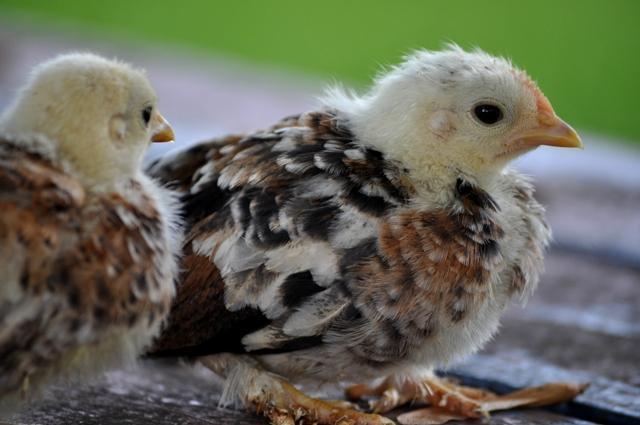
dark reddish black chicks like the one pictured above have been one of my favorites to watch mature. They are dark but, most are really brilliant colored when mature. One of my favorite hens was a tad bit lighter than that one and is COVERED in speckles each with a black band. She is too dark for correct mille but, I am still using her. I am balancing her with a buff columbian male. And, I am eagerly waiting their babies to mature.
Any of these chicks have the genes so, when putting birds with.. say the columbian restrictor gene to a dark gray chick with a black mottled breast MAY give you nice mille chicks! It's a soup.. .just get the ingredients in there.
Good Luck with all of your programs. It's been the most rewarding for me. As they change fast and are... by far.. the most beautiful of bantam when you get it right


 Now to name them.