Good question. There are two parts to molting. One part is how fast the feathers fall out. This is controlled by genetics but I'm not aware of any correlation to breed. With some chickens the feathers fall out in clumps, they may go through a molt in a month or so. You can see bare spots. There are several "molting contest" threads on this forum, you can see what it looks like when the feathers fall out in clumps there.
Others may take four months or so before all of the feathers fall out. Feather loss is gradual. The slowest don't look that rough while molting, no bare spots. You generally cannot tell by looking that these are molting, but you may see loose feathers flying around. Most chickens are in between these extremes.
The other part is how fast the feathers grow back. Again it is genetic, this is what enables feather sexing in newly hatched chicks. Some chickens' feathers grow back rapidly, while others grow back fairly slowly. One way to demonstrate this is the barring gene. If the feather grows back rapidly the barring is a cuckoo pattern like the Cuckoo Marans or Dominique. Pretty broken up when looking at the bird as a whole. But a good quality Barred Rock has slow growing feathers. When they come in the barring is fresh and crisp.
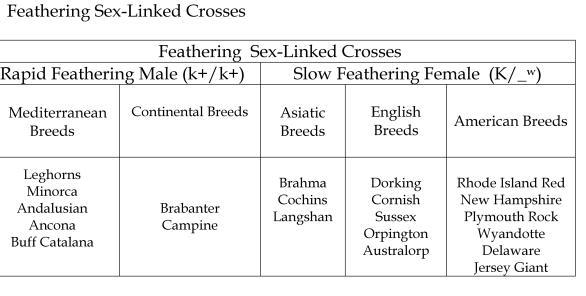
I took this chart from Tadkerson's post on making sex links. He does not list all fast or slow feathering breeds but does show that there is a breed correlation.
Here is the link to Tadkerson's sex link thread.
https://www.backyardchickens.com/threads/sex-linked-information.261208/
@alwaystj9 the overall speed of the molt is going to be mostly controlled by how fast or how slowly the feathers fall out. The speed that they grow back will have a minor contribution to that but they can't grow back until they fall out.