Is anyone aware of any correlation of molting and breed? Do some breeds molt more or less, for longer or shorter than others? Just curious.
Follow along with the video below to see how to install our site as a web app on your home screen.
Note: This feature may not be available in some browsers.
That's actually a great question I've never heard asked!Is anyone aware of any correlation of molting and breed? Do some breeds molt more or less, for longer or shorter than others? Just curious.
Good question. There are two parts to molting. One part is how fast the feathers fall out. This is controlled by genetics but I'm not aware of any correlation to breed. With some chickens the feathers fall out in clumps, they may go through a molt in a month or so. You can see bare spots. There are several "molting contest" threads on this forum, you can see what it looks like when the feathers fall out in clumps there.Is anyone aware of any correlation of molting and breed? Do some breeds molt more or less, for longer or shorter than others? Just curious.
If you feed 20% year round, you won't have to worry about timing extra protein just right. 20 is ideal anyway, for any age chicken and any time of year.Molts can go by faster with extra protein, but timing that feed early is very difficult
Mine still love their whole feeds, 50/50 Kalmbach Chickhouse and Henhouse, which I feed as a mash. They are pretty meh about the 20%, which is always available in a feeder. Flaked oyster shell available on the side.If you feed 20% year round, you won't have to worry about timing extra protein just right. 20 is ideal anyway, for any age chicken and any time of year.
Maybe you would know. I have two hens who's feathers on their back went from smooth to kind of "downy" looking. And now one has, what I hope is molted rather quickly. You can see at the back of the bald spot what I mean by downy. I got them as 18 week RTL back in September. The weather has warmed a fair bit here in the last week but is still just below freezing. She doesn't seem bothered and pushes to get to food... I haven't seen her be picked on.Good question. There are two parts to molting. One part is how fast the feathers fall out. This is controlled by genetics but I'm not aware of any correlation to breed. With some chickens the feathers fall out in clumps, they may go through a molt in a month or so. You can see bare spots. There are several "molting contest" threads on this forum, you can see what it looks like when the feathers fall out in clumps there.
Others may take four months or so before all of the feathers fall out. Feather loss is gradual. The slowest don't look that rough while molting, no bare spots. You generally cannot tell by looking that these are molting, but you may see loose feathers flying around. Most chickens are in between these extremes.
The other part is how fast the feathers grow back. Again it is genetic, this is what enables feather sexing in newly hatched chicks. Some chickens' feathers grow back rapidly, while others grow back fairly slowly. One way to demonstrate this is the barring gene. If the feather grows back rapidly the barring is a cuckoo pattern like the Cuckoo Marans or Dominique. Pretty broken up when looking at the bird as a whole. But a good quality Barred Rock has slow growing feathers. When they come in the barring is fresh and crisp.
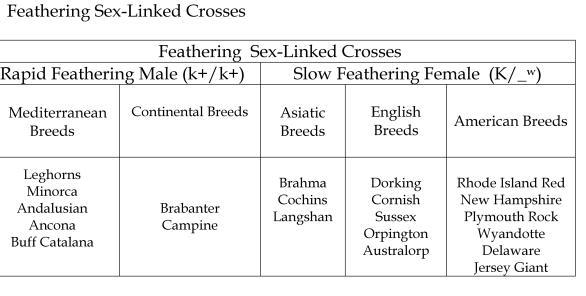
I took this chart from Tadkerson's post on making sex links. He does not list all fast or slow feathering breeds but does show that there is a breed correlation.
![]()
Here is the link to Tadkerson's sex link thread.
https://www.backyardchickens.com/threads/sex-linked-information.261208/
@alwaystj9 the overall speed of the molt is going to be mostly controlled by how fast or how slowly the feathers fall out. The speed that they grow back will have a minor contribution to that but they can't grow back until they fall out.
That is not molting. It is possible it is from feather pecking but I really do not think so. Still, you can't rule out pecking.And now one has, what I hope is molted rather quickly.
She's not preening a ton, not uncomfortable acting by any means and is ravenous when I toss in anything with extra proteinThat is not molting. It is possible it is from feather pecking but I really do not think so. Still, you can't rule out pecking.
I think it is depluming mites. I've never had to deal with them so I'm not sure how to treat them. I suggest you do a google search in depluming mites and see what you think.