URGENT: Sick male duck

Thank you for your speedy reply!
He eats a mix of grains/pellets and grits (he is an indoor duck because as I said he was a rescue and we have no backyard). The grains are corn/peas/and many others that I bought from a feed store for farm animals.

he is alone (the house doesn’t fit others (especially to make the ratio correct). As for the photos, it’s now 5 am so the house is asleep, when morning comes I’ll upload. As for his breathing, it is normal and there is no discharge from the nose.
Only 3 weeks. I will upload them as soon as possible. I found this in my gallery. Notice how his left side seems bigger (and we’re his head starts). He is not able to put his beak behind his left wing (as I told you) so he just tries his best and I noticed he sticks to something e.g his cage/boxes/walls when he sleeps during the day
I would like to add that: when we got him he was a baby duckling with no one. He had broken leg and it took him 4 months until he started turning white and feathering. He was so much near death and we thought he wouldn’t make it but he surprised us all. He would pant all the time, couldn’t move, had extremely heavy breaths. This forum has been my source of information regarding how to raise him as we have no experience. Since 6 months, he hasn’t panted or had any problem. Because of the broken leg (and wing) and all his misfortune, he never actually turned white (he’s creamy colour) and his leg recently started sliding when he walks so we started adding nutritional yeast (we have no brewer yeast in here, it’s not permitted :) ). I am hesitant to start him on antibiotics without knowing it is an illness, but I can feel it ( with the mommy heart) that he’s not ok.
thank you everyone for your help with my baby:love
His poop depends on his mood/how much water he drinks. usually it’s normal but today in the morning it was diarrhoea (very light brown and smelly) I link this type with him having fever from my past experience.
He doesn’t forage so no access to grass/sand. I am considering changing his food or mixing it with something else. I just found a feed store that has duck food that is in a decent package from a brand (the one I got is clearly a hand mix, but I assumed they know best as it’s a feed store)

I will post a video ASAP

Thanks for providing the additional information. I look forward to seeing the video.

What you see often with birds that have some sort of leg problem, like yours, that discourages them from doing normal "duck-stuff", is they slowly decline if not cared for well. Laying down becomes their normal routine, and if the ground is hard enough, they often develop sores, or Bumblefoot on their hock joints which can lead to septic arthritis, or osteomyelitis, both conditions being quite hard to treat. It would be nice if you could feel, and look at his hock joints, for any swelling, or lesions, and tell us. Also, post a few pictures of the legs. Birds may also develop wet weather if not allowed to bathe frequently, or sticky eyes, etc.

That said, there are several things that need to be considered when dealing with a duck with leg problems, which often includes getting the bird on a stable, healthy diet formulated for waterfowl. Looking at the feed in the picture, it doesn't look very well-formulated which discourages good health. Consider getting the waterfowl feed, and for extra nutritional support, get him on B vitamins, as you're doing, and also consider adding Omega 3's to his diet, like Flax seed which has been shown to help the pain associated with leg problems, reduce inflammation, prevent soft tissue damage, and help overall health.

Ensuring the ducks play area is soft padded to reduce sores from sitting and letting the duck bathe in water at least once or twice a day, to relieve the weight of his legs, reduce swelling, keep his feathers clean, is also very important.

In regards to his neck, it's hard to tell what's going on there. The video will help determine what the problem might be.
 
Also are you providing grit which is very important since they don’t have teeth to chew with the grit is used in the gizzard to break down the feed and other things they eat. Putting a small bowl of grit beside his feed bowl will give him access when he needs it. With him having problems from the time you rescued him some of what your seeing maybe genetic and is starting to show up now , could have been there all along but the older he gets the more your able to see it. Sounds like he has a perfect home where he is loved an cared for. Hopefully we can help you get him feeling good again.
 
Thanks for providing the additional information. I look forward to seeing the video.

What you see often with birds that have some sort of leg problem, like yours, that discourages them from doing normal "duck-stuff", is they slowly decline if not cared for well. Laying down becomes their normal routine, and if the ground is hard enough, they often develop sores, or Bumblefoot on their hock joints which can lead to septic arthritis, or osteomyelitis, both conditions being quite hard to treat. It would be nice if you could feel, and look at his hock joints, for any swelling, or lesions, and tell us. Also, post a few pictures of the legs. Birds may also develop wet weather if not allowed to bathe frequently, or sticky eyes, etc.

That said, there are several things that need to be considered when dealing with a duck with leg problems, which often includes getting the bird on a stable, healthy diet formulated for waterfowl. Looking at the feed in the picture, it doesn't look very well-formulated which discourages good health. Consider getting the waterfowl feed, and for extra nutritional support, get him on B vitamins, as you're doing, and also consider adding Omega 3's to his diet, like Flax seed which has been shown to help the pain associated with leg problems, reduce inflammation, prevent soft tissue damage, and help overall health.

Ensuring the ducks play area is soft padded to reduce sores from sitting and letting the duck bathe in water at least once or twice a day, to relieve the weight of his legs, reduce swelling, keep his feathers clean, is also very important.

In regards to his neck, it's hard to tell what's going on there. The video will help determine what the problem might be.
Thanks for providing the additional information. I look forward to seeing the video.

What you see often with birds that have some sort of leg problem, like yours, that discourages them from doing normal "duck-stuff", is they slowly decline if not cared for well. Laying down becomes their normal routine, and if the ground is hard enough, they often develop sores, or Bumblefoot on their hock joints which can lead to septic arthritis, or osteomyelitis, both conditions being quite hard to treat. It would be nice if you could feel, and look at his hock joints, for any swelling, or lesions, and tell us. Also, post a few pictures of the legs. Birds may also develop wet weather if not allowed to bathe frequently, or sticky eyes, etc.

That said, there are several things that need to be considered when dealing with a duck with leg problems, which often includes getting the bird on a stable, healthy diet formulated for waterfowl. Looking at the feed in the picture, it doesn't look very well-formulated which discourages good health. Consider getting the waterfowl feed, and for extra nutritional support, get him on B vitamins, as you're doing, and also consider adding Omega 3's to his diet, like Flax seed which has been shown to help the pain associated with leg problems, reduce inflammation, prevent soft tissue damage, and help overall health.

Ensuring the ducks play area is soft padded to reduce sores from sitting and letting the duck bathe in water at least once or twice a day, to relieve the weight of his legs, reduce swelling, keep his feathers clean, is also very important.

In regards to his neck, it's hard to tell what's going on there. The video will help determine what the problem might be.

Regarding bathing regularly, he showers everyday. He also doesn’t seem to want to sit down, he sleeps standing up so I wouldn’t assume his legs hurt him. Regarding the diet, I will post a picture of it separately so I take recommendations. I will be adding flax seeds, but I cannot buy him formulated feed specifically for ducks. The only ones I found upon my search were formulated feed for ducks from age 3-12 weeks (my duck is a year old), and chicken formulated feed, which I assumed wouldn’t be suitable for the different vitamins.

As for the hard ground, what do you recommend? As he is an indoor duck it is hard to get a soft flooring.

this is a video:

if you notice in the video, when I pet his right wing he always gets provoked and bites me gently. As for the left wing, he stopped biting me. You can notice that I tried to turn his head to the left side but his head was tilted and he couldn’t turn it more, got annoyed and removed my hand. You may see the difference between his head turning to the right and left.
 
Also are you providing grit which is very important since they don’t have teeth to chew with the grit is used in the gizzard to break down the feed and other things they eat. Putting a small bowl of grit beside his feed bowl will give him access when he needs it. With him having problems from the time you rescued him some of what your seeing maybe genetic and is starting to show up now , could have been there all along but the older he gets the more your able to see it. Sounds like he has a perfect home where he is loved an cared for. Hopefully we can help you get him feeling good again.
I just noticed his food had a very limited amount, but read somewhere that they only need grit if they’re eating soft foods. I will search for a place that sells grit and add for his food.
Thank you for your kind speech Miss Lydia :jumpy
 
These are his feet (they are curved inward since youth), the bumblefoot, a full picture for his body from up (kindly notice the incline in his tail to the right side). His foamy eye (it has been foaming for around a week now).
There is his food too. I would like to know your recommendation regarding the feed (what should I add/remove)
 

Attachments

  • B8C9560D-BF3E-431C-B18E-7242381FA04A.jpeg
    B8C9560D-BF3E-431C-B18E-7242381FA04A.jpeg
    343 KB · Views: 7
  • 0A455F39-B555-40F2-9AEC-A3E6EB5E805C.jpeg
    0A455F39-B555-40F2-9AEC-A3E6EB5E805C.jpeg
    299.2 KB · Views: 9
  • B720C29C-B41B-430A-9879-1D35499CC3EE.jpeg
    B720C29C-B41B-430A-9879-1D35499CC3EE.jpeg
    280.1 KB · Views: 7
  • 9960BED8-4A6C-4E11-BA2D-388CC5A601B0.jpeg
    9960BED8-4A6C-4E11-BA2D-388CC5A601B0.jpeg
    898.1 KB · Views: 7
  • 04FBF7D6-D09C-468C-8D03-1AF655EF9BD6.jpeg
    04FBF7D6-D09C-468C-8D03-1AF655EF9BD6.jpeg
    527.6 KB · Views: 10
  • 048FA6E3-9CAC-464B-B240-4E8200AE6C6A.jpeg
    048FA6E3-9CAC-464B-B240-4E8200AE6C6A.jpeg
    291.4 KB · Views: 9
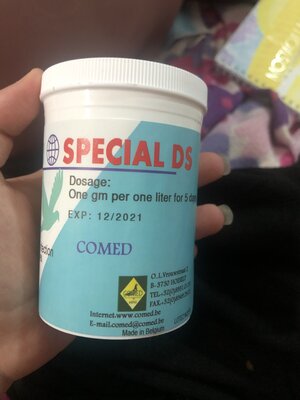
Today I went to a general vet pharmacy and told them his symptoms and they gave me this antibiotic. I made a google search and this what I got too. The pharmacist told me to get him an eye gel and an antibiotic for his bumblefoot from another place. I would wait your advice before starting him on any medicine. I didn’t get the eye gel or the antibiotic ointment as It’s far and everything is too expensive (because they are rare). I would get it to him if required tho, I don’t care he is my baby. But I have been applying fucidin to his bumblefoot and soaking him.
I would appreciate any advise:hugs
 

Attachments

  • image.jpg
    image.jpg
    321.2 KB · Views: 8
  • image.jpg
    image.jpg
    317 KB · Views: 8
  • FF61D764-F79A-4F3B-8F43-5DDC67149B59.png
    FF61D764-F79A-4F3B-8F43-5DDC67149B59.png
    613.5 KB · Views: 9
The antibiotic looks like it's broad spectrum. Which is what you want since not sure what's going on. @Isaac 0 is better on treating with antibiotics than I. As for his foamy eye does he have water deep enough to dunk his head to clean his eyes out? Foamy eye can also be that he isn't cleaning his eyes properly.
Make sure when you get the grit you put it in a separate bowl close to his feed bowl. That way he only uses it when needed. Actually he needs grit to break down his dry feed. Tell us what all is in the feed your giving him ingredients? Looks similar to a 6 way scratch that I buy. It's basically not for main diet. Not sure on yours though since we can't read the bag. After soaking have you tried to pick off the scab on his bumble? getting the infection out is important. after opening up then you clean out good put some type of antibiotic ointment on and wrap to keep it clean till healed. I had to look up Fucidin and it looks like a good product to use especially after you get out the infection.
 
Regarding bathing regularly, he showers everyday. He also doesn’t seem to want to sit down, he sleeps standing up so I wouldn’t assume his legs hurt him. Regarding the diet, I will post a picture of it separately so I take recommendations. I will be adding flax seeds, but I cannot buy him formulated feed specifically for ducks. The only ones I found upon my search were formulated feed for ducks from age 3-12 weeks (my duck is a year old), and chicken formulated feed, which I assumed wouldn’t be suitable for the different vitamins.

As for the hard ground, what do you recommend? As he is an indoor duck it is hard to get a soft flooring.

this is a video:

if you notice in the video, when I pet his right wing he always gets provoked and bites me gently. As for the left wing, he stopped biting me. You can notice that I tried to turn his head to the left side but his head was tilted and he couldn’t turn it more, got annoyed and removed my hand. You may see the difference between his head turning to the right and left.
He's precious:love
 
The antibiotic looks like it's broad spectrum. Which is what you want since not sure what's going on. @Isaac 0 is better on treating with antibiotics than I. As for his foamy eye does he have water deep enough to dunk his head to clean his eyes out? Foamy eye can also be that he isn't cleaning his eyes properly.
Make sure when you get the grit you put it in a separate bowl close to his feed bowl. That way he only uses it when needed. Actually he needs grit to break down his dry feed. Tell us what all is in the feed your giving him ingredients? Looks similar to a 6 way scratch that I buy. It's basically not for main diet. Not sure on yours though since we can't read the bag. After soaking have you tried to pick off the scab on his bumble? getting the infection out is important. after opening up then you clean out good put some type of antibiotic ointment on and wrap to keep it clean till healed. I had to look up Fucidin and it looks like a good product to use especially after you get out the infection.

he always has access to water and I make sure he dips his thoroughly in it. We tried putting ACV in his shower water but still nothing is working.
As for his feed, they just seem to be different dry grains. I can’t recognise except corn/pellets/peas and some little grits. Also, the bag given to us is not manufactured by a brand, rather just a mill or something like that. Nothing is written on it. I will try to seek him food again. If I don’t find, what should I add to his food to make it complete other than grits, flax seeds and nutritional yeast?

I will bring him grits tomorrow, and probably the eye gel. His eye is red in the white area around his iris, and both eyes are tearing, one is foaming.

regarding his bumblefoot, we tried and it bled a little so we were worried and just sealed it. I will soak him now and try.

He's precious:love
Thank you :hugs
 
Sorry for chiming in so late, but you are already in good hands!
Agree to starting an antibiotics treatment immediately, your drake shows signs of a general bacterial infection which must be treated as fast as possible.
Next those huge bumbles should be properly treated, here in the US there is an ointment with broad-spectrum antibiotic available for cheap and i made very good experiences with it, so i suggest you find something similar where you live:
1605207485347.png
As for his general bad health, i would:
  • Have him swim as much as you can, water therapy is always improving the duck's leg and hip health
  • Have him walk on soft natural surfaces, you said you don't have a backyard, so could you take him outside to a public park or something similar?
  • Giving him some outside time will also allow him to pick up some natural grit for his digestive system and some additional nutrients that are hard to come by.
  • Cut back on calorie rich treats with lot's of fat and carbohydrates.
Unfortunately Pekin ducks are a rather screwed up breed, for which birds have purposefully been selected that fatten up rapidly due to their insatiable appetite and can be slaughtered at a young age. No breeder cared for their feet, legs and hips.
Grown up Pekin Ducks do have a slightly yellow taint in their feathers, so that is very normal.
 

New posts New threads Active threads

Back
Top Bottom