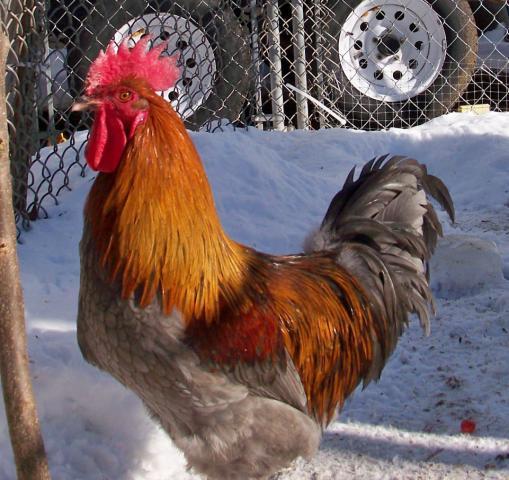
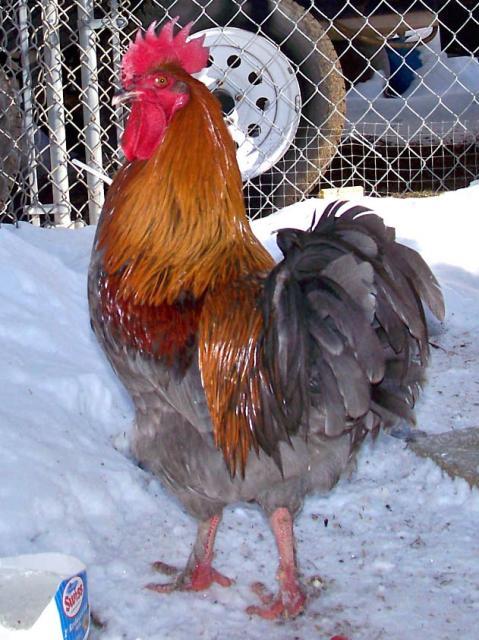
math ace - you should PM geebs about the complementary breeding. She's done lots of that, and would know what combo will work.
I'm not so sure that coppering in a roo breast passes on mossiness. I thought it corresponded more with straw hackle. Are you breeding for roos or hens or both? It's hard to get a good batch of both from any single breeding. From what I have read, coppering in the breast WILL give your blues with little copper a better chance of producing correctly coppered offspring, at least hens with more hackle color. Your hens are overmelanized even though the black is diluted by the blue gene. It seems an undermelanized rooster would offset this.
Oh, I found where I read about the mossiness and the straw hackle thing from the Australian Marans club website:
We can find another colour flaw in the Brown-Red hens. It's the appearance of feathers, which are speckled, stippled, with more or less light marks, fawn-coloured, coppery coloured, or with light shafts. They are said to have stippling on the breast and even on the whole body. Such hens have sometimes been shown as "partridge" Marans, which is totally unacceptable. The true genetic "partridge" colour present in some breeds (like the wild type Duckwing) has nothing in common with these Marans hens, which can only be considered as bad Brown-Reds from which you can get nothing good. These hens often corresponds to cocks whose breast red colour is too spread out down to the thighs, and whose coppery tones are often replaced by a pale light fawn or straw-coloured feather shades,
It didn't look like your boy had copper "down to the thighs"
I agree about the wait and see thing with the comb till he's an adult. I've also seen combs change alot as they get bigger. Some wavy combs straighten out nicely.