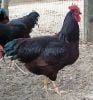
I got a phone call last night asking if you see black striped going down the back of the chicks backs if that is a good or bad thing. for m ye its been a good thing. He told me these chicks are from a trio I gave his son and the females came out of two of my top breeding pens from a male I call New York or New York Reds bird he sent me and a male that i call judge which a judge went nuts over last October.
So if you see this on your little day old chicks dont panic. Also, if you ever see a blueish colored chicks large fowl or bantam this is a lost gene from the 1930s I call this the mouse gene. It comes from a old line of Rose Comb Large fowl from Ernie Jones who sent a runt pullet to Bob Purves in Florida in the 1950s and she passed this into the bant am line that he had. I saw this one time about twenty years ago. So dont kill this chick this is a great color feeder for the future. study the beak color of the chick the further down the beak you see black the more or better color breeder he will be. You will see the difference in you hue or down color of your chicks on the true Heritage reds. When you see heathery chicks you will see rustic color and beaks with little horn color. If you cross a dark red on to a hatchery red you will be between and they should lay well but it would take twenty years to get them dark.
Its just what you really want in a chicken. I have a dog that is from a distance a German Shepard but his mother was a beagle. He is trying to be a German Shepard but just is not. I dont really care I still like him just like many of you who like your lighter colored reds.
Remember there will always be 10,000 production reds out there on peoples farms ,but only about 200 to 300 Heritage Rhode Island Reds. That is just the odds today to locate a good blood line. Pretty Chicks you all have posted. I have two chicks that i hatched from a pullet this year that are as small as my Leghorn chicks so maybe this year I will get two ozs below standard weight on my red bantams. That is not a bad thing considering they came from Large fowl Reds 25 years ago. Share these Reds with others and tell us who you are who have them so we can send people to you next year for eggs or chicks. bob