Quote:
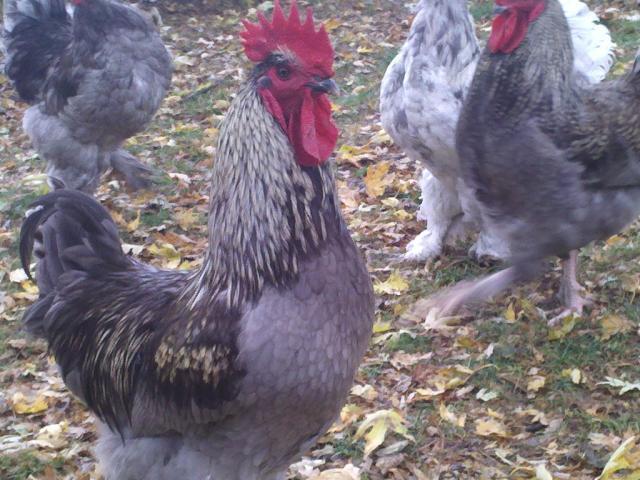
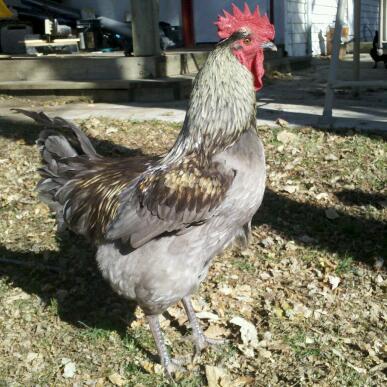
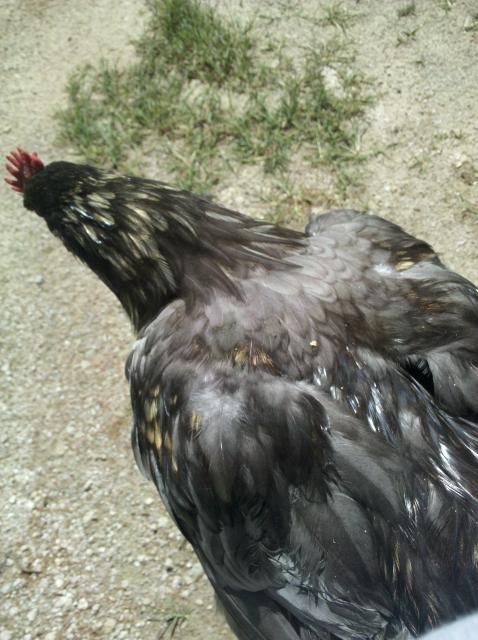
So I'm wonderin... Is there anything to be done with the birchens with gold leakage on the back? Or would they for sure be culls?
And if not what would you breed them to?
I am just getting into Birchens, so I am not 100%, but in my mind I would say yes that something can be done about the gold leakage and yes they can be used. Just like selecting and breeding for darker or deeper copper in the Black Coppers and Blue Coppers. the Silver Birchens would be the same... but a person would select and breed for better silver. My large Birchen boy has some gold leakage......I am test mating him to a Blue Copper (who has very little copper...just a slight hue) hen that I believe may carry the silver Birchen gene, the offspring should be split for gold/silver.....I will raise up the best pullets that show the best silver coloration and the least amount of gold leakage and I will breed them back to their father to see if the next gen. will (should) produce even better and cleaner silver.
So after I said all this.....Vicki can come by now and correct me.
Aww....I hope you guys don't think I'm a pain in the you know what about the birchens and color and etc...
Something can indeed be done with the gold leakage on a birchen male...on a female...I would cull them. The males carry two genes for the color...if they have leakage in the silver they have one copy silver and one copy gold. When mated with a proven solid blue girl...it will take you longer to get to where you want to go, but it is possible with careful breeding and recordkeeping. Now if you have a birchen female, make sure you breed to silver birchens, they will help to determine the coloring of the offspring. If you have a gold birchen, you will get more gold birchens and will head you in the opposite direction since they only have one copy of the gene.
On the venture of mixing the birchen with copper, it is also doable, just again, will require test mating and careful record keeping to make sure one is culling the ones of improper color and can trace it back to the parent stock in case one of them proves to consistently throw the wrong coloring.