- May 19, 2009
- 8,453
- 3,396
- 512
VillageChicken : GS and Pyle are both e+ based. How do you get a correctly colored BTB if they are supposed to be wheaten based?
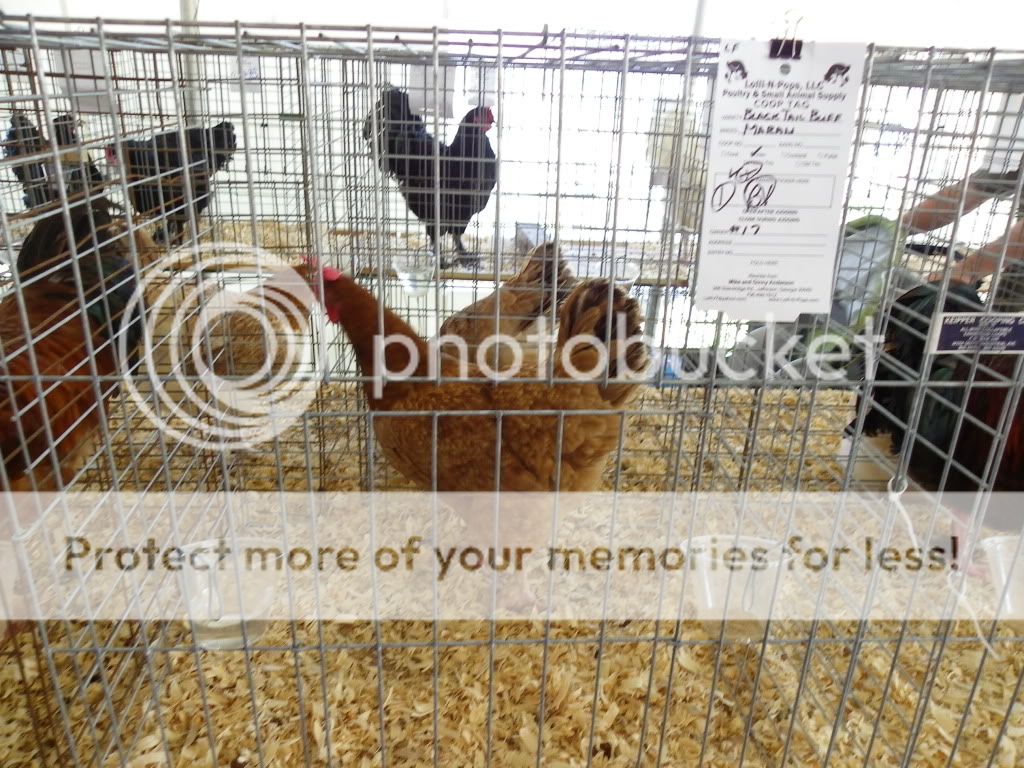
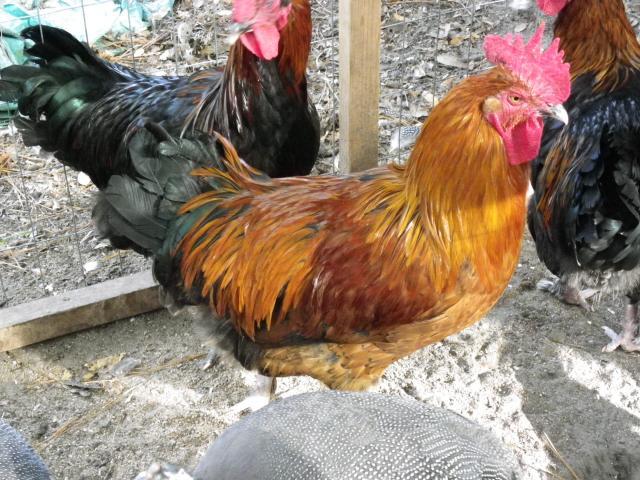
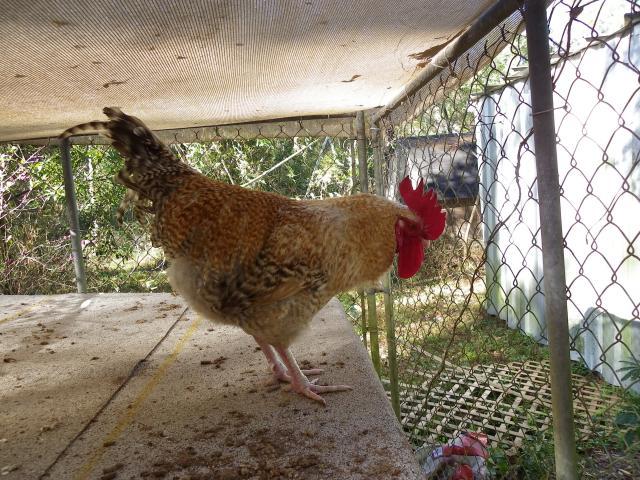
From what I understand BTB is Wheaten + Db or Co? plus red enhancers. Are you able to get the right wing markings and no black in the hackle with an e+ based bird?
------------------
Hi VillageChicken,
e+ and Wh have an uneasy color alliance. They can swap color back and forth in the birds from generation to generation, even blend them. But there is not the difficulty in in segregating them back from each other again that one sees when ER is in the mix. I need to get my notes out to give a more complete answer. Personally, I think BTB should not have any Co in it. Rather Db/Db. Otherwise the plumage hue is too light if Co is there. I know the Austalian BTB use Co. Db can act like a Columbian gene.
------------
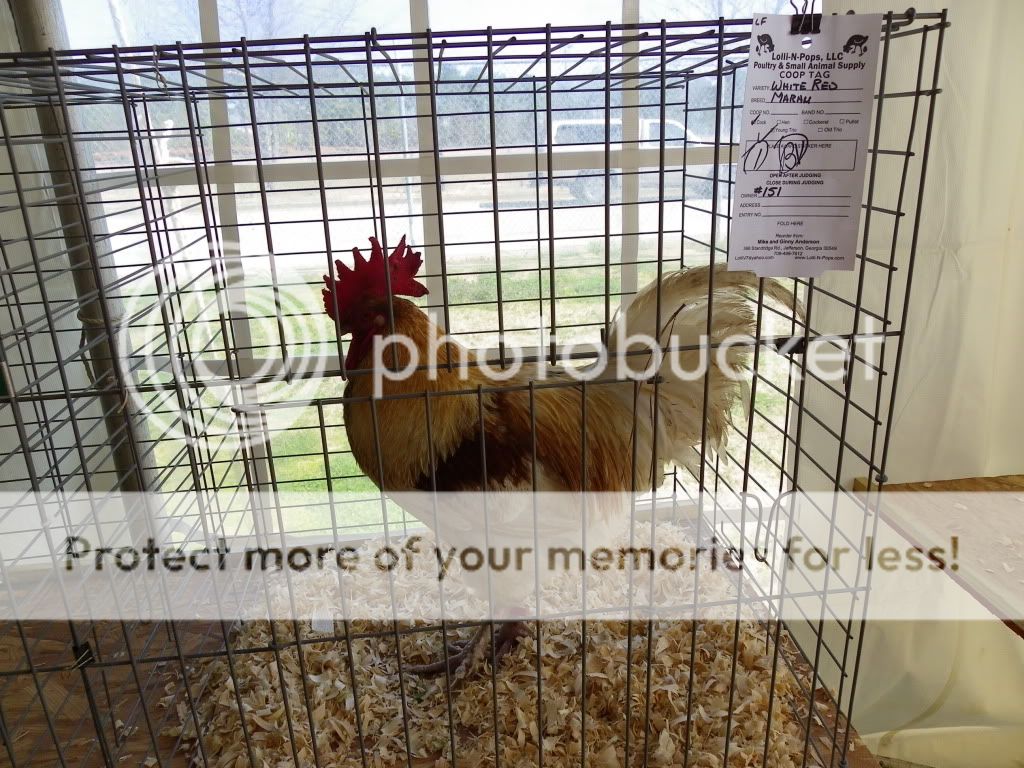
Ok, I went back and looked at my notes. I mispoke when i said White Pyle Marans. I should have said White Red Marans which look like a Pyle bird. However the White Red marans are a Black Copper bird with a white gene. So I guess there is BC behind my girls after all. I had thought Golden Salmon was half the foundation for the White Red Marans project. I will have to check further on that.
Best Regards,
Karen
---------from my notes---------
Dr. Carefoot on family of 3 hues.
http://tinyurl.com/6ggz9hn Page 122. This URL takes you to page 123 and need to
back-page one page. Title of the section is"Genetic Basis for Some Columbian
Restricted Phenotpyes.". Very interesting. Basically what this expert along with
others I have read, is telling us is that we are working with a color pattern(a
family of hues) which basically shows up in three shades. Light, darker and
darkest. For BTB Marans, we want the New Hampshire hue with is the middle of the three. We want
it based on eWh ( Wheaten gene) not eb(Brown gene) or eb( recessive Wheaten
gene). That often, this middle colored hue(New Hampshire) is found expressing
the Co gene which gives it a lighter more even coloring. From what I have read,
multiple experts are saying the best middle hue(New Hampshire) is created by
either Db/Co or Db/Db. Db is Dark Brown (because it turns black to dark brown)
and Co(the columbian restrictor which moves black from the body to the hackle and
tail). Mh is also present in New Hampshire and it sorta acts like a columbian
restrictor too.
-
As I read it, please correct me if I am wrong, this article also states that
the correct color hue can can be either on genes which are homozygous, Ewh, eb
or ey. or heterozygous eWh/eb ; eWh/e+ ; or?
Best,
Karen
From what I understand BTB is Wheaten + Db or Co? plus red enhancers. Are you able to get the right wing markings and no black in the hackle with an e+ based bird?
------------------
Hi VillageChicken,
e+ and Wh have an uneasy color alliance. They can swap color back and forth in the birds from generation to generation, even blend them. But there is not the difficulty in in segregating them back from each other again that one sees when ER is in the mix. I need to get my notes out to give a more complete answer. Personally, I think BTB should not have any Co in it. Rather Db/Db. Otherwise the plumage hue is too light if Co is there. I know the Austalian BTB use Co. Db can act like a Columbian gene.
------------
Ok, I went back and looked at my notes. I mispoke when i said White Pyle Marans. I should have said White Red Marans which look like a Pyle bird. However the White Red marans are a Black Copper bird with a white gene. So I guess there is BC behind my girls after all. I had thought Golden Salmon was half the foundation for the White Red Marans project. I will have to check further on that.
Best Regards,
Karen
---------from my notes---------
Dr. Carefoot on family of 3 hues.
http://tinyurl.com/6ggz9hn Page 122. This URL takes you to page 123 and need to
back-page one page. Title of the section is"Genetic Basis for Some Columbian
Restricted Phenotpyes.". Very interesting. Basically what this expert along with
others I have read, is telling us is that we are working with a color pattern(a
family of hues) which basically shows up in three shades. Light, darker and
darkest. For BTB Marans, we want the New Hampshire hue with is the middle of the three. We want
it based on eWh ( Wheaten gene) not eb(Brown gene) or eb( recessive Wheaten
gene). That often, this middle colored hue(New Hampshire) is found expressing
the Co gene which gives it a lighter more even coloring. From what I have read,
multiple experts are saying the best middle hue(New Hampshire) is created by
either Db/Co or Db/Db. Db is Dark Brown (because it turns black to dark brown)
and Co(the columbian restrictor which moves black from the body to the hackle and
tail). Mh is also present in New Hampshire and it sorta acts like a columbian
restrictor too.
-
As I read it, please correct me if I am wrong, this article also states that
the correct color hue can can be either on genes which are homozygous, Ewh, eb
or ey. or heterozygous eWh/eb ; eWh/e+ ; or?
Best,
Karen